
Need OEM supplier support for this product type?
Contact KOLARWIN Tools for OEM mechanic tools, private label packaging, wholesale quotation and product range support. This gives overseas buyers a clear path from article reading to supplier discussion.
Valve, utility, and security-fastener buyers often search for a five point socket after a standard hex socket fails to seat. The risk comes from naming alone: “five point” may describe an external pentagon socket, while “pentalobe” describes a small five-lobed recess. A buyer can prevent wrong samples by separating fastener profile, drive size, service class, and application before asking for a quote. This guide gives distributors, importers, and private-label tool buyers a controlled specification path based on documented product categories and cautious factory-quality practice.
Contents
- 1. What is a five point socket?
- 2. How does five-point geometry differ from pentalobe?
- 3. Which fasteners and applications use five point sockets?
- 4. How should buyers match size and clearance?
- 5. Should the socket be hand-use or impact-rated?
- 6. What material, finish, and insulation evidence matters?
- 7. How should geometry and fit be inspected?
- 8. How can distributors build a five point assortment?
- 9. What should a five point socket RFQ contain?
- 10. How should a private-label buyer approve a program?
1. What is a five point socket?

A five point socket, also called a penta socket or pentagon socket, fits an external five-sided fastener head. The socket’s working cavity surrounds a pentagonal nut or bolt head rather than a six-sided hex. Current industrial catalogues separate hand-driven penta sockets for utility hardware from impact-rated five-point versions. That distinction gives buyers a useful starting point: specify the external fastener geometry and service class before discussing steel grade, color, or packaging.
Here is the working definition. A five point socket transfers load through five contact flats around an external pentagon. It does not automatically mean a five-lobed driver bit, a five-point star, or a socket for an internal recess. Penta security fasteners use unusual geometry to limit access with common hex tools. Security does not equal a universal torque rating, however; each socket still needs a matched fastener, drive, and service class.
Use this identity checklist before requesting samples:
- external pentagon or internal five-lobed recess;
- nut, bolt head, valve hardware, or security fastener;
- hand drive, torque-wrench drive, or impact-tool drive;
- nominal fastener size, square-drive size, and required depth;
- plain, corrosion-resistant, or insulated construction.
Buyer action: place a photo or dimensioned fastener drawing beside every five point socket SKU. The impact socket product range can sit beside this project only after impact classification matches the intended use.
Five point socket identity table
| Identity field | What the buyer should state | Common mix-up | Evidence to request |
|---|---|---|---|
| Working profile | External pentagon, with five flats | Pentalobe star recess | Fastener photo and cross-section |
| Fastener form | Nut, bolt head, valve hardware, or security head | Internal screw drive | Mating sample or drawing |
| Tool interface | Square drive, fixed handle, or insulated tool system | Fastener profile mistaken for drive size | Full socket drawing |
| Service class | Hand, torque-controlled, or impact | Dark finish treated as proof | Manufacturer use statement |
2. How does five-point geometry differ from pentalobe?

Five-point naming causes costly sample errors because sellers use “penta” for more than one profile. An external pentagon has five broad flats around a fastener head. A pentalobe drive has five rounded lobes inside a recess, commonly associated with compact electronic-device screws. A five-point star or five-lobed bit can look similar in a thumbnail yet require a completely different mating tool.
The shape at the contact surface decides fit. A pentalobe driver cannot substitute for an external pentagon socket. Torx uses six rounded lobes, hex uses six flats, and spline profiles use multiple smaller teeth. Even a correct point count does not prove interchangeability because lobe radius, flat angle, recess depth, and size convention can differ.
Ask a supplier for a profile drawing rather than accepting “5-point” as a complete description:
- identify whether contact sits inside or outside the fastener;
- show flat faces, rounded lobes, corners, and any center pin;
- state nominal size convention and mating fastener family;
- confirm whether tool entry is axial and whether clearance is restricted;
- keep pentalobe, pentagon, five-point star, Torx, and hex as separate SKUs.
For a broader socket-system comparison, the 6-point versus 12-point socket guide helps buyers keep point count and contact geometry in separate fields. Action: reject any RFQ response that names only “5-point” without a profile image or drawing.
Profile comparison table
| Profile name | Contact geometry | Typical mating part | Why it cannot be assumed interchangeable |
|---|---|---|---|
| External pentagon | Five outside flats | Penta nut, bolt head, valve hardware | Socket surrounds a raised head |
| Pentalobe | Five rounded internal lobes | Small security screw recess | Driver enters a cavity |
| Torx | Six rounded lobes | Star-drive screw recess | Point count and lobe form differ |
| Hex | Six flats | Hex nut or bolt head | Six-sided contact does not fit five flats |
| Five-point star | Five lobes or points, naming varies | Specialty internal drive | Supplier terminology needs drawing proof |
3. Which fasteners and applications use five point sockets?

Five point sockets serve places where a regular hex tool would be too common or would not fit. Product catalogs document uses around water and gas valves, while penta security-bolt makers describe public-area covers, ground lids, and restricted-access panels. Utility maintenance tools also pair five-point hardware with other common service heads. These examples describe application families, not a promise that every five point socket suits every site.
Application evidence should come before assortment size. A distributor serving municipal maintenance may need external pentagon valve sockets. A security-hardware buyer may need a deep socket around a threaded penta bolt. A private-label automotive program should not borrow either assumption without a matched vehicle or equipment drawing.
Build an application brief with:
- fastener location and access direction;
- whether unauthorized removal must be discouraged;
- exposure to water, dirt, heat, or road salt;
- available hand or powered drive;
- required reach, clearance diameter, and storage format.
The automotive repair tools range can help map adjacent workshop categories, yet a five-point listing needs application-specific evidence. Buyer action: name one verified use case for each proposed SKU before approving a set.
Application-fit table
| Application family | Why five points may be specified | Buyer verification | Main assortment risk |
|---|---|---|---|
| Water or gas valve service | Cataloged valve hardware may use external pentagon heads | Valve maker or field sample | Wrong nominal profile size |
| Utility or infrastructure covers | Restricted-access fastener geometry | Site hardware drawing | Socket depth or clearance mismatch |
| Security panels and penta bolts | Limits access by common hex tools | Fastener supplier data | Security claim overstated |
| Vehicle or specialty equipment | OEM-specific fastener profile | Service manual or sample | Assuming all vehicles use one size |
4. How should buyers match size and clearance?
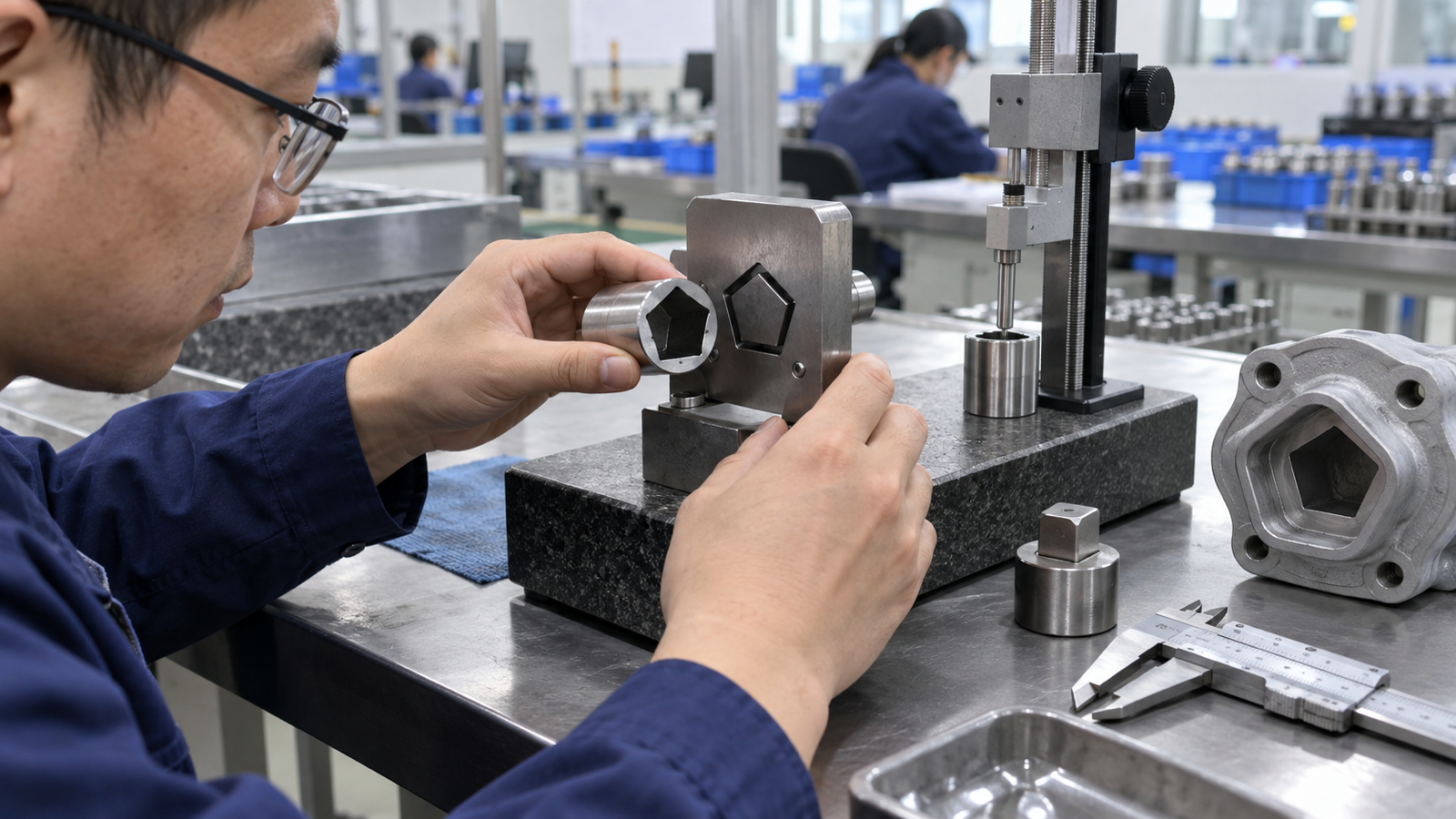
Five point socket size must describe more than one measurement. A regular pentagon has no pair of opposite parallel flats, so a hex-style across-flats value is ambiguous. A buyer needs the supplier’s nominal-size convention tied to a dimensioned datum drawing or matched profile gauge, plus socket drive size, outside diameter, overall length, and working depth. A protruding stud may require a deep socket. A recessed valve body may require a smaller outside diameter even when the pentagon profile matches. A square-drive dimension only tells you which handle or adapter enters the socket.
Keep every dimension in its own RFQ column. Do not convert a metric fastener into an approximate inch size and assume fit. The metric-to-SAE conversion chart can support planning, but a mating sample or controlled drawing should decide final approval.
Record these fields for each line item:
- supplier-defined nominal pentagon size, with every measurement datum identified on a controlled drawing;
- square-drive size and retention method;
- outside diameter and corner clearance;
- overall length, working depth, and internal relief;
- hand or impact wall design, plus any insulation thickness;
- measurement tolerance and gauge method.
Buyer action: send one clean fastener photo beside a scale, then confirm dimensions from a physical sample. A supplier should return a marked drawing before price comparison.
Size and clearance table
| Field | Why it affects fit | How to verify | Approval warning |
|---|---|---|---|
| Pentagon nominal size | Defines the cavity using an agreed datum convention | Controlled drawing and matched profile gauge | Unspecified datum creates incompatible readings |
| Square drive | Selects handle or adapter | Plug gauge and mating tool | Drive size is not fastener size |
| Outside diameter | Controls access around the head | Caliper at widest body | Large wall may foul a recess |
| Working depth | Accommodates head or stud length | Depth gauge and sample | Shallow socket may bottom out |
| Overall length | Controls reach and surrounding clearance | Drawing and sample | Long body can hit nearby parts |
5. Should the socket be hand-use or impact-rated?

Service class changes the design brief. Current manufacturer catalogues separate hand-driven five-point sockets, impact versions, and insulated penta tools. That separation shows why a buyer should not infer use class from a black oxide finish, a thick-looking wall, or a generic phrase such as “heavy duty.”
Choose the tool path before choosing the material label. Hand service may use a ratchet, breaker bar, or torque wrench. Impact service adds repeated shock, retention, guarding, and a product-specific design requirement. A socket sold for hand tools should not be placed in an impact assortment unless its maker expressly rates it for that use.
Write the intended service beside each SKU:
- hand ratchet or fixed-handle use;
- controlled torque-wrench use;
- pneumatic or electric impact use;
- insulated live-work system, where legally and technically applicable;
- prohibited combinations, such as unapproved powered use.
The impact sockets versus regular sockets guide gives useful category context. Action: require a written use-class statement and a matching sample before printing impact language on packaging.
Service-class table
| Service class | Design question | Document to request | Do not claim without evidence |
|---|---|---|---|
| Hand-use | Does fit remain stable under manual torque? | Product drawing and use note | Impact suitability |
| Torque-controlled | Can tool, socket, and fastener be paired correctly? | Tool compatibility statement | Universal torque rating |
| Impact | Has shock service been designed and tested? | Product-specific test evidence | Safe use on every impact tool |
| Insulated | Does insulation system match required voltage and standard? | Marking, test, and compliance file | Live-work approval from appearance |
6. What material, finish, and insulation evidence matters?

Material names help narrow a purchase, yet they do not finish the specification. A supplier may describe alloy families, heat treatment, hardness, surface finish, and insulation as separate controls. Five point sockets for utility work may need corrosion attention. Impact versions may need toughness and wall geometry. Insulated versions need a documented system, not a colored coating that merely looks safe.
Ask for evidence that follows the part through production. Request material identity, heat-treatment records, dimensional inspection, surface-finish definition, and insulation testing when applicable. Exact chemistry, hardness, torsional strength, coating thickness, and electrical ratings remain SKU-specific until a supplier supplies test methods and results.
A practical material file should include:
- material designation and heat or batch traceability;
- heat-treatment route and acceptance range;
- surface finish, corrosion requirement, and marking method;
- hardness or strength test method, if specified;
- insulation material, voltage class, and laboratory report, if relevant;
- controlled drawing revision linked to the sample.
For adjacent material decisions, the socket tools category shows how hand, impact, and accessory families sit in one product system. Buyer action: never approve a material claim from finish color alone; tie it to a report or agreed inspection plan.
Evidence-by-feature table
| Feature | Buyer question | Suitable evidence | Risk if omitted |
|---|---|---|---|
| Base material | Which alloy or grade applies to this SKU? | Mill certificate or supplier declaration | Substitution hidden behind generic steel wording |
| Heat treatment | What route and acceptance range apply? | Batch record and test report | Brittle or soft parts pass visual review |
| Finish | What coating or treatment protects the part? | Process description and sample check | Corrosion expectation remains vague |
| Insulation | What system and test apply? | Standard, marking, and report | Coating mistaken for electrical protection |
7. How should geometry and fit be inspected?

Inspection begins with the five contact flats, not with a polished photograph. A good control plan checks pentagon size, flat angle, corner condition, cavity depth, drive fit, wall thickness, and outside diameter. Retention also matters: a loose square drive can let a socket wobble, while a poor cavity fit can damage fastener corners.
A simple gauge plan catches profile mismatch, damaged corners, poor drive fit, and insufficient depth. Use a controlled master fastener or profile gauge for the working end. Check the square-drive interface with a mating plug or socket. Measure critical dimensions at a defined temperature and record sample identity. If impact use is proposed, add the supplier’s agreed strength or shock-test method rather than inventing a universal value.
Include these checks in a pre-shipment or incoming plan:
- visual review for cracks, folds, burrs, and damaged corners;
- five-flat profile gauge or master fastener fit;
- drive fit, retention, and concentricity;
- cavity depth, wall thickness, and outside diameter;
- surface finish, marking legibility, and packaging protection;
- batch traceability from carton back to inspection lot.
For a profile comparison, keep socket tools and accessories grouped by interface rather than by marketing name. Action: approve a golden sample and inspection drawing together; either document alone leaves room for drift.
Geometry inspection table
| Checkpoint | Measurement or observation | Suggested control | Reject signal |
|---|---|---|---|
| Five flats | Cavity accepts matched master without rocking | Profile gauge or sample fastener | Partial contact or forced entry |
| Corners | Even, clean transitions without folds | Visual magnification | Burr, crack, or collapsed corner |
| Depth and wall | Socket reaches fastener without bottoming | Depth gauge and section sample | Thin wall or blocked cavity |
| Square drive | Mates fully with controlled retention | Plug gauge and pull check | Excess play or incomplete seating |
| Body alignment | Working cavity and drive share a stable axis | Fixture or runout check | Eccentric body or angled drive |
8. How can distributors build a five point assortment?
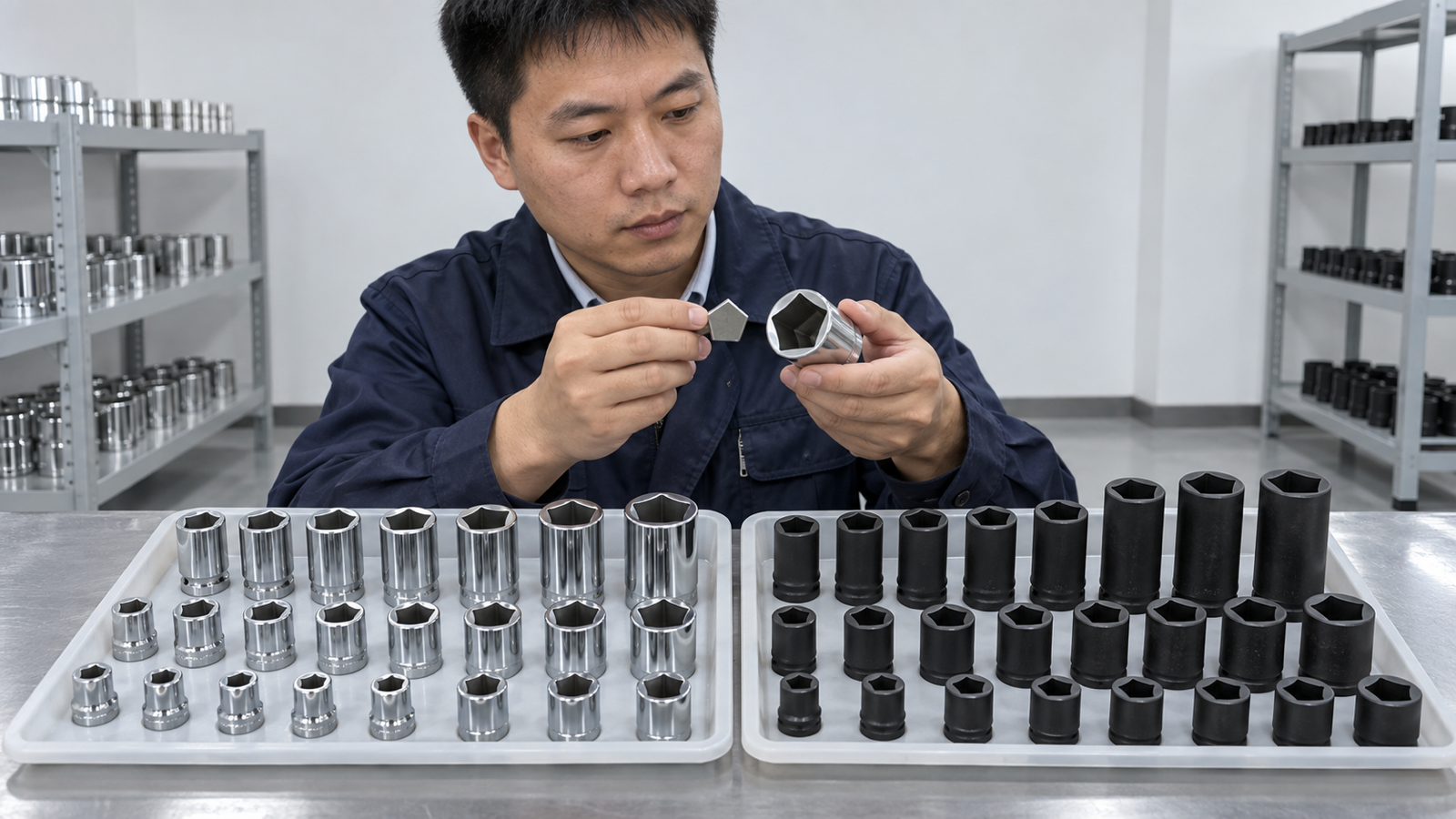
Five point sockets usually sell as problem-solving items rather than broad commodity ranges. A distributor can lose shelf space by stocking many nominal sizes without knowing which valve, cover, or security fastener each one serves. A smaller set with clear application fit may be easier for importers and service buyers to reorder.
Assortment logic should follow verified demand. Start with fastener samples from target customers, then group products by profile, supplier-defined nominal size, drive, depth, and service class. Keep hand and impact variants separate. Add insulated versions only after market, compliance, and handling requirements have been documented.
Use an assortment worksheet with:
- confirmed fastener family and application owner;
- size and drive combination;
- depth and outside-diameter requirement;
- hand, impact, or insulated class;
- package unit, set configuration, and replacement policy;
- evidence status for every specification field.
The socket set manufacturer page can help buyers frame set and packaging questions. The broader mechanic tools list helps place specialty sockets beside complementary tools. Action: rank SKUs by named customer problem, not by supplier catalog order.
Assortment planning table
| Assortment decision | Buyer input | Sensible first control | Common portfolio error |
|---|---|---|---|
| Size range | Fastener samples and field requests | Verify repeat demand before adding sizes | Buying a full range without users |
| Depth | Stud, recess, and access measurements | Offer only proven reach options | Treating deep as universally better |
| Drive | Existing tool fleet | Match local handles and adapters | Mixing hand and impact lines |
| Packaging | Counter, workshop, or service-van sale | Use clear SKU identity | Hiding profile differences in one set |
| Replacement | Expected loss or wear pattern | List single replacements where useful | Forcing a full set purchase |
9. What should a five point socket RFQ contain?

An RFQ should let two suppliers quote the same product. “Five point socket, black, 1/2-inch” leaves profile, fastener size, depth, wall design, and service class unresolved. It also makes later quality disputes hard to prove. A disciplined RFQ connects the customer’s fastener, approved drawing, sample, process evidence, and package copy.
Put the acceptance rule beside each claim. If a listing says impact, ask for the applicable product evidence. If it says insulated, name the required standard and test document. If it says security, describe restricted access without promising that a pentagon shape defeats every tool or attack method.
Attach these items to an RFQ package:
- fastener photo, physical sample, or dimensioned drawing;
- socket profile, nominal-size convention and datum drawing, drive, depth, and outside diameter;
- hand, impact, torque-controlled, or insulated use class;
- material, heat-treatment, finish, and marking requirements;
- inspection plan, sample approval, and batch records;
- packaging artwork, warnings, language, and replacement SKU rules.
The China OEM auto-tools sourcing guide gives a useful supplier-questionnaire model, even when a project serves utility hardware. Buyer action: send a single revision-controlled RFQ and reject quotations that silently replace profile or service class.
RFQ completeness table
| RFQ block | Minimum buyer input | Supplier response | Approval gate |
|---|---|---|---|
| Profile | External pentagon or named internal profile | Drawing and sample | Buyer signs geometry |
| Dimensions | Fastener, drive, depth, OD, length | Marked dimensional sheet | Critical dimensions pass |
| Service | Hand, impact, torque, or insulated | Use statement and evidence | Copy matches class |
| Process | Material, treatment, finish | Process and batch records | Lot traceability works |
| Delivery form | Piece, set, case, and label | Packaging sample | SKU cannot be confused |
10. How should a private-label buyer approve a program?

A private-label five point socket program should pass three gates: profile, service, and communication. Profile approval confirms that the socket fits the real pentagon fastener. Service approval confirms hand, impact, or insulated use with suitable documents. Communication approval confirms that the product page, package, warning, and sales team describe the same item.
The cleanest approval path is a small controlled release. Start with one or two verified fastener families. Compare supplier samples against a signed drawing. Keep one retained sample with inspection records. Expand only after customer feedback confirms that field users can identify the profile and use class without guesswork.
Before release, confirm:
- sample fit under the actual access and drive conditions;
- final drawing revision and inspection points;
- material and process evidence for the approved lot;
- packaging wording that separates pentagon from pentalobe;
- replacement, complaint, and traceability procedure.
Send the approved profile, target market, and packaging needs through KOLARWIN’s contact page when a supplier quotation is ready. Action: release only the SKU whose fastener, socket, service class, and claim language all match.
Q1: Is a five point socket the same as a pentalobe driver?
No. A five point socket normally surrounds an external pentagon fastener. A pentalobe driver enters a five-lobed internal recess. The point count sounds similar, but contact geometry and tool direction differ.
Q2: What are five point sockets used for?
Cataloged uses include water and gas valve hardware, utility fasteners, public-area covers, security bolts, and selected specialty equipment. Confirm each use with a physical fastener or controlled drawing before ordering.
Q3: Can a regular hex socket remove a five point fastener?
Do not assume it can. Six flats do not match five flats. Forcing an incorrect socket can damage corners, lose control, or create a safety problem.
Q4: Can every five point socket work with an impact wrench?
No. Hand-use and impact categories require separate approval. Use an impact wrench only with a socket expressly rated for that service and matched with the correct drive and retention system.
Q5: What should a buyer send with a five point socket RFQ?
Send a fastener sample or dimensioned drawing, the agreed nominal-size convention and datum, drive size, required depth, outside diameter, service class, finish, packaging needs, and any insulation or compliance requirements. Ask suppliers to return a controlled drawing and sample.
Looking for a reliable mechanic tools manufacturer in China?
If you are sourcing hand tools, socket tools, automotive repair tools, mechanic tool sets or OEM private label tools, contact KOLARWIN Tools for factory-direct quotation, customization support and product consultation.


