
Home/Blog/ Bolt Extractor vs Screw Extractor: A B2B Buyer Guide

Bolt Extractor vs Screw Extractor: A B2B Buyer Guide

Get OEM Tool Catalog + Quote Back to Tool Sourcing Blog
Reverse-flute bolt extractor sockets beside internal screw extractors and a damaged fastener sample
This KOLARWIN Tools article is written for overseas distributors, wholesalers, importers and private label tool brands sourcing mechanic tools, automotive repair tools, socket tools, hand tools and OEM tool sets from China. Use this guide to compare product options, check supplier quality points and move from reading to a faster B2B inquiry.

Need OEM supplier support for this product type?

Contact KOLARWIN Tools for OEM mechanic tools, private label packaging, wholesale quotation and product range support. This gives overseas buyers a clear path from article reading to supplier discussion.

“Bolt extractor” and “screw extractor” often overlap in catalogues. The failure interface gives a clearer answer. An external head-grip socket works around an exposed rounded head. An internal screw extractor enters a drilled hole in a broken fastener. Size, access, material and drive limits decide the kit.

1. What naming overlap exists between a bolt extractor and a screw extractor?

Bolt and screw are fastener names. Extractor selection starts with what remains after failure. A rounded head may accept a reverse-flute socket. A flush or recessed break may need a center punch, pilot drill and internal extractor. A snapped stud can need left-hand drilling, a straight-flute extractor or a multi-spline design. Calling every one of these tools a “bolt extractor” hides the interface.

An extraction set may group bolt extractors, spiral-flute extractors, multi-spline tools and left-hand cobalt drills. External-head tools, higher-torque or lower-profile internal tools and drill-assisted tools serve different stages. Exact model instructions govern fit and drive.

Choose the extractor by the metal still available for engagement.

  • External head grip: socket, profile and drive must engage.
  • Internal drilled hole: centering and wall thickness control risk.
  • Mixed case: provide stages rather than one universal claim.

Classify every extractor SKU as external, internal, drill-assisted or multi-spline in your product data.
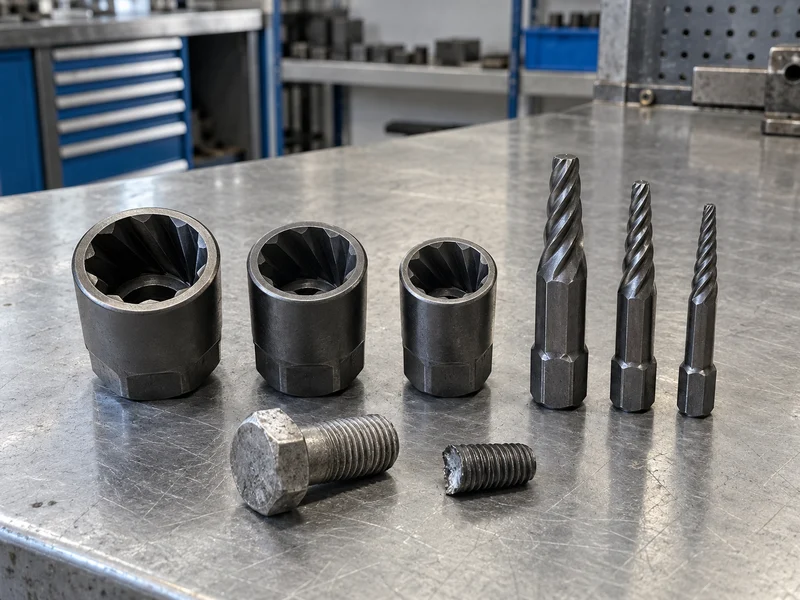
Reverse-flute bolt extractor sockets beside internal screw extractors and a damaged fastener sample
Product illustration; confirm actual model specifications and fit.

Decision table

Remaining fastener Extractor family First check
Rounded exposed head Reverse-flute socket Head size and access
Broken flush Internal spiral or straight flute Center and wall thickness
Deep broken stud Drill-assisted system Pilot depth and alignment
High-torque internal case Multi-spline Hole and drive fit

Place extraction tools inside a wider automotive repair tools range so buyers can source punches, drills and drives together.

The hand tools category groups preparation tools with everyday service equipment.

2. How should a buyer inspect fastener damage before extraction?

Inspection separates a rounded head from a seized shank. Record head shape, exposed height, size, corrosion, thread engagement and clearance. Paint or rust can change socket engagement. A flush break needs center access. A deep hole may leave little wall for an extractor.

Protect the parent part before choosing a drive. Note aluminum or steel around the fastener, nearby wiring, sealing surfaces and whether a drill can stay square. A photograph with a scale and a short description gives a supplier better information than “fits stuck bolts.”

Some sets pair extractor sizes with recommended drill sizes. Identify the fastener, choose the pilot and then choose the extractor. Ask whether a published size describes fastener diameter, drilled-hole size or socket opening.

Record damage and access before selecting a tool.

  • Record external head, flush break or internal cavity.
  • Measure access and parent-wall thickness.
  • Mark nearby surfaces that a drill must not touch.

Include a failure photo, fastener material and access sketch with every sample request.
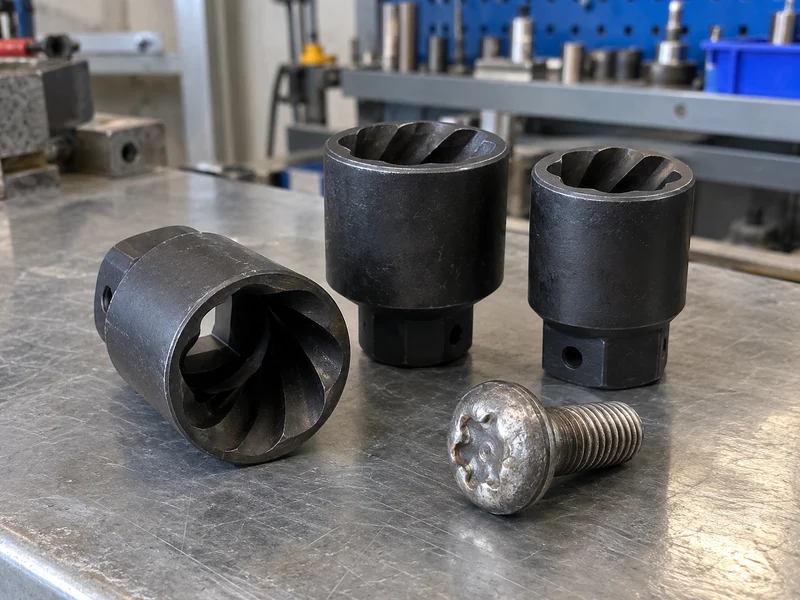
External-grip bolt extractor sockets showing their reverse-flute interiors
Product illustration; confirm actual model specifications and fit.

Decision table

Inspection point Why it matters Evidence
Exposed head Selects socket interface Head photo and size
Flush break Needs centered pilot Access and depth
Parent material Sets damage risk Steel, aluminum or cast part
Nearby clearance Controls tool length Side and top view

3. When do reverse-flute sockets fit an exposed fastener?

Reverse-flute sockets bite into a damaged external head as the operator turns the tool in the removal direction. A profile with hex flats plus a square drive raises two buyer questions: will it grip the remaining head, and can a selected handle reach it squarely?

Head size is not enough. Access may require a low-profile socket, extension or shallow engagement. A socket that fits on a bench can bottom against a surrounding bracket. A large drive can invite force beyond the tool's intended use. Any impact permission belongs to the exact model and instructions.

A sample trial should use a stated fastener material and damage condition. Check whether the socket seats fully, whether the head deforms and whether the drive stays square. If engagement is partial, stop. Sort sockets by head size, access and drive.

Check full socket seating on the damaged head.

  • Match socket opening to remaining head geometry.
  • Confirm square drive and clearance.
  • Keep impact wording tied to the exact product.

Ask suppliers for a head-size drawing, drive specification and test photos on rounded samples.

For a compatible hand-driven socket, check socket drive sizes before specifying the drive family.
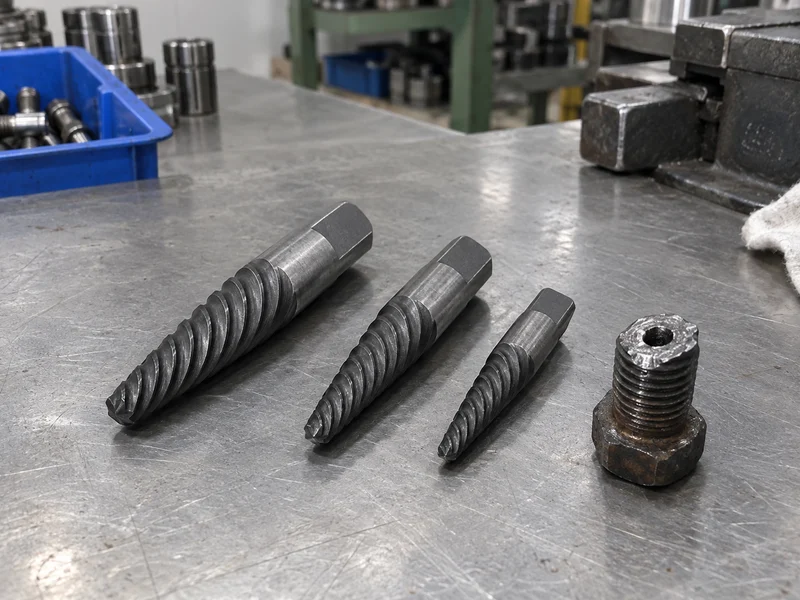
Tapered spiral screw extractor bits beside a drilled fastener sample
Product illustration; confirm actual model specifications and fit.

Decision table

Socket check Buyer question Stop point
Flute profile Does it bite sound metal? Partial seating
Opening size Does it match remaining head? Loose fit
Drive Can the handle stay square? Side load
Use method Is impact approved? Missing instruction

4. When do internal spiral extractors fit a drilled hole?

Internal spiral extractors suit a broken fastener with enough center access for a controlled pilot hole. The operator drills, inserts the extractor and turns in the removal direction. Spiral flutes can embed as resistance rises. This design can serve broken studs, bolts, socket screws and fittings when the exact size and hole conditions match.

The drill must stay centered. If the hole wanders into the parent part, repair becomes harder. Hole diameter should let the extractor engage without leaving a thin wall that collapses. Depth needs engagement while avoiding a blind-hole bottom. Corrosion can raise torque.

An internal extractor does not guarantee removal. It can wedge a seized fastener tighter or break inside a hardened part. Buyers should ask for geometry, pilot guidance, hand-drive limits and stop conditions. A sample test should state material, hole size and turning method.

Confirm pilot alignment and remaining wall thickness.

  • Center-punch before drilling where access allows.
  • Pair each extractor with a stated pilot size.
  • Stop when torque rises sharply or the hole is off-center.

Require a drill-to-extractor pairing chart and one sample extraction record.
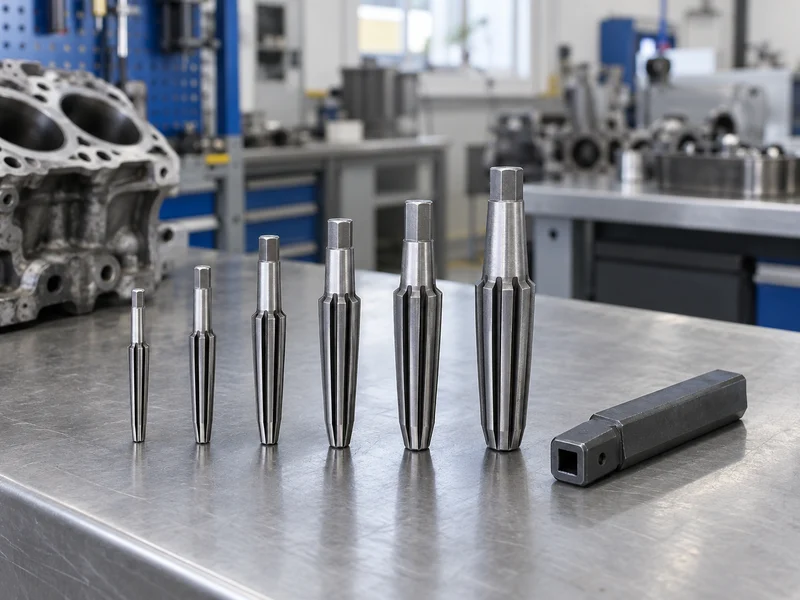
Straight-flute extractor tools and a plain holder arranged separately
Product illustration; confirm actual model specifications and fit.

Decision table

Internal extractor factor What to confirm
Pilot size Marked drill guidance
Flute engagement Fastener wall remains sound
Depth Blind-hole clearance
Turning method Hand or stated drive only

5. When do straight-flute extractors suit a removal plan?

Straight-flute extractors use a drilled hole and driven engagement without the same spiral bite profile. Select the model by pilot size, depth, engagement method and drive clearance. Use still depends on a centered hole, adequate wall and a drive that transfers force without tilting.

Straight-flute extractors belong to a separate tool family from bolt extractors, spiral tools and taps. A distributor should show whether a tool needs a drilled hole, punch seat, socket or special driver.

Test access in the target assembly. A lower-profile tool may clear a bracket, yet its drive still needs room for a wrench. If a tool must be struck, that action requires exact maker approval. Do not infer impact permission from a short square or hex head. Keep the fit statement tied to the model and operating sheet.

Match hole size and drive clearance to the exact extractor.

  • Mark drilled-hole requirements.
  • Show drive shape and access length.
  • State whether striking or impact use is approved.

Request a sectional drawing and an access-and-engagement sample test before adding straight-flute tools to a kit.
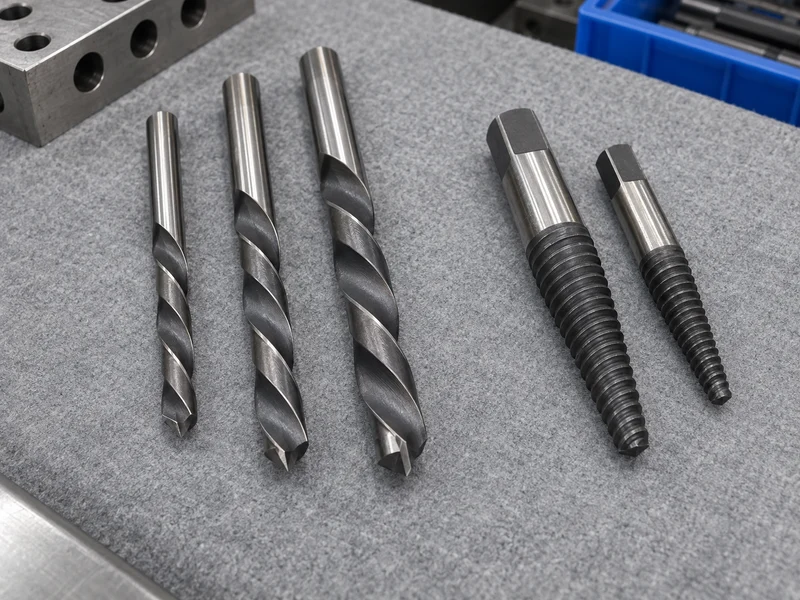
Left-hand drill bits and internal extractor bits laid out as separate tool groups
Product illustration; confirm actual model specifications and fit.

Decision table

Straight-flute check Buyer evidence
Hole interface Pilot size and depth
Drive Wrench, socket or driver fit
Access Length and surrounding clearance
Force method Maker instruction

6. How do left-hand drill tools affect extraction?

Left-hand drills cut in reverse relative to common right-hand drilling. During pilot drilling, their cutting action can loosen some right-hand-threaded fasteners. If the fastener stays seated, the same drill can prepare a hole for an internal extractor. Confirm thread direction before choosing drilling and extraction direction. Cobalt left-hand bits can serve fasteners that need drilling when material and size match.

Drill diameter, length, material, point geometry, lubrication and alignment still matter. Cobalt or high-speed-steel wording does not replace a material-specific guide. A bit can wander, break or cut into a thin parent wall. Request marked drill sizes and a pairing chart for pilot use.

A drill-only result can be a successful preparation stage even if no fastener turns. Avoid claiming that every left-hand bit will extract a seized fastener. Record material, depth and drill method.

Record whether drilling loosens the fastener or prepares a pilot.

  • Keep drill and extractor sizes paired.
  • Mark material and lubrication guidance.
  • Inspect broken bits before continuing.

Request a left-hand bit sample trial with both outcomes recorded: loosening and pilot preparation.
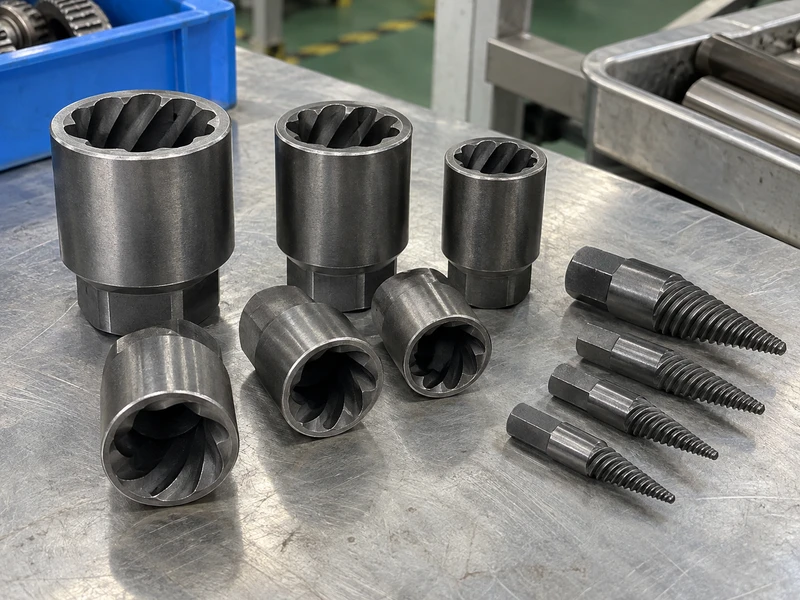
Reverse-fluted external extractor sockets beside separate internal extractors
Product illustration; confirm actual model specifications and fit.

Decision table

Drill outcome Product role Buyer note
Fastener loosens Direct extraction aid Condition-specific
Fastener stays Pilot preparation Pair extractor
Bit wanders Stop and recenter Protect parent wall
Bit breaks Escalate repair Do not promise easy removal

7. What breakage and stop limits should a buyer plan for?

Extractor breakage can make a repair harder, especially when a hardened tool remains inside a fastener. Risk rises with off-center drilling, excessive torque, seized corrosion, thin fastener walls and a tool that does not fully engage. A longer handle can increase force beyond a maker's guidance. An impact wrench can add shock and torsion that the exact extractor may not permit.

OSHA hand and power-tool guidance supports safe selection, inspection and eye protection. It does not set an extractor torque limit. Keep impact wording tied to the exact model and ask for its instructions before making a powered-use claim.

A stop card should cover partial socket seating, a wandering pilot, sudden torque rise, extractor twist, parent-wall damage and a bottomed hole. If the fastener does not move, escalate rather than simply adding force. A shop may need another repair method or part replacement.

Stop when engagement or alignment fails.

  • Define hand, ratchet and impact boundaries.
  • Inspect after every failed engagement.
  • Keep escalation options outside the extractor claim.

Request a maker-approved operating limit and print stop conditions in the instruction sheet.

For supporting sockets, use the impact versus regular socket guide; extractor impact approval still comes from its own instructions.
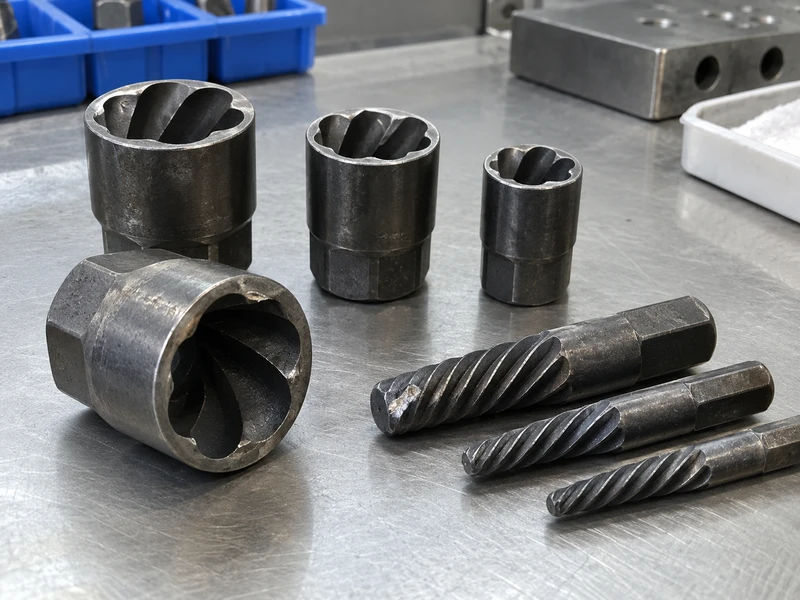
Worn and chipped extractor inspection
Product illustration; confirm actual model specifications and fit.

Decision table

Stop signal Risk Response
Partial socket seat Further rounding Reseat or change size
Off-center pilot Parent-part damage Stop and recenter
Sudden torque rise Tool or fastener failure Release and inspect
Broken extractor Hard material in hole Escalate repair

8. What QC test evidence should extractor buyers request?

QC should examine profile, dimensions, drive fit, edge condition, coating, hardness evidence and markings. Those checks show whether a tool matches the approved drawing. A sample extraction test then shows how the profile behaves on a stated fastener. Test fixtures should name fastener material, damage condition, pilot size, turning method and result. Without those fields, “passed extraction test” says little.

For reverse-flute sockets, inspect full seating and head removal. For internal spirals, inspect pilot alignment, engagement and removal torque method. For straight flutes, confirm driven fit and access. For left-hand drills, check size marking, point condition and pairing. Keep the record tied to lot and tool ID so a distributor can investigate a return.

Packaging QC includes correct pieces, case slots, size marks, instructions and replacement identifiers. Mark extractor and drill sizes where quick identification supports the workflow. A private-label buyer can request equivalent markings without claiming universal performance.

Test the extractor on a documented failure sample.

  • Inspect dimensions and drive before testing.
  • Test each extractor family with a stated fixture.
  • Record sample ID, lot and operator.

Make sample extraction evidence a purchase condition for each size family.
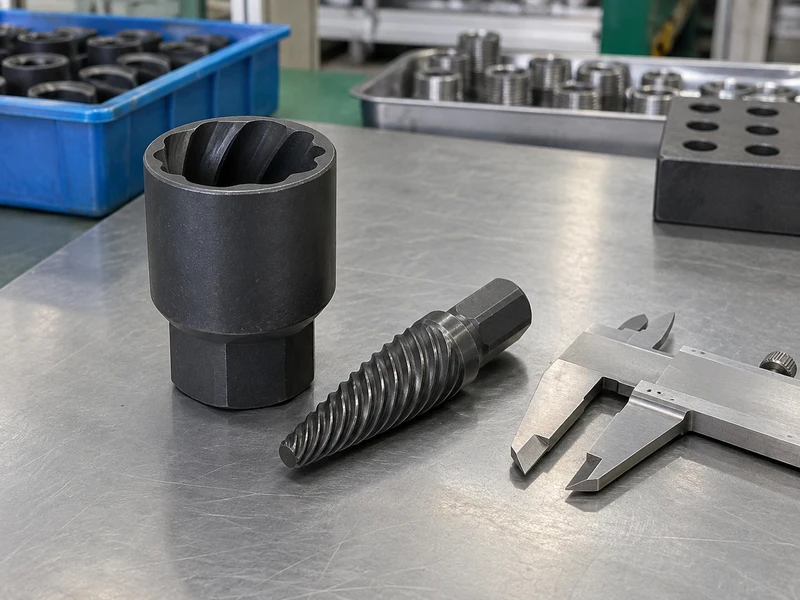
Socket and extractor QC inspection with a blank smooth-jaw gauge
Product illustration; confirm actual model specifications and fit.

Decision table

QC layer Evidence
Geometry Drawing and dimensional record
Drive fit Tool-to-handle sample
Extraction Stated fixture and result
Packaging Piece, mark and instruction check

9. How should a distributor build an extractor assortment?

An assortment should follow repair stages: exposed-head sockets, internal spiral extractors, straight-flute options, left-hand drills, center punches, drivers, gauges and storage. Sizes should reflect the fasteners a distributor actually serves. A broad case can still fail if it lacks a common low-profile option or pairs an extractor with the wrong pilot drill.

A mixed case can group spiral flutes, multi-spline tools, bolt extractors and left-hand drills. That architecture does not decide every buyer's piece count. A shop may prefer a compact exposed-head set plus replacement sizes. Another buyer may need deeper internal tools and more drills. Ask what service scenarios drive sales before copying a large assortment.

Packaging should keep external and internal tools separate. A size map, spare positions and clear instructions reduce wrong-use returns. Private-label buyers can add a document reference without printing unsupported impact or “all fasteners” language. Include replacement positions for common sizes.

Separate external, internal and preparation tools in the kit.

  • External head-grip family.
  • Internal drilled-hole family.
  • Drill, punch, drive and spare support.

Build a matrix by failure scenario, access and size, then remove pieces without a defined buyer job.

The complete mechanic tools list places extractors beside sockets, punches and drives. The mechanics tool set range adds context for case size and replenishment.
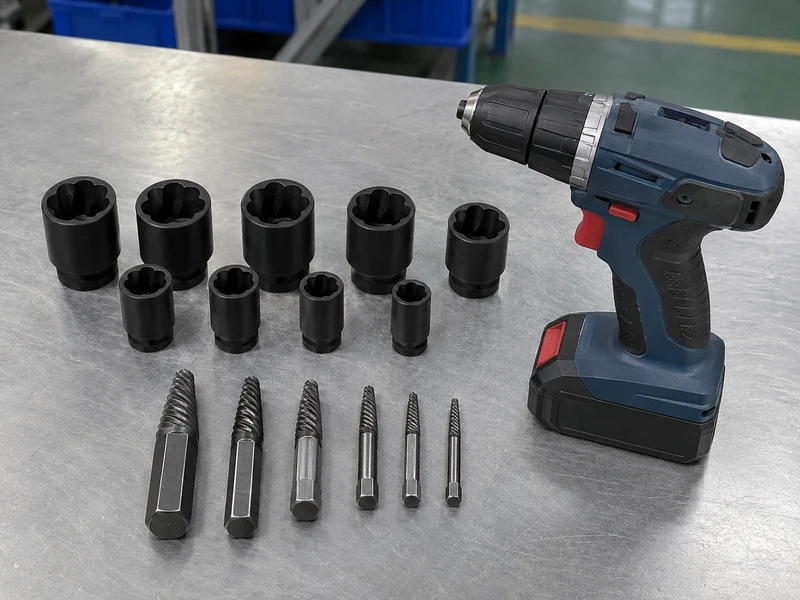
Bolt-extractor kit planning assortment
Product illustration; confirm actual model specifications and fit.

Decision table

Range layer Typical contents Buyer purpose
External Reverse-flute sockets Rounded exposed heads
Internal Spiral and straight flute Broken flush fasteners
Preparation Left-hand drills and punches Center and pilot work
Service Spares and case Replenishment

10. What should a bolt and screw extractor RFQ include?

An RFQ should state external or internal failure, head or drilled-hole size, parent material, corrosion, access, depth, drive, hand or impact use, pilot pairing, finish, packaging and replacement needs. Add photographs and a sample fixture. Ask for geometry drawings, markings, operating files, breakage warnings and test evidence.
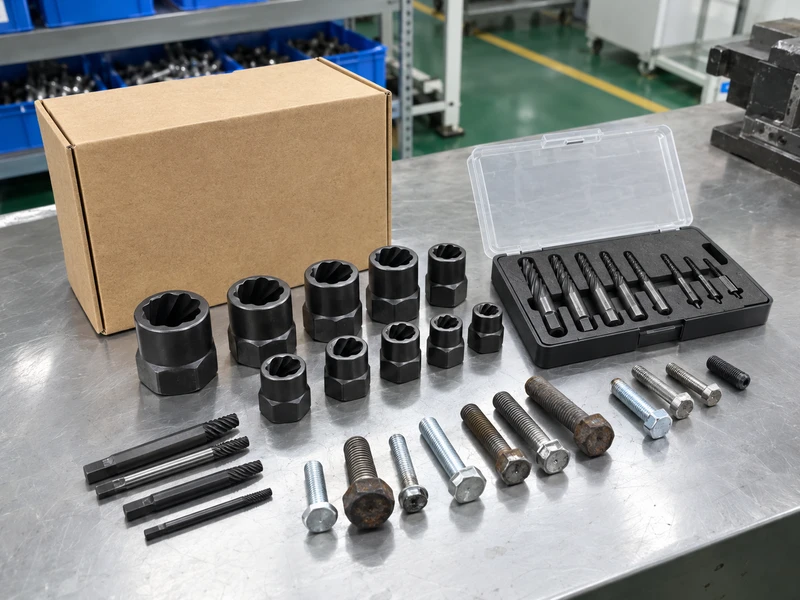
Blank carton and RFQ sample assortment for extractors
Product illustration; confirm actual model specifications and fit.

Keep “bolt extractor” and “screw extractor” as catalogue labels only after defining the interface. Ask for a rounded exposed head, flush broken stud and left-hand pilot sample. Each needs a pass condition. For striking or impact, request exact model approval.

Attach failure photos and test conditions to the RFQ.

  • Attach failure photos and access measurements.
  • Separate external and internal claims.
  • Request pilot and extractor pairings.
  • Confirm impact wording and replacement parts.

Send your sample test sheet with the RFQ and use the wholesale supplier checklist during review. Contact the Kolarwin contact team for a scoped quote.

Q1: Is a bolt extractor the same as a screw extractor?
Names overlap. External head-grip sockets and internal drilled-hole extractors use different interfaces, so choose by failure geometry.

Q2: Can every extractor use an impact wrench?
No. Impact approval belongs to the exact tool and maker instructions. Do not infer it from a square or hex drive.

Q3: Do left-hand drill bits always remove broken fasteners?
No. They may loosen some fasteners, yet they also serve as pilot tools when the fastener stays seated.

Q4: What causes extractor breakage?
Off-center drilling, thin walls, excessive torque, seized corrosion and partial engagement can raise breakage risk.

Q5: What should a distributor request before ordering?
Request interface drawings, size and pilot charts, sample extraction records, drive limits, QC files, warnings, spares and packaging details.

Looking for a reliable mechanic tools manufacturer in China?

If you are sourcing hand tools, socket tools, automotive repair tools, mechanic tool sets or OEM private label tools, contact KOLARWIN Tools for factory-direct quotation, customization support and product consultation.


“Bolt extractor” and “screw extractor” often overlap in catalogues. The failure interface gives a clearer answer. An external head-grip socket works around an exposed rounded head. An internal screw extractor enters a drilled hole in a broken fastener. Size, access, material and drive limits decide the kit.

1. What naming overlap exists between a bolt extractor and a screw extractor?

Bolt and screw are fastener names. Extractor selection starts with what remains after failure. A rounded head may accept a reverse-flute socket. A flush or recessed break may need a center punch, pilot drill and internal extractor. A snapped stud can need left-hand drilling, a straight-flute extractor or a multi-spline design. Calling every one of these tools a “bolt extractor” hides the interface.

An extraction set may group bolt extractors, spiral-flute extractors, multi-spline tools and left-hand cobalt drills. External-head tools, higher-torque or lower-profile internal tools and drill-assisted tools serve different stages. Exact model instructions govern fit and drive.

Choose the extractor by the metal still available for engagement.

Classify every extractor SKU as external, internal, drill-assisted or multi-spline in your product data.

Reverse-flute bolt extractor sockets beside internal screw extractors and a damaged fastener sample
Product illustration; confirm actual model specifications and fit.

Decision table

Remaining fastener Extractor family First check
Rounded exposed head Reverse-flute socket Head size and access
Broken flush Internal spiral or straight flute Center and wall thickness
Deep broken stud Drill-assisted system Pilot depth and alignment
High-torque internal case Multi-spline Hole and drive fit

Place extraction tools inside a wider automotive repair tools range so buyers can source punches, drills and drives together.

The hand tools category groups preparation tools with everyday service equipment.

2. How should a buyer inspect fastener damage before extraction?

Inspection separates a rounded head from a seized shank. Record head shape, exposed height, size, corrosion, thread engagement and clearance. Paint or rust can change socket engagement. A flush break needs center access. A deep hole may leave little wall for an extractor.

Protect the parent part before choosing a drive. Note aluminum or steel around the fastener, nearby wiring, sealing surfaces and whether a drill can stay square. A photograph with a scale and a short description gives a supplier better information than “fits stuck bolts.”

Some sets pair extractor sizes with recommended drill sizes. Identify the fastener, choose the pilot and then choose the extractor. Ask whether a published size describes fastener diameter, drilled-hole size or socket opening.

Record damage and access before selecting a tool.

Include a failure photo, fastener material and access sketch with every sample request.

External-grip bolt extractor sockets showing their reverse-flute interiors
Product illustration; confirm actual model specifications and fit.

Decision table

Inspection point Why it matters Evidence
Exposed head Selects socket interface Head photo and size
Flush break Needs centered pilot Access and depth
Parent material Sets damage risk Steel, aluminum or cast part
Nearby clearance Controls tool length Side and top view

3. When do reverse-flute sockets fit an exposed fastener?

Reverse-flute sockets bite into a damaged external head as the operator turns the tool in the removal direction. A profile with hex flats plus a square drive raises two buyer questions: will it grip the remaining head, and can a selected handle reach it squarely?

Head size is not enough. Access may require a low-profile socket, extension or shallow engagement. A socket that fits on a bench can bottom against a surrounding bracket. A large drive can invite force beyond the tool's intended use. Any impact permission belongs to the exact model and instructions.

A sample trial should use a stated fastener material and damage condition. Check whether the socket seats fully, whether the head deforms and whether the drive stays square. If engagement is partial, stop. Sort sockets by head size, access and drive.

Check full socket seating on the damaged head.

Ask suppliers for a head-size drawing, drive specification and test photos on rounded samples.

For a compatible hand-driven socket, check socket drive sizes before specifying the drive family.

Tapered spiral screw extractor bits beside a drilled fastener sample
Product illustration; confirm actual model specifications and fit.

Decision table

Socket check Buyer question Stop point
Flute profile Does it bite sound metal? Partial seating
Opening size Does it match remaining head? Loose fit
Drive Can the handle stay square? Side load
Use method Is impact approved? Missing instruction

4. When do internal spiral extractors fit a drilled hole?

Internal spiral extractors suit a broken fastener with enough center access for a controlled pilot hole. The operator drills, inserts the extractor and turns in the removal direction. Spiral flutes can embed as resistance rises. This design can serve broken studs, bolts, socket screws and fittings when the exact size and hole conditions match.

The drill must stay centered. If the hole wanders into the parent part, repair becomes harder. Hole diameter should let the extractor engage without leaving a thin wall that collapses. Depth needs engagement while avoiding a blind-hole bottom. Corrosion can raise torque.

An internal extractor does not guarantee removal. It can wedge a seized fastener tighter or break inside a hardened part. Buyers should ask for geometry, pilot guidance, hand-drive limits and stop conditions. A sample test should state material, hole size and turning method.

Confirm pilot alignment and remaining wall thickness.

Require a drill-to-extractor pairing chart and one sample extraction record.

Straight-flute extractor tools and a plain holder arranged separately
Product illustration; confirm actual model specifications and fit.

Decision table

Internal extractor factor What to confirm
Pilot size Marked drill guidance
Flute engagement Fastener wall remains sound
Depth Blind-hole clearance
Turning method Hand or stated drive only

5. When do straight-flute extractors suit a removal plan?

Straight-flute extractors use a drilled hole and driven engagement without the same spiral bite profile. Select the model by pilot size, depth, engagement method and drive clearance. Use still depends on a centered hole, adequate wall and a drive that transfers force without tilting.

Straight-flute extractors belong to a separate tool family from bolt extractors, spiral tools and taps. A distributor should show whether a tool needs a drilled hole, punch seat, socket or special driver.

Test access in the target assembly. A lower-profile tool may clear a bracket, yet its drive still needs room for a wrench. If a tool must be struck, that action requires exact maker approval. Do not infer impact permission from a short square or hex head. Keep the fit statement tied to the model and operating sheet.

Match hole size and drive clearance to the exact extractor.

Request a sectional drawing and an access-and-engagement sample test before adding straight-flute tools to a kit.

Left-hand drill bits and internal extractor bits laid out as separate tool groups
Product illustration; confirm actual model specifications and fit.

Decision table

Straight-flute check Buyer evidence
Hole interface Pilot size and depth
Drive Wrench, socket or driver fit
Access Length and surrounding clearance
Force method Maker instruction

6. How do left-hand drill tools affect extraction?

Left-hand drills cut in reverse relative to common right-hand drilling. During pilot drilling, their cutting action can loosen some right-hand-threaded fasteners. If the fastener stays seated, the same drill can prepare a hole for an internal extractor. Confirm thread direction before choosing drilling and extraction direction. Cobalt left-hand bits can serve fasteners that need drilling when material and size match.

Drill diameter, length, material, point geometry, lubrication and alignment still matter. Cobalt or high-speed-steel wording does not replace a material-specific guide. A bit can wander, break or cut into a thin parent wall. Request marked drill sizes and a pairing chart for pilot use.

A drill-only result can be a successful preparation stage even if no fastener turns. Avoid claiming that every left-hand bit will extract a seized fastener. Record material, depth and drill method.

Record whether drilling loosens the fastener or prepares a pilot.

Request a left-hand bit sample trial with both outcomes recorded: loosening and pilot preparation.

Reverse-fluted external extractor sockets beside separate internal extractors
Product illustration; confirm actual model specifications and fit.

Decision table

Drill outcome Product role Buyer note
Fastener loosens Direct extraction aid Condition-specific
Fastener stays Pilot preparation Pair extractor
Bit wanders Stop and recenter Protect parent wall
Bit breaks Escalate repair Do not promise easy removal

7. What breakage and stop limits should a buyer plan for?

Extractor breakage can make a repair harder, especially when a hardened tool remains inside a fastener. Risk rises with off-center drilling, excessive torque, seized corrosion, thin fastener walls and a tool that does not fully engage. A longer handle can increase force beyond a maker's guidance. An impact wrench can add shock and torsion that the exact extractor may not permit.

OSHA hand and power-tool guidance supports safe selection, inspection and eye protection. It does not set an extractor torque limit. Keep impact wording tied to the exact model and ask for its instructions before making a powered-use claim.

A stop card should cover partial socket seating, a wandering pilot, sudden torque rise, extractor twist, parent-wall damage and a bottomed hole. If the fastener does not move, escalate rather than simply adding force. A shop may need another repair method or part replacement.

Stop when engagement or alignment fails.

Request a maker-approved operating limit and print stop conditions in the instruction sheet.

For supporting sockets, use the impact versus regular socket guide; extractor impact approval still comes from its own instructions.

Worn and chipped extractor inspection
Product illustration; confirm actual model specifications and fit.

Decision table

Stop signal Risk Response
Partial socket seat Further rounding Reseat or change size
Off-center pilot Parent-part damage Stop and recenter
Sudden torque rise Tool or fastener failure Release and inspect
Broken extractor Hard material in hole Escalate repair

8. What QC test evidence should extractor buyers request?

QC should examine profile, dimensions, drive fit, edge condition, coating, hardness evidence and markings. Those checks show whether a tool matches the approved drawing. A sample extraction test then shows how the profile behaves on a stated fastener. Test fixtures should name fastener material, damage condition, pilot size, turning method and result. Without those fields, “passed extraction test” says little.

For reverse-flute sockets, inspect full seating and head removal. For internal spirals, inspect pilot alignment, engagement and removal torque method. For straight flutes, confirm driven fit and access. For left-hand drills, check size marking, point condition and pairing. Keep the record tied to lot and tool ID so a distributor can investigate a return.

Packaging QC includes correct pieces, case slots, size marks, instructions and replacement identifiers. Mark extractor and drill sizes where quick identification supports the workflow. A private-label buyer can request equivalent markings without claiming universal performance.

Test the extractor on a documented failure sample.

Make sample extraction evidence a purchase condition for each size family.

Socket and extractor QC inspection with a blank smooth-jaw gauge
Product illustration; confirm actual model specifications and fit.

Decision table

QC layer Evidence
Geometry Drawing and dimensional record
Drive fit Tool-to-handle sample
Extraction Stated fixture and result
Packaging Piece, mark and instruction check

9. How should a distributor build an extractor assortment?

An assortment should follow repair stages: exposed-head sockets, internal spiral extractors, straight-flute options, left-hand drills, center punches, drivers, gauges and storage. Sizes should reflect the fasteners a distributor actually serves. A broad case can still fail if it lacks a common low-profile option or pairs an extractor with the wrong pilot drill.

A mixed case can group spiral flutes, multi-spline tools, bolt extractors and left-hand drills. That architecture does not decide every buyer's piece count. A shop may prefer a compact exposed-head set plus replacement sizes. Another buyer may need deeper internal tools and more drills. Ask what service scenarios drive sales before copying a large assortment.

Packaging should keep external and internal tools separate. A size map, spare positions and clear instructions reduce wrong-use returns. Private-label buyers can add a document reference without printing unsupported impact or “all fasteners” language. Include replacement positions for common sizes.

Separate external, internal and preparation tools in the kit.

Build a matrix by failure scenario, access and size, then remove pieces without a defined buyer job.

The complete mechanic tools list places extractors beside sockets, punches and drives. The mechanics tool set range adds context for case size and replenishment.

Bolt-extractor kit planning assortment
Product illustration; confirm actual model specifications and fit.

Decision table

Range layer Typical contents Buyer purpose
External Reverse-flute sockets Rounded exposed heads
Internal Spiral and straight flute Broken flush fasteners
Preparation Left-hand drills and punches Center and pilot work
Service Spares and case Replenishment

10. What should a bolt and screw extractor RFQ include?

An RFQ should state external or internal failure, head or drilled-hole size, parent material, corrosion, access, depth, drive, hand or impact use, pilot pairing, finish, packaging and replacement needs. Add photographs and a sample fixture. Ask for geometry drawings, markings, operating files, breakage warnings and test evidence.

Blank carton and RFQ sample assortment for extractors
Product illustration; confirm actual model specifications and fit.

Keep “bolt extractor” and “screw extractor” as catalogue labels only after defining the interface. Ask for a rounded exposed head, flush broken stud and left-hand pilot sample. Each needs a pass condition. For striking or impact, request exact model approval.

Attach failure photos and test conditions to the RFQ.

Send your sample test sheet with the RFQ and use the wholesale supplier checklist during review. Contact the Kolarwin contact team for a scoped quote.

Q1: Is a bolt extractor the same as a screw extractor?
Names overlap. External head-grip sockets and internal drilled-hole extractors use different interfaces, so choose by failure geometry.

Q2: Can every extractor use an impact wrench?
No. Impact approval belongs to the exact tool and maker instructions. Do not infer it from a square or hex drive.

Q3: Do left-hand drill bits always remove broken fasteners?
No. They may loosen some fasteners, yet they also serve as pilot tools when the fastener stays seated.

Q4: What causes extractor breakage?
Off-center drilling, thin walls, excessive torque, seized corrosion and partial engagement can raise breakage risk.

Q5: What should a distributor request before ordering?
Request interface drawings, size and pilot charts, sample extraction records, drive limits, QC files, warnings, spares and packaging details.

Why Partner with Kolarwin Tools?

Factory-Direct Pricing Skip the middleman — access competitive wholesale prices and protect your margins
Private Label & OEM Ready Your brand, our expertise — full customization from logo to packaging
Fast Global Shipping Reliable delivery to 60+ countries with full export documentation support
Low MOQ, High Flexibility Start small, scale fast — flexible order quantities to fit your business
Dedicated B2B Support One-on-one account management from quote to delivery, every time

Get Your Free Quote in 24 Hours

Tell us your sourcing needs — we'll respond with a tailored quote, product specs, and the best pricing for your market. No commitment required.

Chat on WhatsApp Email Us Directly
