
Home/Blog/ Ribe vs Torx: Bit Profile and Fit Guide for Tool Buyers

Ribe vs Torx: Bit Profile and Fit Guide for Tool Buyers

Get OEM Tool Catalog + Quote Back to Tool Sourcing Blog
Torx bit socket drawing with a six-lobe end profile and dimension arrows
This KOLARWIN Tools article is written for overseas distributors, wholesalers, importers and private label tool brands sourcing mechanic tools, automotive repair tools, socket tools, hand tools and OEM tool sets from China. Use this guide to compare product options, check supplier quality points and move from reading to a faster B2B inquiry.

Need OEM supplier support for this product type?

Contact KOLARWIN Tools for OEM mechanic tools, private label packaging, wholesale quotation and product range support. This gives overseas buyers a clear path from article reading to supplier discussion.

Ribe and Torx bits may both appear in automotive tool catalogs, but their fastener profiles differ and should not be substituted by guesswork. A buyer needs the correct profile, size, bit length, and socket drive before building a set. This guide uses the supplied catalogue’s separate Torx and RT Ribe listings as product evidence and treats broader fit advice as general guidance. See impact bit sockets and related socket tools for category context.

1. What is the key difference between Ribe and Torx?

Torx uses a six-lobe star-shaped drive profile. Ribe, also called Polydrive in some tool catalogs, uses a different multi-spline or fluted profile. A shape that looks vaguely star-like in a small product photo is not enough to identify it; inspect the fastener recess or use the equipment drawing.
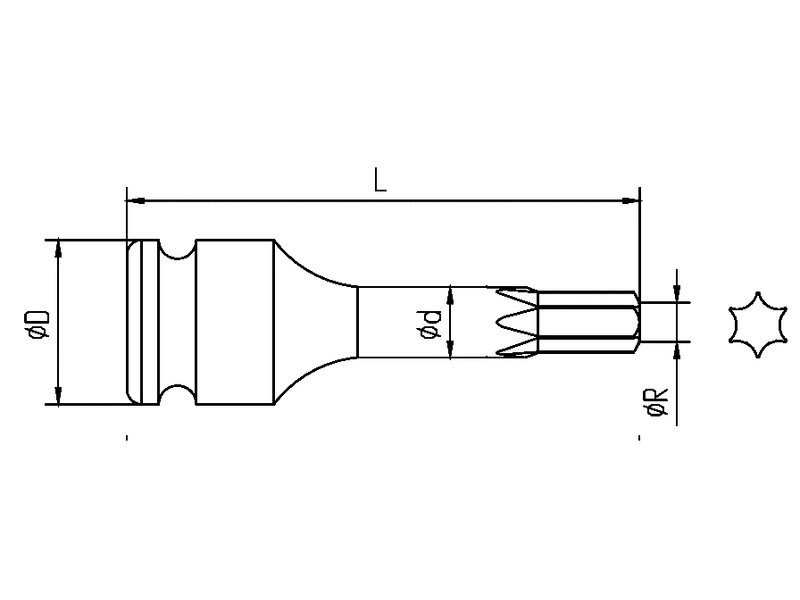
Torx bit socket drawing with a six-lobe end profile and dimension arrows
Catalogue drawing of the Torx bit-socket profile and dimensions.

The supplied catalog reinforces this distinction by listing a Torx impact bit socket series and a separate RT Ribe series on printed pages 11 and 12. Separate pages and designations mean separate products. Neither profile should be treated as a substitute for the other.

  • Match the driver profile to the fastener recess before checking size.
  • Inspect a clear drawing or physical fastener sample.
  • Keep profile names intact in catalog records and packaging.

The first buying rule: identify profile before size. Kolarwin’s bit socket product family includes profile-specific bit sockets for comparison.

Decision table: profile identification

Item Torx Ribe / Polydrive
General visual cue Six-lobe star form Multi-spline or fluted form
Catalog treatment Separate Torx series Separate RT Ribe series
Buying action Verify T-size and fit Verify RT designation and fit

2. Do Ribe and Torx size numbers map to each other?

No direct mapping should be assumed. Torx labels commonly use a T prefix, such as T20 or T30. The supplied catalog uses RT labels for its Ribe series, with entries such as RT5, RT6, and RT8. These numeric labels refer to their own profile families; equal or nearby numbers do not establish equal geometry.
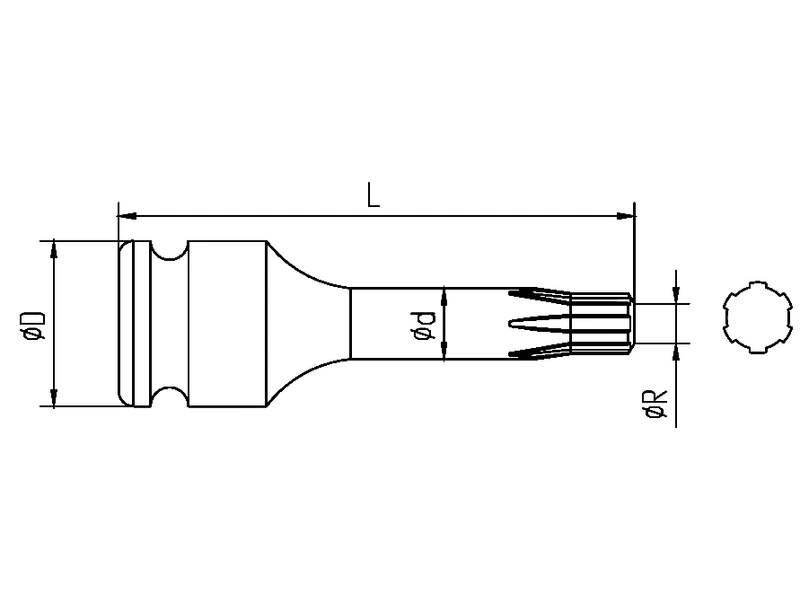
RT Ribe bit socket drawing with end profile and dimension arrows
Catalogue drawing of the RT Ribe bit-socket profile and dimensions.

This matters in set planning. If a reseller uses a generic “star bit” label, warehouse staff may pick a visually similar but incompatible tool. A wrong bit may fail to seat fully or may damage the recess under powered use.

  • Preserve each series prefix in product data.
  • Do not create a size conversion chart without a verified dimensional standard.
  • Confirm disputed applications against an approved drawing or sample.

For a clean assortment file, make profile and size separate mandatory fields. Related socket set programs can group specific bits with matching drive sizes.

Decision table: size notation

Catalog notation Profile family Interpretation
T20, T30, T50 Torx T-series size designation
RT5, RT8, RT12 RT Ribe Separate Ribe designation
Similar number alone Unknown without prefix Never use as a cross-profile conversion

3. What bit sizes does the supplied catalogue list?

Printed page 11 lists metric Torx impact socket bits from T20 through T100, with some intermediate sizes included. Printed page 12 lists RT Ribe impact socket bits from RT5 through RT14. The catalog also shows a separate spline series on page 12. Keep that spline series distinct from both Torx and RT Ribe in product records.
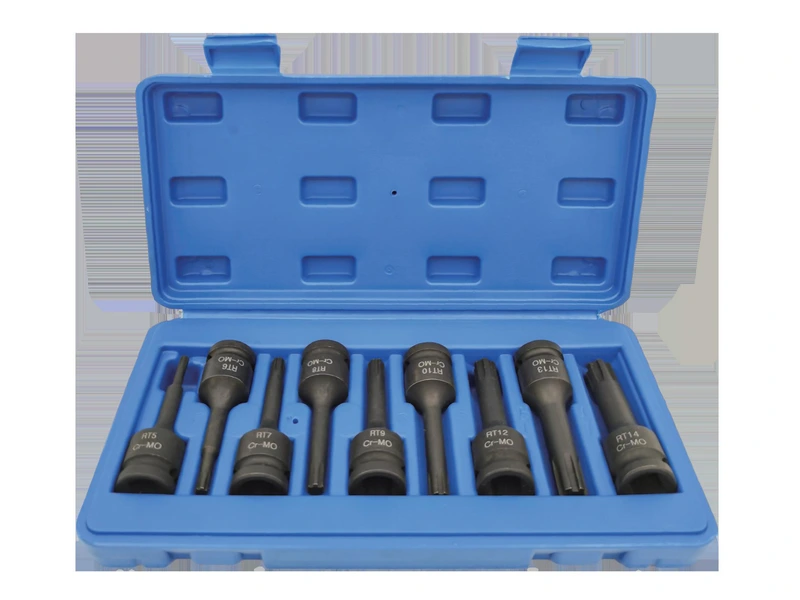
RT Ribe bit sockets arranged in an open blue case
Supplier catalogue photo of the RT Ribe bit-socket set.

The listed products are 1/2-inch drive impact bit sockets, with a table showing dimensions labeled D, d, R, and L. The listed L value appears as 78 mm for the tabulated families. These page values are supplier-provided catalog facts, not independently measured specifications; confirm a current drawing before quoting exact dimensions.

  • Confirm every requested size against a current, legible product table.
  • Keep the drive interface, profile, and profile size in separate fields.
  • Ask whether the table’s dimension symbols use the supplier’s drawing definitions.

When building a range, include only sizes supported by a confirmed current specification. Compare with complete mechanic tool sets when designing a bundled kit.

Decision table: supplied catalog families

Family Printed page Visible size style Listed L value
Torx impact bit socket 11 T-series, T20–T100 range 78 mm
RT Ribe impact bit socket 12 RT-series, RT5–RT14 range 78 mm
Spline impact bit socket 12 M-series 78 mm

4. How should a buyer identify an unknown fastener recess?

Start with a clean, close view and a drawing if available. Remove dirt or coating that hides the profile, then compare the recess with a known profile gauge or a correctly sized sample bit. Do not force a driver into the recess; a mismatched bit can damage a fastener before its profile becomes clear.
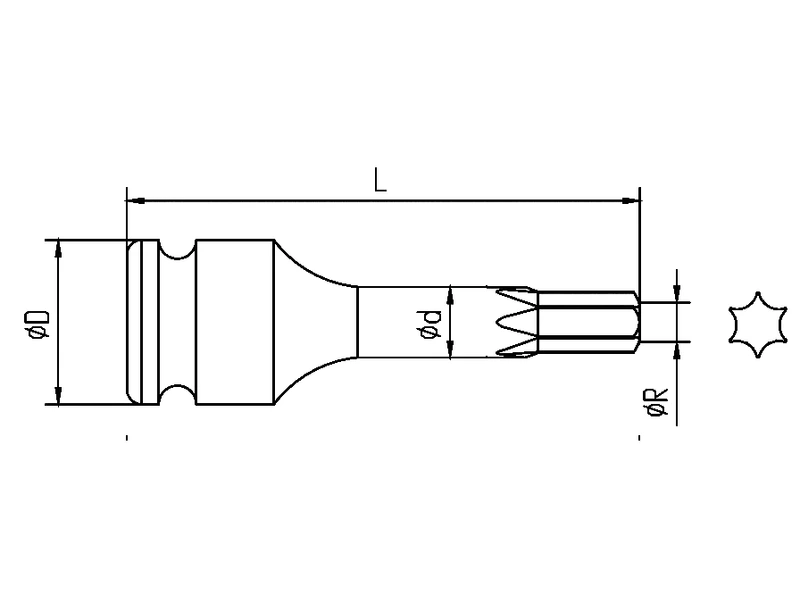
Torx bit socket drawing with a six-lobe end profile and dimension arrows
Catalogue drawing of the Torx bit-socket profile and dimensions.

Record more than the head shape. Fastener size, recess depth, center pin or security feature, and access constraints can affect the correct tool. Some fastener families offer tamper-resistant versions, so a plain bit may not seat even when the base profile looks right.

  • Capture a straight-on image and a side view of recess depth.
  • Record fastener manufacturer or equipment drawing reference when available.
  • Test fit by hand before applying powered torque.

A sample saves rework: send the fastener or drawing with the RFQ and request profile confirmation. Kolarwin’s automotive repair tools cover adjacent service categories.

Decision table: unknown fastener intake

Observation What it helps determine Follow-up
Recess outline Candidate profile Compare against known standard or gauge
Recess depth Bit reach Confirm engagement length
Center pin or obstruction Security feature Specify matching bit form
Equipment documentation Intended fastener identity Verify size and revision

5. What does “impact bit socket” tell a buyer?

It describes a bit profile mounted in a socket body with a square drive interface, intended for use with powered impact tools when specified by the supplier. It does not identify bit size, tool drive, maximum torque, material grade, or test qualification by itself. Those details require product-specific documentation.
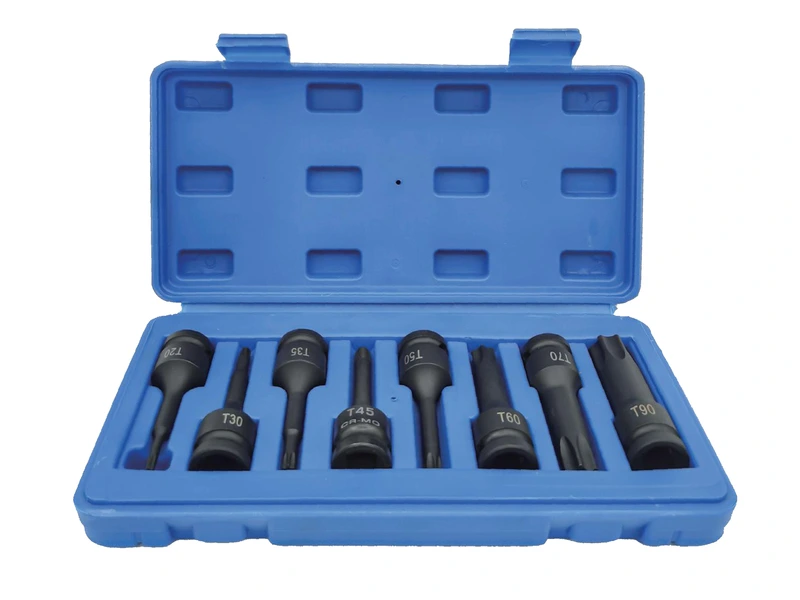
Torx bit sockets arranged in an open blue case
Supplier catalogue photo of the Torx bit-socket set.

The catalog labels the Torx and Ribe families as impact bit sockets and shows a 1/2-inch drive. That supports a product-family description, but it does not supply a performance rating for each size. Ask which standard or customer specification applies and request evidence tied to the item.

  • Confirm the drive size and the matching wrench anvil.
  • Ask for material, heat-treatment, and performance specifications.
  • Keep unsupported torque values out of product copy.

For powered applications, approve the tool and fastener combination on a sample under a controlled procedure. Read the impact socket versus regular socket guide for broader tool-use distinctions.

Decision table: what the label does and does not establish

Label or field Establishes Does not establish alone
Impact bit socket Product intended for impact use when documented Maximum torque or certification
1/2-inch drive Socket-to-tool interface size Fastener profile size
T30 or RT8 Profile-family size label Cross-profile equivalence
Black finish Visible finish Material or performance rating

6. How should dimensions be checked before purchase?

Check drive size, overall length, bit length, profile dimensions, and socket outside diameter. The source catalog uses D, d, R, and L labels, but the page alone may not fully define every dimension datum. Ask the supplier for the controlled drawing and symbol definitions before using those values in engineering or packaging.
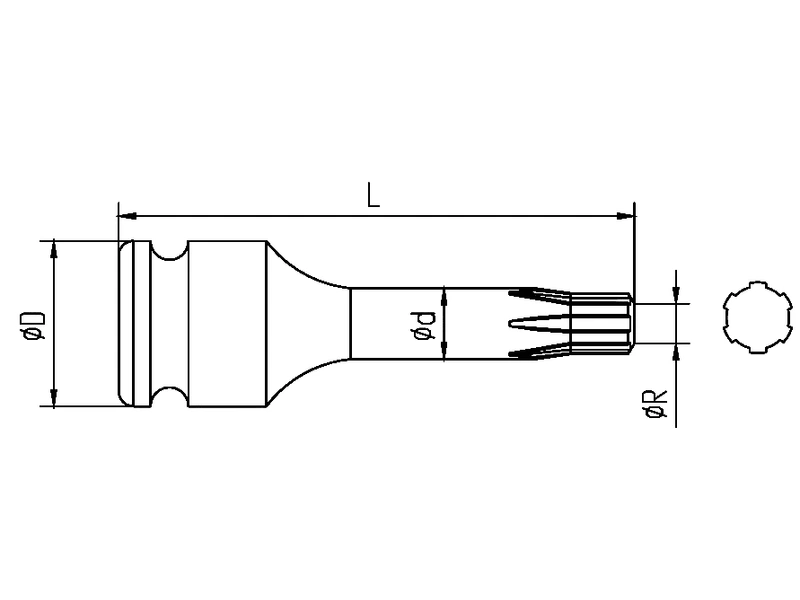
RT Ribe bit socket drawing with end profile and dimension arrows
Catalogue drawing of the RT Ribe bit-socket profile and dimensions.

Then compare working reach with the assembly. A long bit may reach a recessed fastener yet create access problems in a crowded area. A short bit may fit the space but fail to reach the bottom of a deep recess.

  • Request a dimensioned drawing for the exact size and profile.
  • Confirm units and tolerances, not just nominal values.
  • Check bit engagement depth against a representative fastener.

Approve the drawing before the sample: otherwise a sample can pass by chance while the production drawing remains ambiguous. For socket interface choices, see impact socket adapters.

Decision table: dimensional review

Dimension Buyer purpose Confirmation needed
Square drive Tool compatibility Drive standard and tolerance
Overall length Reach and access Exact length and datum
Bit profile size Fastener engagement Profile-specific drawing
Outside diameter Clearance Maximum envelope

7. How should distributors build a Ribe and Torx assortment?

Begin with service data, customer requests, and equipment coverage. A mixed assortment can reduce separate purchases, but only when each bit is identified correctly and sizes match the target market. Do not pad a set with duplicated numbers from different profile families and present them as interchangeable.
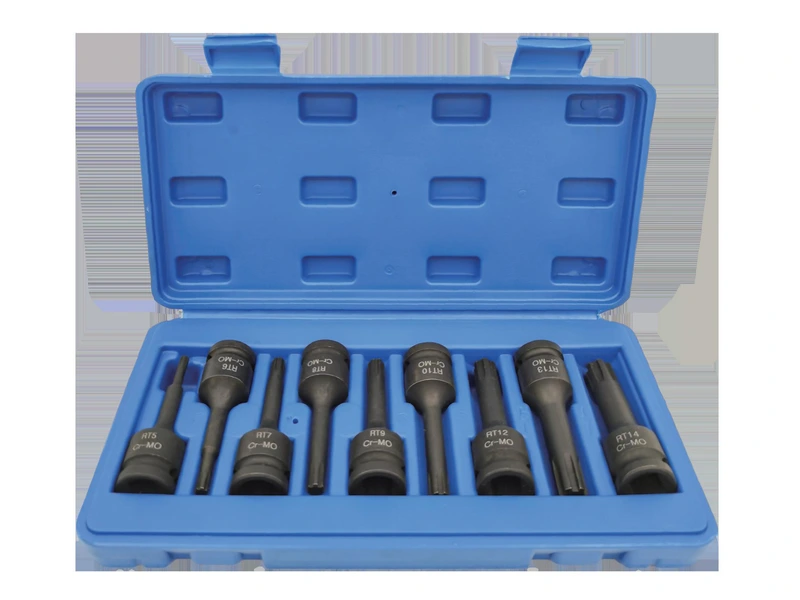
RT Ribe bit sockets arranged in an open blue case
Supplier catalogue photo of the RT Ribe bit-socket set.

Packaging should show profile abbreviations and size markings on the bit or holder. A molded tray position map can help users return each bit to the right slot. For a private-label program, validate typography, labels, and item count against the approved bill of materials.

  • Separate profile families into labeled rows or holders.
  • Choose a size mix based on actual repair coverage.
  • Confirm every size and drive before artwork approval.

Range planning works best with a usage list: ask customers which fasteners they service, then build a focused set. See industry tool solutions for channel context.

Decision table: assortment planning

Decision Useful input Control
Which profiles? Customer fastener list Separate Torx, Ribe, and spline
Which sizes? Service coverage data Match actual demand
How to store? User workflow Clear profile labels and positions
What to print? Approved bill of materials Revision-controlled artwork

8. What should a supplier sample evaluation include?

Evaluate identification, seating, reach, and build consistency. Fit the bit by hand in a representative fastener before applying load. Confirm that its profile seats fully and does not rock excessively. If powered testing is required, agree on the test fixture, operating conditions, acceptance limits, and reporting method before testing.
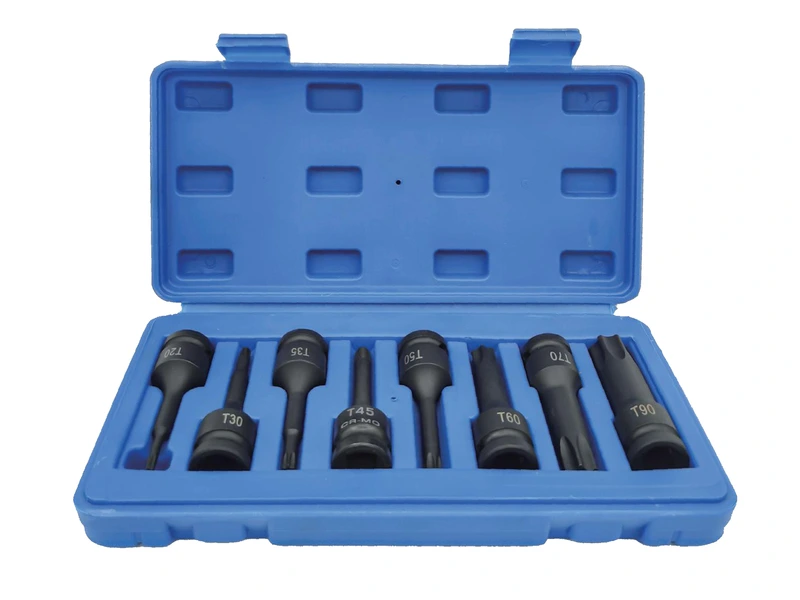
Torx bit sockets arranged in an open blue case
Supplier catalogue photo of the Torx bit-socket set.

Record the sample’s profile and size markings, packaging label, drawing revision, and any test report reference. A passing sample cannot substantiate a broad family claim unless the test scope covers the family or a justified sampling plan.

  • Check markings against the ordered profile and size.
  • Record sample dimensions and fastener fit observations.
  • Request lot traceability and defined test scope for performance claims.

Keep acceptance measurable: write pass criteria into the purchase specification before production. Use Kolarwin’s socket tools category as a product-family reference while comparing the sample with its impact socket range and controlled drawing.

Decision table: sample acceptance evidence

Evidence Question answered Limitation
Visual inspection Is profile and marking recognizable? Does not prove strength
Hand fit check Does sample seat in fastener? Does not prove powered durability
Test report Which test condition was run? Scope may not cover all sizes
Drawing revision Which geometry was approved? Must match production item

9. How should product pages explain compatibility?

Name the profile and size exactly. Use “Torx” for a verified Torx profile and “Ribe” or “RT Ribe” only when the supplied drawing supports that description. State socket drive separately from profile size. Show an accurate profile image and dimensioned diagram when those assets have been cleared for public use.
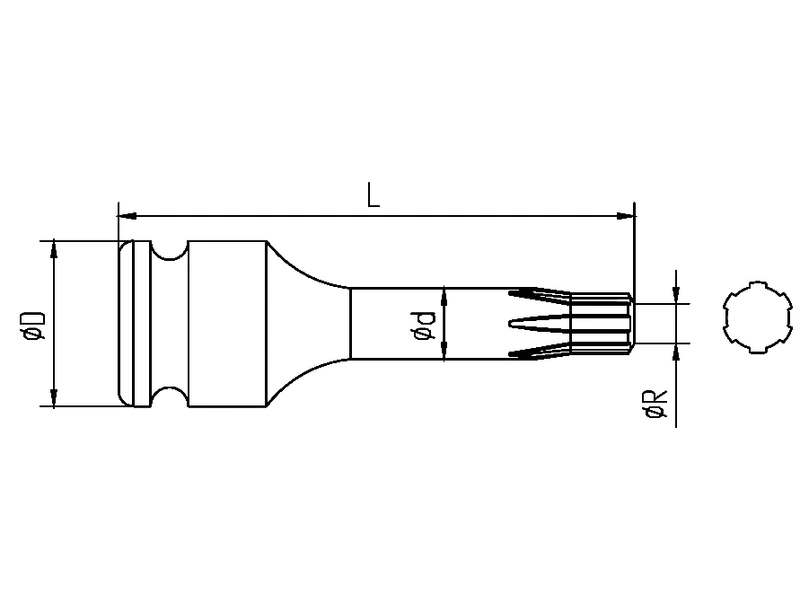
RT Ribe bit socket drawing with end profile and dimension arrows
Catalogue drawing of the RT Ribe bit-socket profile and dimensions.

Avoid phrases such as “fits Torx and Ribe” unless testing supports that unusual claim for a specific fastener. Do not publish numeric mapping tables based on visual similarity. Buyers need clarity about what the item fits, not a broad promise.

  • Put profile and prefix in product title and SKU.
  • Display size units and tool drive as separate fields.
  • State exclusions when a security feature or recess depth changes fit.

Run a catalog proof before release: compare page copy, item marks, packaging, and purchase specification. Browse the socket tools category for related products.

Decision table: compatibility copy

Field Clear wording Avoid
Profile Torx or RT Ribe “Star bit” only
Size T30 or RT8 Number without prefix
Tool drive 1/2-inch square drive Conflating drive with profile
Fit statement Confirmed fastener scope “Universal” or cross-fit claim

10. What should a buyer do before approving a Ribe or Torx order?

Send the fastener drawing or sample, identify the required profile, and request the matching controlled bit drawing. Confirm size prefixes, drive interface, length, materials, and any powered-use test requirements. The supplied catalog lists separate Torx and RT Ribe series, so the buyer should preserve that separation through quotation, sampling, and packaging.
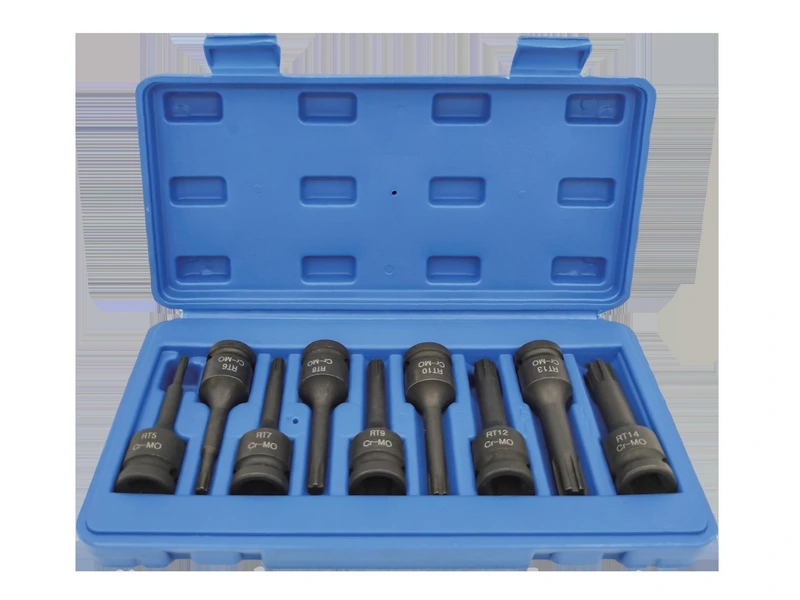
RT Ribe bit sockets arranged in an open blue case
Supplier catalogue photo of the RT Ribe bit-socket set.
  • Verify the profile and size against the mating fastener.
  • Approve a sample and dimensioned drawing together.
  • Keep performance claims tied to the exact item and test scope.

A safe purchase starts with fit evidence: do not approve by numeric label or a small image alone. Use Kolarwin’s impact socket range for a category inquiry.

Q1: Are Ribe and Torx interchangeable?
No. They are different profiles and require a matching bit.

Q2: Does RT8 correspond to T8?
No direct mapping should be assumed; the labels belong to separate profile families.

Q3: What drive does the supplied catalogue list?
Its Torx, spline, and RT Ribe bit socket tables identify a 1/2-inch drive.

Q4: What does the listed 78 mm represent?
The catalog labels a dimension L and shows 78 mm; confirm its datum on a controlled drawing.

Q5: What should accompany a sample request?
Send the fastener drawing or sample, requested profile and size, drive, and any test criteria.

Looking for a reliable mechanic tools manufacturer in China?

If you are sourcing hand tools, socket tools, automotive repair tools, mechanic tool sets or OEM private label tools, contact KOLARWIN Tools for factory-direct quotation, customization support and product consultation.


Ribe and Torx bits may both appear in automotive tool catalogs, but their fastener profiles differ and should not be substituted by guesswork. A buyer needs the correct profile, size, bit length, and socket drive before building a set. This guide uses the supplied catalogue’s separate Torx and RT Ribe listings as product evidence and treats broader fit advice as general guidance. See impact bit sockets and related socket tools for category context.

1. What is the key difference between Ribe and Torx?

Torx uses a six-lobe star-shaped drive profile. Ribe, also called Polydrive in some tool catalogs, uses a different multi-spline or fluted profile. A shape that looks vaguely star-like in a small product photo is not enough to identify it; inspect the fastener recess or use the equipment drawing.

Torx bit socket drawing with a six-lobe end profile and dimension arrows
Catalogue drawing of the Torx bit-socket profile and dimensions.

The supplied catalog reinforces this distinction by listing a Torx impact bit socket series and a separate RT Ribe series on printed pages 11 and 12. Separate pages and designations mean separate products. Neither profile should be treated as a substitute for the other.

The first buying rule: identify profile before size. Kolarwin’s bit socket product family includes profile-specific bit sockets for comparison.

Decision table: profile identification

Item Torx Ribe / Polydrive
General visual cue Six-lobe star form Multi-spline or fluted form
Catalog treatment Separate Torx series Separate RT Ribe series
Buying action Verify T-size and fit Verify RT designation and fit

2. Do Ribe and Torx size numbers map to each other?

No direct mapping should be assumed. Torx labels commonly use a T prefix, such as T20 or T30. The supplied catalog uses RT labels for its Ribe series, with entries such as RT5, RT6, and RT8. These numeric labels refer to their own profile families; equal or nearby numbers do not establish equal geometry.

RT Ribe bit socket drawing with end profile and dimension arrows
Catalogue drawing of the RT Ribe bit-socket profile and dimensions.

This matters in set planning. If a reseller uses a generic “star bit” label, warehouse staff may pick a visually similar but incompatible tool. A wrong bit may fail to seat fully or may damage the recess under powered use.

For a clean assortment file, make profile and size separate mandatory fields. Related socket set programs can group specific bits with matching drive sizes.

Decision table: size notation

Catalog notation Profile family Interpretation
T20, T30, T50 Torx T-series size designation
RT5, RT8, RT12 RT Ribe Separate Ribe designation
Similar number alone Unknown without prefix Never use as a cross-profile conversion

3. What bit sizes does the supplied catalogue list?

Printed page 11 lists metric Torx impact socket bits from T20 through T100, with some intermediate sizes included. Printed page 12 lists RT Ribe impact socket bits from RT5 through RT14. The catalog also shows a separate spline series on page 12. Keep that spline series distinct from both Torx and RT Ribe in product records.

RT Ribe bit sockets arranged in an open blue case
Supplier catalogue photo of the RT Ribe bit-socket set.

The listed products are 1/2-inch drive impact bit sockets, with a table showing dimensions labeled D, d, R, and L. The listed L value appears as 78 mm for the tabulated families. These page values are supplier-provided catalog facts, not independently measured specifications; confirm a current drawing before quoting exact dimensions.

When building a range, include only sizes supported by a confirmed current specification. Compare with complete mechanic tool sets when designing a bundled kit.

Decision table: supplied catalog families

Family Printed page Visible size style Listed L value
Torx impact bit socket 11 T-series, T20–T100 range 78 mm
RT Ribe impact bit socket 12 RT-series, RT5–RT14 range 78 mm
Spline impact bit socket 12 M-series 78 mm

4. How should a buyer identify an unknown fastener recess?

Start with a clean, close view and a drawing if available. Remove dirt or coating that hides the profile, then compare the recess with a known profile gauge or a correctly sized sample bit. Do not force a driver into the recess; a mismatched bit can damage a fastener before its profile becomes clear.

Torx bit socket drawing with a six-lobe end profile and dimension arrows
Catalogue drawing of the Torx bit-socket profile and dimensions.

Record more than the head shape. Fastener size, recess depth, center pin or security feature, and access constraints can affect the correct tool. Some fastener families offer tamper-resistant versions, so a plain bit may not seat even when the base profile looks right.

A sample saves rework: send the fastener or drawing with the RFQ and request profile confirmation. Kolarwin’s automotive repair tools cover adjacent service categories.

Decision table: unknown fastener intake

Observation What it helps determine Follow-up
Recess outline Candidate profile Compare against known standard or gauge
Recess depth Bit reach Confirm engagement length
Center pin or obstruction Security feature Specify matching bit form
Equipment documentation Intended fastener identity Verify size and revision

5. What does “impact bit socket” tell a buyer?

It describes a bit profile mounted in a socket body with a square drive interface, intended for use with powered impact tools when specified by the supplier. It does not identify bit size, tool drive, maximum torque, material grade, or test qualification by itself. Those details require product-specific documentation.

Torx bit sockets arranged in an open blue case
Supplier catalogue photo of the Torx bit-socket set.

The catalog labels the Torx and Ribe families as impact bit sockets and shows a 1/2-inch drive. That supports a product-family description, but it does not supply a performance rating for each size. Ask which standard or customer specification applies and request evidence tied to the item.

For powered applications, approve the tool and fastener combination on a sample under a controlled procedure. Read the impact socket versus regular socket guide for broader tool-use distinctions.

Decision table: what the label does and does not establish

Label or field Establishes Does not establish alone
Impact bit socket Product intended for impact use when documented Maximum torque or certification
1/2-inch drive Socket-to-tool interface size Fastener profile size
T30 or RT8 Profile-family size label Cross-profile equivalence
Black finish Visible finish Material or performance rating

6. How should dimensions be checked before purchase?

Check drive size, overall length, bit length, profile dimensions, and socket outside diameter. The source catalog uses D, d, R, and L labels, but the page alone may not fully define every dimension datum. Ask the supplier for the controlled drawing and symbol definitions before using those values in engineering or packaging.

RT Ribe bit socket drawing with end profile and dimension arrows
Catalogue drawing of the RT Ribe bit-socket profile and dimensions.

Then compare working reach with the assembly. A long bit may reach a recessed fastener yet create access problems in a crowded area. A short bit may fit the space but fail to reach the bottom of a deep recess.

Approve the drawing before the sample: otherwise a sample can pass by chance while the production drawing remains ambiguous. For socket interface choices, see impact socket adapters.

Decision table: dimensional review

Dimension Buyer purpose Confirmation needed
Square drive Tool compatibility Drive standard and tolerance
Overall length Reach and access Exact length and datum
Bit profile size Fastener engagement Profile-specific drawing
Outside diameter Clearance Maximum envelope

7. How should distributors build a Ribe and Torx assortment?

Begin with service data, customer requests, and equipment coverage. A mixed assortment can reduce separate purchases, but only when each bit is identified correctly and sizes match the target market. Do not pad a set with duplicated numbers from different profile families and present them as interchangeable.

RT Ribe bit sockets arranged in an open blue case
Supplier catalogue photo of the RT Ribe bit-socket set.

Packaging should show profile abbreviations and size markings on the bit or holder. A molded tray position map can help users return each bit to the right slot. For a private-label program, validate typography, labels, and item count against the approved bill of materials.

Range planning works best with a usage list: ask customers which fasteners they service, then build a focused set. See industry tool solutions for channel context.

Decision table: assortment planning

Decision Useful input Control
Which profiles? Customer fastener list Separate Torx, Ribe, and spline
Which sizes? Service coverage data Match actual demand
How to store? User workflow Clear profile labels and positions
What to print? Approved bill of materials Revision-controlled artwork

8. What should a supplier sample evaluation include?

Evaluate identification, seating, reach, and build consistency. Fit the bit by hand in a representative fastener before applying load. Confirm that its profile seats fully and does not rock excessively. If powered testing is required, agree on the test fixture, operating conditions, acceptance limits, and reporting method before testing.

Torx bit sockets arranged in an open blue case
Supplier catalogue photo of the Torx bit-socket set.

Record the sample’s profile and size markings, packaging label, drawing revision, and any test report reference. A passing sample cannot substantiate a broad family claim unless the test scope covers the family or a justified sampling plan.

Keep acceptance measurable: write pass criteria into the purchase specification before production. Use Kolarwin’s socket tools category as a product-family reference while comparing the sample with its impact socket range and controlled drawing.

Decision table: sample acceptance evidence

Evidence Question answered Limitation
Visual inspection Is profile and marking recognizable? Does not prove strength
Hand fit check Does sample seat in fastener? Does not prove powered durability
Test report Which test condition was run? Scope may not cover all sizes
Drawing revision Which geometry was approved? Must match production item

9. How should product pages explain compatibility?

Name the profile and size exactly. Use “Torx” for a verified Torx profile and “Ribe” or “RT Ribe” only when the supplied drawing supports that description. State socket drive separately from profile size. Show an accurate profile image and dimensioned diagram when those assets have been cleared for public use.

RT Ribe bit socket drawing with end profile and dimension arrows
Catalogue drawing of the RT Ribe bit-socket profile and dimensions.

Avoid phrases such as “fits Torx and Ribe” unless testing supports that unusual claim for a specific fastener. Do not publish numeric mapping tables based on visual similarity. Buyers need clarity about what the item fits, not a broad promise.

Run a catalog proof before release: compare page copy, item marks, packaging, and purchase specification. Browse the socket tools category for related products.

Decision table: compatibility copy

Field Clear wording Avoid
Profile Torx or RT Ribe “Star bit” only
Size T30 or RT8 Number without prefix
Tool drive 1/2-inch square drive Conflating drive with profile
Fit statement Confirmed fastener scope “Universal” or cross-fit claim

10. What should a buyer do before approving a Ribe or Torx order?

Send the fastener drawing or sample, identify the required profile, and request the matching controlled bit drawing. Confirm size prefixes, drive interface, length, materials, and any powered-use test requirements. The supplied catalog lists separate Torx and RT Ribe series, so the buyer should preserve that separation through quotation, sampling, and packaging.

RT Ribe bit sockets arranged in an open blue case
Supplier catalogue photo of the RT Ribe bit-socket set.

A safe purchase starts with fit evidence: do not approve by numeric label or a small image alone. Use Kolarwin’s impact socket range for a category inquiry.

Q1: Are Ribe and Torx interchangeable?
No. They are different profiles and require a matching bit.

Q2: Does RT8 correspond to T8?
No direct mapping should be assumed; the labels belong to separate profile families.

Q3: What drive does the supplied catalogue list?
Its Torx, spline, and RT Ribe bit socket tables identify a 1/2-inch drive.

Q4: What does the listed 78 mm represent?
The catalog labels a dimension L and shows 78 mm; confirm its datum on a controlled drawing.

Q5: What should accompany a sample request?
Send the fastener drawing or sample, requested profile and size, drive, and any test criteria.

Why Partner with Kolarwin Tools?

Factory-Direct Pricing Skip the middleman — access competitive wholesale prices and protect your margins
Private Label & OEM Ready Your brand, our expertise — full customization from logo to packaging
Fast Global Shipping Reliable delivery to 60+ countries with full export documentation support
Low MOQ, High Flexibility Start small, scale fast — flexible order quantities to fit your business
Dedicated B2B Support One-on-one account management from quote to delivery, every time

Get Your Free Quote in 24 Hours

Tell us your sourcing needs — we'll respond with a tailored quote, product specs, and the best pricing for your market. No commitment required.

Chat on WhatsApp Email Us Directly
