
Need OEM supplier support for this product type?
Contact KOLARWIN Tools for OEM mechanic tools, private label packaging, wholesale quotation and product range support. This gives overseas buyers a clear path from article reading to supplier discussion.
A spark plug socket must hold a plug during removal and guide it through a confined well without loading its ceramic insulator sideways. Magnetic and rubber inserts both retain the plug, but their contact, service life, fit, and replacement behavior differ. This buyer guide focuses on retention style and socket selection, while leaving size charts to a separate reference. Buyers can use it to define sample checks and avoid treating one insert material as suitable for every plug.
1. What does an insert do inside a spark plug socket?
A retention insert holds the plug in the socket while a technician moves it through the plug well. Manufacturer guidance explains that a rubberized or magnetic socket helps prevent a plug from falling out or sliding too deeply into the tool. A separate spark-plug socket size guide covers hex and reach decisions that must be settled before insert preference. Space around and behind the plug also helps limit side forces. Retention should support controlled handling; it does not replace correct socket fit or careful alignment.
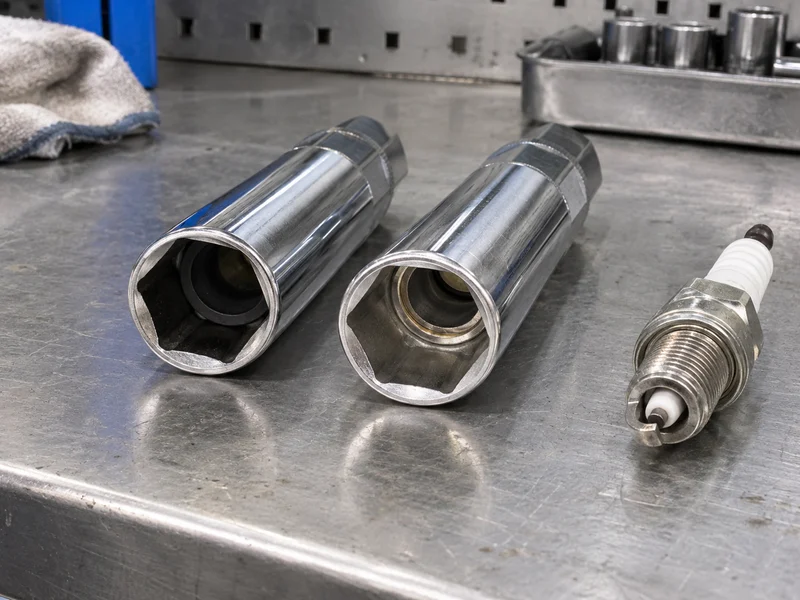
- Hold the plug during insertion and extraction.
- Keep the ceramic from contacting hard socket surfaces unnecessarily.
- Allow enough clearance for correct seating without forcing the plug.
Specify retention and internal clearance together. Test with the intended plug family and socket depth.
Insert job
| Insert job | Buyer question |
|---|---|
| Retention | Does plug stay in place during handling? |
| Clearance | Can ceramic and shell sit without binding? |
| Alignment | Does socket guide plug straight into well? |
2. How does a magnetic insert retain a spark plug?
A magnet attracts the plug’s steel shell or hex area and holds it against the socket’s internal contact point. Ceramic itself is not magnetic; retention depends on the surrounding metal portion and magnet placement. A magnetic design can avoid a soft rubber ring contacting the plug, but attraction strength, position, and socket geometry vary by model. Confirm that magnet contact does not interfere with plug seating or removal.
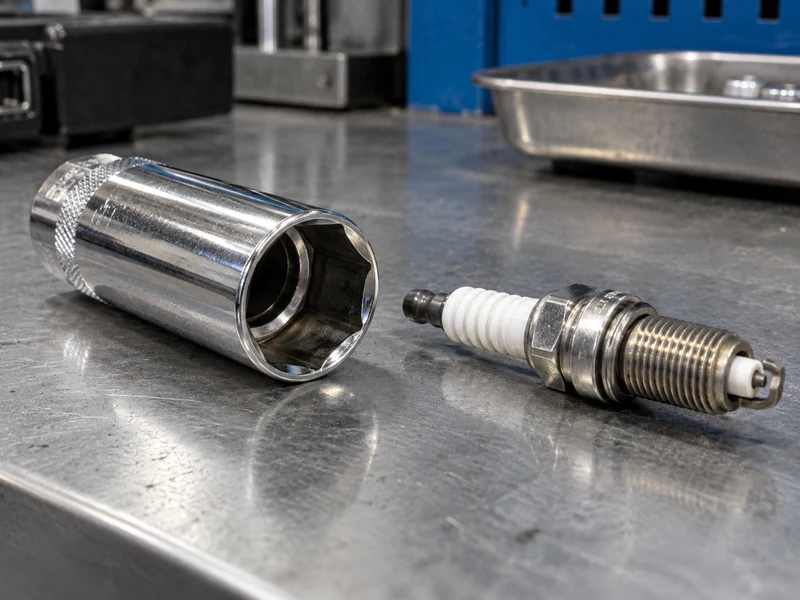
- Check magnet position relative to steel shell.
- Confirm retention is firm enough for handling but does not obstruct release.
- Inspect magnet security and debris pickup.
Evaluate the actual plug and cavity, since “magnetic” alone says little about fit. Request a sample test using common plug shapes in the intended range.
Magnetic feature
| Magnetic feature | Check |
|---|---|
| Contact target | Steel plug shell or hex region |
| Retention | Handling hold and controlled release |
| Condition | Magnet secure and clean |
3. How does a rubber insert retain a spark plug?
A rubber or elastomer insert grips part of the plug through friction. Contact position and hardness determine hold and removal force. A properly fitted insert can cushion a plug, while an overly tight or poorly placed insert can drag, distort, or remain stuck on the plug. Material can age, harden, swell, or wear with heat, oil, and cleaning chemicals. Those conditions should be addressed in buyer sampling. A repair shop that cleans sockets with strong chemicals or stores them near heat should test its actual routine; the source material does not establish one service life for every elastomer compound. A supplier selection guide can help the buyer request compound information and replacement-part support without treating either as automatic.
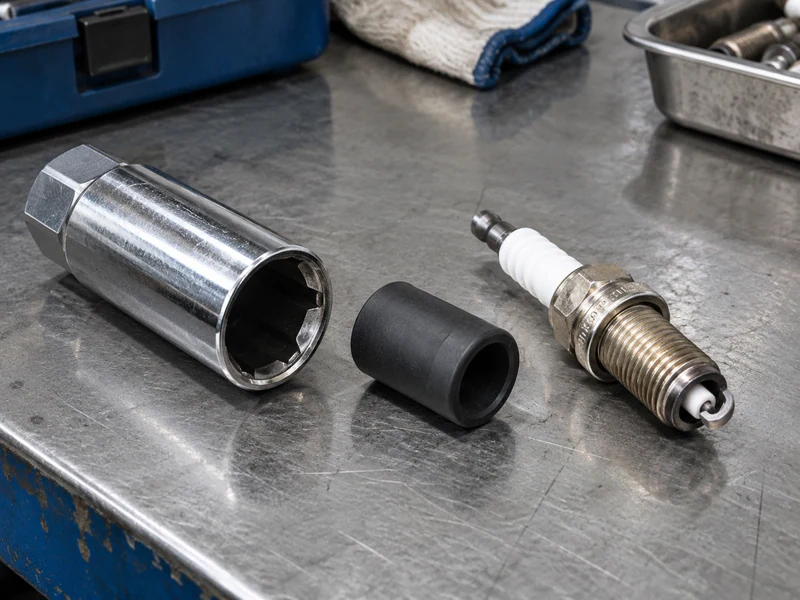
- Check insert grip on a clean, dry plug.
- Inspect whether insert pulls free after repeated cycles.
- Confirm material resists the intended storage and workshop conditions.
A replaceable insert may help serviceability if buyers can source replacements. Ask for insert material information only when supplier evidence supports it.
Rubber insert
| Rubber insert | Sample observation |
|---|---|
| Grip | Holds plug without excessive extraction force |
| Fit | Does not cover threads or electrode |
| Wear | No tearing, permanent deformation, or migration |
4. Which option offers better protection for ceramic?
Neither option automatically protects ceramic if the socket is oversized, misaligned, or too shallow. Manufacturer guidance emphasizes space around and behind the plug to prevent lateral force and deep sliding. A magnetic socket can keep metal-to-metal contact at the shell, while rubber may add a compliant contact surface. Design details matter more than the broad insert label. Inspect how the plug sits and whether its ceramic touches the socket wall. A useful pass criterion is visible clearance around the ceramic through the socket depth, stable contact at the steel shell or hex, and no tilt when the plug is held at the working angle. The socket tools range is a related category for checking the intended drive system.
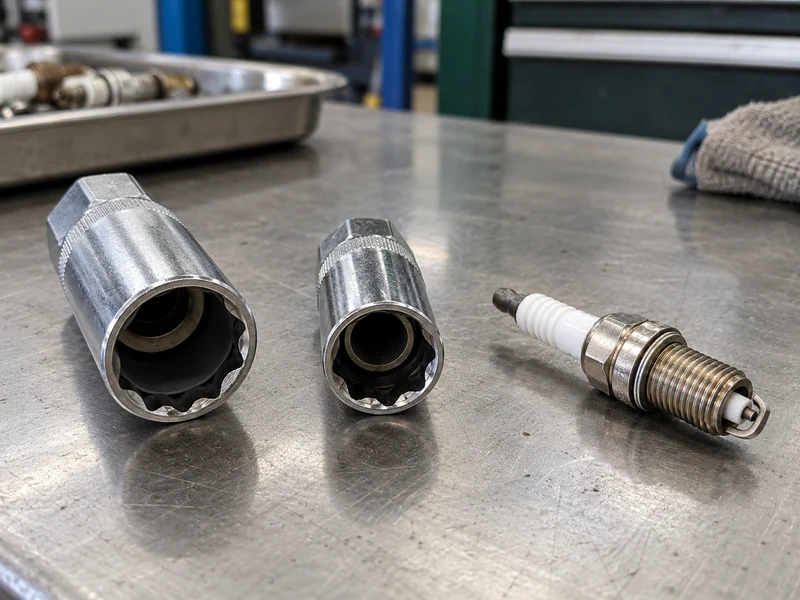
- Look for centered support at the shell or hex.
- Check side clearance around ceramic for the complete plug.
- Avoid forcing a socket over a plug or insert.
Protection depends on clearance, geometry, and handling. Reject samples that tilt or bind even if retention seems strong.
Risk
| Risk | Evidence |
|---|---|
| Side contact | Ceramic clearance through socket depth |
| Rear contact | Electrode and insulator clearance |
| Drop / tilt | Controlled handling test |
5. What happens during repeated removal and installation?
Service cycles expose retention wear and contamination. An elastomer may polish, loosen, harden, or stick depending on its compound, heat, oils, and cleaners; a magnet can collect ferrous debris or move if poorly secured. The proper comparison uses repeated cycles with the same plug type and socket orientation. Do not claim a fixed service life without testing. If kits include multiple sizes, test each insert because contact geometry changes. A service shop that transfers plugs through a vertical well may prioritize secure handling; a fleet with available replacement inserts may prefer a compliant, replaceable part if samples prove release remains controlled. A distributor can turn those use cases into two separate sample acceptance sheets instead of choosing one construction for every customer.
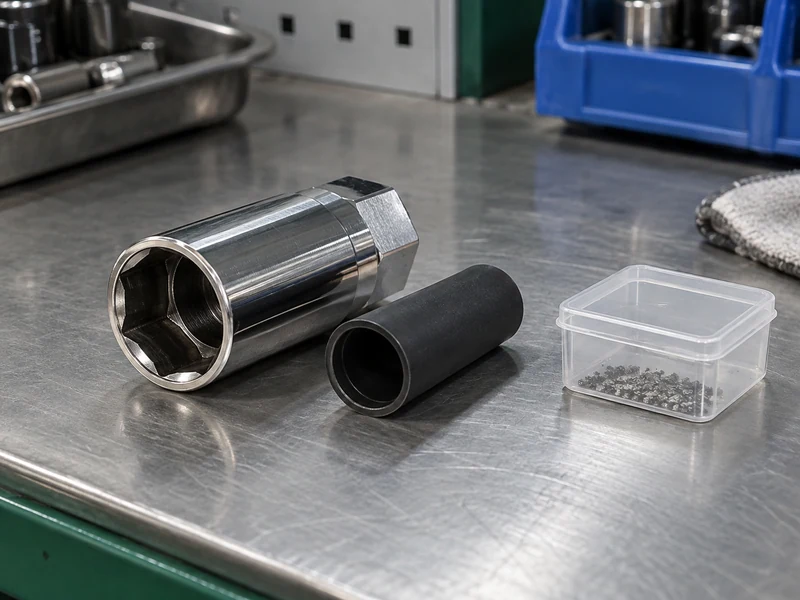
- Set a practical cycle count based on intended use.
- Check hold force and release after each interval.
- Inspect for debris, tears, loosening, or magnet movement.
Record wear by model instead of assuming all inserts age alike. Include a replacement rule if the insert is serviceable.
Cycle finding
| Cycle finding | What to record |
|---|---|
| Retention trend | Hold and release over cycles |
| Surface condition | Tear, debris, wear, or shift |
| Serviceability | Replacement part availability and fit |
6. Which socket body and access features matter too?
Drive size, overall length, outside diameter, wall thickness, hex profile, and extension interface all affect access. A thin-wall socket may enter a narrow plug well, but must still retain adequate strength for intended hand use. A swivel or extension can help reach an angled well; it can also change control. The existing spark plug socket size guide covers size and access questions, while this comparison stays centered on insert behavior.
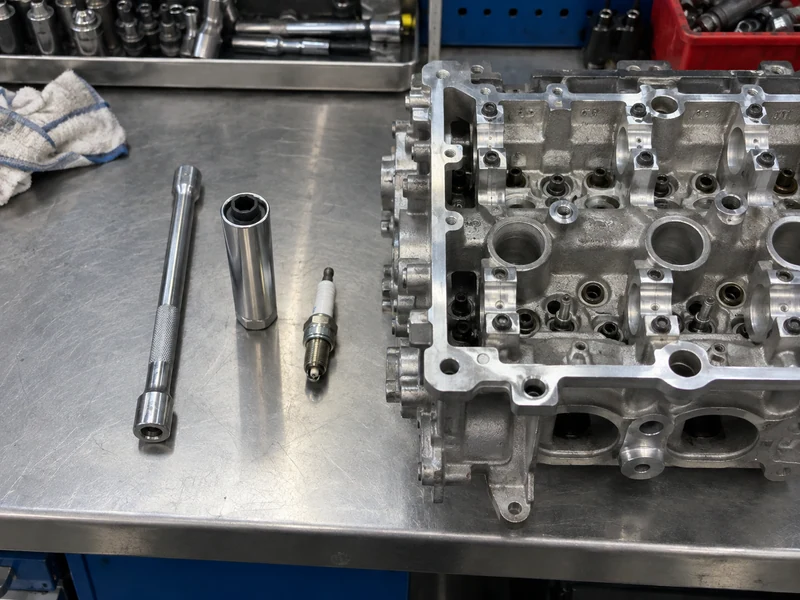
- Confirm plug hex and drive fit.
- Measure outside diameter against well clearance.
- Test extensions with socket and plug assembled.
Choose retention only after socket geometry clears the application. Specify exact size and access requirements separately from insert type.
Socket field
| Socket field | Fit check |
|---|---|
| Drive | Ratchet interface and retention |
| Outside diameter | Plug-well clearance |
| Length | Reach and extension combination |
7. How should technicians use a retained plug socket?
Start with a cool engine and clean the area around the plug well according to the service procedure. Align the socket with the plug and avoid side loading the ceramic. Hand-start installation where specified, then tighten using the vehicle or plug maker’s torque instruction. A retention insert helps carry the plug but does not authorize tightening by ratchet feel. Manufacturer service guidance warns that dropped spark plugs may suffer visible or hairline damage. If a socket is used with an extension, test the assembled length and retention together; a plug that holds in a loose socket on a bench may not remain seated when the assembly is lowered into a deep, angled well.
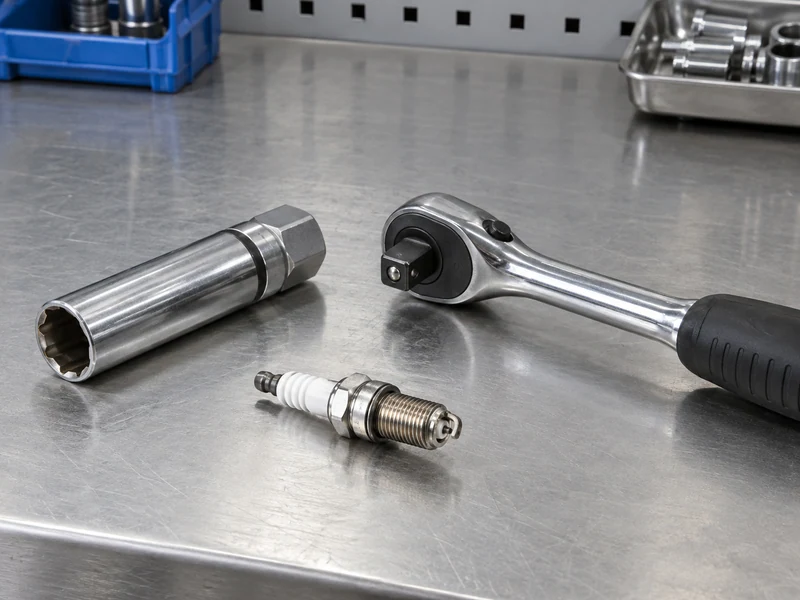
- Keep debris out of the cylinder before removal.
- Align socket and plug axis before turning.
- Use torque values and installation steps from the applicable service source.
Retention makes handling easier; careful alignment protects the plug and threads. Train service staff on the approved procedure for the engine family.
Task stage
| Task stage | Control |
|---|---|
| Before removal | Clean area and confirm engine condition |
| Handling | Keep plug centered and controlled |
| Installation | Hand-start and torque per source |
8. What should a buyer check in a sample comparison?
Use the same plug style, socket size, extension, and operator for magnetic and rubber samples. Compare retention during horizontal and vertical movement, release behavior, ceramic clearance, and access through a representative well. Add an extension-retention check: seat the plug, hold the assembled tool at the working angle, then verify that the plug releases when intended without striking the ceramic. Inspect insert attachment after repeated use. Keep hand-use and impact-use classifications explicit; a retention insert does not define the socket’s drive-use rating. A distributor may set pass criteria such as no drop during transfer, no bind at insertion, and no insert migration after the agreed cycle count.
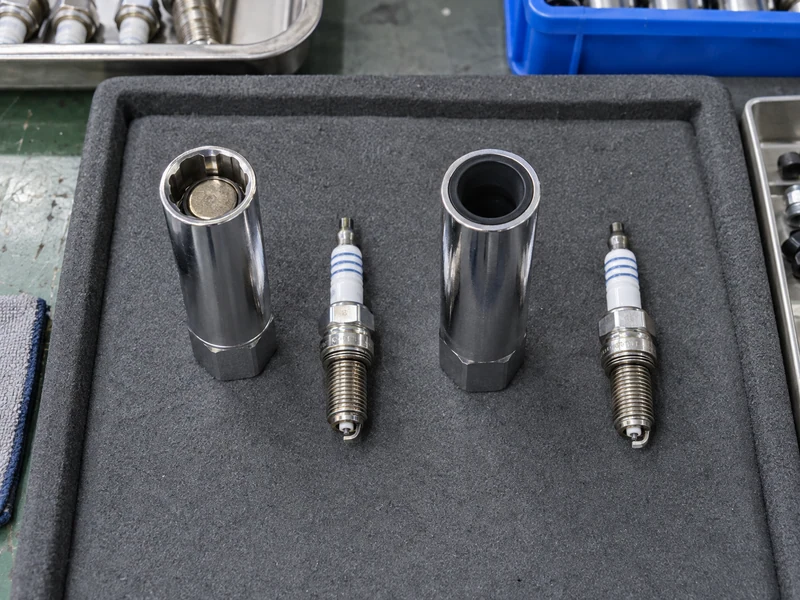
- Use a clean plug and representative well fixture.
- Check hold, release, tilt, and side clearance.
- Record socket dimensions and intended use class.
A side-by-side test avoids selecting by insert label alone. Approve written acceptance points with service and quality teams; contact KOLARWIN with the plug and well dimensions if a sample comparison is needed.
Sample test
| Sample test | Pass evidence |
|---|---|
| Handling | Plug remains retained during transfer |
| Fit | No bind or ceramic interference |
| Durability | Insert remains fixed after cycles |
9. How should distributors plan magnetic and rubber versions?
Set the stocking decision by service conditions and sample results, not broad customer preference. Avoid duplicating every size in both styles unless demand supports the inventory. Clearly identify insert type and socket size in the catalog, while keeping drive, length, and use class in separate fields. A mechanics tool set program can make retention choice one line in a larger kit plan, with spare inserts tracked as a separate service item. The mechanic tool planning guide can help keep socket size, extension, drive, and retention fields distinct.
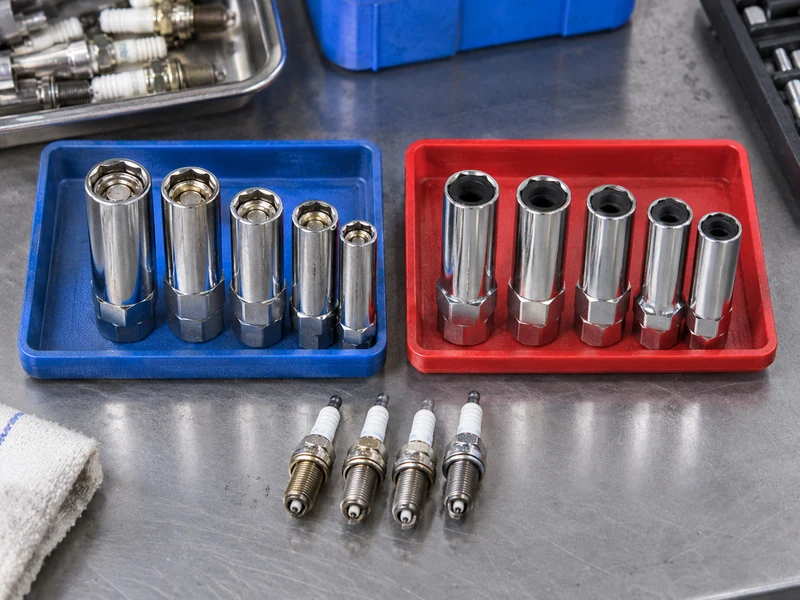
- For frequent plug transfer, require a horizontal and vertical retention test plus intentional release.
- For replaceable elastomer versions, verify spare insert fit and availability before choosing the range.
- For debris exposure, include magnet cleaning and recheck retention after cleaning.
Clear catalog fields reduce selection errors; retention performance still depends on fit and insert behavior. Use SKU-level photos and approve each size/style combination against a plug and extension sample.
Range decision
| Buyer condition | Sample-backed choice rule |
|---|---|
| Frequent transfer through a deep well | Choose the version that passes vertical retention and controlled release with the extension fitted |
| Spares available and compliant contact preferred | Consider rubber only after repeated-cycle grip and removal checks |
| Ferrous debris likely | Magnetic option needs a practical cleaning check and retention recheck |
| No spares or service plan | Compare total-tool replacement and failure criteria before SKU selection |
10. What should a spark plug socket RFQ include?
State plug hex range, drive size, overall length, outside diameter, hand-use classification, insert style, internal clearance, finish, sample test, and packaging. Attach plug samples or drawings when geometry is unusual. Ask for verified material data if the insert must meet a specific service environment. Keep performance claims tied to evidence and do not promise ceramic protection without a defined test.
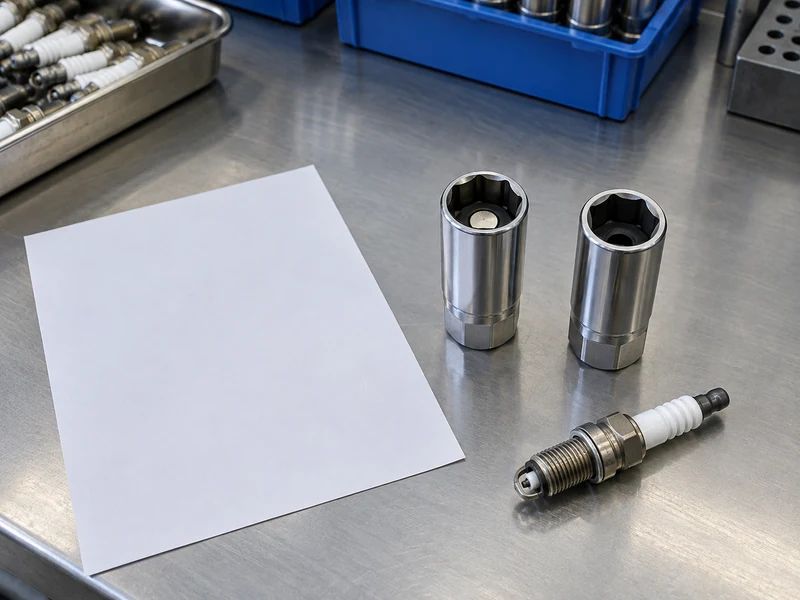
- Specify application and plug geometry.
- Define retention and release acceptance checks.
- Record required packaging, markings, and quality documents.
One sample approval should cover both the socket body and insert behavior. Send the approved specification via contact KOLARWIN.
Q1: Does a magnet attract spark plug ceramic?
No. A magnet retains the metal shell or hex area; ceramic itself is not magnetic.
Q2: Which insert holds a plug more securely?
That depends on socket design, plug geometry, insert condition, and desired release force. Test representative samples.
Q3: Can a rubber insert damage a plug?
A correct fit should handle the plug without binding, but inspect contact and avoid forcing a misfit socket.
Q4: Do magnetic sockets replace a torque wrench?
No. Use the specified installation torque and procedure.
Q5: Are all spark plug sockets impact rated?
No. Confirm the tool’s stated use classification separately from retention style.
Looking for a reliable mechanic tools manufacturer in China?
If you are sourcing hand tools, socket tools, automotive repair tools, mechanic tool sets or OEM private label tools, contact KOLARWIN Tools for factory-direct quotation, customization support and product consultation.


