
Need OEM supplier support for this product type?
Contact KOLARWIN Tools for OEM mechanic tools, private label packaging, wholesale quotation and product range support. This gives overseas buyers a clear path from article reading to supplier discussion.
When a fastener sits behind a bracket, a straight extension may not reach it. Buyers then compare a flexible socket extension vs universal joint, treating both accessories as interchangeable. They are not. A flexible extension bends along a shaft, while a universal joint pivots through a joint. This guide helps B2B buyers choose each type.
1. What Are Flexible Socket Extensions and Universal Joints?
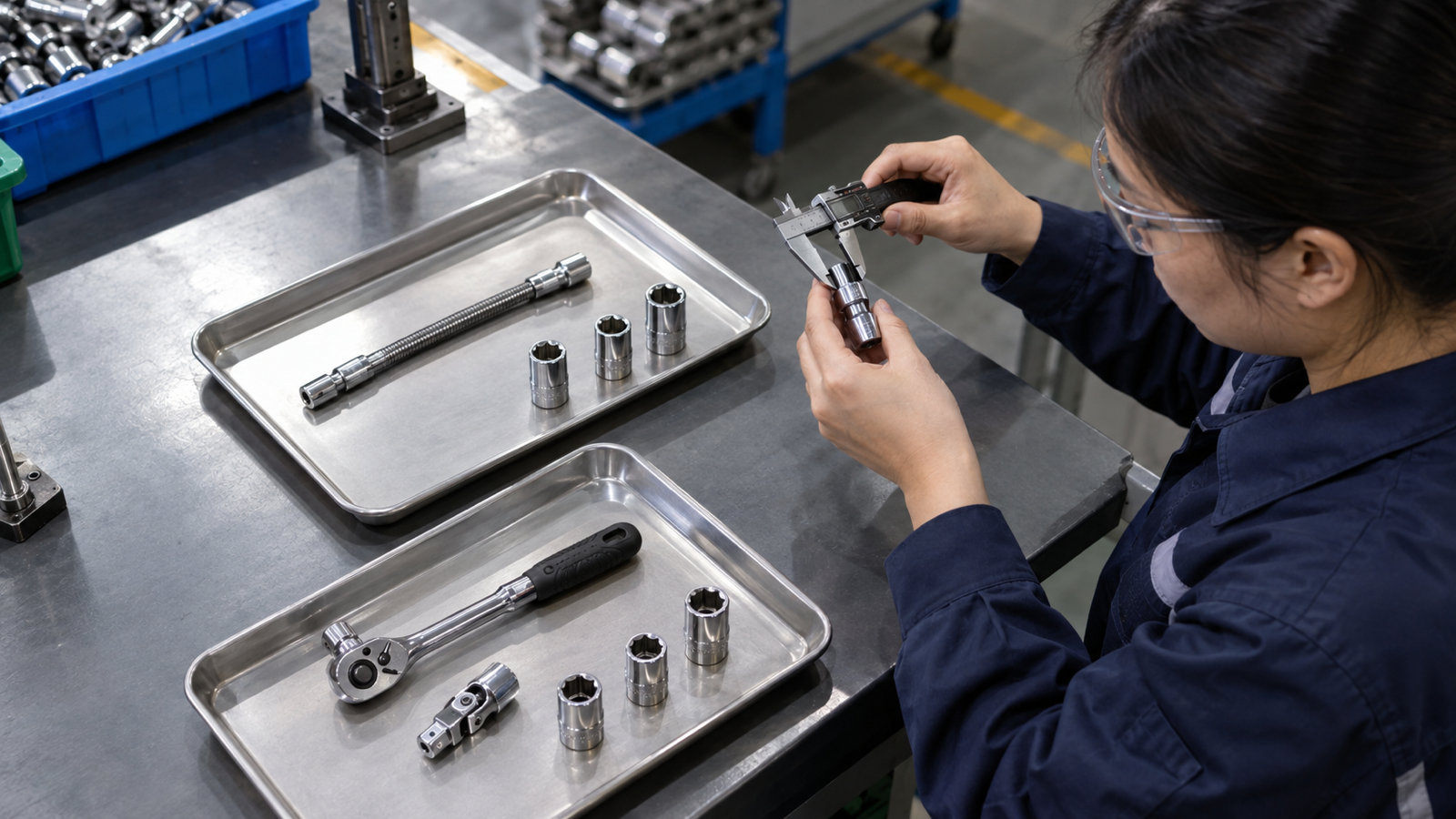
A flexible socket extension connects a ratchet or driver with a socket through a bendable shaft. A universal joint uses a pinned or articulated connection between drive ends. It creates short angled access where a rigid extension cannot stay in line.
Here’s the practical split: a flexible extension behaves like a supported bend in a drive path, while a universal joint behaves like a pivoting coupling. Neither part grants a universal angle or torque value. Results depend on design, drive size, socket fit, load direction, and the maker’s stated use.
For a product brief, record:
- hand-operated or powered-tool application;
- drive size and mating socket range;
- straight reach required behind the obstruction;
- retention method at both drive ends;
- inspection requirements.
Practical action: list both accessories as separate SKUs, even within one socket set.
Basic accessory comparison
| Accessory | Main movement | Best buyer question | Main limitation |
|---|---|---|---|
| Flexible socket extension | Shaft bends along its length | Do I need reach with controlled flexibility? | Bend behavior and load capacity vary by design |
| Universal joint | Compact joint pivots between drives | Do I need short angled access? | Joint articulation can reduce control |
| Rigid extension | No intended angular movement | Can the drive remain straight? | Cannot clear a side obstruction |
| Wobble extension | Limited movement at drive interface | Is small offset enough? | Movement and fit depend on geometry |
2. How Do These Accessories Differ Mechanically?
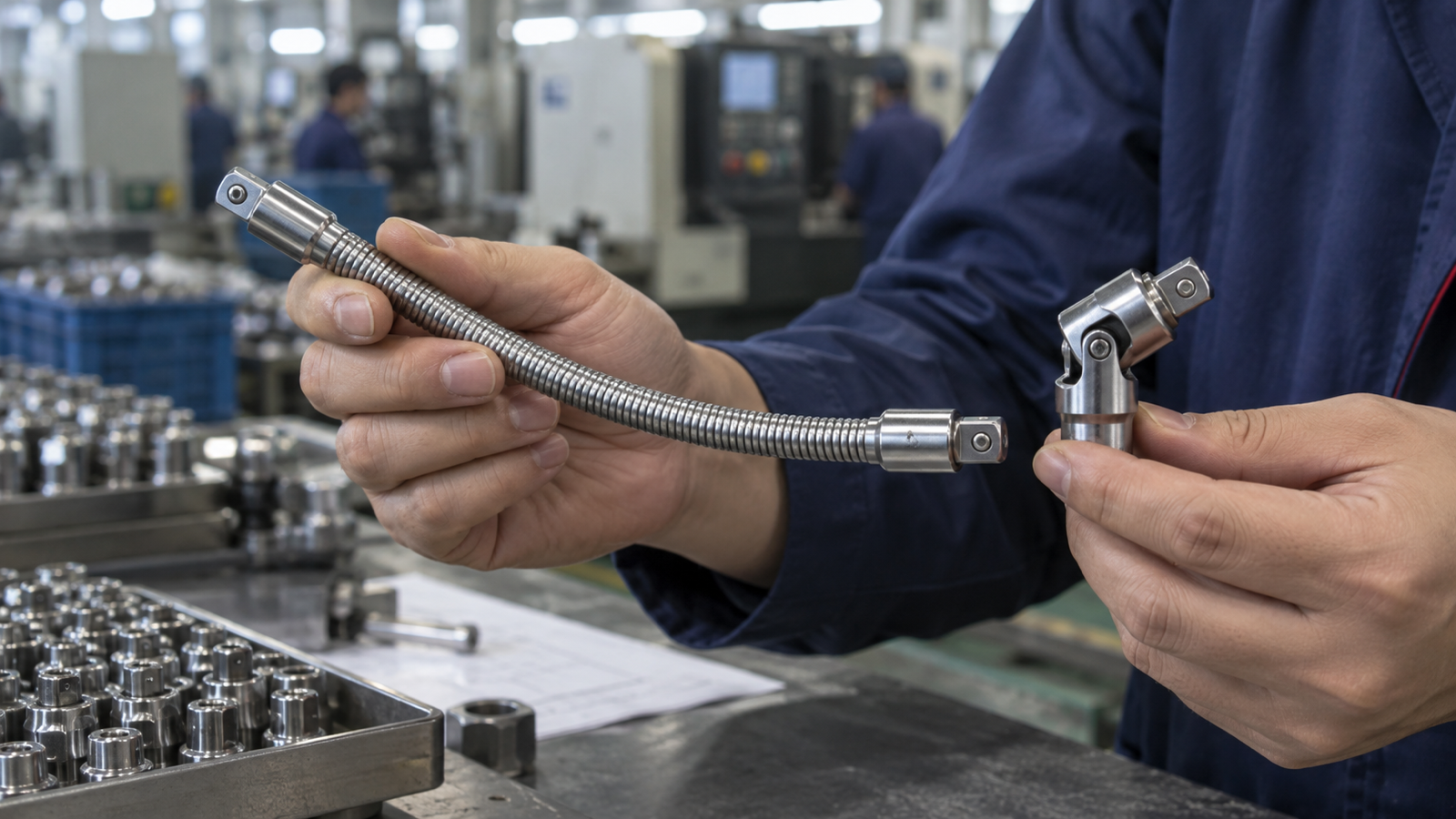
Flexible socket extensions usually contain a covered flexible shaft with drive ends. The shaft follows a curve as hand position and clearance change. Universal joints concentrate movement at one articulated connection. A cross, pin, ball, or similar joint transfers rotation while allowing misalignment.
Check where movement occurs. Movement happens along a flexible extension, yet it happens at one joint in a universal. That difference affects how a buyer holds the assembly, how a socket tracks a fastener, and how much room remains around nearby parts.
Look for these mechanical details during sample review:
- whether socket retention stays positive during a bend;
- whether joint movement feels smooth rather than loose;
- whether the cover, pin, or cage protects moving parts;
- whether drive ends remain square under hand pressure;
- whether the tool returns easily toward a neutral position.
ISO 3316 identifies dimensions, marking, hardness, and torsional testing for hand-operated square-drive attachments. A supplier must still identify product class and test method.
Practical action: ask for a section drawing before approval.
Mechanical feature checklist
| Feature | Flexible socket extension | Universal joint |
|---|---|---|
| Moving area | Distributed along shaft | Concentrated at joint |
| Typical access benefit | Reach around a longer obstruction | Short offset around a tight corner |
| User control | Depends on shaft stiffness and support | Depends on joint play and alignment |
| Wear focus | Shaft, cover, drive ends | Pin, cross, ball, cage, drive ends |
3. Which Access Problem Does Each Accessory Solve?
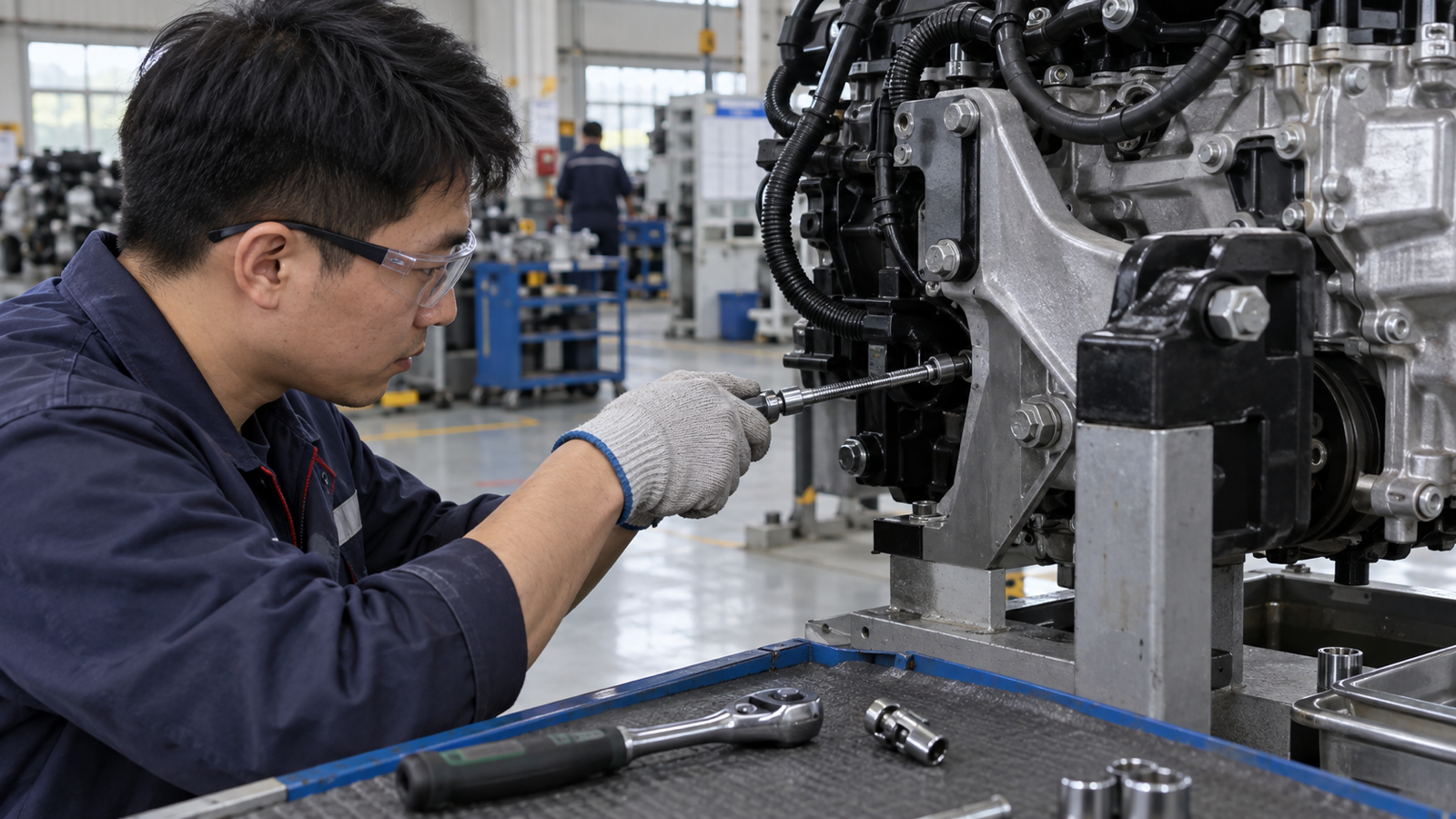
Choose a flexible extension when a fastener sits deep behind hoses, panels, or a frame member and the task stays within the accessory maker’s load limit. Many flexible shafts are intended for low-torque run-down or access work, not for breaking seized fasteners loose. Choose a universal joint when a socket needs a nearby angled approach. Use rigid extensions for straight alignment.
Use the obstruction as your starting point: measure where a hand, ratchet, or driver can sit. A joint may solve a side offset yet create a poor line of sight. A flexible extension may need more shaft support.
Map the application with evidence:
- fastener location and surrounding clearance;
- approach direction available for a tool handle;
- working depth from drive head to socket;
- likelihood of repeated removal or installation;
- nearby wiring, painted surfaces, seals, or delicate components.
See KOLARWIN’s automotive repair tools range and socket tools assortment when building a matched category.
Practical action: request an application photo before fixing length or joint style.
Access selection matrix
| Work condition | First accessory to test | Why | Check before approval |
|---|---|---|---|
| Long obstruction, modest offset, low-torque task | Flexible extension | Keeps reach while following a curve | Maker’s load limit, socket engagement, and shaft support |
| Short corner near fastener | Universal joint | Adds compact angular access | Joint play and operator control |
| Clear straight path | Rigid extension | Preserves simple alignment | Length, retention, and reach |
4. How Should Buyers Assess Control and Fastener Engagement?

Access does not equal control. A socket must remain fully seated on a fastener, especially behind a panel. Excessive articulation can let a socket cock sideways. A flexible shaft can also bow or twist when unsupported.
Control comes before convenience: evaluate the accessory with the exact socket profile and fastener family planned for sale. A 6-point and 12-point socket can behave differently on the same hex fastener.
During a fit trial, check:
- full socket seating before rotation;
- operator visibility and hand clearance;
- tendency for the socket to walk off the fastener;
- smooth reverse movement after loosening;
- interference with adjacent parts.
Use KOLARWIN’s 6-point versus 12-point socket guide for matching profiles. Tie fit statements to a defined fastener and socket.
Practical action: add target-fastener engagement to sample approval.
Control and engagement checks
| Check | Pass condition | Hold condition |
|---|---|---|
| Socket seating | Socket stays fully engaged before load | Visible gap or rocking |
| Joint or shaft movement | Movement follows intended path | Sudden binding or uncontrolled flop |
| Reverse operation | Operator can back off smoothly | Socket sticks or slips |
| Adjacent clearance | Tool avoids nearby parts | Contact marks or pinching risk |
5. Can Either Accessory Be Used With Impact Tools?
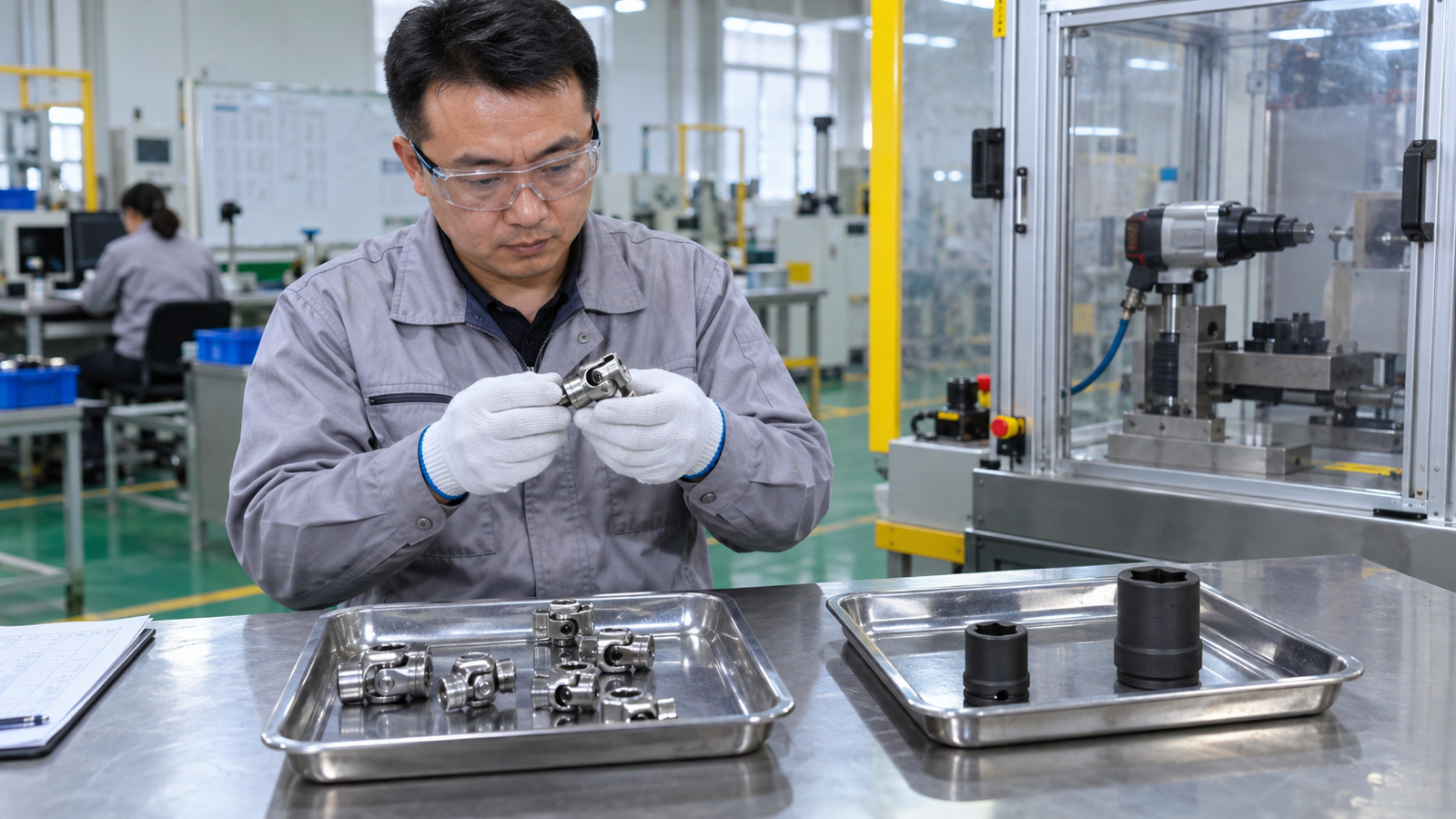
Do not assume that a flexible socket extension or universal joint suits an impact wrench. Hand-operated attachments fall under a different product class from machine-operated impact accessories. ISO 3316 covers hand-operated square-drive attachments. ISO 3317 has a narrower scope: square-drive adaptors with hexagon or cylindrical-flat drive ends for power socket wrenches. It does not establish powered suitability for every flexible extension or universal joint. A powered application needs its own product-specific design, marking, retention, and validation decision.
This is the safety gate: material color, a heavy appearance, or a familiar drive size cannot prove impact suitability. Powered tools can introduce pulses, vibration, and ejection hazards absent from hand testing.
For any powered-use SKU, define:
- approved power-tool class and operating instructions;
- impact-rated accessory classification where applicable;
- drive and socket retention method;
- test procedure and acceptance rule;
- warnings, markings, and packaging language.
Use KOLARWIN’s impact socket category and impact versus regular socket guide for assortment context. Each accessory still needs product-level evidence.
Practical action: place hand-use and powered-use accessories under separate RFQ gates.
Powered-use approval gate
| Question | Hand-use decision | Powered-use decision |
|---|---|---|
| Product class | Hand-operated attachment | Power-compatible attachment |
| Evidence | Dimensions, marking, torsional test | Power-use design, retention, and test evidence |
| Tool interface | Ratchet or hand driver | Impact wrench or powered driver |
| Warning | Manual use limits | Power-tool limits and retainer guidance |
6. How Do Drive Size, Socket Retention, and Compatibility Affect Selection?
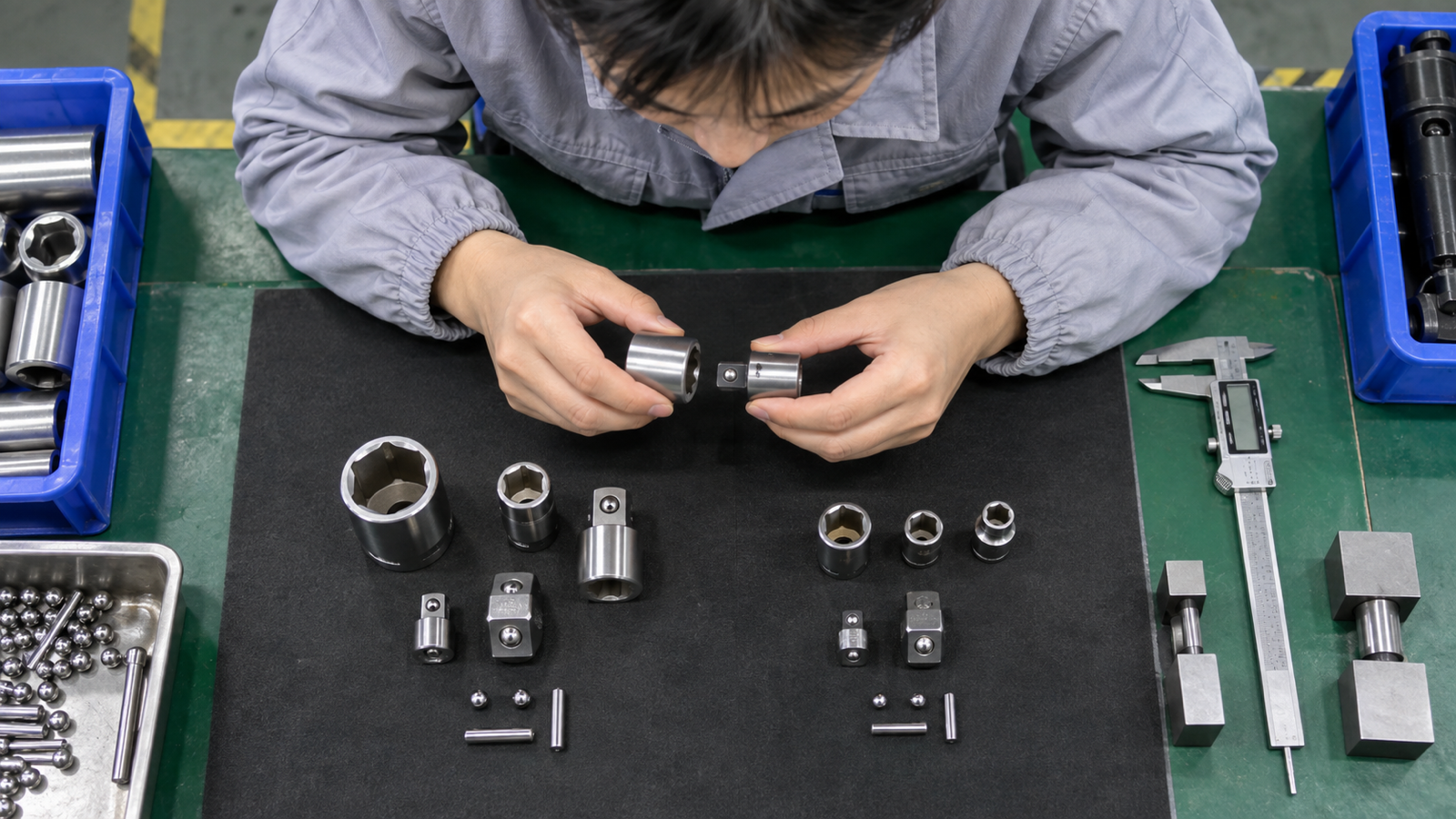
A correct accessory must match drive size, socket interface, clearance, and retention method. A 1/4-inch accessory cannot be treated as a smaller 1/2-inch version without checking geometry and use. Drive-size families can differ in wall thickness, joint construction, retention, and intended load.
Compatibility hides in the interface: square drive, detent, pin, groove, and socket opening work as one connection. Nominal drive size alone can miss retention details that matter during overhead or angled work.
Add these fields to your compatibility review:
- drive size at input and output ends;
- socket retention style and release behavior;
- socket depth and opening profile;
- clearance around the drive head;
- adapter use, if any, and its classification.
Use KOLARWIN’s socket set range for matched drive planning. Confirm cross-brand fit with a mating test.
Practical action: approve accessory and socket as a tested pair.
Interface compatibility table
| Interface item | What buyer confirms | Why it matters |
|---|---|---|
| Input drive | Ratchet, driver, or power-tool square | Prevents mismatch at source |
| Output drive | Socket square and retention detail | Controls fit and release |
| Retention | Ball, pin, groove, or other method | Reduces accidental socket loss |
| Clearance | Head width and surrounding space | Determines real access |
7. What Should Distributors Check in Samples and QC?
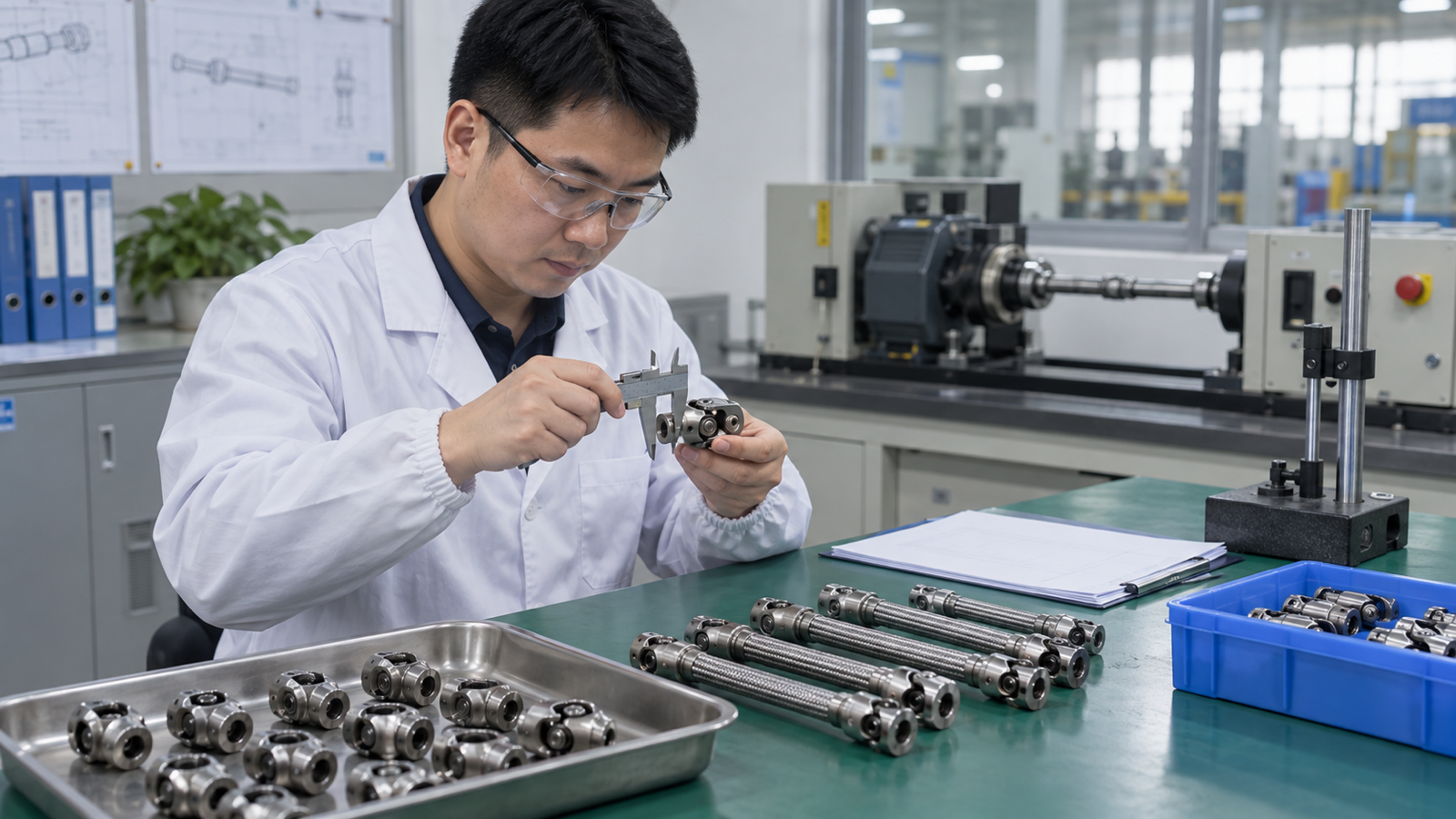
Sample approval should cover appearance, dimensions, movement, fit, and repeatable inspection. A polished universal joint may hide pin looseness. A flexible extension may bend smoothly once yet show cover damage later. QC must combine visual checks with gauges and an agreed functional method.
A sample earns approval through records: retain the drawing revision, inspection points, photos, and test results alongside the buyer’s SKU file. Product-specific requirements still need agreement.
Include these checks in a control plan:
- input and output drive dimensions;
- socket retention and release force by agreed method;
- joint play or shaft bend behavior;
- surface finish, burrs, cracks, and edge condition;
- marking location and legibility.
For assortment context, see KOLARWIN’s hand tools category and mechanic tool sets. Do not copy inspection values without review.
Practical action: make “sample approved” mean documented fit and movement results.
Sample and QC plan
| Inspection stage | Example evidence | Release question |
|---|---|---|
| Incoming material | Batch record and agreed grade | Does material match approved file? |
| Geometry | Drawing, gauges, sample measurements | Do drive ends fit the mating parts? |
| Movement | Joint or shaft functional record | Does motion stay controlled? |
| Surface | Visual standard and defect log | Are burrs or cracks absent? |
8. How Should Buyers Compare Assortment and Packaging?
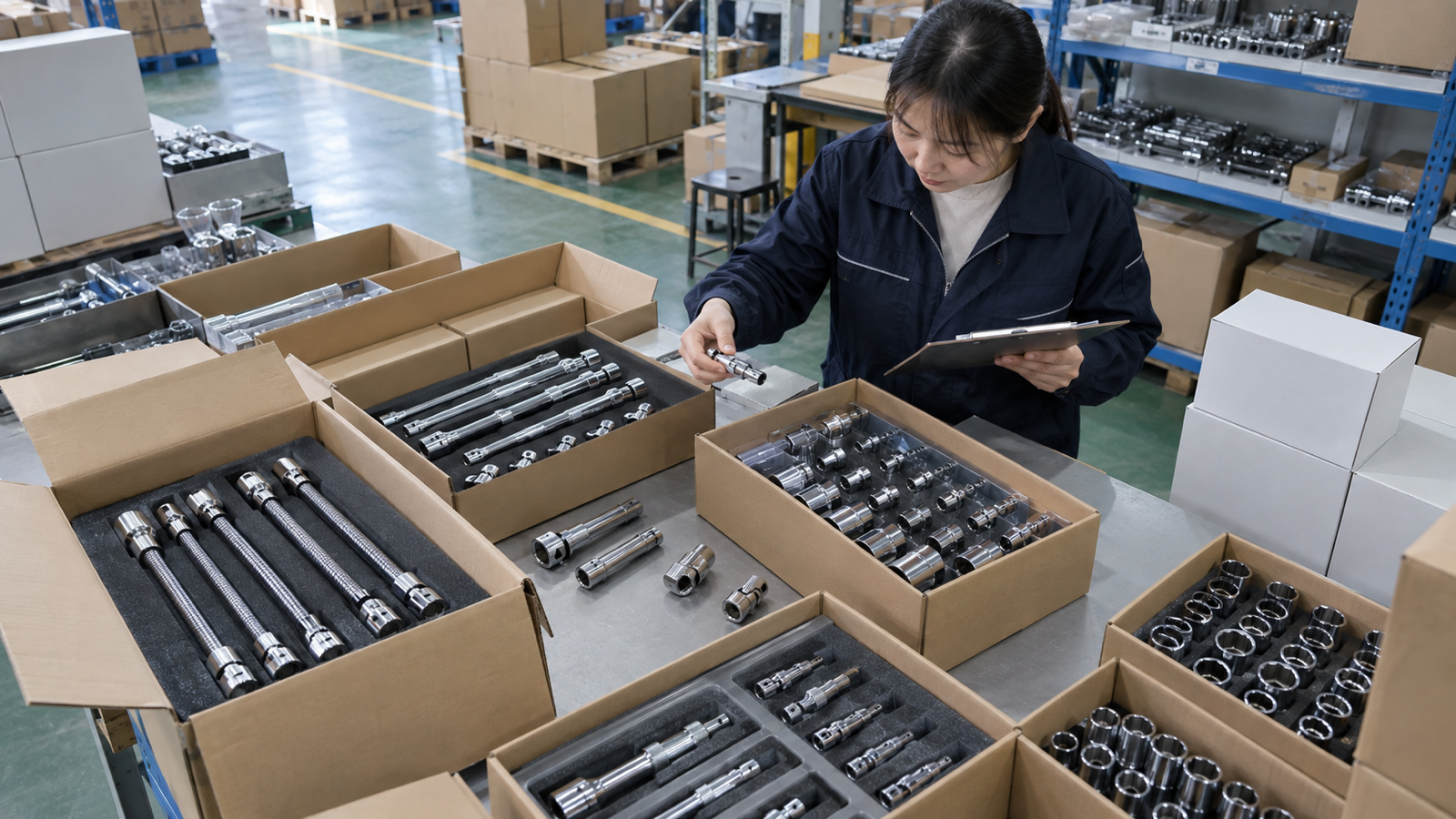
Distributors sell a clear use case, compatible drive family, and manageable SKU story. A flexible extension may belong in an access kit. A universal joint may sit in a general socket set. Packaging must prevent buyers from assuming every accessory suits every tool.
Good packaging answers the counter question: “Where can I use this, and where should I stop?” Show drive size, tool classification, compatible socket family, retention information, and warnings. Keep copy away from unsupported angle or torque promises.
For assortment planning, compare:
- drive sizes and socket profiles;
- straight, flexible, wobble, and universal options;
- individual SKU versus set inclusion;
- label language for intended tool class;
- tray or pouch protection.
Use KOLARWIN’s mechanic tool set guide for distributors when mapping accessories into a larger distributor program. Packaging should match inspection records.
Practical action: approve a SKU matrix before artwork starts, then lock warnings.
Assortment and packaging matrix
| Commercial field | Flexible extension | Universal joint |
|---|---|---|
| Product story | Reach around obstructions | Compact angled access |
| Set role | Access or specialty kit | General socket accessory |
| Label priority | Shaft behavior and support | Joint movement and control |
| Compatibility note | Drive size and socket retention | Drive size and socket retention |
9. How Should an RFQ Specify a Flexible Extension or Universal Joint?
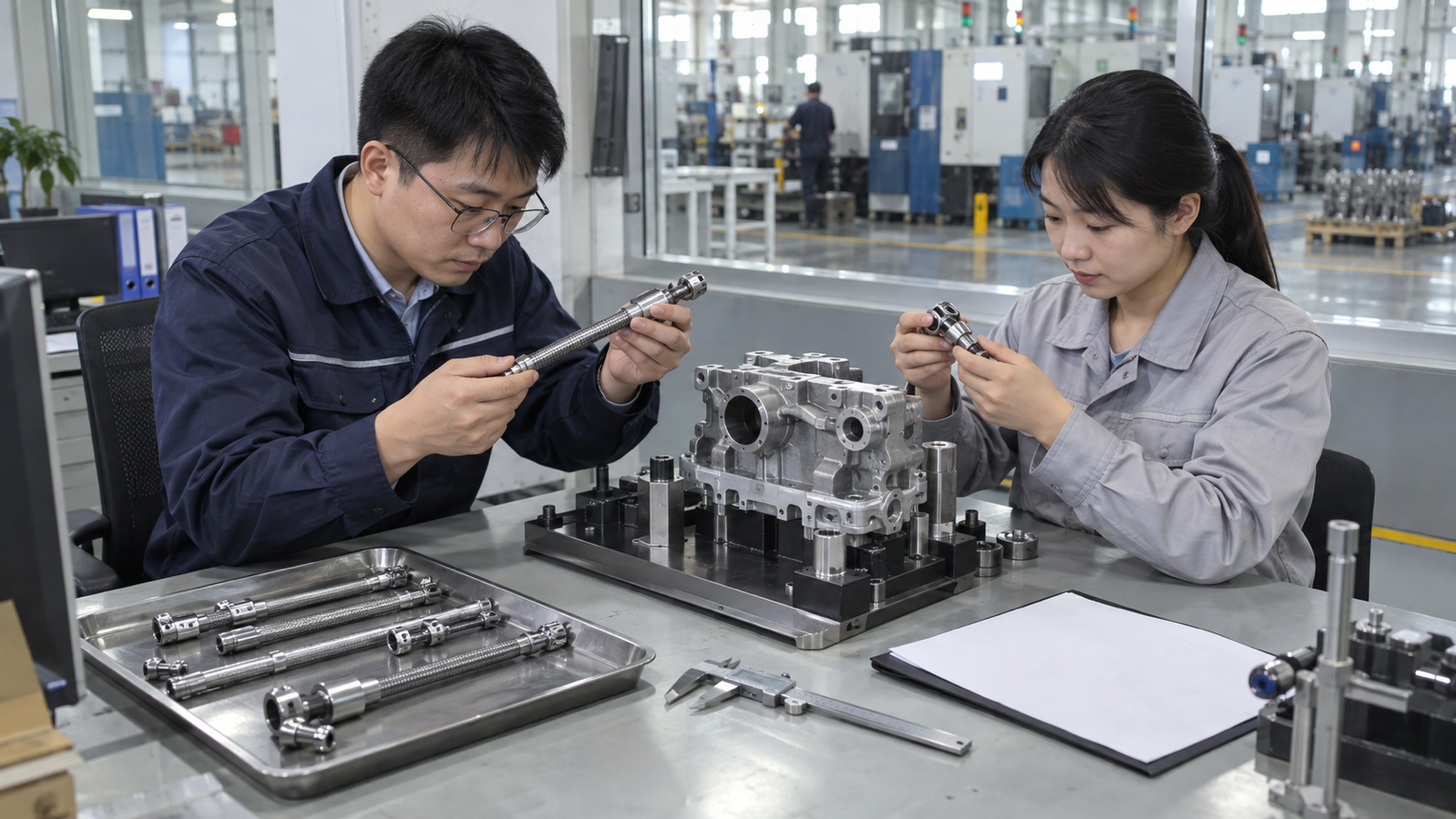
An RFQ should describe the work problem, interface, evidence, and delivery format. “Flexible extension, good quality” gives a supplier too much room for interpretation. “Universal joint, high torque” asks for a result without defining tool class, test method, or application.
Specific wording saves rework: write requirements that a drawing, sample, inspection record, or test report can prove. Remove claims your team cannot inspect.
Include the following RFQ fields:
- accessory type and intended use;
- input and output drive sizes;
- target socket profiles and retention;
- total length or working envelope;
- finish, marking, and private-label artwork;
- material specification and process records;
- functional inspection method;
- packaging, carton, and traceability requirements.
For supplier discussions, KOLARWIN’s contact page offers a next step after your specification is ready. Attach photos or drawings for difficult applications.
Practical action: issue a sample RFQ with one application, drive family, and acceptance checklist.
RFQ requirement table
| RFQ field | Example wording | Evidence requested |
|---|---|---|
| Accessory type | Flexible extension or universal joint, stated separately | Product drawing |
| Use class | Hand-operated or powered, not implied | Classification and instructions |
| Interface | Input/output drive and retention defined | Gauge or mating sample |
| Movement | Controlled bend or articulated joint, no universal angle promise | Functional sample record |
| Quality | Defects, finish, marking, and traceability defined | Inspection report |
10. Which Option Should a B2B Buyer Choose?
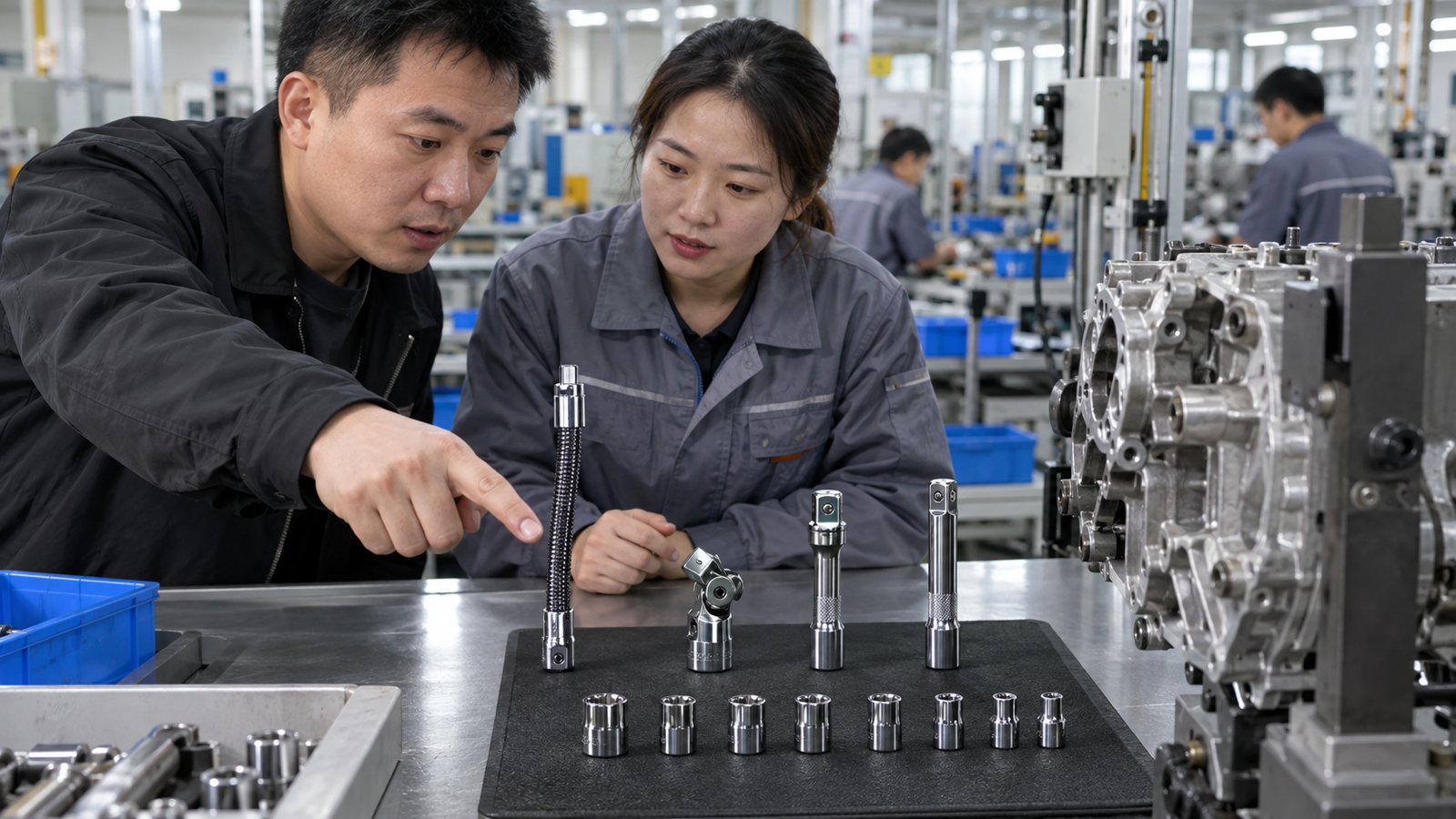
Choose a flexible socket extension when reach around a longer obstruction matters, the operator can support the shaft, and the task falls within the maker’s stated load limit. Do not select it for initial breakaway torque unless its current instructions permit that use. Choose a universal joint when a short pivot solves an access corner. Choose a rigid extension whenever a straight drive path works. Keep powered use in a separate approval lane unless design and testing support it.
The decision rule is plain: select movement based on the obstruction, then validate control with the exact socket and tool class.
Use this final checklist:
- map the fastener;
- confirm drive size and socket retention;
- select flexible, universal, wobble, or rigid geometry;
- verify tool classification;
- inspect samples with a repeatable method.
Practical action: send suppliers an application photo, drive family, socket profile, and acceptance checklist.
Q1: What is a flexible socket extension?
A flexible socket extension uses a bendable shaft between a drive tool and socket. It helps reach around obstructions, yet bend behavior depends on product construction and use conditions.
Q2: What is a universal joint used for?
A universal joint provides a compact articulated connection for angled access. It suits short offsets where a rigid extension cannot remain aligned.
Q3: Can a universal joint replace a flexible extension?
Not in every application. A universal joint concentrates movement at one point, while a flexible extension bends along a shaft. Match movement with obstruction and control needs.
Q4: Can these accessories be used with an impact wrench?
Only when a product is designed, marked, retained, and validated for powered use. Do not infer impact suitability from finish, material nickname, or drive size.
Q5: What should a buyer request from a supplier?
Request a drawing, material and process evidence, interface details, intended-use classification, functional inspection record, packaging proof, and a sample tested with your target socket.
Looking for a reliable mechanic tools manufacturer in China?
If you are sourcing hand tools, socket tools, automotive repair tools, mechanic tool sets or OEM private label tools, contact KOLARWIN Tools for factory-direct quotation, customization support and product consultation.


