
Need OEM supplier support for this product type?
Contact KOLARWIN Tools for OEM mechanic tools, private label packaging, wholesale quotation and product range support. This gives overseas buyers a clear path from article reading to supplier discussion.
A click wrench can deliver controlled tightening without a battery. A digital wrench can add a display, alerts, angle functions, or stored results, but only when its model includes those features and the operator follows its instructions. For distributors, the right comparison starts with work evidence: required torque range, operator skill, calibration plan, environment, service route, and whether a record of each tightening event has value.
Click vs digital torque wrench selection has no universal winner. A calibrated click tool may suit repeat service work with simple sign-off. A calibrated digital model may suit a process that needs visible alerts or electronic records. Buyers should compare one defined model against another and approve samples through measurement, handling, battery, and service checks.
1. What is the difference between click and digital torque wrenches?
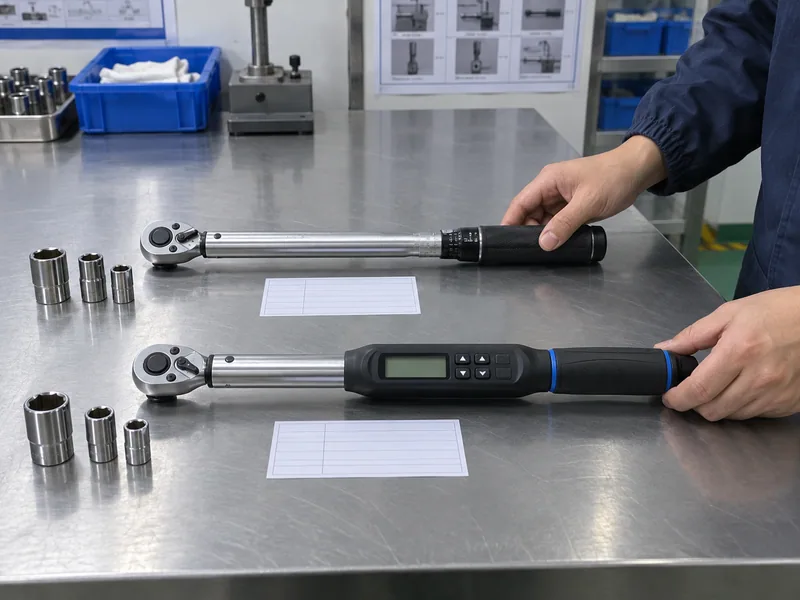
The main difference is feedback method: a click wrench signals a preset threshold through a mechanical release, while a digital wrench senses torque electronically and presents readings or alerts according to its model.
Which operating details change the buying decision?
Click tools normally use a scale and lock on a handle. Digital tools may show a target, live reading, peak value, angle, light, sound, or vibration. A digital screen alone does not prove better accuracy.
Specify what an operator must see, hear, feel, or document.
- Required torque range and unit system
- Fastener access and working direction
- Operator training and shift turnover
- Calibration and repair route
- Need for electronic results, if any
Use torque wrench guidance for professional buyers to frame a broader range review. Action: compare two actual model datasheets, not “analog” and “digital” as abstract categories.
What belongs in an initial comparison matrix?
| Decision field | Click wrench | Digital wrench | Buyer evidence |
|---|---|---|---|
| Signal | Mechanical release and audible/tactile cue | Display and model-specific alert | Operator trial |
| Power | No battery for the mechanism | Battery or rechargeable system may be required | Runtime and spare plan |
| Record | Manual sign-off | Logging only if model supports it | Export or paper workflow |
| Setup | Scale and lock procedure | Buttons, menu, target, or preset procedure | Training sheet |
| Service | Mechanical inspection and calibration | Sensor, electronics, battery, and calibration support | Service quotation |
2. How does a click torque wrench signal the target?
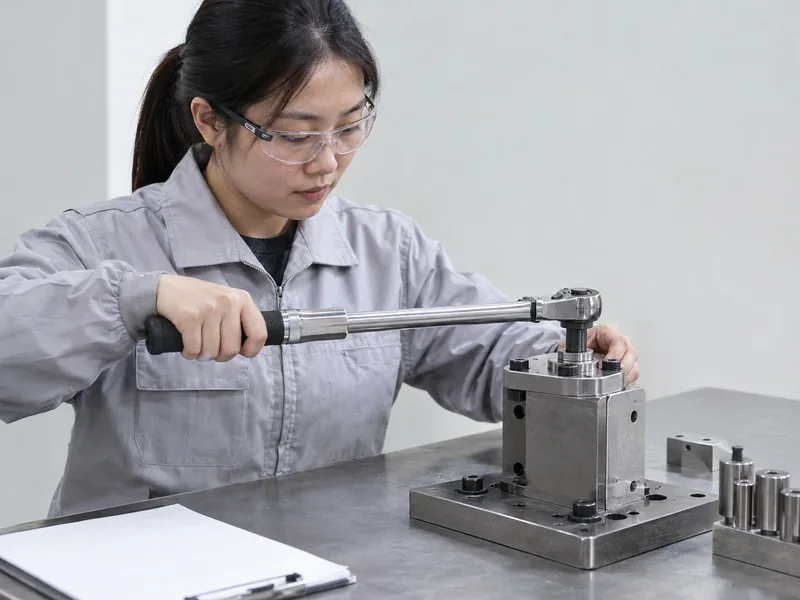
A click wrench signals a target when its internal mechanism releases slightly at a set load, producing a tactile and often audible cue. The operator must stop applying force after that signal.
Why do operators choose click tools?
Click tools are familiar, quick to hand over, and independent of battery status. They suit many maintenance and assembly tasks where a supervisor can control settings and record completion separately.
Set, lock, seat, pull smoothly, then stop at the signal.
- Read the scale at eye level during setup.
- Lock the adjustment if the model provides a lock.
- Keep the drive square fully engaged.
- Stop after the release; do not add a second pull.
For adjacent hand-tool range planning, review KOLARWIN hand tools. Action: test scale readability and signal recognition with the least experienced intended operator.
Which click-tool risks need control?
| Risk | Likely cause | Control |
|---|---|---|
| Wrong setting | Scale misread or lock left loose | Setup check and witness mark policy |
| Over-tightening | Operator continues after click | Training and observation |
| Drift | Wear, storage, overload, or missed calibration | Periodic verification |
| Poor engagement | Wrong socket or access angle | Correct accessory and fixture |
| Slow handover | Setting changes between users | Reset and sign-off procedure |
3. What can a digital torque wrench add?
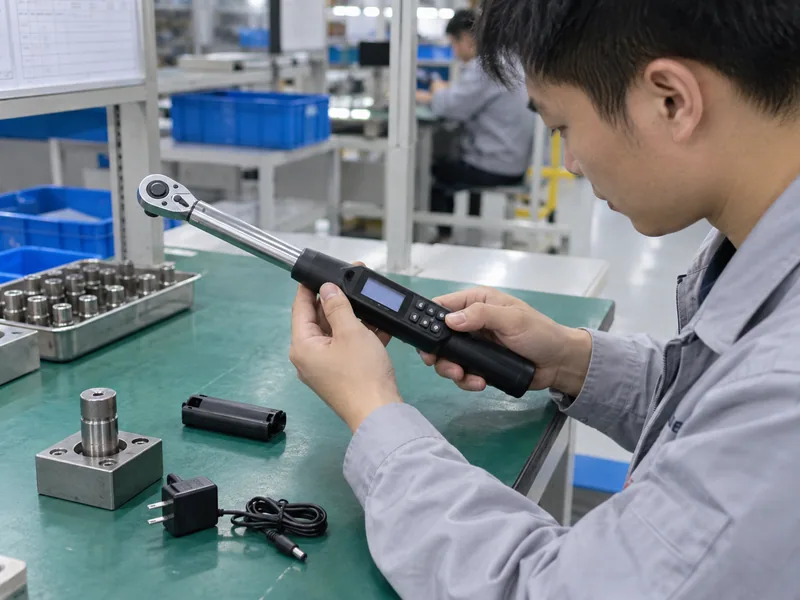
A digital wrench can add a visible reading and model-specific alerts such as light, sound, or vibration. Some models also support angle measurement, presets, memory, communication, or downloadable results; buyers must verify each feature in its manual.
Which electronic features are worth specifying?
An alert can help in a noisy or visually constrained station, while a display can make unit conversion and target setting easier. Presets may reduce repeated entry, but menus can also increase training needs. Data functions have value only when a customer has a defined record workflow.
Every selected function should solve a documented operator or quality problem.
- Target and tolerance entry
- Unit selection and lockout
- Peak, track, or click-peak mode
- Angle mode, only when supported and required
- Memory, export, or wireless communication, only when supported
Compare the broader torque wrench sourcing guide before adding electronics to a general hand-tool program. Action: demand a live demonstration of each claimed alert and record function.
How should features appear in product data?
| Feature | Specify as | Do not assume |
|---|---|---|
| Alert | Light, sound, vibration, or combination | Every digital model has all three |
| Angle | Range, direction, and operating mode | Torque-only models measure angle |
| Memory | Capacity and result fields | A display stores results automatically |
| Export | Port, file type, app, or software | A USB port means data logging |
| Presets | Count, lock behavior, and access | Presets prevent every setup error |
Action: keep unsupported features out of packaging and sales copy.
4. Which wrench is more accurate?
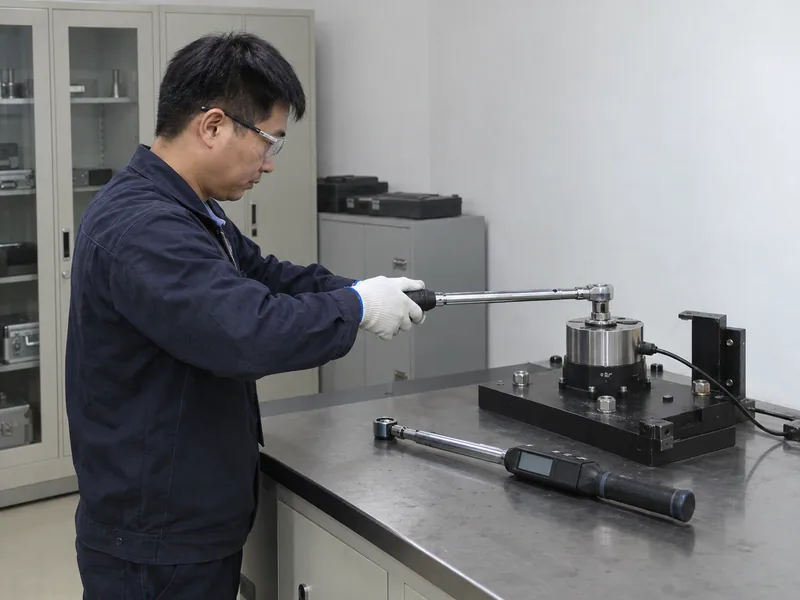
Neither format is automatically more accurate; accuracy depends on a specific model, range, direction, condition, calibration method, and operator procedure. A digital display can make readings easier to interpret, while a click mechanism can perform well when maintained and used correctly.
What does a calibration certificate prove?
A certificate identifies a tested tool, test points, direction, equipment, and stated tolerance or standard. It does not make every future use accurate, and it does not replace a customer’s verification plan. A supplier should identify whether a document reports conformance, calibration, or an internal inspection result.
Match its model, serial number, range, direction, and date with the product being bought.
- Confirm the stated standard or method.
- Check clockwise and counterclockwise coverage where needed.
- Review test points against the intended working range.
- Record the next verification or calibration trigger.
Use the professional torque-wrench guide to review range, calibration and unit fields together. Keep torque units such as N·m, lbf·ft and lbf·in distinct. Action: reject “high precision” wording without model-specific evidence.
What accuracy fields belong in a comparison?
| Field | Why it matters | Required evidence |
|---|---|---|
| Stated tolerance | Defines a model claim | Manufacturer datasheet |
| Working range | Shows where the claim applies | Range and test points |
| Direction | Separates clockwise from reverse use | Certificate or manual |
| Resolution | Describes display or scale increments | Product specification |
| Verification method | Shows how performance is checked | Calibration procedure |
Action: compare like-for-like ranges and directions before selecting a format.
5. How do calibration and service differ?
Both tool types need a controlled service plan. Click tools require mechanical inspection and calibration; digital tools add sensors, electronics, firmware or software dependencies, and battery checks.
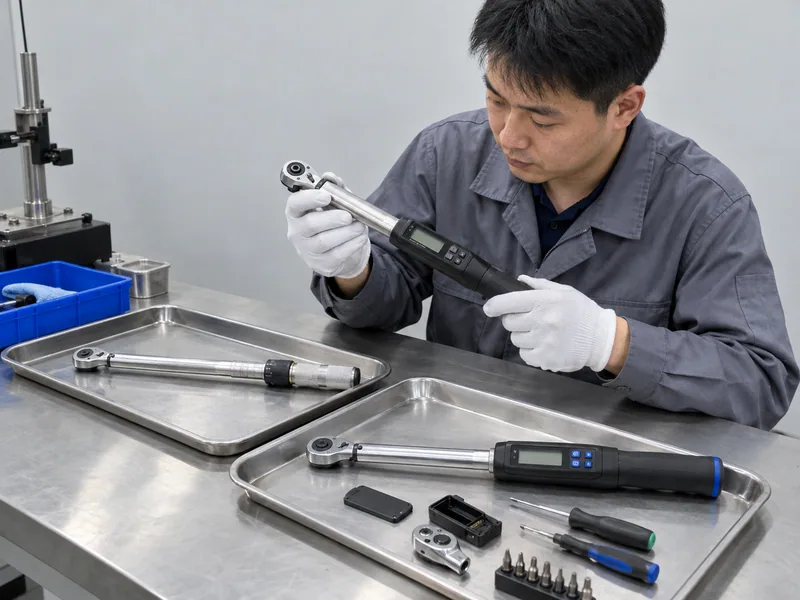
What should a maintenance program cover?
Start with customer instructions and the selected model’s manual. Define verification after overload, impact, repair, or abnormal readings. Storage position, temperature, contamination, and repeated use can affect service intervals.
Name who checks, adjusts, documents, and returns each tool.
- Asset ID and serial-number capture
- Incoming and outgoing inspection
- Calibration or verification interval
- Repair parts and battery availability
- Quarantine process for failed tools
Use mechanics tool set planning to separate torque-tool service from ordinary kit replenishment. Action: ask suppliers for a sample service record and escalation path.
Which service items differ by format?
| Service item | Click tool | Digital tool | Buyer question |
|---|---|---|---|
| Scale | Clean, readable, and aligned | Display and controls readable | Can operators read it in use? |
| Mechanism | Release, spring, head, and lock | Sensor, head, and mechanism | Which parts are replaceable? |
| Power | Not required for mechanism | Battery, charger, contacts, or cells | What happens during low power? |
| Software | Usually none | Firmware or app may exist | Is support documented? |
| Records | Manual certificate or log | Electronic or manual record | Who owns the record? |
Action: include service status in total-cost comparisons.
6. How do batteries and work environments affect selection?
Batteries affect digital-tool readiness, storage, transport, and service. Click tools avoid battery dependence, while digital tools may need spare cells or charging access even when torque accuracy remains within specification.
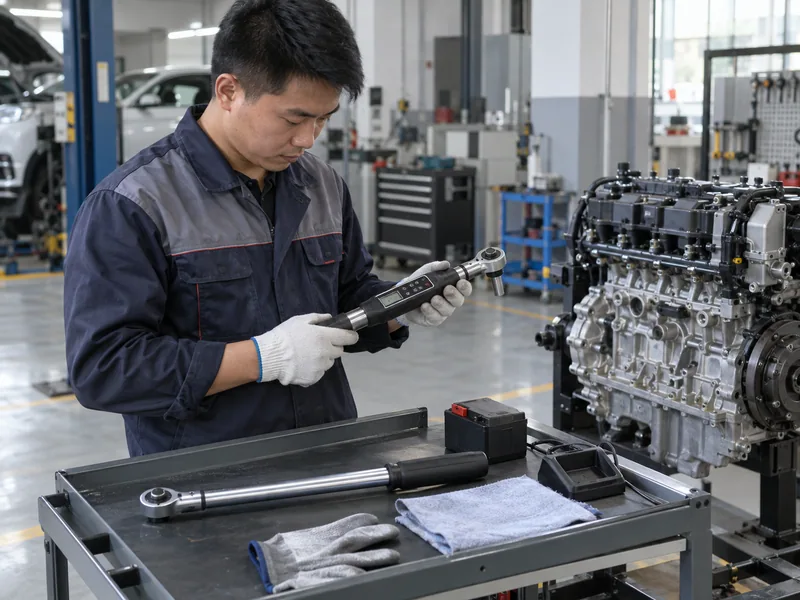
Which environmental checks belong in a sample trial?
Test display visibility, button operation, grip, storage case, and battery replacement using the intended gloves and lighting. Check temperature, oil, dust, moisture, impact exposure, and cleaning limits against the model manual.
A feature that works on a clean desk may fail during shift change or field service.
- Start-of-shift power check for digital models
- Spare battery or charging location
- Low-power behavior and saved-setting behavior
- Display readability at the real working angle
- Storage and transport protection
For a wider automotive repair tool assortment, assign digital tools to tasks that can support their operating and charging requirements. Action: run a full-shift trial before adopting a battery-dependent SKU.
What should the environment scorecard show?
| Condition | Click concern | Digital concern | Trial evidence |
|---|---|---|---|
| Low light | Scale visibility | Screen visibility and alert | Operator observation |
| Noise | Audible click may be missed | Sound alert may be missed | Tactile or visual backup |
| Dust or oil | Mechanism contamination | Buttons, seals, and display | Cleaning and inspection |
| Cold or heat | Material and storage limits | Battery and display response | Manual limits and trial |
| Field transport | Drop or overload damage | Battery, screen, and electronics | Case and handling check |
Action: record environmental limits in the product brief.
7. When does data logging justify a digital model?
Data logging justifies a digital model when a customer has a defined need to connect torque results with an asset, operator, work order, or audit record. A digital wrench without memory or communication does not create traceability by itself.
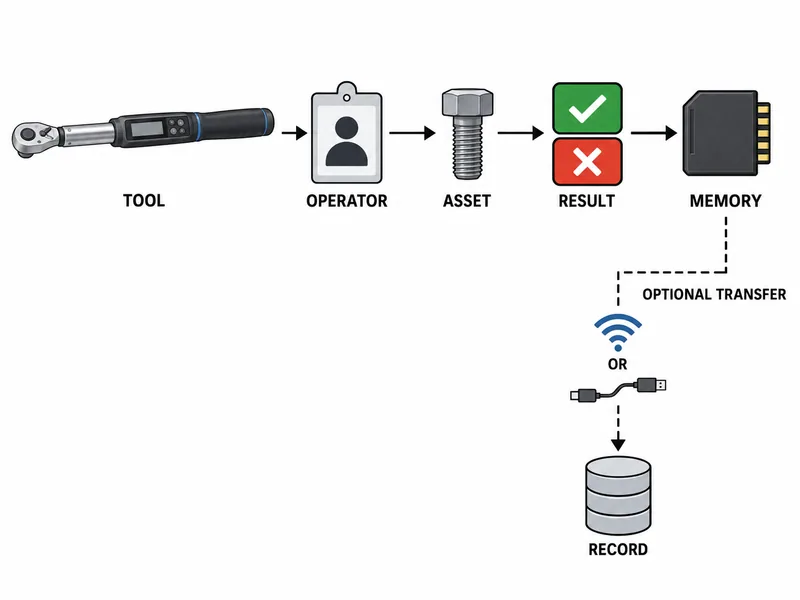
How should buyers define a record workflow?
Specify what gets recorded, how an operator identifies a fastener or assembly, where data is stored, and who reviews exceptions. Decide whether manual transcription is acceptable before paying for connectivity.
If nobody reviews or retains a result, electronic storage may add cost without control.
- Result fields and timestamp behavior
- Tool or operator identification
- Pass/fail or tolerance status
- Export method and file ownership
- Data retention and privacy expectations
Use complete mechanic tool sourcing guidance when placing digital tools inside a wider service program. Action: request an anonymized sample export or screen demonstration before claiming traceability.
Which record features should appear in an RFQ?
| Record feature | RFQ question | Evidence |
|---|---|---|
| Storage | How many results and fields? | Manual or demo |
| Transfer | Cable, app, wireless, or manual? | Working demonstration |
| Identity | Tool, user, job, or asset ID? | Data sample |
| Exceptions | How are failures marked? | Screen or export sample |
| Retention | Who stores and retrieves records? | Customer workflow |
8. How should distributors inspect click and digital samples?
Sample inspection should combine dimensional checks, torque testing, operator handling, calibration evidence, service review, and packaging review. Digital samples also need battery, display, control, and data-function checks.
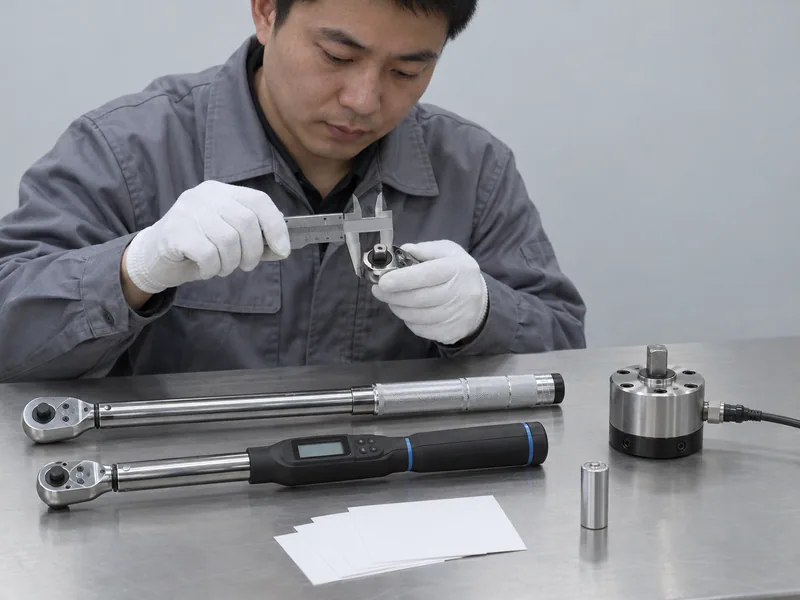
What should a sample approval test include?
Use a calibrated reference system suited to the tool range and direction. Test several points across the intended range, then repeat after normal handling. Do not turn one pass into a blanket accuracy claim for every size or mode.
Capture what passed, under which setup, and which claims remain unapproved.
- Model, serial number, and revision
- Stated range, direction, and units
- Certificate and test setup
- Operator usability and signal response
- Battery, alert, memory, or export checks where present
Action: quarantine samples with missing identity or incomplete evidence.
What should the inspection table contain?
| Check | Click sample | Digital sample | Acceptance record |
|---|---|---|---|
| Setting | Scale and lock | Menu, buttons, target | Setup photo or sheet |
| Signal | Release and cue | Display and alerts | Operator sign-off |
| Measurement | Reference-system result | Reference-system result | Test record |
| Handling | Grip, head, socket | Grip, head, screen | Trial notes |
| Support | Parts and certificate | Parts, battery, software | Supplier response |
Action: approve only the exact model and configuration tested.
9. What should a click or digital torque wrench RFQ specify?
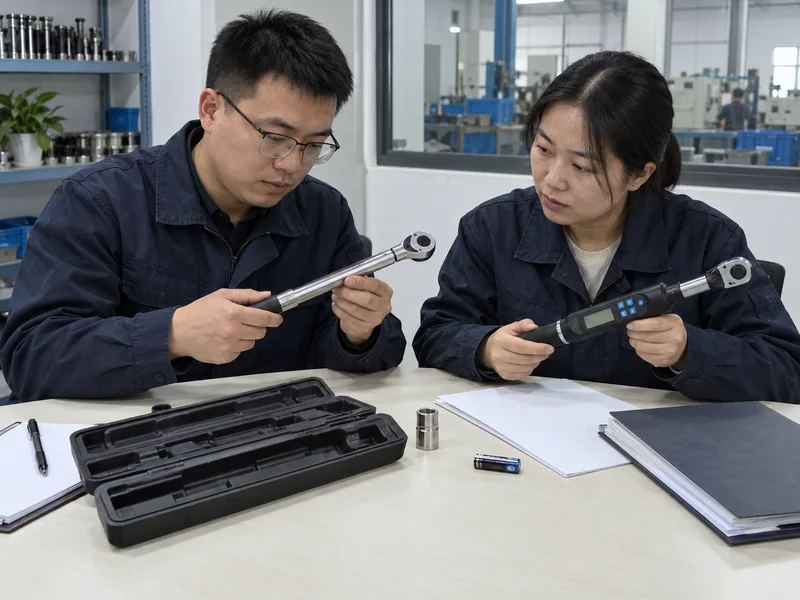
An RFQ should specify the work, model class, torque range, drive, direction, units, calibration evidence, service route, packaging, and any digital functions. “Accurate digital torque wrench” leaves too many assumptions.
Which technical fields prevent quotation drift?
Include nominal range, tolerance claim, working direction, drive size, head type, scale or display, alerts, angle function, memory, communication, battery, case, accessories, and documentation. Separate required fields from optional upgrades.
Suppliers can quote the same tool definition and disclose deviations early.
- State test points and reference method.
- Request sample approval before bulk production.
- Identify certificate type and serial-number policy.
- Define spare parts and service response documents.
- Prohibit unsupported accuracy, logging, or factory claims.
Review socket tool options when specifying the drive ecosystem around a torque wrench. Action: issue one controlled RFQ revision to every shortlisted supplier.
What belongs in a commercial comparison?
| RFQ block | Required detail | Supplier response |
|---|---|---|
| Tool | Click or digital model class | Datasheet and sample |
| Measurement | Range, units, direction, tolerance | Certificate or method |
| Electronics | Alerts, angle, memory, transfer | Model-specific proof |
| Service | Calibration, repair, batteries | Route and terms |
| Delivery | Case, accessories, markings, documents | Quotation assumptions |
Action: reject a quote that silently changes the tested configuration.
10. Which torque wrench should a B2B buyer source?
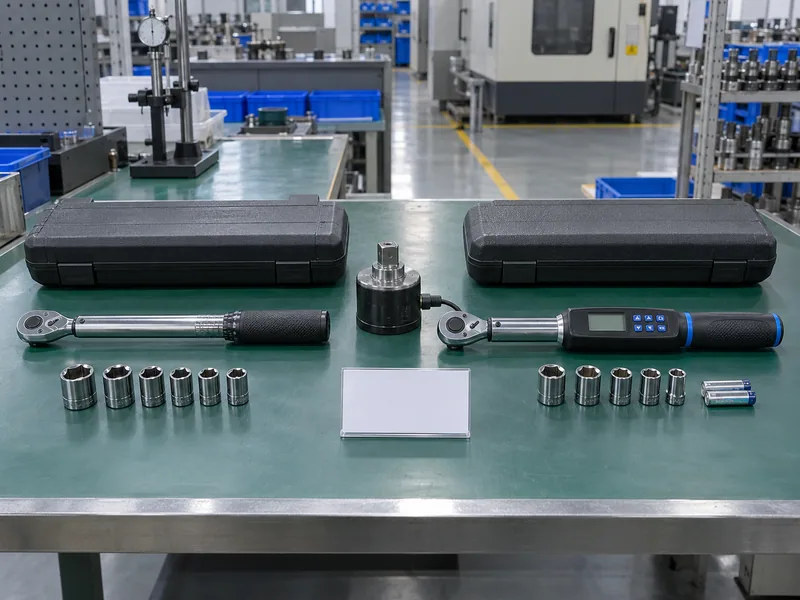
Source a click wrench for a controlled routine where mechanical feedback, simple training, and low battery dependence fit the work. Source a digital wrench when visible alerts, angle functions, or electronic records solve a defined process need and the buyer accepts battery and service obligations.
What is the final selection gate?
Use this gate before listing a tool or placing a purchase order:
- Match the exact working range, direction, and drive.
- Confirm model-specific calibration evidence.
- Test operator signal, access, and handling.
- Verify battery, service, and replacement support for digital models.
- Approve data functions only after a real workflow demonstration.
Buy the format that matches a documented task and a supportable quality system.
KOLARWIN can review a comparison brief, sample matrix, and RFQ through contact with KOLARWIN Tools. Buyers can review the wider tool range before selecting a supplier. The goal is a tool specification that operators can use and procurement teams can defend.
Can a click torque wrench be as accurate as a digital wrench?
Yes, a calibrated click model can meet its stated tolerance when used within its range and procedure. Compare model evidence rather than assuming format alone determines accuracy.
Do digital torque wrenches always record tightening data?
No. Memory, export, and communication depend on model design. Request a working demonstration before making a traceability claim.
What happens if a digital torque wrench battery dies?
The tool may stop displaying or alerting, depending on design. Define a spare-battery or charging plan and a fallback tool before approving field use.
Which tool suits a rough maintenance environment?
A click tool may simplify power and electronics concerns, but durability still depends on its construction, care, and service plan. Test either format in the real environment.
Should an RFQ require a calibration certificate?
Require model-specific calibration or conformance evidence when customer quality rules call for it. State range, direction, test points, serial identity, and certificate type in the RFQ.
Looking for a reliable mechanic tools manufacturer in China?
If you are sourcing hand tools, socket tools, automotive repair tools, mechanic tool sets or OEM private label tools, contact KOLARWIN Tools for factory-direct quotation, customization support and product consultation.


