Home/Blog/ Bearing Separator vs Bearing Puller: What Is the Difference?

Bearing Separator vs Bearing Puller: What Is the Difference?

Get OEM Tool Catalog + Quote Back to Tool Sourcing Blog
This KOLARWIN Tools article is written for overseas distributors, wholesalers, importers and private label tool brands sourcing mechanic tools, automotive repair tools, socket tools, hand tools and OEM tool sets from China. Use this guide to compare product options, check supplier quality points and move from reading to a faster B2B inquiry.

Need OEM supplier support for this product type?

Contact KOLARWIN Tools for OEM mechanic tools, private label packaging, wholesale quotation and product range support. This gives overseas buyers a clear path from article reading to supplier discussion.

Removing a bearing often fails at the gripping point, not at the forcing screw. A jaw may have no shoulder, a housing may be blind, or a separator may fit the wrong ring. A separator creates a supported edge. A puller supplies the frame, jaws, collet, or hydraulic force. This guide helps B2B buyers choose without assuming one tool fits every bearing.

1. What is the difference between a bearing separator and a bearing puller?
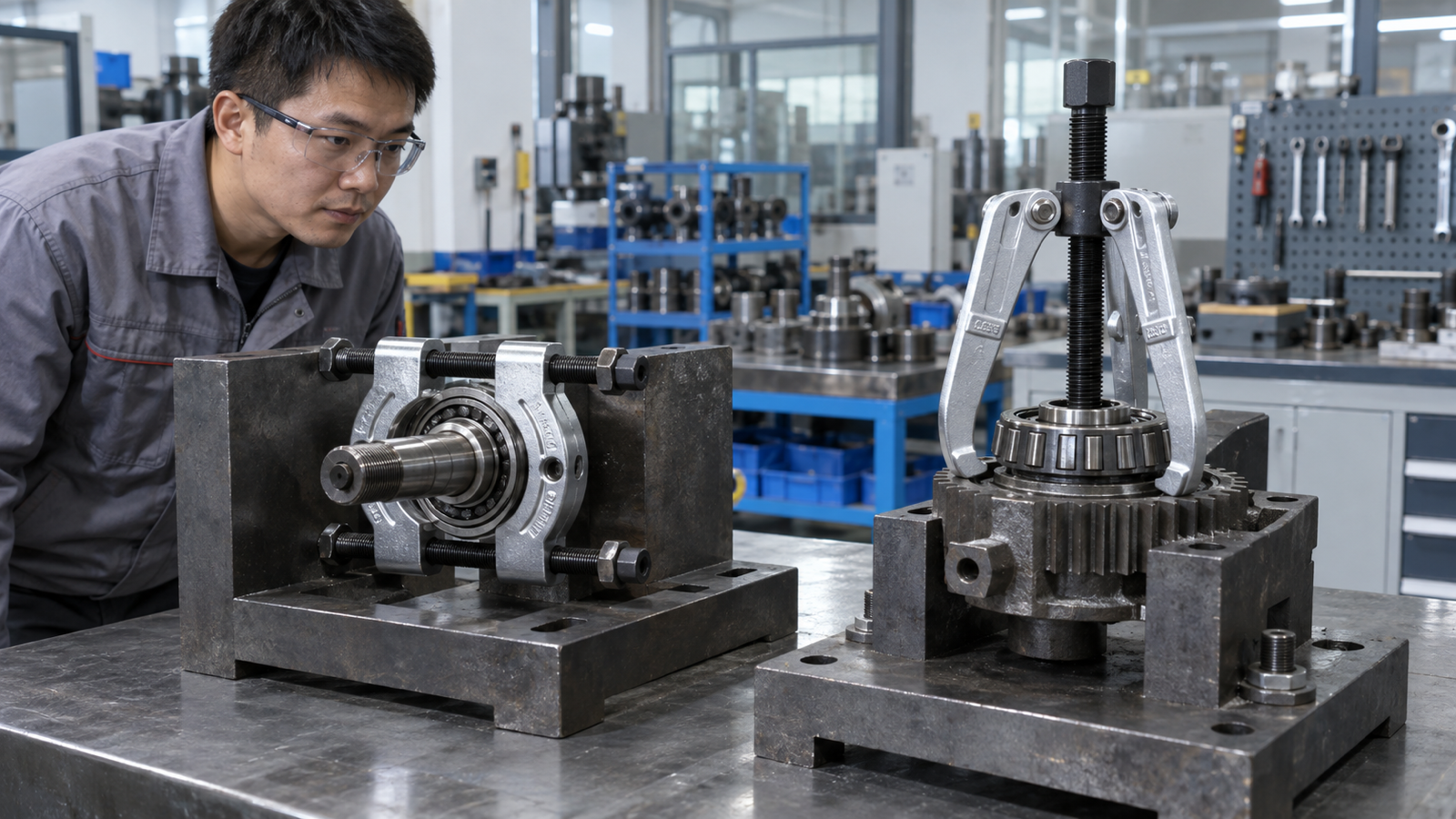
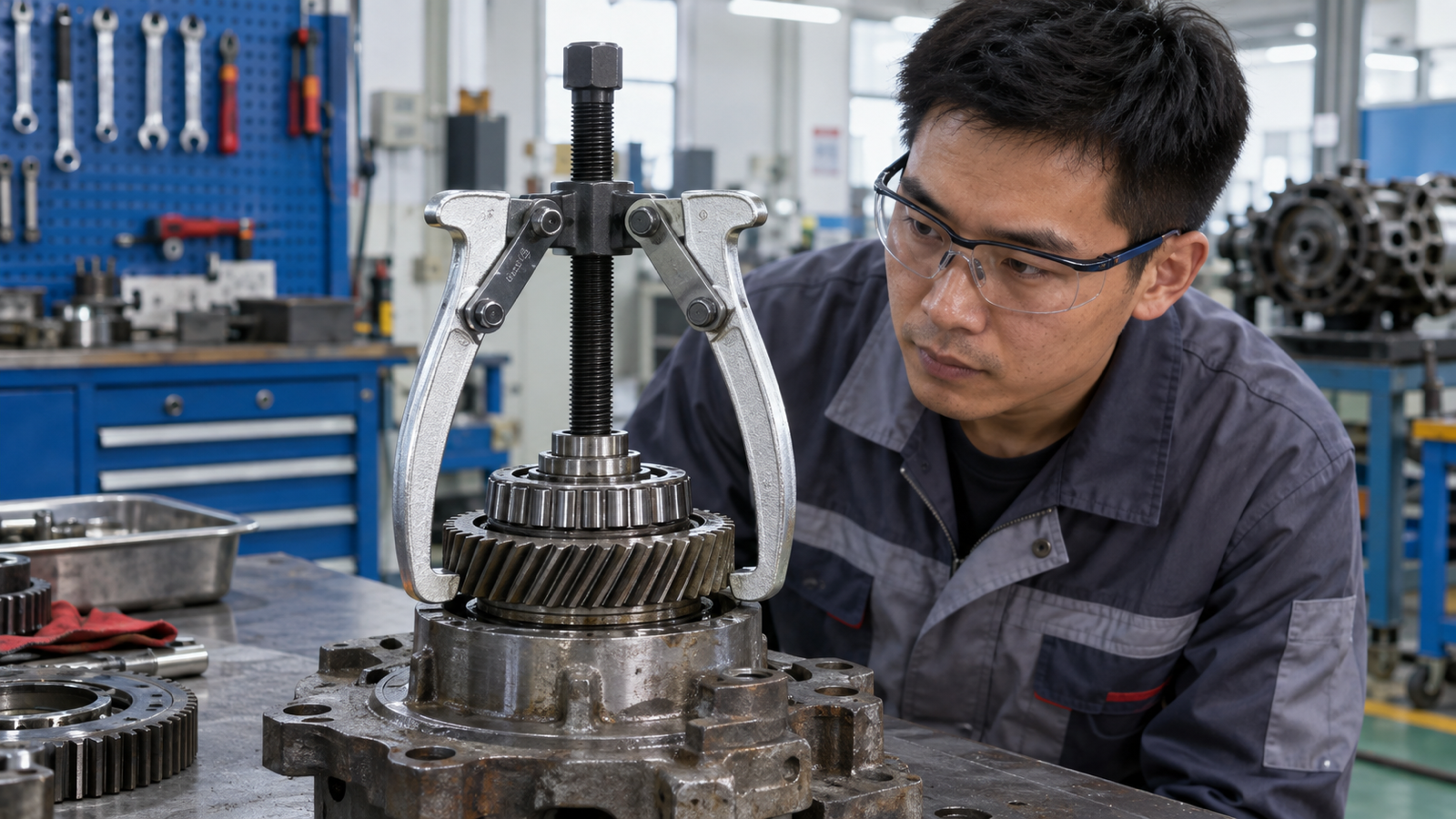
Bearing separator and three-jaw bearing puller compared on separate supported fixtures.

A bearing separator, or bearing splitter, is a clamping plate or two-piece wedge assembly. Its thin edges enter behind a bearing, gear, or pulley when jaws cannot reach. A bearing puller is the extraction mechanism, using jaws, a collet, bridge, screw, or hydraulic force.

Here is the distinction: a separator creates engagement; a puller applies controlled withdrawal force. Many kits need a crossbar, rods, or hydraulic frame.

For a buyer, check these points:

  • Where can the tool grip: outside shoulder, inner bore, or rear face?
  • Which component must move, and which surface can react the force?

KOLARWIN’s automotive repair tools range gives category context.

Practical action: write engagement and reaction points into every RFQ before comparing price.

Quick comparison for buyers

Item Bearing separator Bearing puller
Main job Creates a gripping edge behind a tight part Applies extraction force through a matched mechanism
Typical contact Thin plates behind a ring or shoulder Jaws, collet, hub bolts, or bridge
Works alone? Often no; requires a frame or rods Sometimes, if jaws and screw are integrated

2. What is a bearing separator used for?
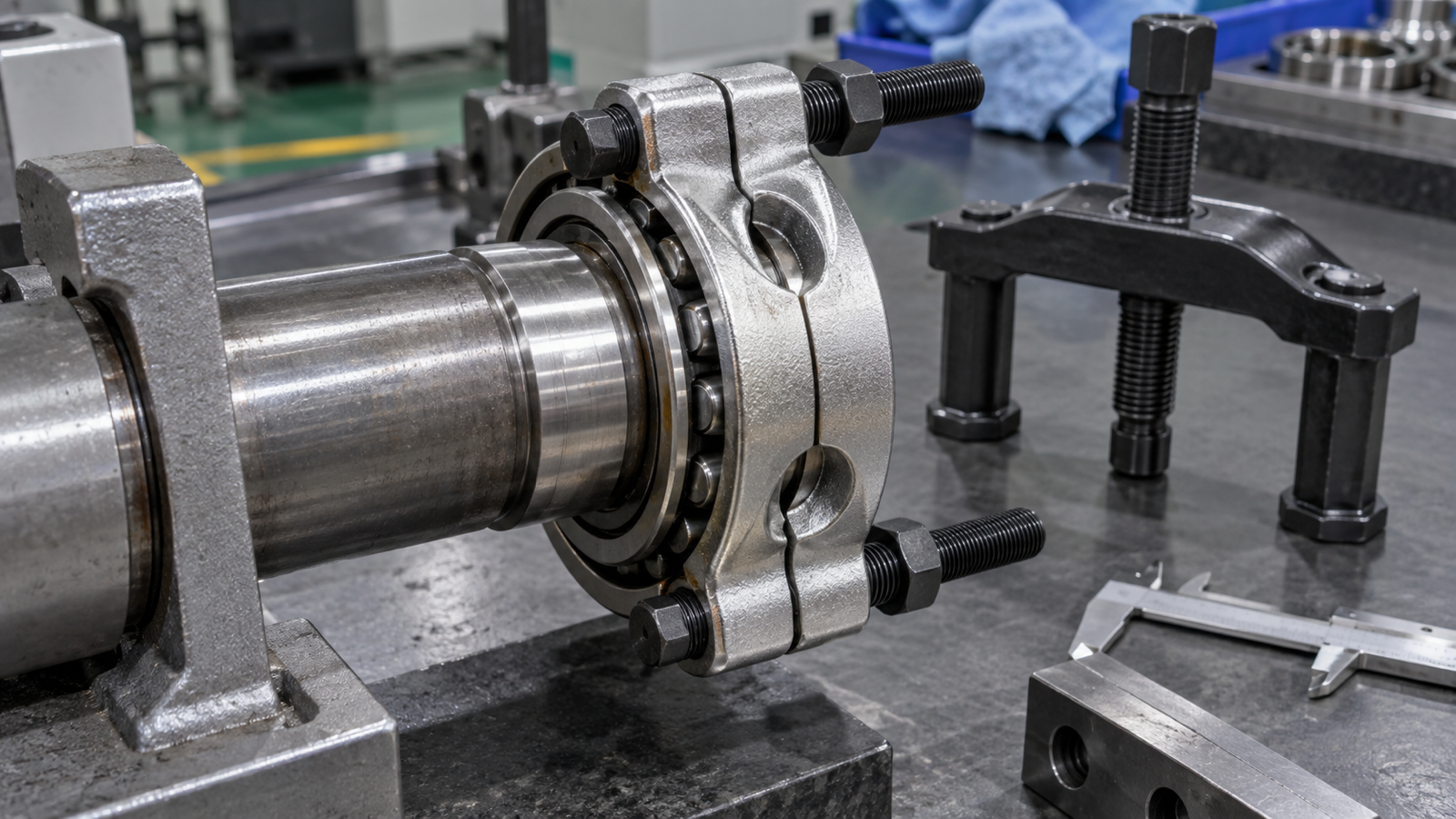
Bearing separator halves seated evenly behind a bearing race on a supported shaft.

A bearing separator suits an inner ring close against a shoulder, where normal puller jaws have too little space. Two plates close around the part. Beveled edges seat behind a suitable face, then rods or a crossbar lift the separator and target together.

This geometry can help with an inner ring on a shaft, gear with a narrow rear gap, or pulley without an exposed rim. Contact must land on a sound shoulder or face, not a seal lip, chamfer, cage, or thin section.

The fit decides whether a separator helps: a thin plate must remain seated as load rises. Specify opening range and plate thickness rather than calling a model “universal.”

Before approval, inspect:

  • parallel seating behind the target component;
  • enough edge depth without touching rolling elements or seals;
  • a flat reaction path through rods, bridge, or ram;

For wheel-bearing projects, pair the decision with this wheel-bearing puller kit guide so a race tool is not confused with a hub set.

Practical action: request a fit drawing showing rear clearance, edge thickness, and permitted force.

Separator fit checkpoints

Check Good evidence Stop and reassess when
Rear clearance Measured gap accepts both plates Plate edge sits on a chamfer or seal
Contact width Even support behind a sound face Only a narrow corner carries load
Frame connection Matched rods, bridge, or ram Threads or pins are improvised

3. What is a bearing puller used for?

Chinese technician checking three-jaw bearing puller alignment.

A bearing puller transfers force from a screw, hydraulic cylinder, or slide hammer into a moving component. External jaws grip a shoulder. Internal pullers expand inside a bore. Hub pullers attach through a flange or stud pattern. Reversible jaws change range by configuration.

“Puller” describes a family, not one geometry. Two jaws may fit a narrow opening. Three jaws can share contact across three points when a suitable shoulder exists. A slide hammer describes force application, not whether its attachment is internal or external.

A complete puller specification tells you how force travels: grip, reach, spread, protection, actuation, and rating should appear together.

Ask suppliers for:

  • minimum and maximum internal or external spread;
  • effective reach and jaw-tip thickness;
  • bore range for internal collets;
  • spindle thread, drive size, or hydraulic pressure limit;
  • inspection instructions.

Use the specialty pullers and extractors in a mechanic tool list when mapping an assortment.

Practical action: approve each puller by named component and measured interface, not nominal diameter.

Puller setup checkpoints

Puller family Engagement method Buyer must confirm
External jaw Behind an outside shoulder Jaw seating, reach, spread, alignment
Internal or blind Expanding fingers or collet Bore, rear grip, expansion range
Hub puller Flange bolts or studs Pattern, thread, axle and sensor clearance

4. How do separator engagement and jaw engagement differ?
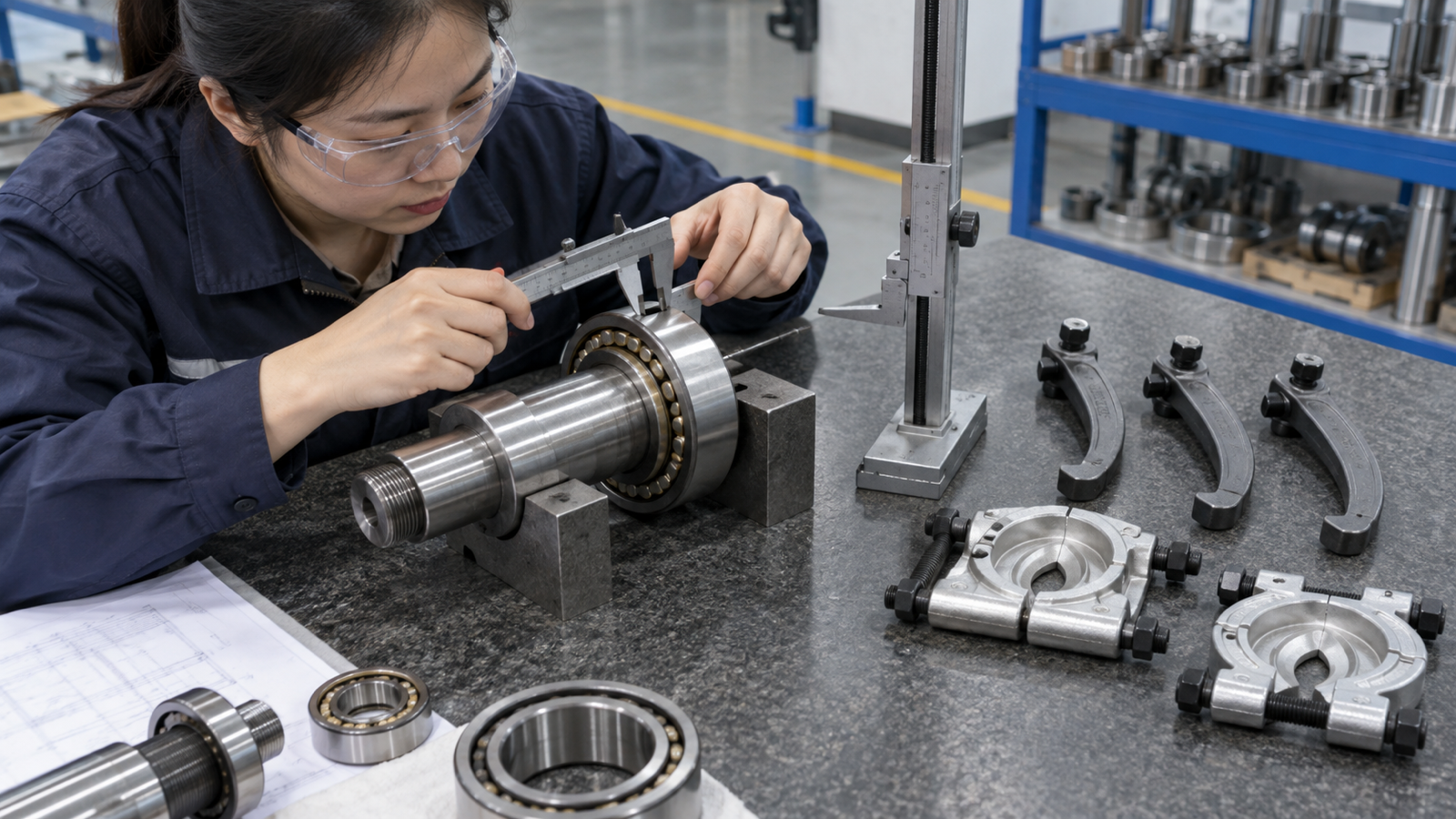
Chinese quality engineer measuring bearing access and rear clearance.

Separator plates slide behind a part and clamp by tightening their bolts. Their broad faces can support an inner ring when jaw tips are too thick. Jaw pullers approach from outside or inside, with each jaw seated on a sound shoulder.

That difference changes the failure mode. A jaw touching only at its tip may roll out. A separator that is not parallel may mark the shaft. Both need a centered axis and independent support for heavy assemblies.

Look at contact before capacity: a higher force rating cannot repair a poor grip. Inspect the contact surface while the tool is hand-tight and again after initial load.

For approval, record:

  • the ring or component being contacted;
  • contact width and seating depth;
  • reaction surface condition and support;

Keep fit photographs with the drawing so samples match approved engagement.

Practical action: add a “full contact at zero load” checkpoint to the sample-approval form.

Engagement comparison

Feature Separator plates Jaw puller
Entry path Slides into a narrow rear gap Reaches around or inside a shoulder
Contact shape Broad edge or plate face Discrete jaw tips or hooks
Best evidence Clearance and seating photos Spread, reach, and alignment photos

5. When is a bearing separator better than a standard jaw puller?
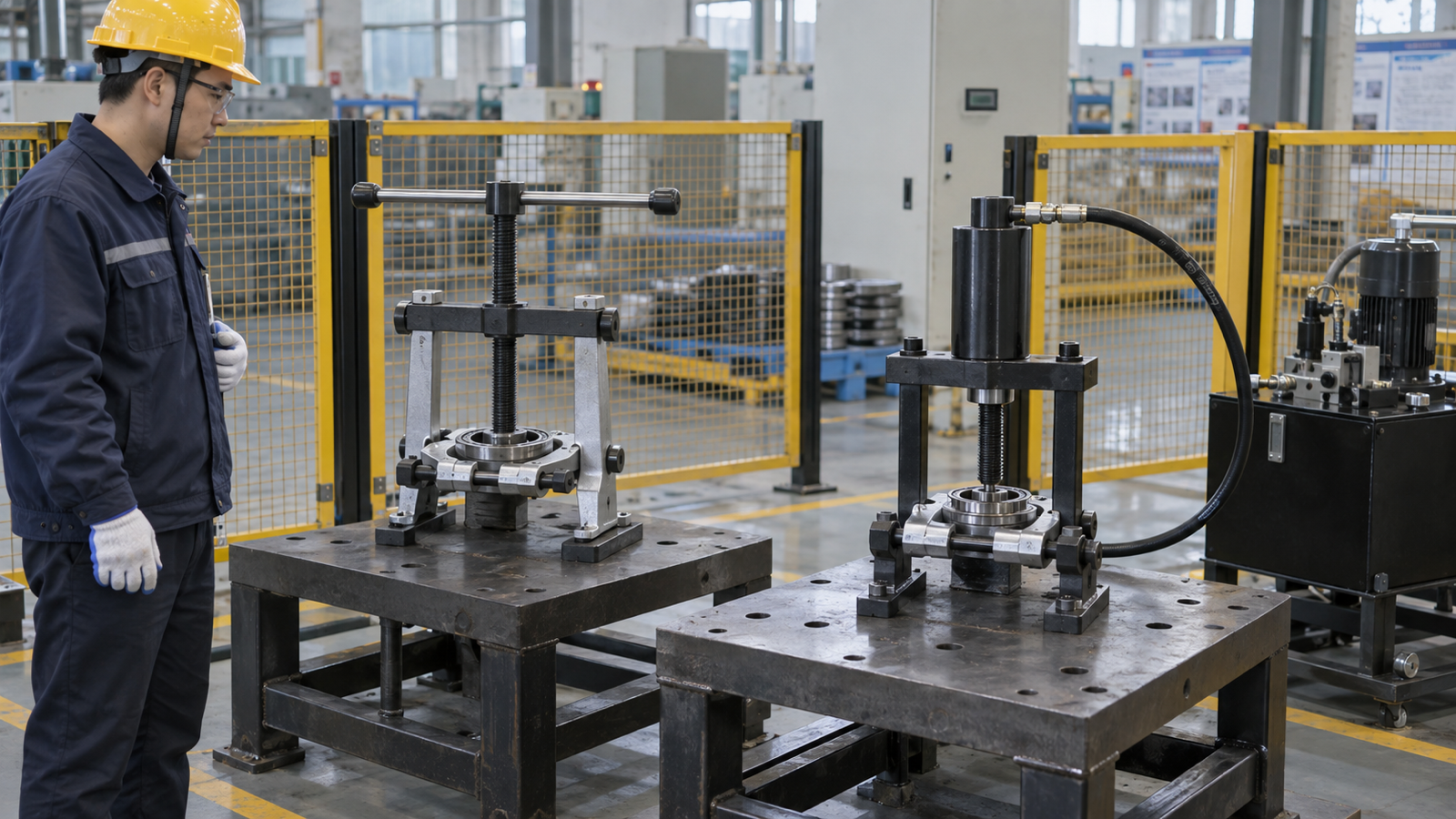
Mechanical and hydraulic bearing separator systems on guarded test fixtures.

A separator often suits a narrow gap, flush inner ring, or face that cannot accept a hook-shaped jaw. It can provide a stable lifting surface when a jaw tip would contact a seal or thin flange. Its value still depends on rear support and a matched frame.

The separator must load the intended part. A reusable bearing may need a different method than a damaged race.

The better choice follows the interface: measure gap, ring width, shoulder depth, and shaft condition before ordering.

For a B2B program, capture:

  • application photos or a dimensioned sample;
  • minimum and maximum rear clearance;
  • target ring and adjacent components;

KOLARWIN’s China OEM auto-tools sourcing guide supports sourcing when separators sit beside hub or slide-hammer tools.

Practical action: fit-test one separator sample before approving an assortment.

Application screen

Situation Separator may suit when Another method may suit when
Inner ring near shoulder Rear edge remains strong and accessible No safe rear face exists
Gear or pulley Plates can sit squarely behind hub Hub is thin or unsupported
Heavy assembly Frame and support are rated together Component needs another method

6. When is a jaw puller the better choice?
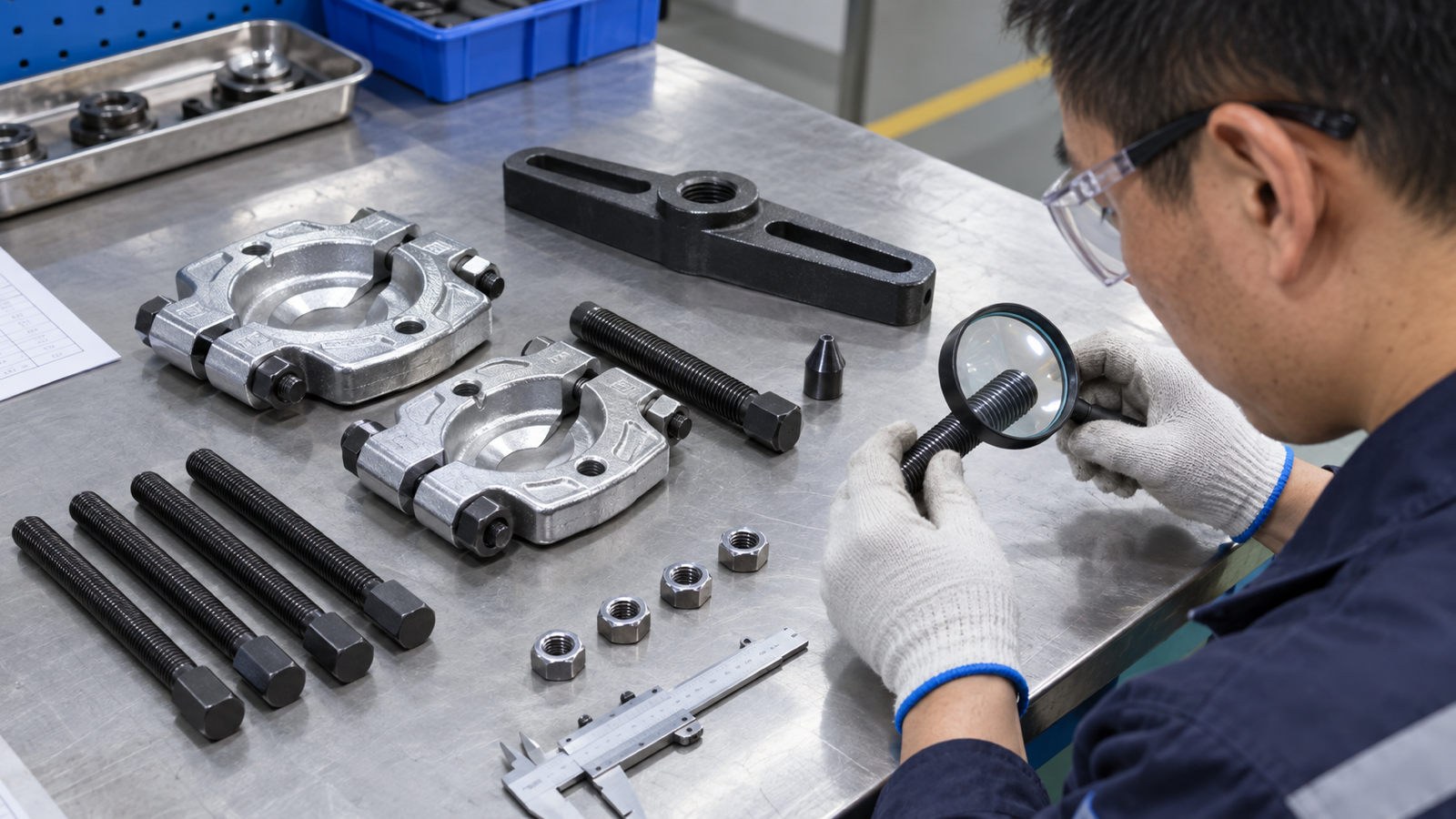
Chinese inspector checking separator plates, studs, threads, and forcing screw condition.

A jaw puller can suit a clear shoulder with enough room for stable seating. It sets up quickly for exposed hubs, bearings, pulleys, and similar parts. Reversible jaws may cover inside and outside extraction, with a separate spread, reach, and force check for each direction.

Jaw count does not decide fit. Two jaws may suit confined access. Three jaws can provide three-point contact where geometry allows it. Neither fixes a narrow shoulder or off-axis screw.

A jaw puller wins on access only when its hooks stay put: hand-tight inspection, balanced adjustment, and a clear release path matter more than a large catalogue range.

Buyers should compare:

  • jaw tip thickness against the available gap;
  • reach under the shoulder;
  • spread at the required reach;
  • reversible-jaw instructions;
  • a force limit for the selected configuration.

A puller belongs in a wider mechanics tool-set configuration after its interfaces are documented.

Practical action: test the narrowest and deepest intended application, since that combination usually reveals fit problems first.

Jaw-puller decision points

Buyer question Why it matters Evidence to request
Can each jaw seat fully? Reduces roll-out risk Fit photo or sample test
Does reach remain usable at spread? Nominal spread can mislead Dimensioned reach chart
Are jaws reversible? Orientation changes geometry Configuration drawing

7. Can separators and pullers work with internal or blind-bearing systems?
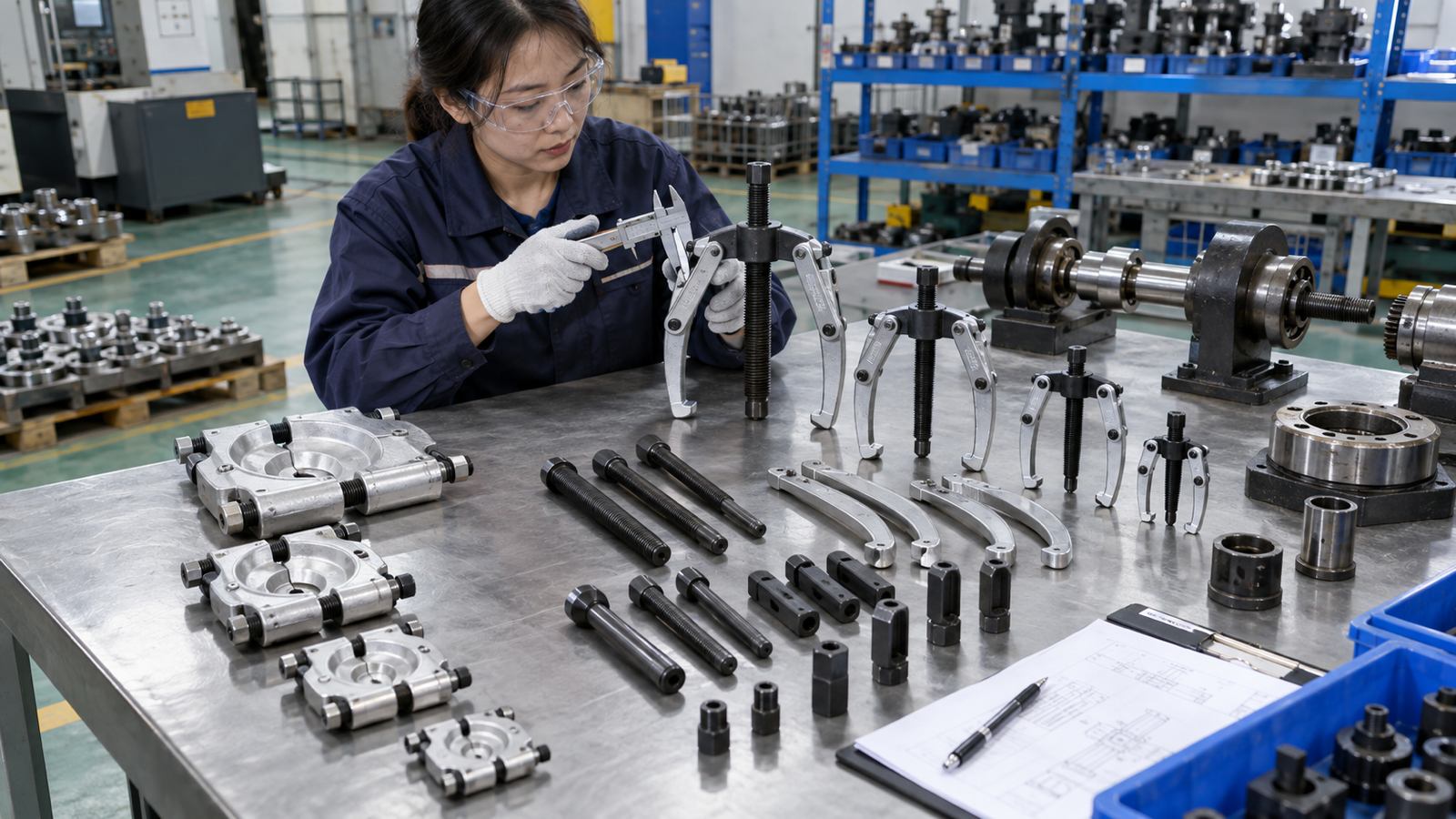
Chinese procurement engineer reviewing puller reach, spread, and separator capacity.

Blind housings have no rear opening for an external jaw. An internal puller expands inside the bearing or bore. A counterstay, bridge, or slide hammer then withdraws the part. A separator helps only when an edge can enter behind the target.

Internal systems need careful expansion. Fingers must engage a strong surface without damaging the bore, rolling elements, cage, or seal. With a slide hammer, check permitted use, connection, mass, and release path. A counterstay may suit non-impact work.

Blind access changes the selection questions: ask how the tool enters, expands, reacts, and exits before discussing force.

Specify:

  • bore diameter and usable internal depth;
  • target ring or housing surface;
  • expansion range and engagement length;
  • counterstay or slide-hammer connection;
  • impact restrictions, guarding, and protection for seals, sensors, and machined bores.

Do not call a separator kit a blind-bearing system unless its listed parts perform that sequence.

Practical action: approve a blind-housing sample with the internal grip visible before load testing.

Blind-system comparison

System Entry and grip Main buyer check
Internal collet puller Expands inside bore or ring Engagement depth and bore range
Slide-hammer attachment Internal or external adapter plus sliding mass Connection, impact limits, release path
Counterstay system Internal grip reacts against a bridge Bridge clearance and stable support

8. Are separator and puller removals destructive or non-destructive?
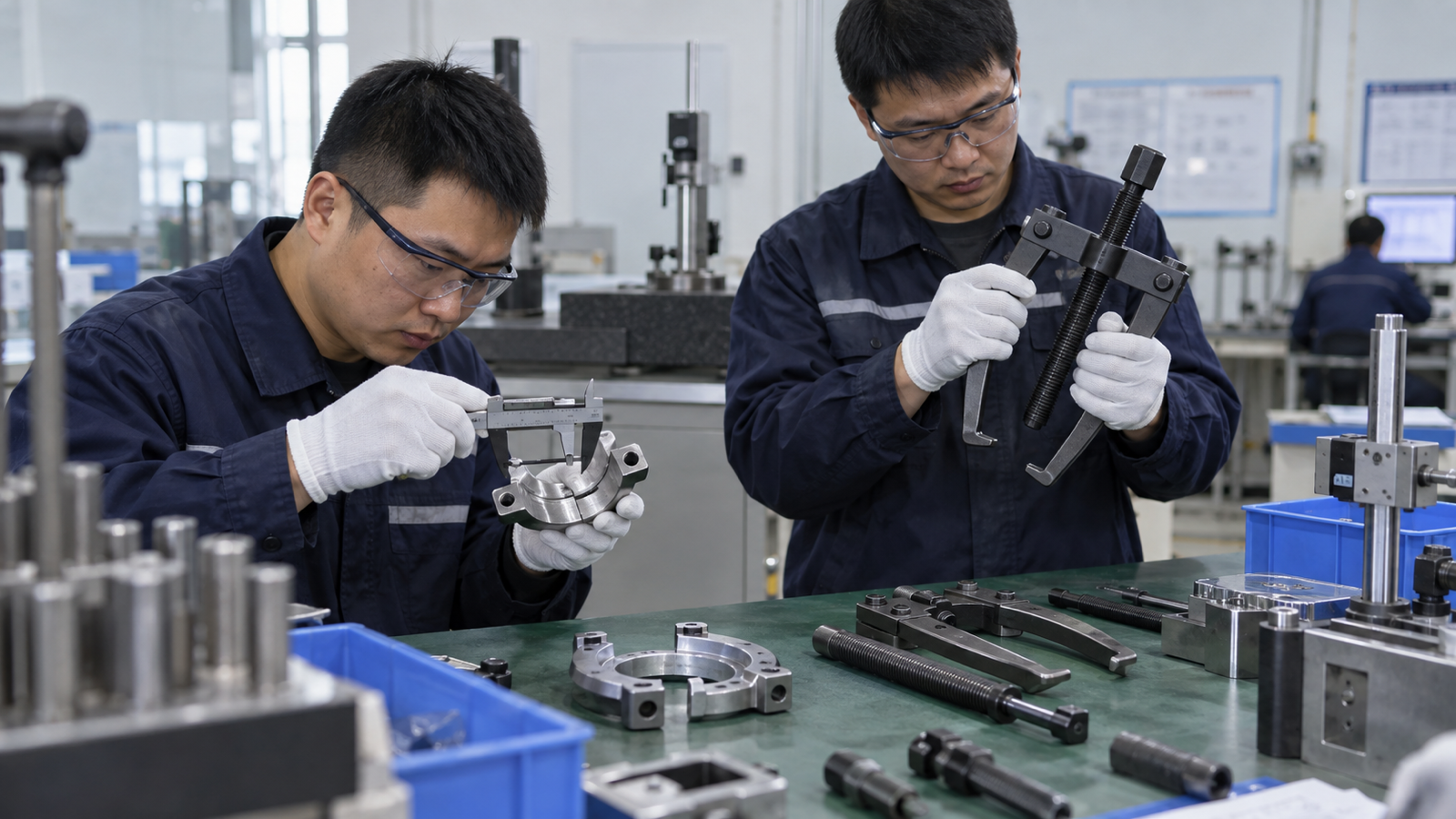
Chinese quality team inspecting bearing separator and puller components.

Neither tool family carries a universal “non-destructive” label. A correctly fitted puller can preserve a shaft or housing while the bearing remains a discard item. A separator can protect a shoulder in one setup yet mark it when misaligned or overloaded.

Destructive removal may suit a seized inner ring or damaged bearing with no reuse requirement. Cutting, grinding, heating, or other special methods need risk assessment and competent supervision. Cutting a tight ring can release tensile stress. Torch heat can change bearing steel properties or damage seals. Treat these methods as procedure-specific.

Define what must survive: the buyer should name the reusable shaft, housing, hub, seal, sensor, or bearing before choosing the removal method.

For each application, record:

  • target part disposition: reuse, inspection, repair, or scrap;
  • surfaces that must remain undamaged;
  • approved puller, press, heat, or cutting method;
  • stop conditions and post-removal inspection responsibility.

Practical action: add a “protected components” field to every tool approval and work instruction.

Removal-outcome matrix

Removal goal Tool implication Caution
Preserve shaft and housing Use matched grip and support Confirm force path and alignment
Save bearing for inspection Avoid load through rolling elements Follow bearing maker’s method
Remove a seized discard ring Special method may be approved Guard fragments and control heat

9. What force and safety information should B2B buyers specify?
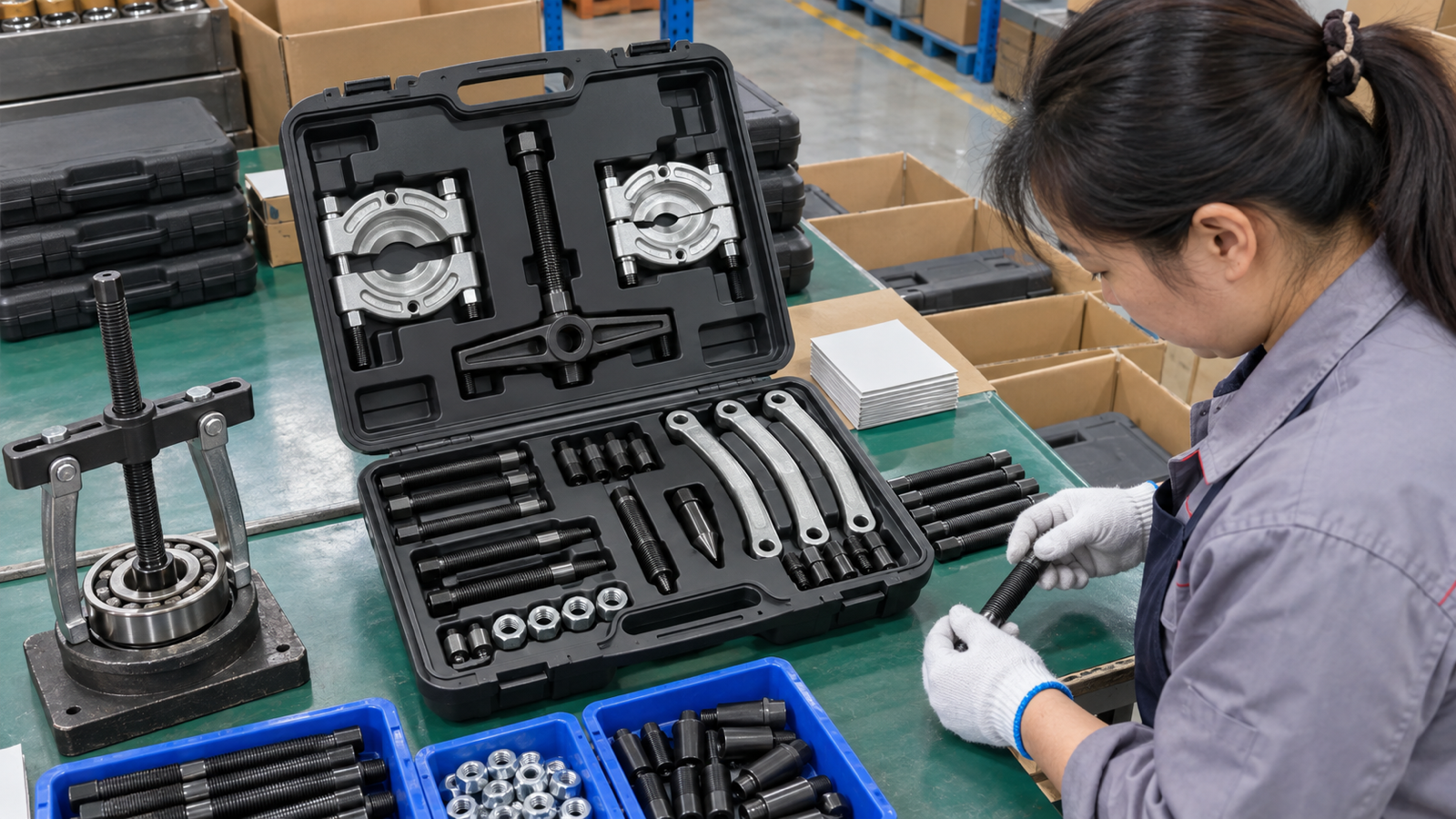
Unbranded bearing separator and puller kit arranged in a fitted case.

A buyer should request force data for the exact configuration, not a headline number detached from reach, spread, or adapter choice. Capacity may depend on component condition, configuration, actuation, and inspection. Wear, damage, friction, and misalignment can reduce performance.

Before operation, isolate equipment under the applicable workplace procedure. OSHA’s hazardous-energy rule covers unexpected start-up and stored-energy release for covered servicing work. Support heavy components independently and keep people outside the release path. Use required eye, face, and guarding controls.

Stop at abnormal resistance: do not strike a loaded puller, add a pipe extension, use an unapproved impact drive, weld jaws, or exceed a pressure or force limit. Recheck retainers, fit, corrosion, direction, support, and the tool instructions.

Ask suppliers for:

  • rated force or pressure by configuration;
  • reach, spread, stroke, and minimum contact dimensions;
  • inspection and replacement criteria;
  • approved drive methods and impact restrictions;
  • traceable test information when required.

For assortment planning, compare specialty tools with mechanic tool-set selection for distributors instead of one generic kit.

Practical action: make “configuration-specific rating received” a purchase-release gate.

Buyer safety specification

Field Minimum record Why it matters
Rated configuration Tool, adapters, reach, spread Prevents misuse of headline capacity
Energy control Isolation and stored-energy steps Limits unexpected movement
Operator protection PPE, guard, exclusion zone Controls fragment and release hazards

10. How should a B2B buyer choose and approve the right system?
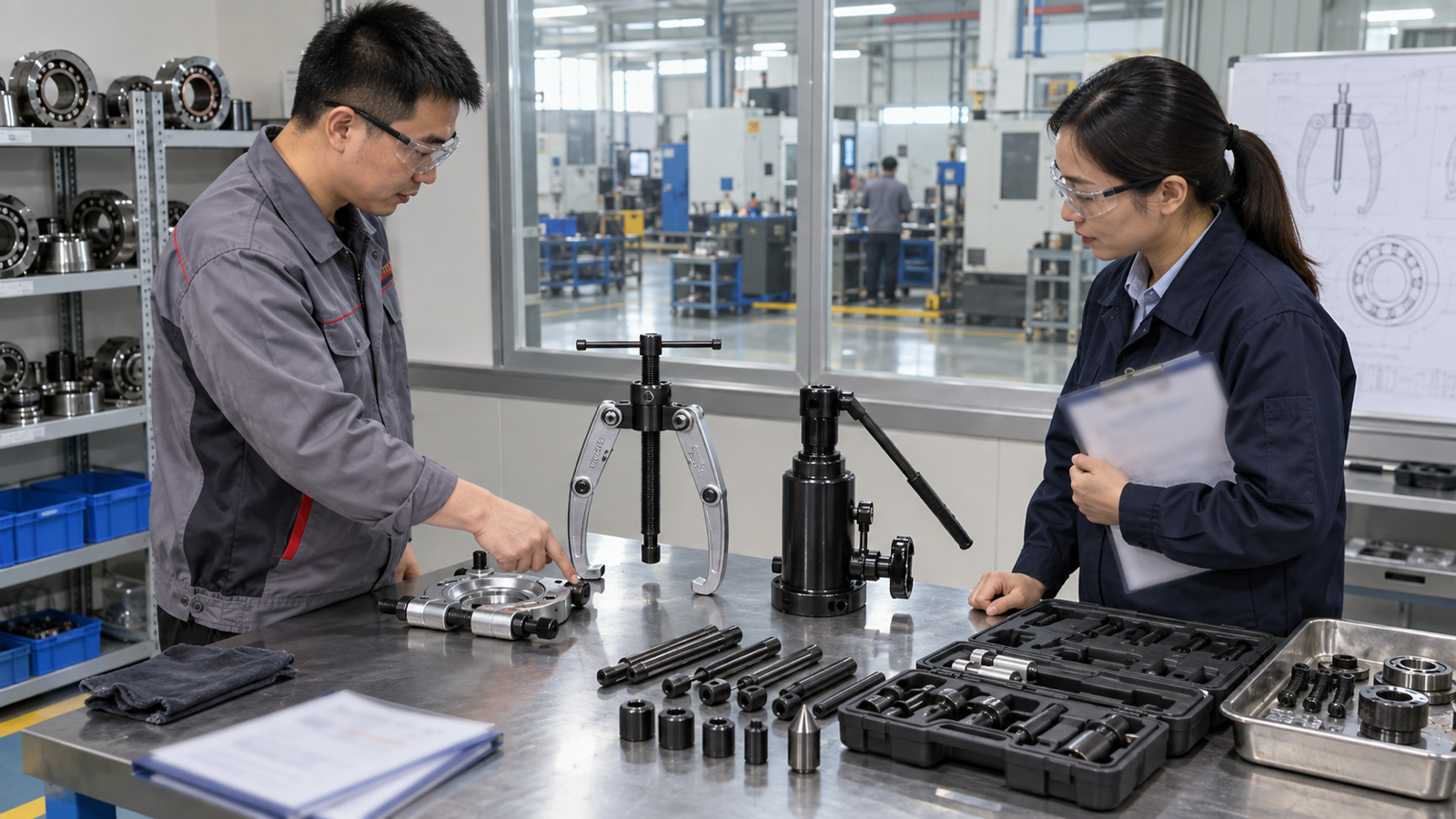
Chinese supplier and buyer reviewing bearing separator and puller samples.

Choose engagement before product family. Start with a measured drawing or sample. Mark the component that must move and the surface that can react force. Test a separator, jaw, internal collet, hub attachment, or press interface against those points.

An approval package should include fit photographs, dimensional limits, configuration-specific force information, spares, instructions, packaging, and change-control rules. Identify plates, rods, bridges, jaws, hydraulic parts, and adapters as one load-bearing system.

For wider programs, the socket-tools system and OEM socket-set packaging options may be complementary. Use the KOLARWIN B2B tool sourcing blog for related guides, then contact the KOLARWIN team about a bearing-puller RFQ with dimensions, quantity, applications, packaging, and spares.

Use a clear approval rule: choose a separator for a narrow supported rear edge, a jaw or internal puller for secure grip, and another method when neither creates a controlled force path.

Practical action: approve one representative sample under the hardest fit before releasing production.

Q1: Is a bearing separator the same as a bearing puller? No. A separator creates a gripping edge. A puller supplies frame and force. Combined kits still need a rating check.

Q2: Can a bearing separator remove any bearing? No. It needs a sound rear edge and clearance. It may not suit a blind housing, fragile seal, or unsafe reaction surface.

Q3: Are three-jaw pullers always better than two-jaw pullers? No. Jaw count does not replace reach, spread, shoulder depth, or alignment. Verify the actual interface.

Q4: Can a slide hammer be used with a separator? Only when separator, adapter, and slide-hammer connection are designed and rated together. Check instructions, engagement, impact limits, and release path.

Q5: What should a buyer send with a bearing-puller RFQ? Send photos, bore or shaft dimensions, rear clearance, reach, spread, quantity, packaging, spares, and local documentation needs.

Looking for a reliable mechanic tools manufacturer in China?

If you are sourcing hand tools, socket tools, automotive repair tools, mechanic tool sets or OEM private label tools, contact KOLARWIN Tools for factory-direct quotation, customization support and product consultation.


Removing a bearing often fails at the gripping point, not at the forcing screw. A jaw may have no shoulder, a housing may be blind, or a separator may fit the wrong ring. A separator creates a supported edge. A puller supplies the frame, jaws, collet, or hydraulic force. This guide helps B2B buyers choose without assuming one tool fits every bearing.

1. What is the difference between a bearing separator and a bearing puller?

Bearing separator and three-jaw bearing puller compared on separate supported fixtures.

A bearing separator, or bearing splitter, is a clamping plate or two-piece wedge assembly. Its thin edges enter behind a bearing, gear, or pulley when jaws cannot reach. A bearing puller is the extraction mechanism, using jaws, a collet, bridge, screw, or hydraulic force.

Here is the distinction: a separator creates engagement; a puller applies controlled withdrawal force. Many kits need a crossbar, rods, or hydraulic frame.

For a buyer, check these points:

KOLARWIN’s automotive repair tools range gives category context.

Practical action: write engagement and reaction points into every RFQ before comparing price.

Quick comparison for buyers

Item Bearing separator Bearing puller
Main job Creates a gripping edge behind a tight part Applies extraction force through a matched mechanism
Typical contact Thin plates behind a ring or shoulder Jaws, collet, hub bolts, or bridge
Works alone? Often no; requires a frame or rods Sometimes, if jaws and screw are integrated

2. What is a bearing separator used for?

Bearing separator halves seated evenly behind a bearing race on a supported shaft.

A bearing separator suits an inner ring close against a shoulder, where normal puller jaws have too little space. Two plates close around the part. Beveled edges seat behind a suitable face, then rods or a crossbar lift the separator and target together.

This geometry can help with an inner ring on a shaft, gear with a narrow rear gap, or pulley without an exposed rim. Contact must land on a sound shoulder or face, not a seal lip, chamfer, cage, or thin section.

The fit decides whether a separator helps: a thin plate must remain seated as load rises. Specify opening range and plate thickness rather than calling a model “universal.”

Before approval, inspect:

For wheel-bearing projects, pair the decision with this wheel-bearing puller kit guide so a race tool is not confused with a hub set.

Practical action: request a fit drawing showing rear clearance, edge thickness, and permitted force.

Separator fit checkpoints

Check Good evidence Stop and reassess when
Rear clearance Measured gap accepts both plates Plate edge sits on a chamfer or seal
Contact width Even support behind a sound face Only a narrow corner carries load
Frame connection Matched rods, bridge, or ram Threads or pins are improvised

3. What is a bearing puller used for?

Chinese technician checking three-jaw bearing puller alignment.

A bearing puller transfers force from a screw, hydraulic cylinder, or slide hammer into a moving component. External jaws grip a shoulder. Internal pullers expand inside a bore. Hub pullers attach through a flange or stud pattern. Reversible jaws change range by configuration.

“Puller” describes a family, not one geometry. Two jaws may fit a narrow opening. Three jaws can share contact across three points when a suitable shoulder exists. A slide hammer describes force application, not whether its attachment is internal or external.

A complete puller specification tells you how force travels: grip, reach, spread, protection, actuation, and rating should appear together.

Ask suppliers for:

Use the specialty pullers and extractors in a mechanic tool list when mapping an assortment.

Practical action: approve each puller by named component and measured interface, not nominal diameter.

Puller setup checkpoints

Puller family Engagement method Buyer must confirm
External jaw Behind an outside shoulder Jaw seating, reach, spread, alignment
Internal or blind Expanding fingers or collet Bore, rear grip, expansion range
Hub puller Flange bolts or studs Pattern, thread, axle and sensor clearance

4. How do separator engagement and jaw engagement differ?

Chinese quality engineer measuring bearing access and rear clearance.

Separator plates slide behind a part and clamp by tightening their bolts. Their broad faces can support an inner ring when jaw tips are too thick. Jaw pullers approach from outside or inside, with each jaw seated on a sound shoulder.

That difference changes the failure mode. A jaw touching only at its tip may roll out. A separator that is not parallel may mark the shaft. Both need a centered axis and independent support for heavy assemblies.

Look at contact before capacity: a higher force rating cannot repair a poor grip. Inspect the contact surface while the tool is hand-tight and again after initial load.

For approval, record:

Keep fit photographs with the drawing so samples match approved engagement.

Practical action: add a “full contact at zero load” checkpoint to the sample-approval form.

Engagement comparison

Feature Separator plates Jaw puller
Entry path Slides into a narrow rear gap Reaches around or inside a shoulder
Contact shape Broad edge or plate face Discrete jaw tips or hooks
Best evidence Clearance and seating photos Spread, reach, and alignment photos

5. When is a bearing separator better than a standard jaw puller?

Mechanical and hydraulic bearing separator systems on guarded test fixtures.

A separator often suits a narrow gap, flush inner ring, or face that cannot accept a hook-shaped jaw. It can provide a stable lifting surface when a jaw tip would contact a seal or thin flange. Its value still depends on rear support and a matched frame.

The separator must load the intended part. A reusable bearing may need a different method than a damaged race.

The better choice follows the interface: measure gap, ring width, shoulder depth, and shaft condition before ordering.

For a B2B program, capture:

KOLARWIN’s China OEM auto-tools sourcing guide supports sourcing when separators sit beside hub or slide-hammer tools.

Practical action: fit-test one separator sample before approving an assortment.

Application screen

Situation Separator may suit when Another method may suit when
Inner ring near shoulder Rear edge remains strong and accessible No safe rear face exists
Gear or pulley Plates can sit squarely behind hub Hub is thin or unsupported
Heavy assembly Frame and support are rated together Component needs another method

6. When is a jaw puller the better choice?

Chinese inspector checking separator plates, studs, threads, and forcing screw condition.

A jaw puller can suit a clear shoulder with enough room for stable seating. It sets up quickly for exposed hubs, bearings, pulleys, and similar parts. Reversible jaws may cover inside and outside extraction, with a separate spread, reach, and force check for each direction.

Jaw count does not decide fit. Two jaws may suit confined access. Three jaws can provide three-point contact where geometry allows it. Neither fixes a narrow shoulder or off-axis screw.

A jaw puller wins on access only when its hooks stay put: hand-tight inspection, balanced adjustment, and a clear release path matter more than a large catalogue range.

Buyers should compare:

A puller belongs in a wider mechanics tool-set configuration after its interfaces are documented.

Practical action: test the narrowest and deepest intended application, since that combination usually reveals fit problems first.

Jaw-puller decision points

Buyer question Why it matters Evidence to request
Can each jaw seat fully? Reduces roll-out risk Fit photo or sample test
Does reach remain usable at spread? Nominal spread can mislead Dimensioned reach chart
Are jaws reversible? Orientation changes geometry Configuration drawing

7. Can separators and pullers work with internal or blind-bearing systems?

Chinese procurement engineer reviewing puller reach, spread, and separator capacity.

Blind housings have no rear opening for an external jaw. An internal puller expands inside the bearing or bore. A counterstay, bridge, or slide hammer then withdraws the part. A separator helps only when an edge can enter behind the target.

Internal systems need careful expansion. Fingers must engage a strong surface without damaging the bore, rolling elements, cage, or seal. With a slide hammer, check permitted use, connection, mass, and release path. A counterstay may suit non-impact work.

Blind access changes the selection questions: ask how the tool enters, expands, reacts, and exits before discussing force.

Specify:

Do not call a separator kit a blind-bearing system unless its listed parts perform that sequence.

Practical action: approve a blind-housing sample with the internal grip visible before load testing.

Blind-system comparison

System Entry and grip Main buyer check
Internal collet puller Expands inside bore or ring Engagement depth and bore range
Slide-hammer attachment Internal or external adapter plus sliding mass Connection, impact limits, release path
Counterstay system Internal grip reacts against a bridge Bridge clearance and stable support

8. Are separator and puller removals destructive or non-destructive?

Chinese quality team inspecting bearing separator and puller components.

Neither tool family carries a universal “non-destructive” label. A correctly fitted puller can preserve a shaft or housing while the bearing remains a discard item. A separator can protect a shoulder in one setup yet mark it when misaligned or overloaded.

Destructive removal may suit a seized inner ring or damaged bearing with no reuse requirement. Cutting, grinding, heating, or other special methods need risk assessment and competent supervision. Cutting a tight ring can release tensile stress. Torch heat can change bearing steel properties or damage seals. Treat these methods as procedure-specific.

Define what must survive: the buyer should name the reusable shaft, housing, hub, seal, sensor, or bearing before choosing the removal method.

For each application, record:

Practical action: add a “protected components” field to every tool approval and work instruction.

Removal-outcome matrix

Removal goal Tool implication Caution
Preserve shaft and housing Use matched grip and support Confirm force path and alignment
Save bearing for inspection Avoid load through rolling elements Follow bearing maker’s method
Remove a seized discard ring Special method may be approved Guard fragments and control heat

9. What force and safety information should B2B buyers specify?

Unbranded bearing separator and puller kit arranged in a fitted case.

A buyer should request force data for the exact configuration, not a headline number detached from reach, spread, or adapter choice. Capacity may depend on component condition, configuration, actuation, and inspection. Wear, damage, friction, and misalignment can reduce performance.

Before operation, isolate equipment under the applicable workplace procedure. OSHA’s hazardous-energy rule covers unexpected start-up and stored-energy release for covered servicing work. Support heavy components independently and keep people outside the release path. Use required eye, face, and guarding controls.

Stop at abnormal resistance: do not strike a loaded puller, add a pipe extension, use an unapproved impact drive, weld jaws, or exceed a pressure or force limit. Recheck retainers, fit, corrosion, direction, support, and the tool instructions.

Ask suppliers for:

For assortment planning, compare specialty tools with mechanic tool-set selection for distributors instead of one generic kit.

Practical action: make “configuration-specific rating received” a purchase-release gate.

Buyer safety specification

Field Minimum record Why it matters
Rated configuration Tool, adapters, reach, spread Prevents misuse of headline capacity
Energy control Isolation and stored-energy steps Limits unexpected movement
Operator protection PPE, guard, exclusion zone Controls fragment and release hazards

10. How should a B2B buyer choose and approve the right system?

Chinese supplier and buyer reviewing bearing separator and puller samples.

Choose engagement before product family. Start with a measured drawing or sample. Mark the component that must move and the surface that can react force. Test a separator, jaw, internal collet, hub attachment, or press interface against those points.

An approval package should include fit photographs, dimensional limits, configuration-specific force information, spares, instructions, packaging, and change-control rules. Identify plates, rods, bridges, jaws, hydraulic parts, and adapters as one load-bearing system.

For wider programs, the socket-tools system and OEM socket-set packaging options may be complementary. Use the KOLARWIN B2B tool sourcing blog for related guides, then contact the KOLARWIN team about a bearing-puller RFQ with dimensions, quantity, applications, packaging, and spares.

Use a clear approval rule: choose a separator for a narrow supported rear edge, a jaw or internal puller for secure grip, and another method when neither creates a controlled force path.

Practical action: approve one representative sample under the hardest fit before releasing production.

Q1: Is a bearing separator the same as a bearing puller? No. A separator creates a gripping edge. A puller supplies frame and force. Combined kits still need a rating check.

Q2: Can a bearing separator remove any bearing? No. It needs a sound rear edge and clearance. It may not suit a blind housing, fragile seal, or unsafe reaction surface.

Q3: Are three-jaw pullers always better than two-jaw pullers? No. Jaw count does not replace reach, spread, shoulder depth, or alignment. Verify the actual interface.

Q4: Can a slide hammer be used with a separator? Only when separator, adapter, and slide-hammer connection are designed and rated together. Check instructions, engagement, impact limits, and release path.

Q5: What should a buyer send with a bearing-puller RFQ? Send photos, bore or shaft dimensions, rear clearance, reach, spread, quantity, packaging, spares, and local documentation needs.

Why Partner with Kolarwin Tools?

Factory-Direct Pricing Skip the middleman — access competitive wholesale prices and protect your margins
Private Label & OEM Ready Your brand, our expertise — full customization from logo to packaging
Fast Global Shipping Reliable delivery to 60+ countries with full export documentation support
Low MOQ, High Flexibility Start small, scale fast — flexible order quantities to fit your business
Dedicated B2B Support One-on-one account management from quote to delivery, every time

Get Your Free Quote in 24 Hours

Tell us your sourcing needs — we'll respond with a tailored quote, product specs, and the best pricing for your market. No commitment required.

Chat on WhatsApp Email Us Directly