
Need OEM supplier support for this product type?
Contact KOLARWIN Tools for OEM mechanic tools, private label packaging, wholesale quotation and product range support. This gives overseas buyers a clear path from article reading to supplier discussion.
Single and double flares describe how a tube end is formed. They do not create one universal safety ranking. A single-wall 37° AN or JIC flare can be approved when its tube, fitting, sleeve, material, and specification match. A double flare folds the tube wall back. Buyers must match the formed end with its approved fitting and service requirement.
1. What is the difference between a single flare and a double flare?
A single flare expands one tube wall into a conical sealing surface, while a double flare folds the tube end back before final forming. The names do not authorize substitution.
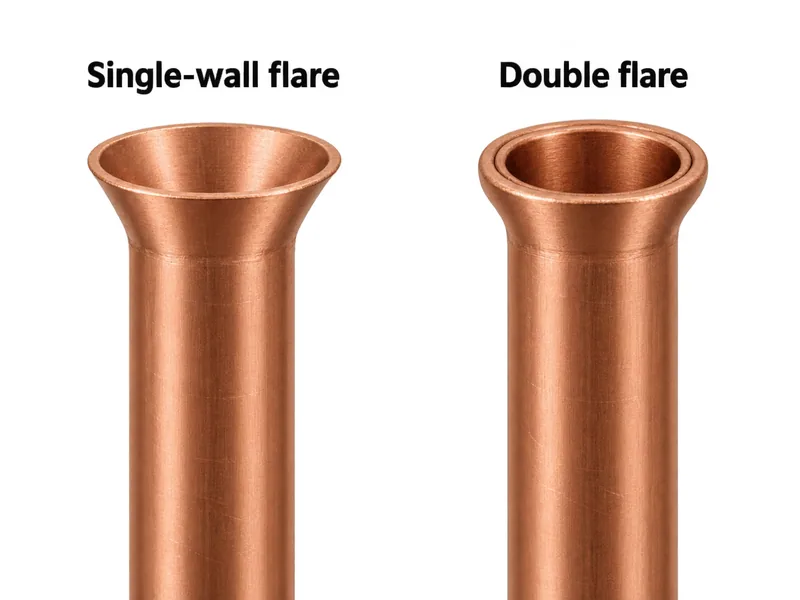
How does each shape form?
A single flare uses one formed wall. A double flare creates a folded edge before final forming. Angle, tube, wall, and fitting remain specification-dependent.
Identify flare construction, angle, tube, and mating fitting together.
- Single flare: one formed tube wall
- Double flare: folded tube end with a reinforced edge
- 37° AN/JIC: a separate approved single-wall system in many designs
- Brake-line forms: follow the vehicle or component specification
Buyers can review KOLARWIN’s hydraulic brake pipe flaring tool guide before defining a tool program.
Why is the distinction commercial?
The flare determines the tool, gauge, fitting seat, training method, and replacement process. “Flare tool” alone hides compatibility.
A lower price cannot repair a wrong flare specification.
Keep single, double, 37° AN/JIC, and other approved forms in separate product data fields. Do not use a generic “universal brake flare” label for a part with limited scope.
What should a buyer record?
Record flare type, angle, tube outside diameter, wall and material, fitting family, application, tooling, and inspection method. Keep the mating fitting reference in the same approval file.
| Flare construction | Forming action | Mating requirement | Buyer record |
|---|---|---|---|
| Single wall | Form one conical wall | Matching approved seat | Angle, tube, fitting |
| Double | Fold tube, then form | Matching double-flare seat | Tube, die, fitting |
| 37° AN/JIC single wall | Form specified 37° cone | Matching 37° nose and sleeve | Angle, tube, sleeve |
2. How is a single-wall flare formed?
A single-wall flare is formed by preparing the tube end, clamping it at the specified height, and pressing the wall against the correct cone or die. The tool and material must be approved for that flare family.
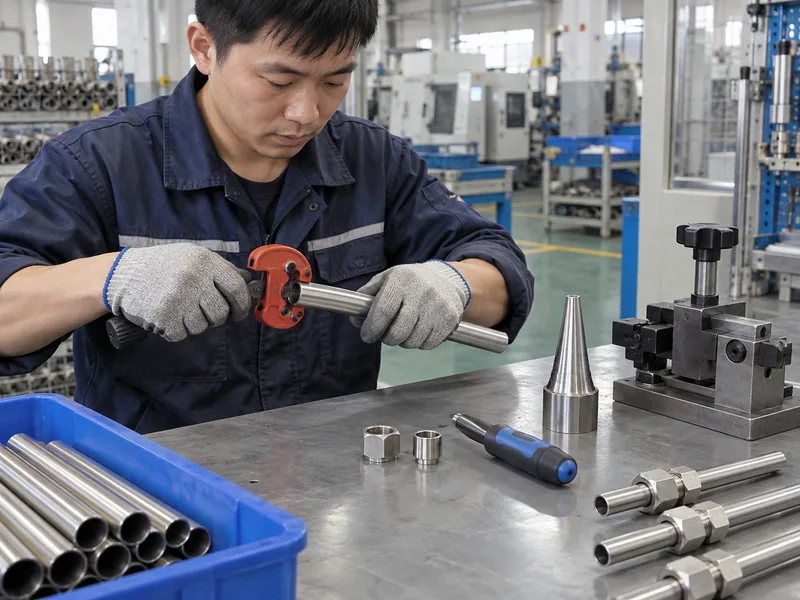
What preparation affects the result?
The tube needs a square cut, clean deburring, correct nut and sleeve placement, and stable clamping.
Small errors become visible at the sealing edge.
- Cut the tube square
- Deburr inside and outside
- Install nut or sleeve before forming
- Clamp at the specified height
Where can a single flare be approved?
A single flare can be appropriate in an approved 37° AN or JIC-style system or another specified application. Application approval matters more than a generic rule.
“single” does not mean universally unsafe, and it does not mean universally suitable.
Confirm fitting nose, sleeve, angle, tube, wall, and service conditions. Never insert a generic single flare into a double-specified brake system.
What should a sample show?
A sample should show a smooth, concentric cone, even edge, correct angle, and no cracks or tool marks. Gauge it against the approved drawing.
| Single-flare check | Failure sign | Action |
|---|---|---|
| Cut and deburr | Tilted end or burr | Rework tube preparation |
| Cone surface | Crack, fold, or scratch | Reject sample |
| Angle | Gauge mismatch | Stop and review tooling |
| Fitting seat | Poor contact | Verify approved pairing |
3. How is a double flare formed?
A double flare is formed by first folding the tube end with a forming button or die, then finishing the folded wall into the specified flare shape. It requires tooling, tube preparation, and inspection suited to the approved double-flare standard.
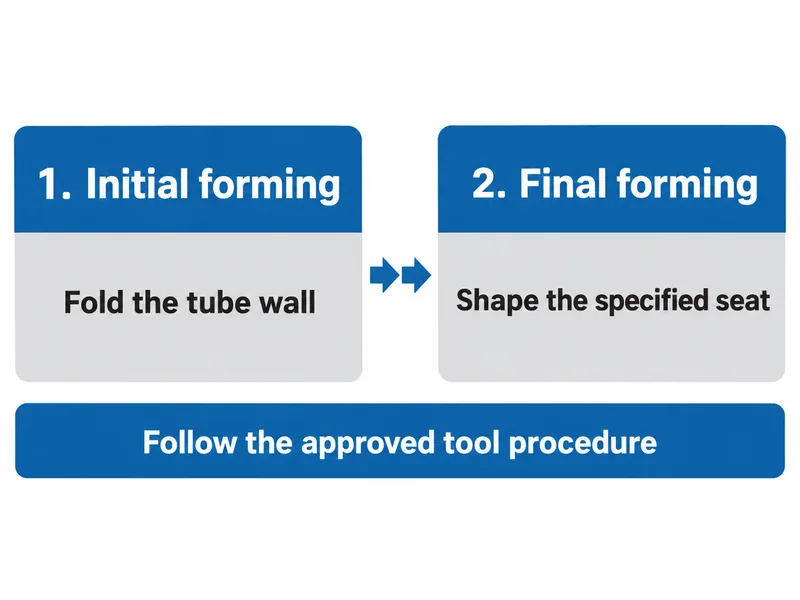
What changes during forming?
The first operation turns the tube edge back on itself. A second operation forms the folded section into the final shape.
Inspect the fold before final forming and the seat afterward.
- Square-cut and deburr the tube
- Fit the correct nut before clamping
- Use the approved forming button
- Inspect fold and final flare separately
An approved hand-tools range can support cutters, deburring tools, clamps, and related maintenance tools around the flare workstation.
Why does fold quality matter?
An uneven fold can create a thin edge, crack, off-center seat, or incomplete contact. Excessive force can damage the tube or die. A visually large flare is not proof of a correct fold.
The fold carries information that the outer cone cannot show.
Use a sectioned sample or approved gauge during process development.
What should a double-flare buyer specify?
Specify tube material, outside diameter, wall, flare angle, die family, process steps, inspection method, and fitting standard. Name whether the tool supports only double flares or also approved single forms.
| Double-flare field | Why it matters | Evidence |
|---|---|---|
| Tube wall | Controls fold volume | Material and tube record |
| Die and button | Forms the fold | Tool drawing and sample |
| Final angle | Controls fitting seat | Gauge or drawing |
| Inspection | Finds cracks and offset | Control plan |
4. Is a single flare always unsafe for automotive tubing?
No. A single flare can be acceptable in an approved automotive 37° AN/JIC or other specified tube system. It is unacceptable when an assembly explicitly requires a double flare.
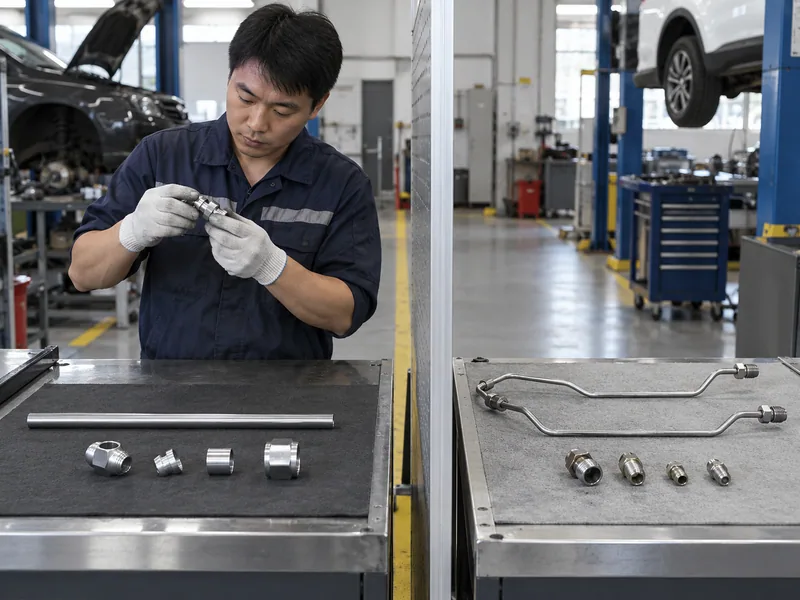
Why does the approved system matter?
A 37° AN/JIC uses a matching 37° nose, sleeve, nut, tube, and forming method. It differs from a double-flare brake connection.
The word “single” alone does not provide approval.
- Confirm 37° AN/JIC or another specified standard
- Verify tube and sleeve combination
- Use the correct forming tool and gauge
- Keep brake-system requirements separate
KOLARWIN’s socket and tool range is a useful adjacent sourcing reference, but the tube fitting specification remains controlling.
When must a buyer reject a single flare?
Reject it when the vehicle, component, drawing, or service instruction specifies a double flare, when the mating seat does not match the specified flare geometry, or when the tube and tool capability are not documented. Never improvise a flare type for a pressurized brake system.
Do not put a generic single flare into a double-specified brake connection.
How should a catalog state the limit?
State the approved system, angle, tube material, and application. Avoid “safe for all brake lines,” “universal flare,” or similar claims unless the exact scope is documented.
| Catalog statement | Better practice |
|---|---|
| Single flare | Add angle, tube, and fitting family |
| 37° AN/JIC single flare | Name nose, sleeve, and tube scope |
| Double flare | Name standard, tube range, and die |
| Automotive use | Identify approved assembly, not a broad market |
5. How do flare angle and mating seat affect selection?
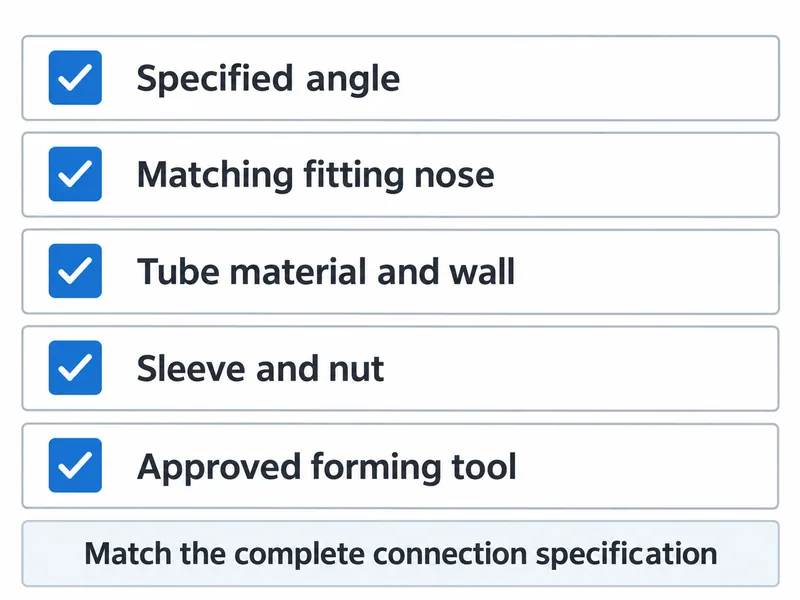
Flare angle and mating-seat geometry determine whether a formed tube seals. A single or double label cannot replace those fields.
What should be verified for a 37° system?
Verify the 37° cone, fitting nose, sleeve, nut, tube, and forming tool. The sealing surfaces must correspond.
Match the flare to the fitting, not merely to a tool name.
- Confirm angle from the drawing
- Verify tube outside diameter and wall
- Confirm sleeve and nut arrangement
- Inspect the finished seat with the approved gauge
What should stay outside this comparison?
Bubble-flare and other seat designs need separate specifications. A metric thread alone does not identify the sealing face, and a bubble flare must not be substituted for a specified 37° single or inverted double flare.
A different seat family needs different tooling and verification.
What should a buyer compare?
Compare angle, seat, tube, wall, fitting, tooling, gauge, and process record. Require the supplier to identify every dimension that affects sealing.
| Compatibility field | Question | Evidence |
|---|---|---|
| Angle | What angle is specified? | Drawing or gauge |
| Tube | Which material, OD, and wall? | Tube record |
| Fitting | Which nose, sleeve, and nut? | Part drawing |
| Process | Which die and inspection? | Work instruction |
6. How should buyers inspect single and double flare samples?
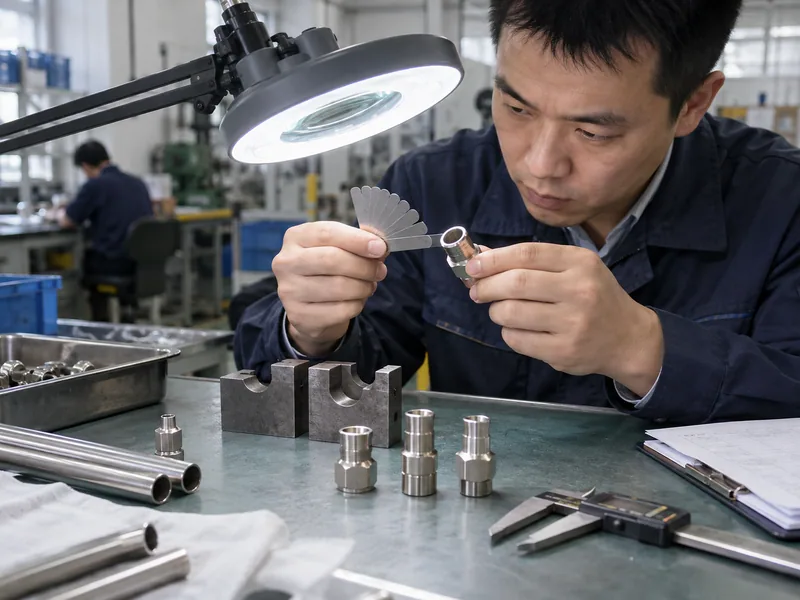
Buyers should inspect preparation, geometry, surface, angle, fold quality where applicable, and fit with the approved mating sample.
What should a single-flare sample pass?
It should show a smooth cone with the specified angle and no crack, split, fold, or deep tool mark. The tube should remain centered.
The flare cannot be judged fully in isolation.
- Check cut and deburring
- Gauge angle and diameter
- Inspect the sealing face
- Test fit without forcing the nut
Document sample size, tools, gauges and disposition in the inspection plan. Review the industry sourcing overview for broader market and application context.
What should a double-flare sample pass?
It should show an even fold, centered final cone, intact edge, correct angle, and no cracks or thin spots. Check both the outside seat and the folded interior during process approval.
Inspect it before accepting a polished outer surface.
Keep a retained sample when traceability is required.
What should the inspection report contain?
Record tube lot, material, OD, wall, flare type, angle, tooling, operator, date, gauge, quantity, result, and disposition.
| QC area | Single flare | Double flare |
|---|---|---|
| Preparation | Square cut and deburr | Square cut and deburr |
| Geometry | Cone and angle | Fold, cone, and angle |
| Surface | Smooth, crack-free seat | Smooth, crack-free folded seat |
| Fit | Approved matching fitting | Approved double-flare fitting |
7. What tooling should a distributor include in a flare program?
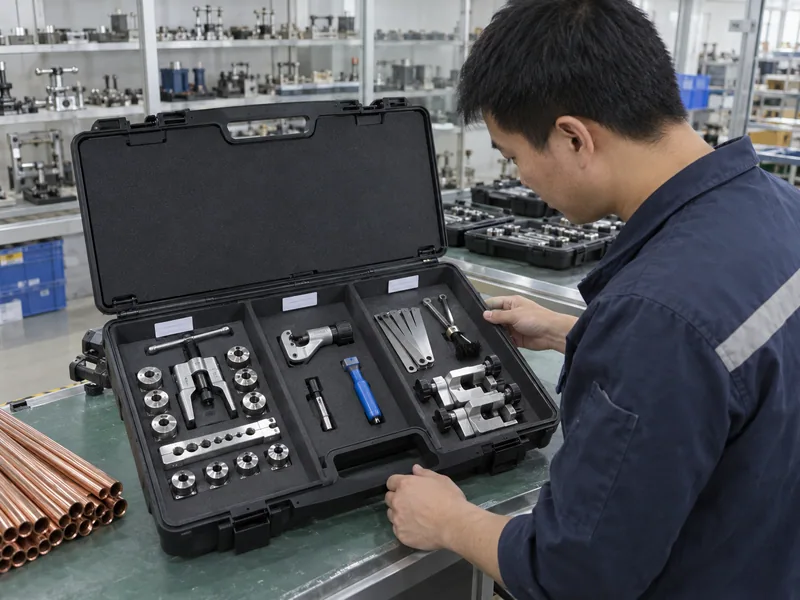
A flare program should include the correct tool, dies, cutter, deburring tool, gauges, instructions, and replacement parts. See automotive repair tools for adjacent service-line planning.
Which tools support repeatable preparation?
Use a square-cut cutter, deburring tool, stable clamp, correct die, and gauge. Separate adapters by family.
The die and gauge determine what the kit can actually form and verify.
- Match dies to flare type
- Match adapters to tube size
- Include cutter and deburring support
- Protect gauges from damage
How should private-label sets be organized?
Separate single-wall 37° tools, double-flare tools, and other seat families in case slots and instructions. Mark each die with its approved profile and size. Do not place an interchangeable-looking adapter beside an unapproved one.
Physical separation reduces wrong-tool selection.
Request packaging artwork, die maps, spare lists, and sample photos.
What should a tool-set table show?
List flare family, angle, tube sizes, materials, dies, gauges, cutter, deburring tool, and exclusions. State whether the kit forms single, double, 37° AN/JIC, or another approved family.
| Set field | Buyer question | Approval evidence |
|---|---|---|
| Flare family | What may this kit form? | Manual and sample |
| Tube coverage | Which OD and wall? | Adapter and tube list |
| Inspection | Which gauge or check? | Control plan |
| Spares | Which die or cutter parts? | Part list |
8. What should an RFQ include for single and double flare products?
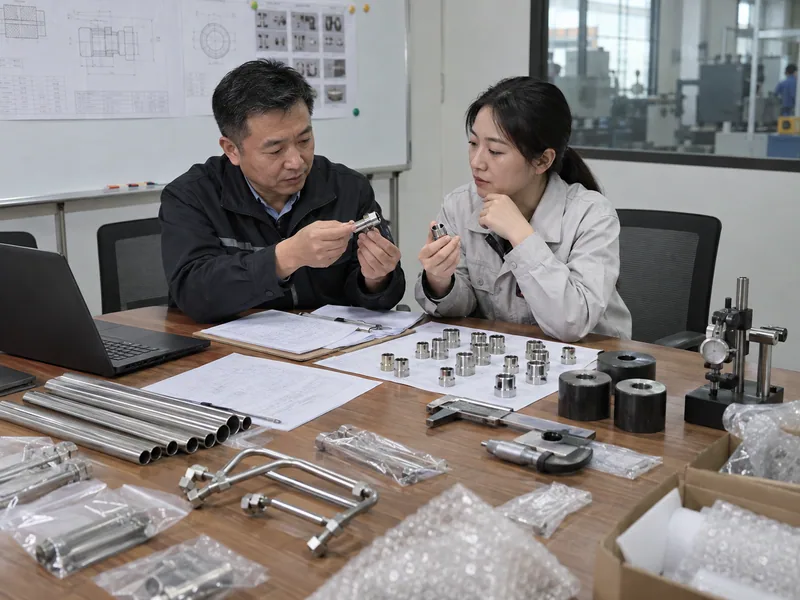
An RFQ should name flare construction, angle, tube, fitting, application, tooling, QC evidence, packaging, and spares.
Which product fields are mandatory?
Specify single or double flare, approved 37° AN/JIC scope where relevant, tube OD and wall, material, fitting family, die, gauge, and target market. State whether the buyer needs a tool, a tube component, or a complete set.
Ask for the formed connection, not just a flaring tool.
- Name the flare construction
- State angle and mating fitting
- List tube material and size
- Request sample and QC records
Review complete mechanic tool sourcing guidance before sending a wider tool-program RFQ.
What evidence should a supplier return?
Request drawings, tooling instructions, capability limits, sample photographs, gauge method, material records, packaging proof, and spare data. Ask for exclusions around double-specified brake systems.
Compatibility limits belong beside price and lead-time fields.
Do not accept “universal brake flare” wording without an identified flare family and approved application.
How should buyers compare quotes?
Compare flare, angle, tube coverage, tooling, QC, packaging, and spares.
| RFQ field | Required answer | Buyer decision |
|---|---|---|
| Flare and angle | Exact construction and angle | Accept or clarify |
| Tube scope | Material, OD, wall | Confirm coverage |
| QC evidence | Gauge and sample method | Approve or reject |
| Limits and spares | Exclusions and part list | Plan support |
9. How should buyers avoid wrong-flare brake-system orders?
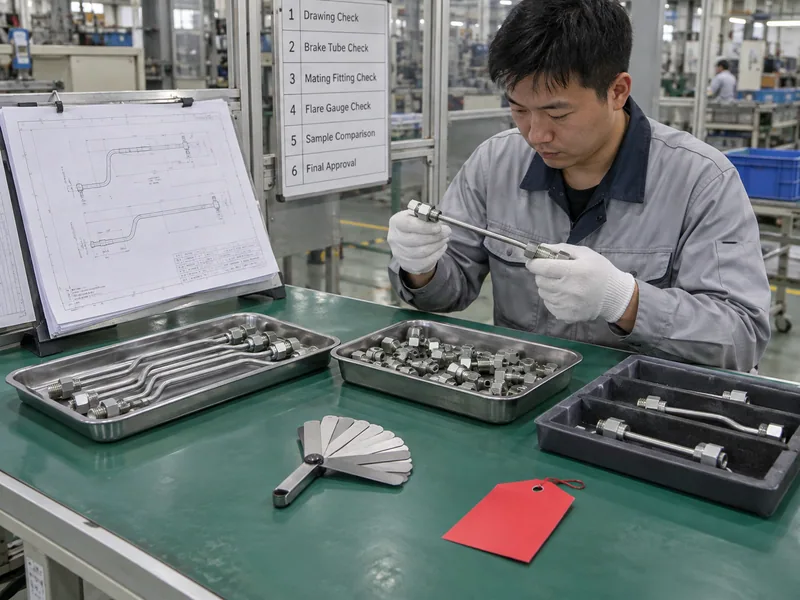
Buyers should verify the component specification, then match tube, fitting seat, tool, and inspection method. A generic single flare must never replace a specified double flare.
What should the approval workflow do?
Start with the service drawing or approved sample. Confirm flare type, angle, tube, fitting, material, and tool. Require QC signoff before a private-label listing or replacement line enters inventory.
No drawing, no flare-family approval.
- Record the required flare
- Keep a mating fitting sample
- Inspect first production samples
- Lock the approved SKU and instructions
Use the about KOLARWIN page as a supplier-context link, while keeping the customer’s technical drawing authoritative.
What wording should be prohibited?
Prohibit “fits all brake lines,” “universal single flare,” “double flare replacement,” and unsupported pressure claims. Use qualified language tied to the tested tube and fitting family.
State the approved use and the boundary in the same paragraph.
What should the release checklist contain?
Record product code, flare type, angle, tube scope, fitting scope, tool and die, inspection method, packaging, warning, and service contact. Keep the checklist with the approved sample.
| Release check | Required evidence | Stop condition |
|---|---|---|
| Application | Drawing or service data | Flare unspecified |
| Compatibility | Mating sample or drawing | Seat mismatch |
| Process | Tool and gauge method | No repeatable check |
| Copy | Qualified scope statement | Universal claim |
10. Which Flare Program Should a B2B Buyer Choose?
A B2B buyer should choose a flare program by approved application, angle, tube, fitting, forming method, QC evidence, packaging, and spares. Keep approved 37° single-wall systems separate from double-specified brake programs.
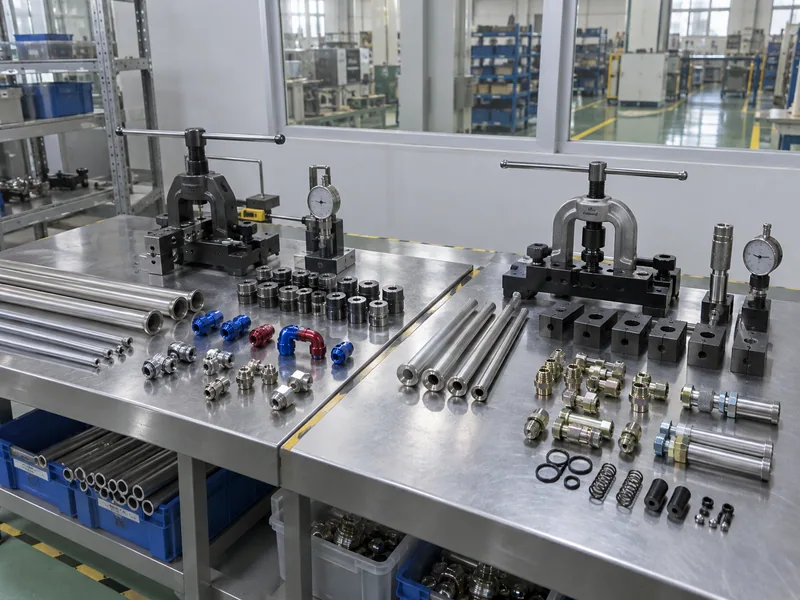
What should the final product brief include?
State flare family, angle, tube, fitting, process, gauge, application, exclusions, packaging, and spares.
Match the approved flare, then inspect the formed seat.
- Separate single-wall and double-flare SKUs
- Identify approved 37° AN/JIC scope
- Keep brake-system limits visible
- Require sample and QC evidence
For a focused RFQ, contact KOLARWIN Tools with target tubing, flare family, fittings, and packaging needs. KOLARWIN’s position is practical: a clear product boundary helps tool buyers build repeatable service programs.
Is a single flare always unsafe?
No. It can be approved in systems such as specified 37° AN/JIC connections. It must not replace a double flare required by a brake or component specification.
Can I use a single flare in a double-specified brake system?
No. Use the specified double-flare process, tube, fitting, and inspection method.
Does a double flare fit every flare seat?
No. Flare construction and mating-seat geometry must match the approved assembly.
What should a flare-tool RFQ include?
Include flare type, angle, tube OD and wall, material, fitting family, dies, gauge, QC method, packaging, exclusions, and spares.
What is the first sample check?
Confirm the drawing, tube preparation, flare shape, angle, surface condition, and fit with the approved mating sample.
Looking for a reliable mechanic tools manufacturer in China?
If you are sourcing hand tools, socket tools, automotive repair tools, mechanic tool sets or OEM private label tools, contact KOLARWIN Tools for factory-direct quotation, customization support and product consultation.


