
Need OEM supplier support for this product type?
Contact KOLARWIN Tools for OEM mechanic tools, private label packaging, wholesale quotation and product range support. This gives overseas buyers a clear path from article reading to supplier discussion.
Choosing between mechanical and hydraulic bearing pullers looks like a force question. Distributors and private-label buyers must compare control, access, capacity, service, and stored-energy risk. This guide focuses on that decision rather than a puller-type catalogue.
Contents: Decision · Actuation · Capacity · Setup · Protection · Hazards · Service · Assortment · RFQ · Decision rule
1. When should a buyer choose mechanical or hydraulic?
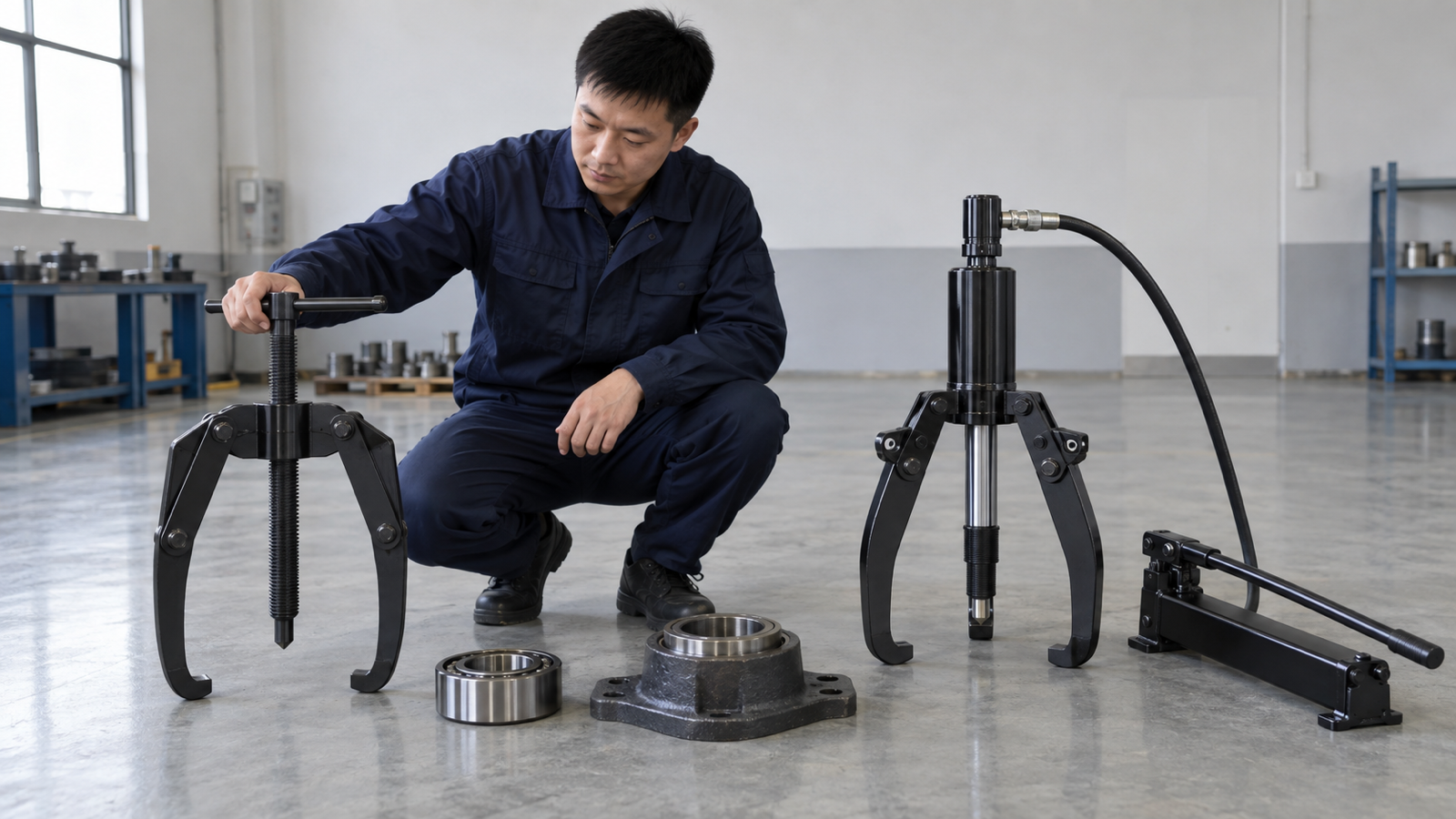
Mechanical pullers suit many portable jobs where a threaded spindle reaches the shaft end. An operator turns it with the permitted hand tool. Hydraulic pullers suit applications where a complete rated system provides controlled force with less spindle effort. Neither choice fixes poor jaw contact, inadequate reach, or a weak reaction surface.
Start with an application map rather than a model number:
- Identify the ring, shoulder, hub, or housing surface that will carry load.
- Record access, reach, spread, bore range, clearance, and line of pull.
- Note whether a counterstay, pump, hose, adapter, or shield is required.
- Separate routine jobs from high-load or repeat-production work.
The buying split starts with the workpiece: select actuation after grip and support are documented. KOLARWIN’s automotive repair tools range gives context for bearing, hub, CV-joint, and slide-hammer programs.
Action: send one measured application sheet for each target family before requesting price. Ask for a fit sketch showing the complete load path.
Mechanical versus hydraulic decision screen
| Buyer condition | Mechanical puller may fit | Hydraulic puller may fit | Evidence to request |
|---|---|---|---|
| Typical work | Portable, intermittent extraction | Repeat or high-effort extraction | Application profile |
| Force control | Spindle turns with permitted hand tool | Pump and cylinder apply pressure | Manual and system diagram |
| Site access | Wrench clearance at shaft end | Pump, hose, and frame clearance | Setup drawing |
| Approval risk | Unapproved impact or extensions | Pressure, hose, relief, and frame mismatch | Configuration limits |
2. How do mechanical and hydraulic pullers control force?
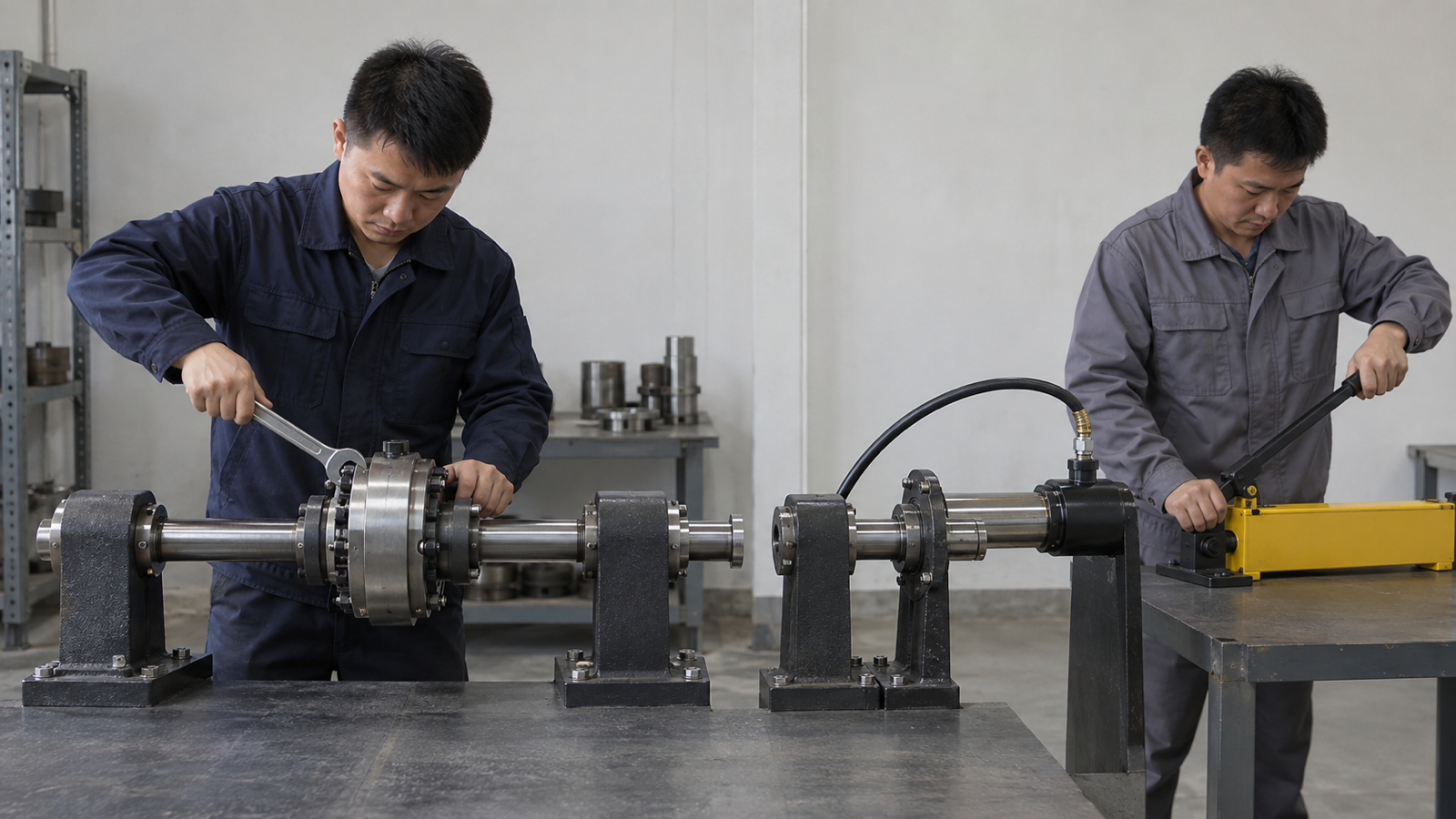
A mechanical puller converts spindle rotation into axial movement. An operator feels thread engagement and resistance, yet wrench torque does not automatically equal safe withdrawal force. Thread condition, lubrication, friction, alignment, and frame geometry affect results.
Hydraulic systems separate pumping effort from cylinder movement. This can make a heavy extraction less tiring, though pressure remains stored energy. Buyers should compare control behaviour rather than treating hydraulics as an automatic upgrade.
- Check spindle thread, nut, wrench size, stroke, and permitted drive method.
- Check pump type, working pressure, cylinder stroke, couplers, and hose routing.
- Ask how overload or pressure relief works and whether settings are sealed.
- Confirm how force is held, released, or re-applied.
Control has a paper trail: a supplier should describe how an operator applies, limits, and releases force. The China OEM auto-tools sourcing guide can support wider mixed-order and supplier-review discussions.
Action: ask for an operating sequence naming the frame, jaws, cylinder, pump, and allowed drive method.
Force-control comparison
| Control point | Mechanical | Hydraulic | Buyer check |
|---|---|---|---|
| Force input | Threaded spindle rotation | Pump pressure into cylinder | Permitted operating method |
| Operator feedback | Thread resistance and movement | Pressure indication and movement | Gauge or manual guidance |
| Stored energy | Thread load in frame | Pressure in cylinder, hose, and coupler | Release procedure |
| Misuse concern | Impact wrench or pipe extension | Altered relief setting or damaged hose | Warning labels and manual |
3. What capacity information should a supplier document?
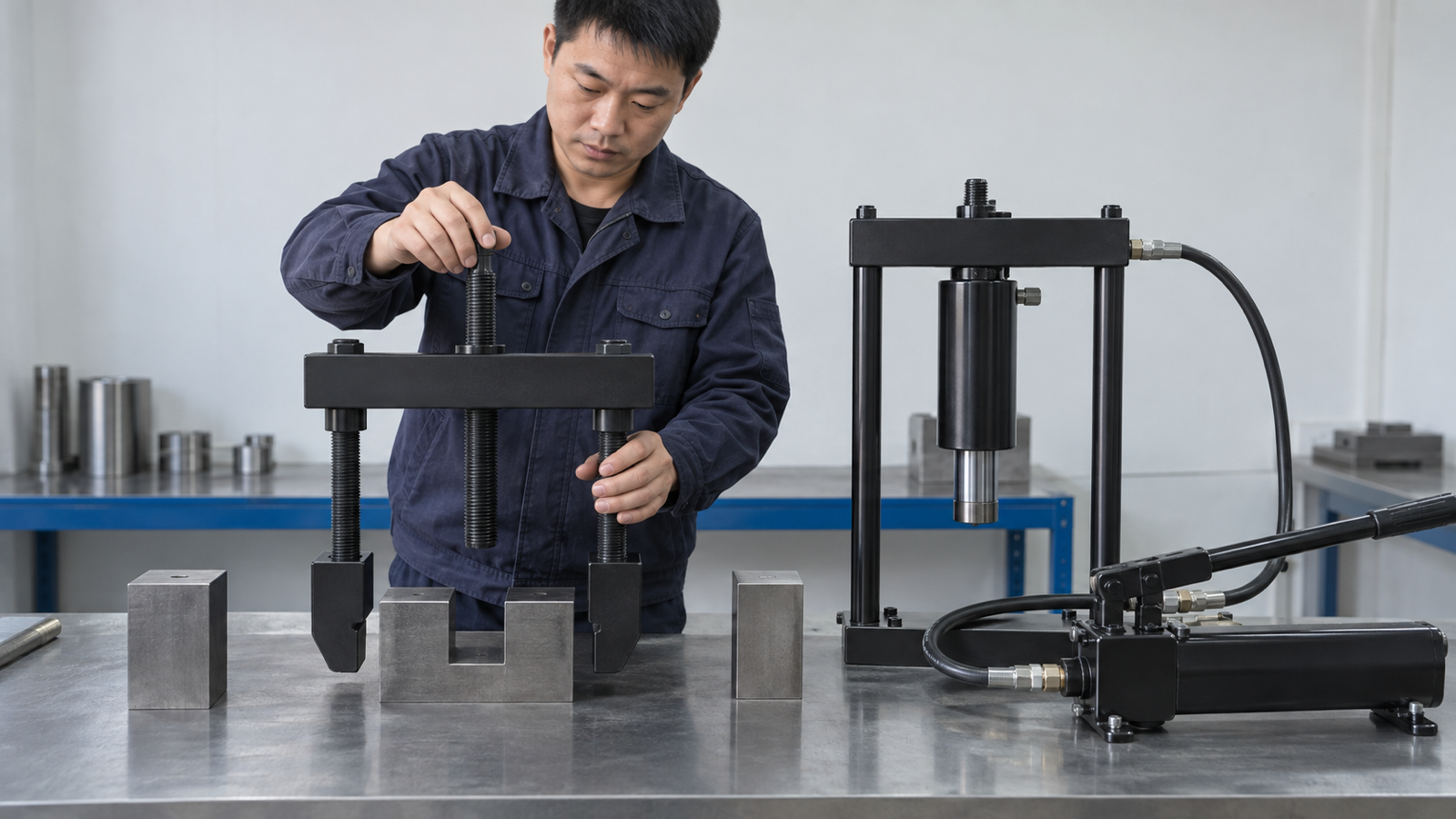
“Heavy-duty” does not provide a usable rating. A capacity value belongs to a named configuration, test basis, and condition. Buyers need to know whether it describes withdrawal force, hydraulic pressure, frame capability, a jaw arrangement, or a new tool under testing.
Ask for comparable fields across mechanical and hydraulic offers:
- Maximum withdrawal force with configuration, stroke, and contact arrangement.
- Hydraulic pressure, cylinder area, pump limit, relief setting, and hose rating.
- Reach, spread, jaw thickness, bore range, frame dimensions, and support points.
- Test method, new-tool assumption, wear limits, and duty-cycle restriction.
A rating without its setup is a loose number: the weakest frame, jaw, adapter, hose, or connection limits a complete system. Use the specialty pullers and extractors in a mechanic tool list for assortment context only. It cannot replace product-specific evidence.
Action: put every rating into a sheet with fields for configuration and test basis. Mark unsupported fields “not documented.”
Capacity-document comparison
| Field | Mechanical request | Hydraulic request | Approval question |
|---|---|---|---|
| Force | Withdrawal force by frame and jaw setup | Withdrawal force by cylinder and frame setup | What exact parts were assembled? |
| Pressure | Not normally applicable | Working and maximum pressure | Does relief protection match? |
| Geometry | Reach, spread, stroke, thread | Reach, spread, stroke, frame, hose path | Does rating remain valid at reach? |
| Condition | New-tool and wear limits | New-tool, seal, hose, and wear limits | When must service stop use? |
4. How do setup and access change the choice?
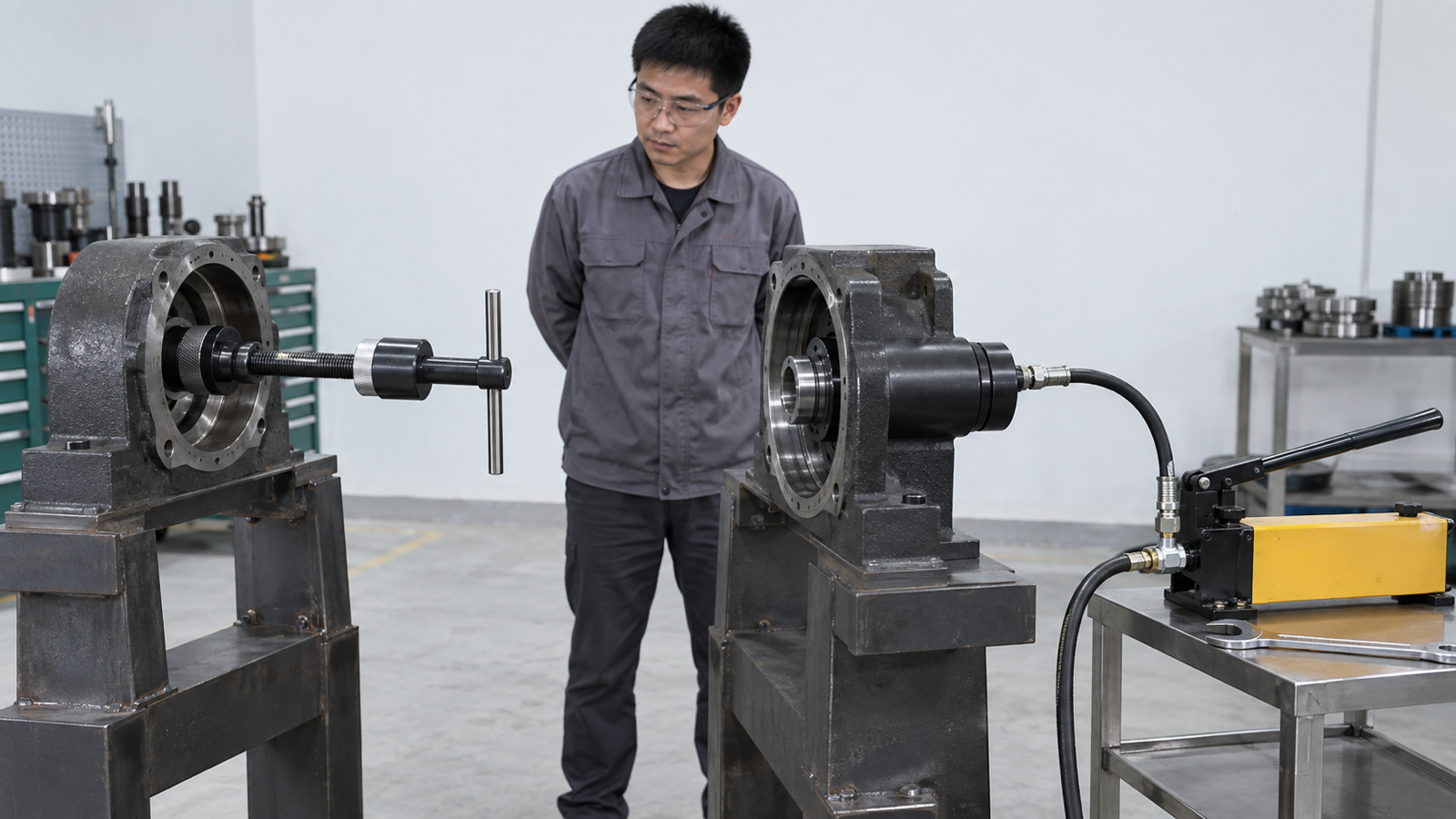
Actuation cannot compensate for a puller that cannot sit squarely. Mechanical systems need spindle wrench clearance. Hydraulic systems need room for cylinder, pump, hose, couplers, and operator. A blind housing may need an internal attachment, counterstay, or approved slide-hammer connection.
Record access in three dimensions, not with a single nominal diameter:
- Measure effective reach from frame to contact shoulder.
- Measure spread at that reach, plus jaw-tip or plate thickness.
- Locate shaft end, bore shoulder, housing wall, seals, sensors, and adjacent obstructions.
- Mark safe positions for pump, hose, wrench, support stands, and hands.
Fit comes before force: a lower-force tool with stable contact beats a larger system that loads a seal or thin flange. For wheel-bearing applications, keep the supplier’s current safety manual beside the fit record.
Action: require a section drawing or sample photograph showing jaws, reaction point, actuator, and clearance.
Setup and access matrix
| Setup feature | Mechanical implication | Hydraulic implication | Proof for approval |
|---|---|---|---|
| Shaft-end access | Wrench and spindle must align | Cylinder and ram need axial room | Side-view setup drawing |
| Confined space | Thin frame and short wrench may help | Pump and hose may be obstructed | Clearance measurement |
| Blind housing | Internal attachment plus support needed | Same grip issue plus hydraulic frame | Section-view fit test |
| Heavy component | Independent support still required | Cylinder does not replace support | Support plan and photo |
5. How do you protect the bearing and workpiece?
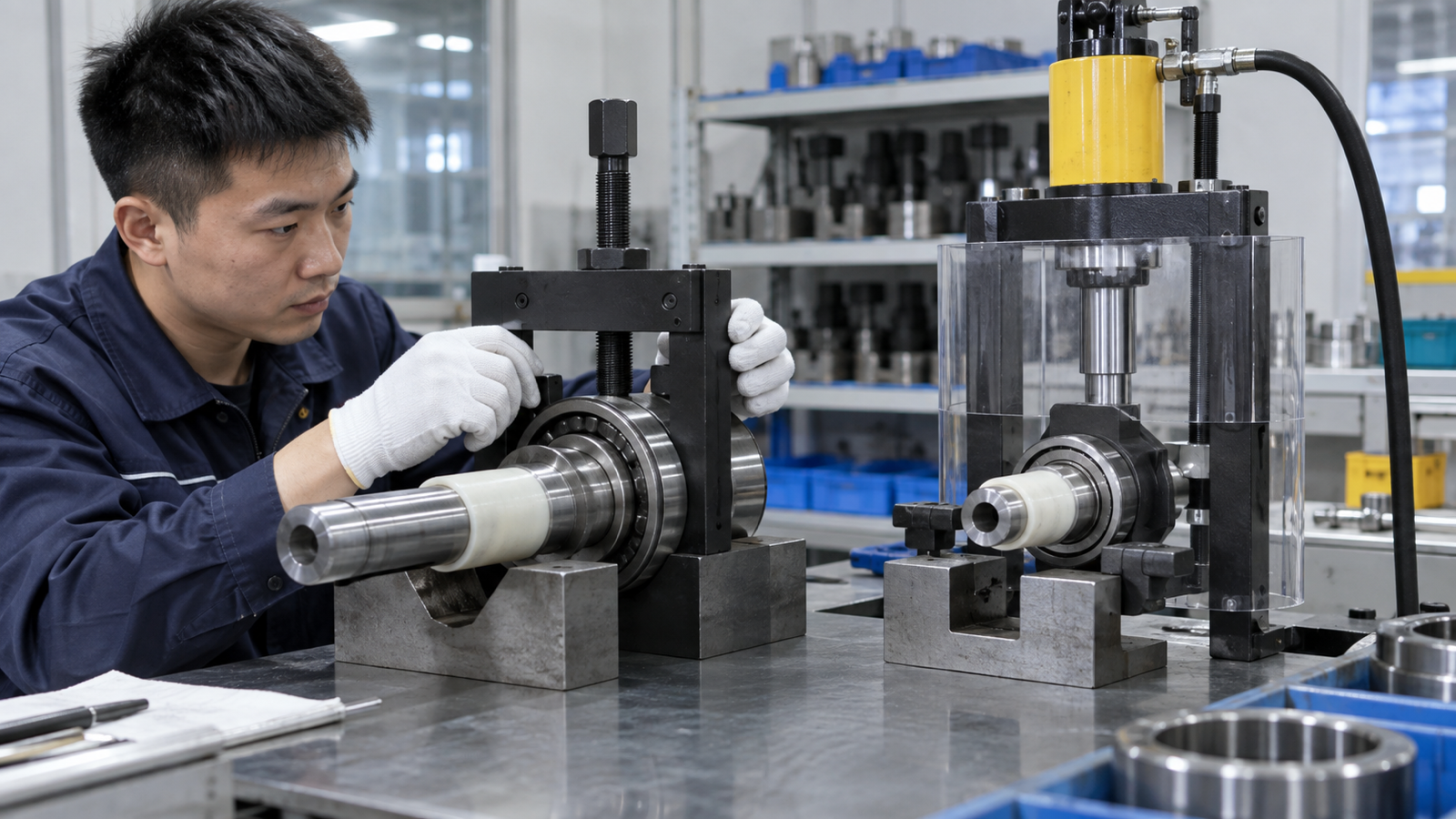
Protection starts at the load path. A jaw should grip a sound shoulder or specified ring. An internal attachment should expand against its approved surface. A separator needs even seating behind a robust face. Force through rolling elements, a cage, seal, sensor, or thin housing can damage parts before capacity becomes visible.
Mechanical and hydraulic systems share several fit controls:
- Centre the forcing axis on the shaft or reaction point.
- Keep the frame square and check jaw seating after initial load.
- Support heavy components independently from the puller.
- Keep bystanders outside the release path and use PPE required by the risk assessment.
- Stop when the part does not move at the permitted limit; reassess grip, corrosion, and method.
Protection is a geometry decision: do not sell a higher force as a remedy for poor engagement. Keep the selected configuration tied to a measured drawing and a sample photograph.
Action: add “contact surface, alignment, support, and release path” fields before any force test.
Workpiece-protection checks
| Check | Mechanical concern | Hydraulic concern | Record |
|---|---|---|---|
| Contact | Jaw roll-out or spindle misalignment | Same contact risk under higher load | Fit photo |
| Support | Frame or shaft end may bend | Frame, cylinder, and support may overload | Support sketch |
| Adjacent parts | Seal, cage, or sensor damage | Higher force can worsen contact error | Exclusion zone |
| Release path | Sudden jaw or component movement | Stored pressure and hose movement | PPE and guarding note |
6. What hydraulic hazards belong in a buying review?
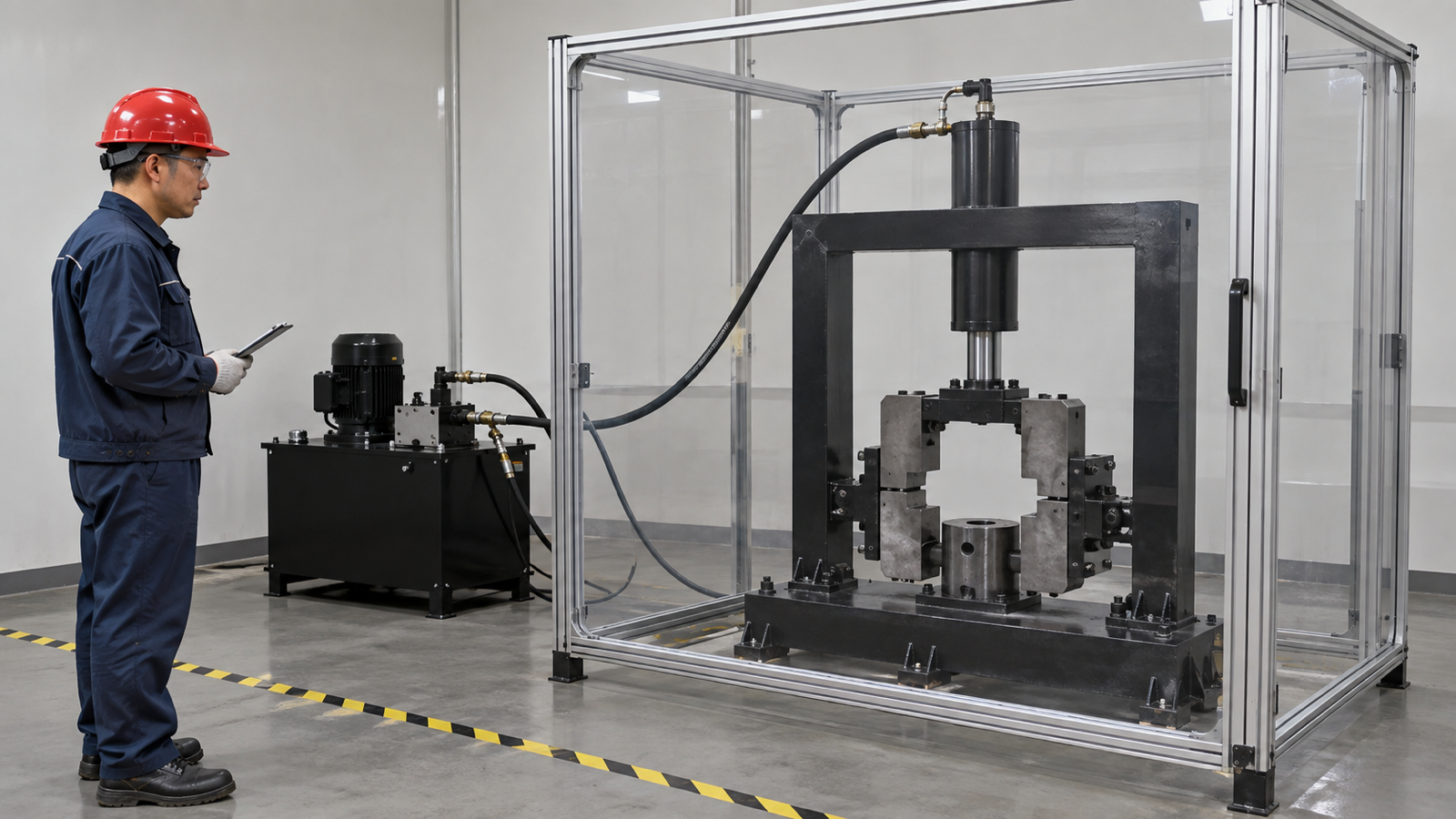
Hydraulic pullers introduce pressure in cylinders, hoses, couplers, and fittings. A damaged hose, loose connection, altered relief setting, or unsupported load can create a sudden release. Mechanical tools store energy in loaded frames and spindles too, though service checks differ.
An importer should keep hazards visible in product documents and training material:
- State maximum pressure and force for the complete approved configuration.
- Prohibit altered relief settings, improvised hoses, and mismatched couplers.
- Require inspection of seals, hoses, threads, jaws, pins, and frames.
- Define component support, line-of-pull exclusion, and controlled pressure release.
- Refer users to applicable workplace rules and lockout procedures.
Pressure deserves its own warning block: never imply that hydraulic assistance removes guarding, support, or operator training. OSHA’s hand-tool safety rule provides a U.S. reference point. Its hazardous-energy rule also applies where relevant. Destination-market requirements still need review.
Action: request the current manual, warning labels, inspection points, and pressure-release procedure.
Hazard-control comparison
| Hazard | Mechanical control | Hydraulic control | Document needed |
|---|---|---|---|
| Overload | Spindle, frame, and drive limit | Pressure, force, relief, and frame limit | Configuration warning |
| Sudden release | Stable jaw seat and clear path | Stable seat plus pressure-release steps | Operating manual |
| Component damage | No impact or extensions unless allowed | No altered relief or mismatched parts | Prohibited-use list |
| Maintenance | Threads, arms, pins, frame | Seals, hoses, couplers, cylinder, frame | Inspection schedule |
7. What service and spares should a buyer plan?
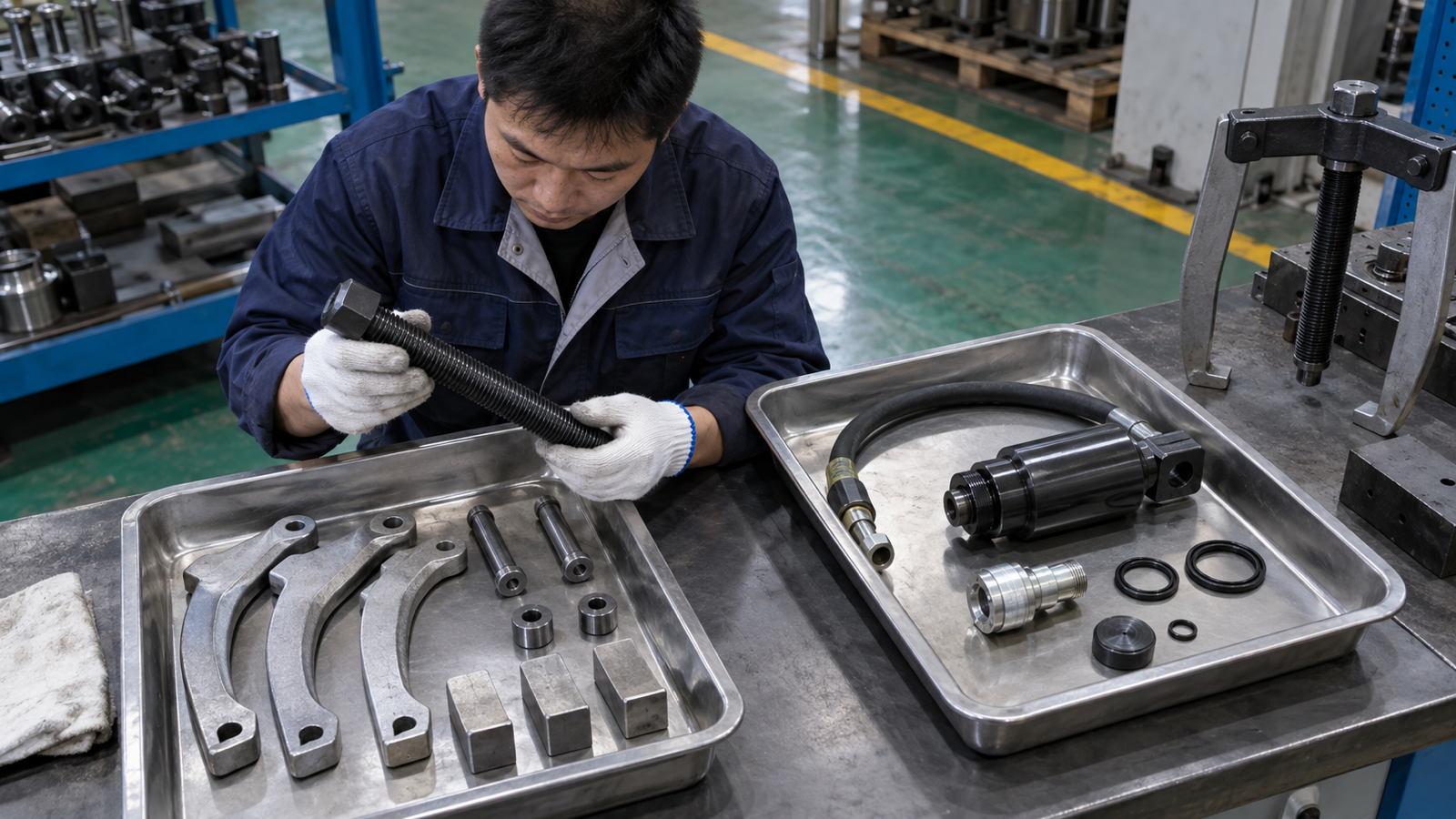
Mechanical puller service centres on threads, nuts, arms, pins, jaws, and finishes. Hydraulic systems add pumps, seals, cylinders, hoses, couplers, gauges, and contamination control. A low purchase price becomes a resale problem when wear parts lack part numbers or replacement paths.
Build service planning into the commercial file:
- List replaceable arms, jaw tips, pins, spindle nuts, seals, hoses, and couplers.
- Ask how wear, deformation, leaks, and damaged threads remove a tool from service.
- Confirm manual revision, exploded view, part numbers, and language needs.
- Record batch or serial traceability where offered.
- Separate warranty language from actual service availability.
Service sells the second order: distributors need a spare-parts story that matches the configuration placed in the market. Use mechanics tool-set configurations when planning case layouts and wider workshop bundles.
Action: request a spare-parts matrix with part number, compatible configuration, replacement method, and availability status. Do not promise lead times without confirmation.
Service-plan comparison
| Service field | Mechanical | Hydraulic | Buyer record |
|---|---|---|---|
| Wear parts | Spindle, nut, jaws, arms, pins | Seals, hose, couplers, cylinder plus frame parts | Part numbers |
| Inspection | Threads, bends, cracks, jaw seats | Pressure parts, leaks, seals, hose damage | Inspection points |
| Repair | Often workshop-mechanical | May need clean hydraulic service | Approved repair route |
| Resale support | Manual and spare hardware | Manual, pressure data, hydraulic spares | Customer-facing file |
8. How should distributors build a puller assortment?
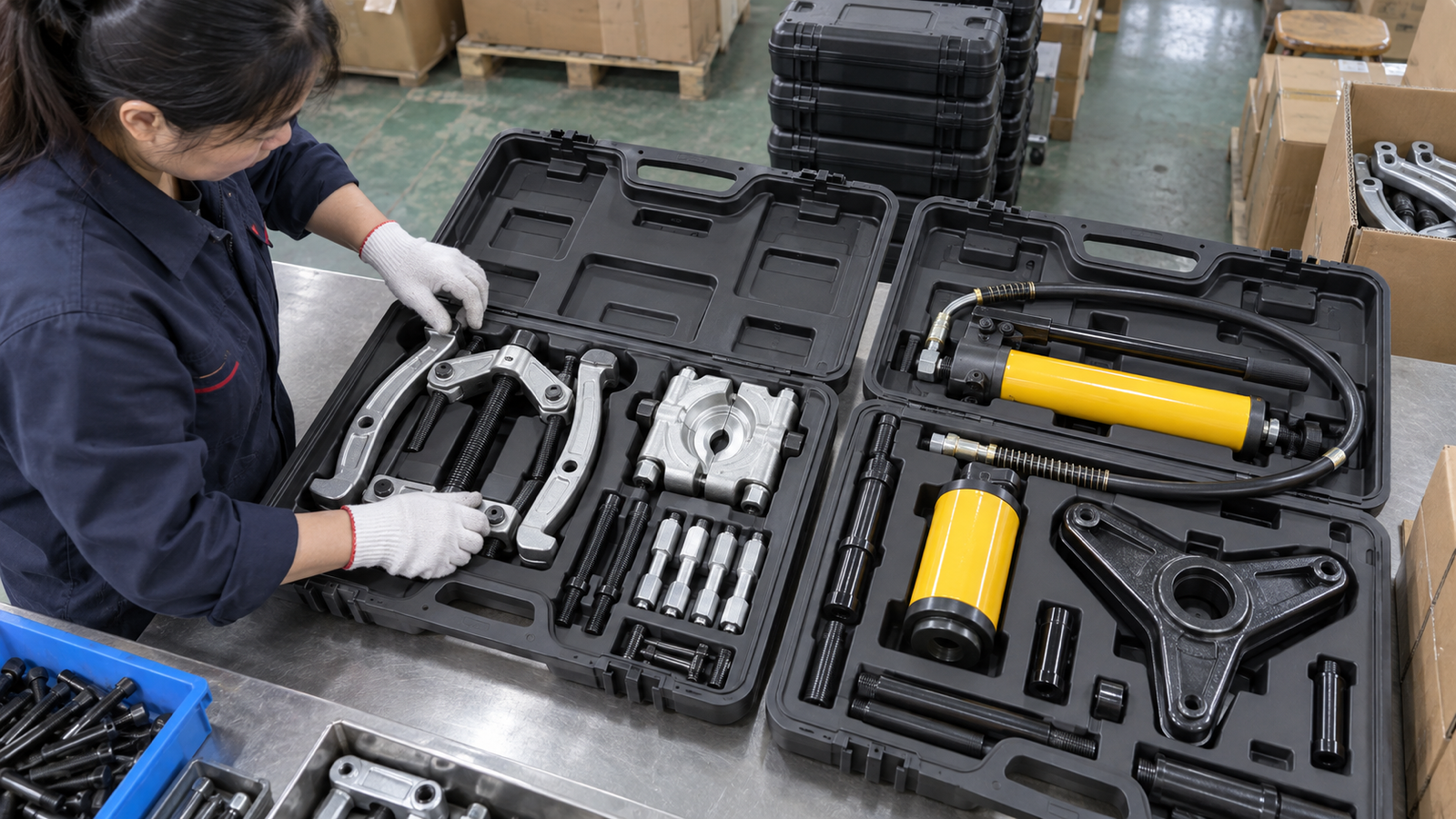
An assortment should reflect applications, not overlapping force labels. Group products by grip geometry and use actuation as a second filter. A private-label case should show its approved configuration, adapters, frame parts, instructions, and spares.
Useful assortment tiers can include:
- Portable mechanical jaw or separator sets for common workshop access.
- Internal or blind-hole kits with approved counterstay or slide-hammer attachments.
- Hydraulic systems for applications that document force, support, and service needs.
- Replacement jaws, seals, hoses, adapters, and protective components as service SKUs.
- Mixed kits with clear boundaries between sockets and pullers.
Assortment logic should follow the invoice: every SKU needs an application, configuration, package list, and approval record. Use the mechanic tool-set selection for distributors when setting tiered bundles and private-label packaging.
Action: create a matrix with application, grip, actuation, dimensions, capacity evidence, package contents, service parts, and channel before selecting SKUs.
Assortment architecture
| Assortment layer | Mechanical offer | Hydraulic offer | Buyer safeguard |
|---|---|---|---|
| Entry workshop | Portable jaw, separator, or internal set | Usually not needed without documented use | Fit and manual |
| Specialist repair | Matched attachment and counterstay | Compact complete system | Configuration file |
| High-load program | Heavy frame with stated limit | Cylinder, pump, hose, frame, guard | Full system rating |
| Service channel | Jaws, arms, pins, spindle parts | Seals, hoses, couplers, pumps | Spare-parts matrix |
9. What should an RFQ and sample approval record?
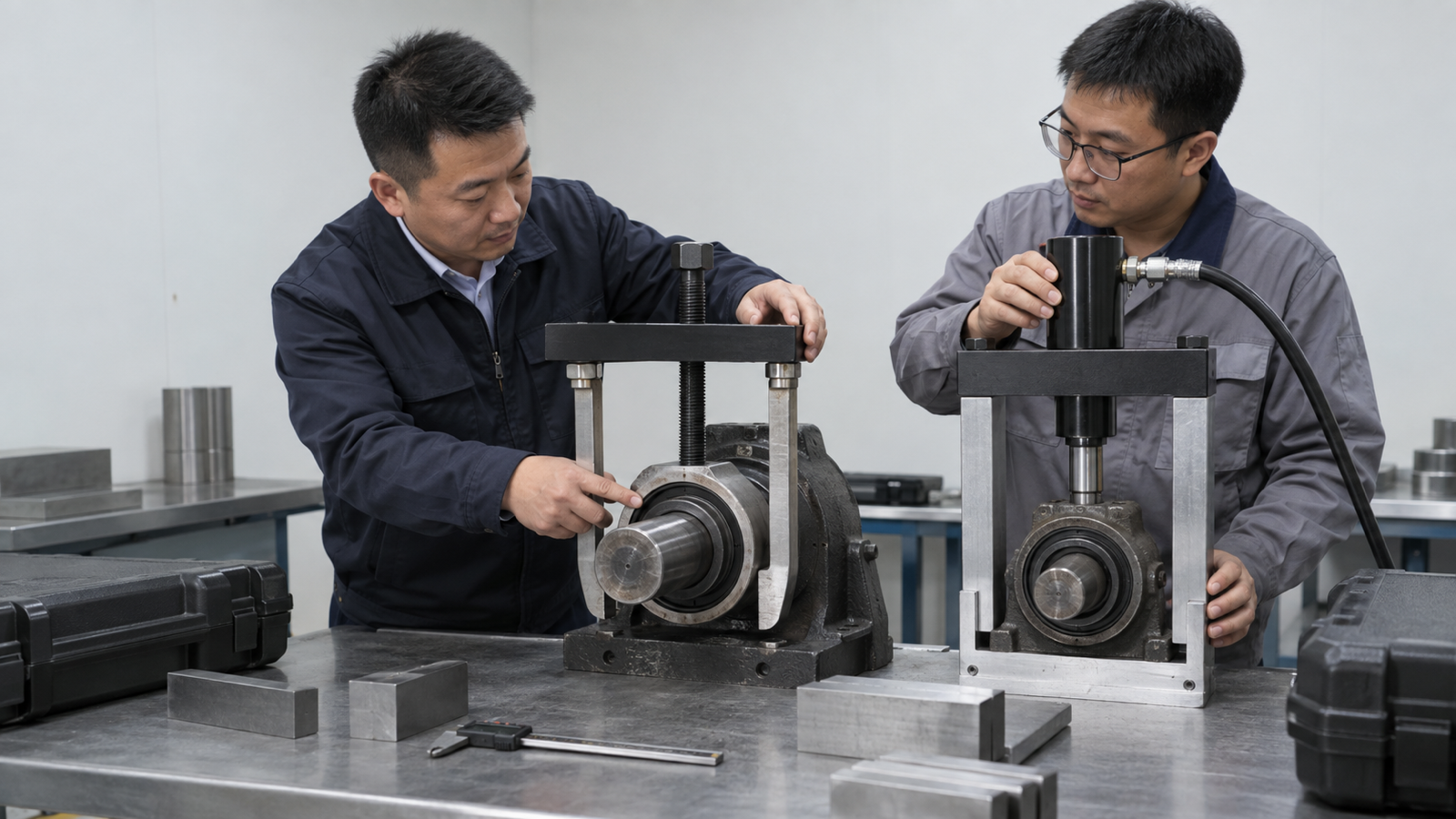
An RFQ should make supplier answers comparable. “Mechanical puller, heavy duty” or “hydraulic kit, universal” leaves gaps for any B2B buyer. Use a two-column form: supplier value and buyer verification.
Include these fields:
- Application drawing, component photos, bearing position, fit, and access dimensions.
- Grip family, jaw or separator contact, reach, spread, bore range, stroke, and clearance.
- Actuation, complete BOM, force or pressure evidence, and permitted operating method.
- Documented material and finish, case layout, manual, labels, and spares.
- Sample-test result, accepted configuration, open risks, revision number, and sign-off.
A strong RFQ prevents a weak sample: link every quoted value to a drawing, photograph, manual page, or measured fit. A socket-tools system may complement a workshop package, yet it does not replace puller-specific evidence.
Action: approve one representative sample at the narrowest reach and deepest access expected for each SKU family. Hold bulk release until fit and document gaps close.
RFQ approval table
| RFQ block | Supplier submission | Buyer verification |
|---|---|---|
| Application | Drawing, photo, target component | Measured interface and load path |
| Technical | Dimensions, force, pressure, BOM | Configuration matches sample |
| Safety | Manual, warnings, limits, PPE | Destination-market review |
| Commercial | Case, label, spares, traceability | Private-label sign-off |
10. What is a practical approval rule for a private-label program?
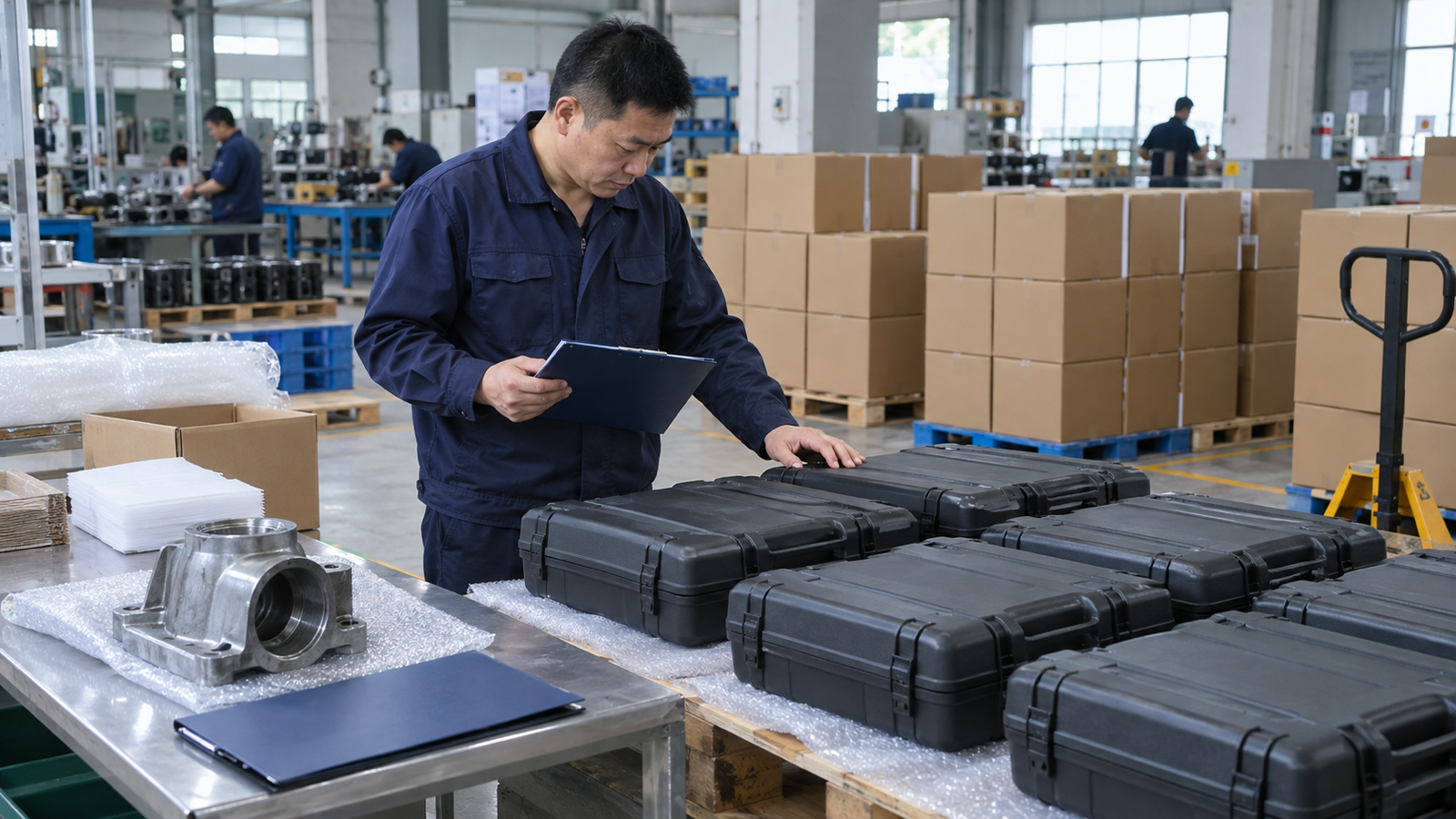
Choose mechanical actuation when a documented grip, stable support, and permitted spindle operation cover the intended work. Choose hydraulic actuation when a complete cylinder, pump, frame, hose, jaw, and protection setup has a documented limit that fits the application. If either option lacks a clear load path or configuration rating, pause approval.
For private-label programs, the accepted product should reproduce across production batches. Keep these elements unchanged:
- the same working dimensions and approved grip configuration;
- the same actuator, frame, adapters, warnings, and manual revision;
- the same case layout, labels, spares, and inspection record;
- the same change-control path for substitutions or new tooling.
The next move is concrete: send drawings, clearances, quantities, packaging, and spare-part needs through KOLARWIN’s B2B tool sourcing blog. You can also contact the KOLARWIN team about a bearing-puller RFQ. A supplier can then recommend a configuration for review.
Action: release a purchase order only after fit, force evidence, safety documents, BOM, packaging, and service parts appear on one signed approval sheet.
FAQs
#### Are hydraulic bearing pullers always stronger than mechanical pullers?
No. A hydraulic cylinder may generate substantial force, yet a complete system remains limited by its frame, jaws, adapters, hose, and approved configuration. Compare documented withdrawal force under matching conditions.
#### Can a mechanical puller use an impact wrench?
Only when current manufacturer instructions explicitly permit that drive method. Otherwise, impact and pipe extensions can overload threads, frames, jaws, or the workpiece.
#### Does a higher force rating solve poor jaw fit?
No. A tool must load a sound shoulder or specified ring with stable alignment. More force can worsen roll-out, seal damage, bending, or sudden release.
#### What hydraulic parts belong in a private-label spare-parts plan?
List compatible seals, hoses, couplers, gauges, pump parts, cylinder parts, jaws, pins, and frame hardware. Use supplier part numbers and configuration references.
#### What should a distributor send with an RFQ?
Send component photos, measured reach and spread, bore or shoulder dimensions, clearance, quantity, packaging needs, target market, and spare-parts expectations. Ask for a dimensioned fit drawing, complete BOM, operating manual, and configuration-specific force data.
Looking for a reliable mechanic tools manufacturer in China?
If you are sourcing hand tools, socket tools, automotive repair tools, mechanic tool sets or OEM private label tools, contact KOLARWIN Tools for factory-direct quotation, customization support and product consultation.


