
Need OEM supplier support for this product type?
Contact KOLARWIN Tools for OEM mechanic tools, private label packaging, wholesale quotation and product range support. This gives overseas buyers a clear path from article reading to supplier discussion.
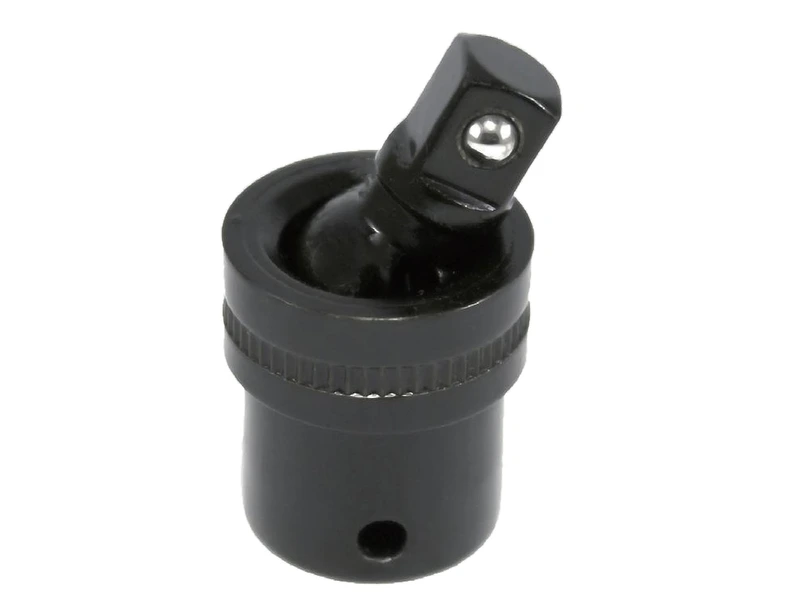
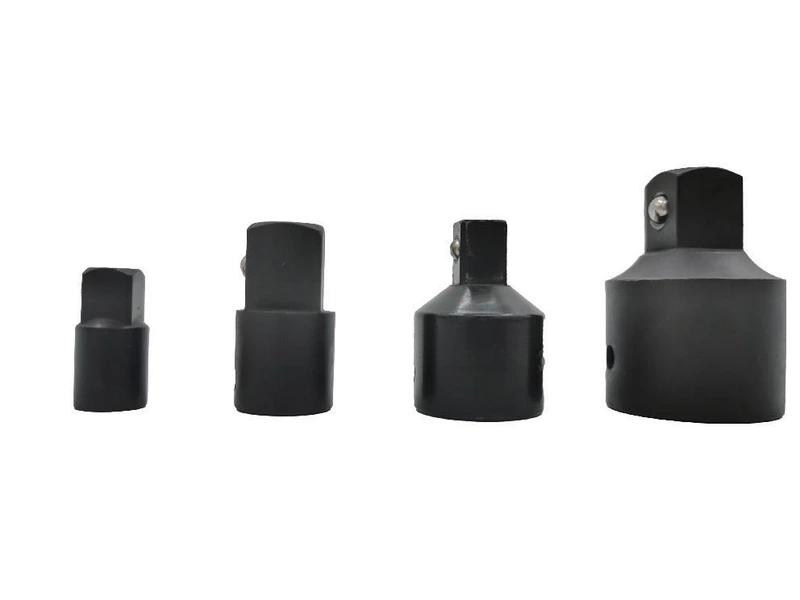
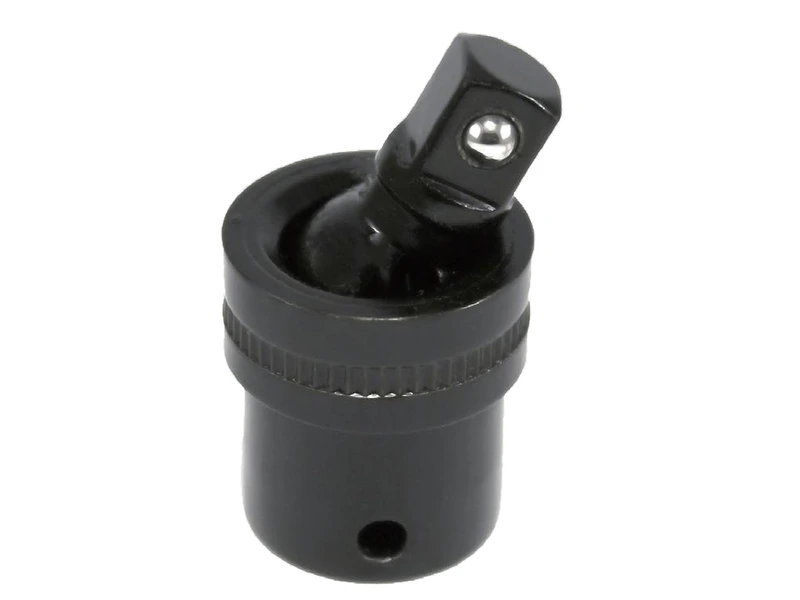
“Universal joint” and “swivel socket” can describe different constructions, and catalogue labels do not always make the distinction clear. The catalogue lists ordinary drive universal joints and uses the label “impact ball swivel universal joint socket.” However, the photo beside that label shows a female-to-male square-drive adapter, with a male square visible; it does not show an integrated fastener-opening swivel socket.
1. What is the difference between an impact universal joint and a swivel socket?
A conventional universal joint is an articulated coupling between two square-drive ends. In general, an integrated swivel socket combines a fastener opening with a movable connection near the drive end. The catalogue photo labeled “impact ball swivel universal joint socket” instead shows a female-to-male square-drive adapter with a visible male square. Buyers should request a drawing or sample before treating that catalogue label as an integrated socket design.
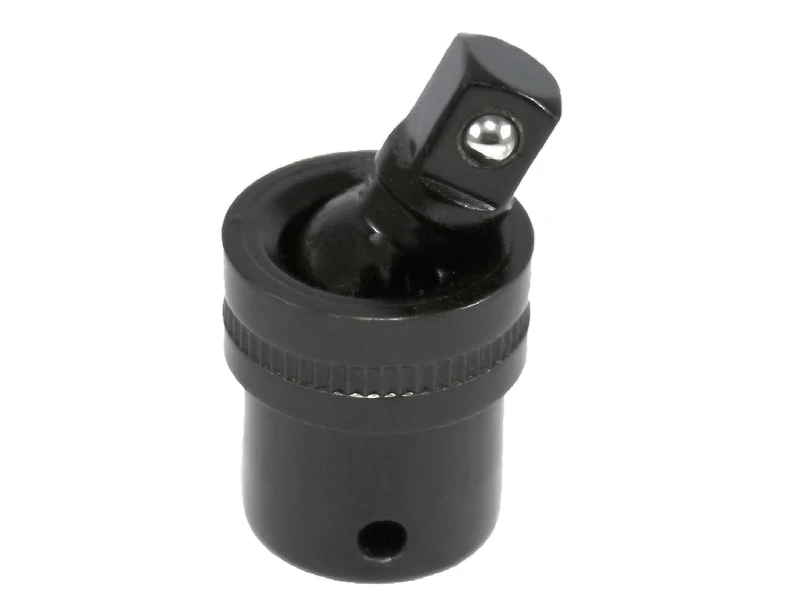
- Universal joint: accessory connects a drive tool to a socket.
- Swivel socket: socket and articulated drive connection form one item.
- Catalogue photo: the labeled ball-swivel item appears to be a square-drive adapter, not a fastener-opening socket.
Start with what moves and where. The catalogue lists 3/8-, 1/2-, and 3/4-inch drive universal joints. A separate entry labeled “impact ball swivel universal joint socket” spans 3/8- through 1-inch drive, but its photo shows a female-to-male square-drive adapter rather than an integrated fastener-opening socket. That listing supports the stated catalogue nomenclature, not a performance rating or a claim that an integrated swivel socket appears in the source. A broader impact socket range should specify the attachment as a separate line item.
Construction comparison
| Feature | Universal joint accessory | Swivel socket |
|---|---|---|
| Socket interface | Separate socket attaches to joint | Socket body is integrated |
| Articulation | At coupling between square ends | At joint near the socket head |
| Replacement | Joint and socket can be separated | Usually replace as one product |
| Catalogue-photo distinction | Page 14 shows a separate drive joint | Page 14’s labeled ball-swivel photo shows a square-drive adapter, not an integrated socket |
| Main RFQ check | Drive ends and intended tool class | Drive, opening, depth, and joint design |
Action: ask for a drawing showing the joint location, square interfaces, and retaining details.
2. How does the joint structure affect access?
Articulation helps a socket approach a fastener where a straight extension cannot line up with the tool. The useful range depends on joint geometry, surrounding clearance, socket depth, and how the operator supports the tool. Buyers should not infer a safe working angle from a product photograph.
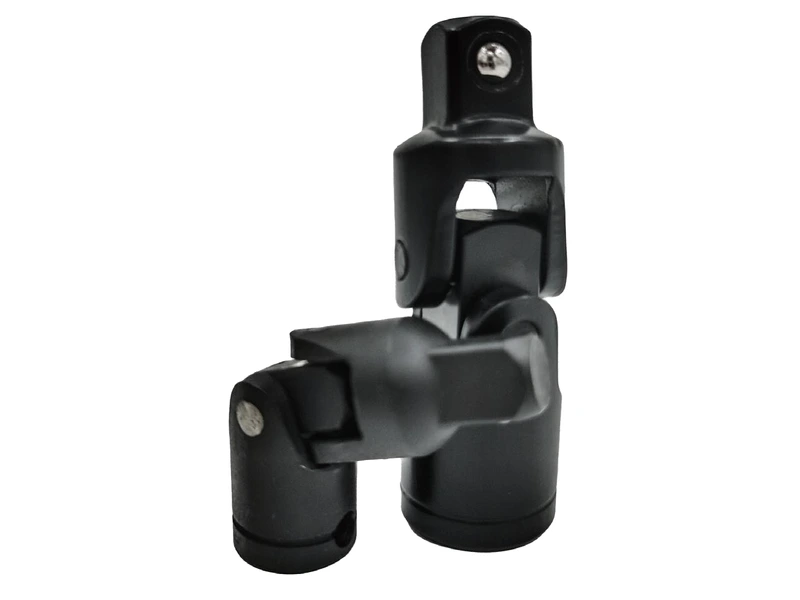
- Identify the obstruction and access direction in the application.
- Check whether the joint body clears adjacent components.
- Confirm the required working angle using supplier documentation or a controlled fit check.
Use the real clearance envelope. A side-view drawing and a sample test in the target assembly give better evidence than an unscaled catalogue image. For buyers comparing the wider socket tools range, keep extension length and articulation as separate dimensions.
Access review
| Question | Why it changes selection |
|---|---|
| Where is the obstruction? | Determines joint placement and tool approach |
| What clearance surrounds the fastener? | Sets body diameter and swing space |
| Is the fastener recessed? | Changes socket depth and extension needs |
| Can the operator hold alignment? | Affects control and risk of side loading |
Action: send a simple access sketch or photos with the application dimensions before choosing a joint style.
3. Why does joint type matter for powered impact use?
An impact wrench sends repeated pulses through every component in the drive chain. Accessories intended for hand ratchets may not be suitable for that duty. The catalogue labels an entry “impact ball swivel universal joint socket” and separately lists universal joints and ratchet-wrench products. The labeled photo shows a square-drive adapter, not an integrated fastener-opening socket. Buyers still need the exact construction and explicit impact-use documentation for the part and tool combination.
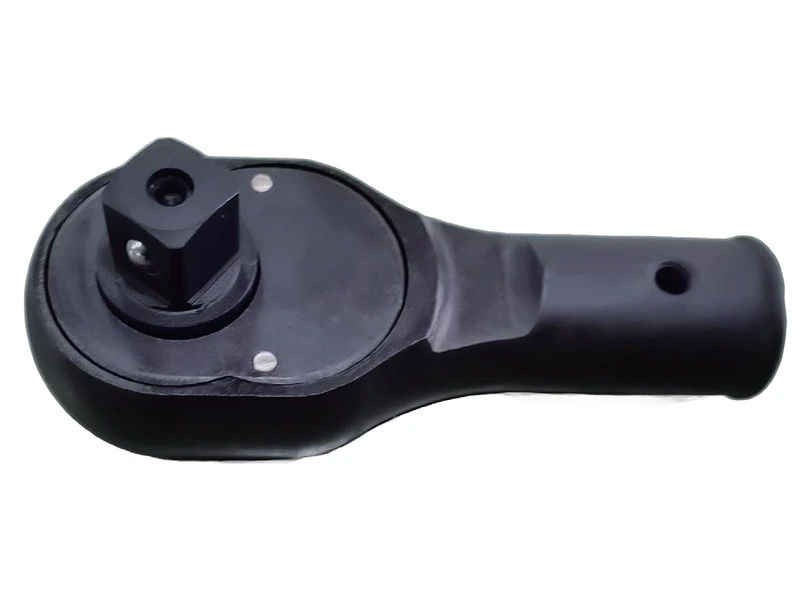
- Confirm whether the accessory is specifically rated or designated for impact service.
- Verify the tool maker’s instructions for every accessory in the chain.
- Do not substitute a hand-use universal joint because square sizes match.
Follow the intended-use label through the whole assembly. Catalogue page 14’s ratchet-wrench entries belong to hand-operated products; their presence beside an entry labeled as an impact accessory does not make the ratchets impact-rated. A buyer evaluating automotive repair tools should mark every powered-drive component by tool class.
Powered-drive compatibility fields
| Field | Buyer verification |
|---|---|
| Intended use | Impact or hand operation stated for exact item |
| Drive ends | Tool anvil, joint, and socket interfaces match |
| Retention | Pin, ring, detent, or other method documented |
| Tool instructions | Accessory type permitted by the wrench maker |
Action: keep hand ratchets and impact accessories in distinct BOM categories and approve each item against the tool manual.
4. What should buyers know about angle and torque limits?
A catalogue photo may show a joint bent at an angle, but it cannot establish a permitted working angle, torque limit, impact rating, or service life. The supplied pages do not state a maximum angle or torque rating for these accessories. Those values should remain open until the supplier provides controlled evidence.
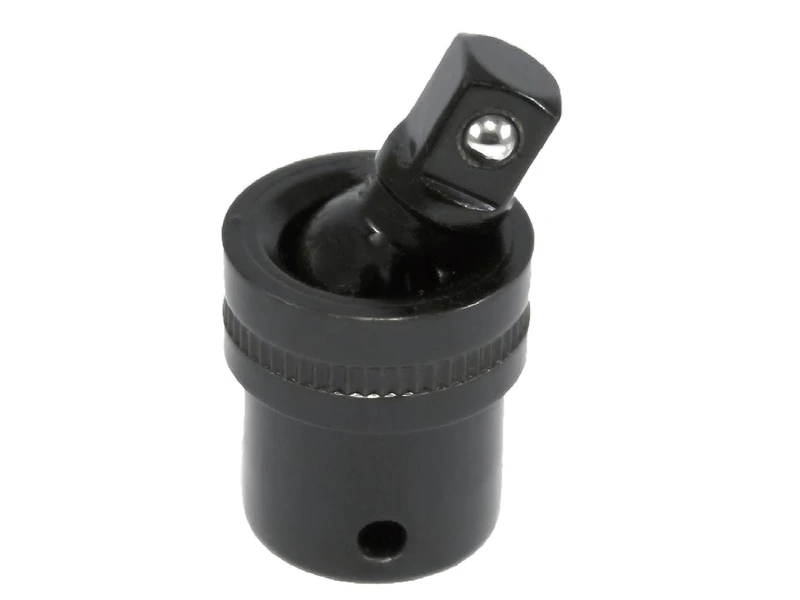
- Request the maximum operating angle for the exact model, if applicable.
- Request intended-use and load documentation tied to the product identity.
- Ask how tests were performed and what constitutes failure.
Do not turn appearance into a rating. If the supplier cannot document a limit, treat that field as unverified and design around the tool manufacturer’s instructions. A socket supplier checklist can help track the drawing, use class, and test evidence as distinct approvals.
Limit evidence review
| Claim | Required evidence |
|---|---|
| Maximum angle | Controlled specification and measurement definition |
| Torque or load limit | Test method, sample identity, and acceptance criteria |
| Impact service | Explicit intended-use statement and applicable documentation |
| Durability | Defined cycle, operating conditions, and outcome |
Action: do not publish or print an unsupported angle or torque value in product copy or packaging.
5. How do drive size and fastener size differ?
Drive size describes the square connection between the wrench, accessory, and socket. Fastener size describes the socket opening. A 1/2-inch-drive joint may connect to sockets with several openings; the two measurements answer different questions. Every transition in an assembly should be recorded so an adapter does not appear to solve a mismatch without approval.
- Specify the wrench anvil size.
- Specify each accessory’s female and male drive ends.
- Specify socket opening, profile, and depth separately.
Write the chain from tool to fastener. The catalogue lists female-to-male dimensions for universal joints and identifies drive families; the buyer still must match each interface. Use a metric-to-SAE conversion chart when opening sizes cross unit systems, while keeping the square drive field unchanged.
Example drive-chain fields
| Assembly position | Example field | Check |
|---|---|---|
| Wrench | 1/2-inch anvil | Tool manual and retention |
| Joint or swivel | 1/2-inch female to 1/2-inch male | Drive interface and use class |
| Socket | 24 mm, 6-point, deep | Fastener match and access |
| Fastener | Across-flats size | Correct engagement and condition |
Action: place each drive transition and fastener opening in separate columns on the purchase specification.
6. When is a separate universal joint easier to maintain?
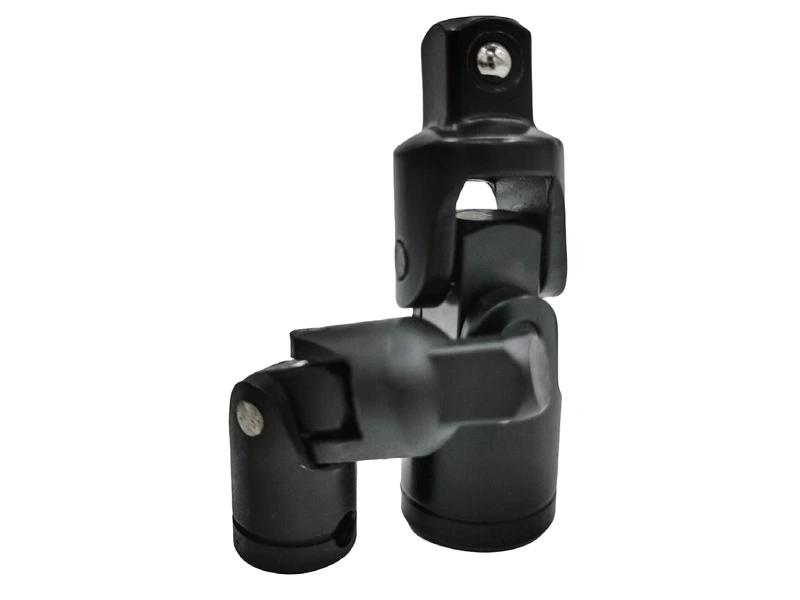
A separate joint lets the buyer pair one accessory with multiple sockets and replace the joint independently. This can simplify assortment planning if both components suit the intended use. The arrangement also adds an interface and may add length, which can affect clearance and leverage. A separately sourced integrated swivel socket could reduce loose pieces by combining the socket and joint, but the catalogue photo does not show that construction.
- Compare total assembly length, not only joint length.
- Check availability of replacement joints and compatible sockets.
- Confirm retention and impact classification for each component.
Count interfaces as well as pieces. A modular setup can be flexible in a service kit, while an integrated socket can simplify a fixed-size application. The right answer depends on the assortment and access pattern. Buyers planning a mechanics tool set should document compatibility across each drive family.
Serviceability trade-off
| Choice | Potential advantage | Review point |
|---|---|---|
| Separate joint and socket | Replaceable components and flexible pairing | More interfaces and assembled length |
| Integrated swivel socket, if offered | One-item selection for a specific opening | Request a distinct drawing and SKU; not shown in the catalogue photo |
| Multiple joint designs | Match different access situations | More SKUs and qualification work |
Action: compare the cost and availability of replacement components before locking an assortment.
7. Which product dimensions deserve a drawing check?
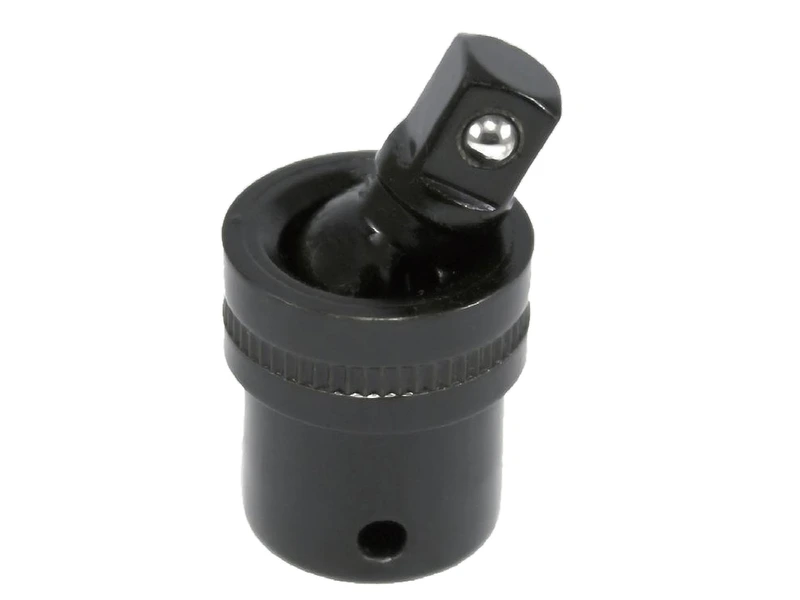
Overall length is only one part of fit. Joint head diameter, socket outside diameter, square-drive depth, opening depth, pin-hole location, and the articulation envelope can all determine whether an accessory reaches a fastener. A current-revision drawing should show the finished product and critical mating surfaces.
- Request head diameter and overall length.
- Confirm square-drive depth and retention-feature location.
- Check socket opening, external diameter, and fastener engagement depth.
Check the whole envelope against the obstruction. The supplier’s product drawing should carry a revision and SKU link. Use the existing socket dimension reference as a field checklist, not as a substitute for a drawing of the joint accessory.
Drawing review fields
| Dimension or feature | Application question |
|---|---|
| Head outside diameter | Will the joint pass beside the obstruction? |
| Overall length | Does the tool remain clear of nearby parts? |
| Drive depth | Does the accessory seat fully on the anvil? |
| Retention location | Will the tool’s pin or ring engage correctly? |
| Articulation envelope | Can the head swing through the required path? |
Action: approve a dimensioned current-revision drawing before evaluating production samples.
8. How should a buyer inspect a joint sample?
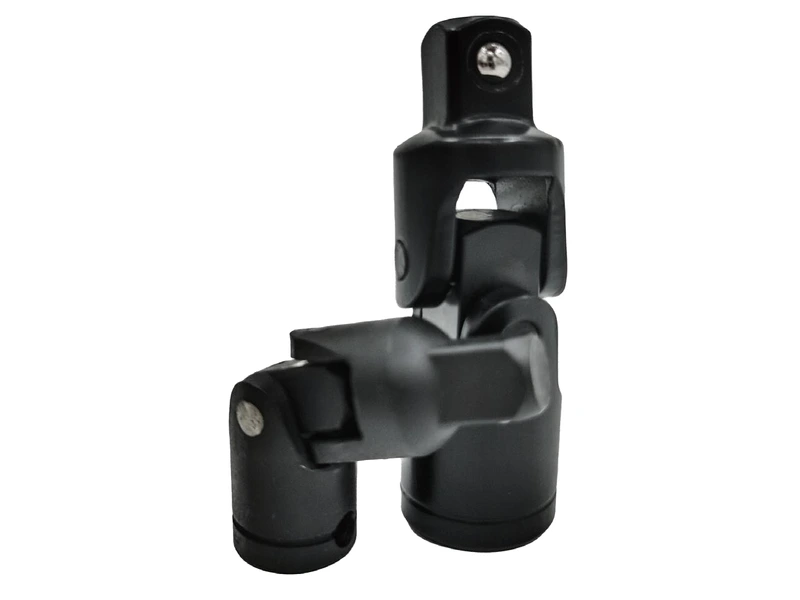
A sample inspection should verify construction, fit, movement, and markings against the approved drawing. A smooth hand movement does not prove load capability. Nor does a sample that fits a hand ratchet prove impact compatibility. If the design includes retention parts, inspect their seating and function using the nominated tool interface.
- Compare visible structure with the drawing and product description.
- Check free movement without binding or obvious looseness.
- Verify square engagement and retention with the intended tool.
Treat the sample as an identity and fit check. Performance claims need a separate documented method. Photograph the sample from several angles and record the model, revision, and inspection date. A socket set program should include a compatibility matrix where joints and sockets are packaged together.
Sample inspection record
| Check | Record |
|---|---|
| Product identity | SKU, revision, and intended-use description |
| Construction | Separate yoke joint, square-drive ball-swivel adapter, or integrated fastener-opening socket if offered |
| Interface | Female and male drive sizes, retention fit |
| Movement | Binding, excessive play, or interference observations |
| Evidence gap | Ratings, test reports, or unclear markings |
Action: quarantine samples with identity or compatibility gaps until the supplier resolves them in writing.
9. What belongs in a universal-joint RFQ?
The RFQ should distinguish a separate yoke-style universal joint, a ball-swivel square-drive adapter, and an integrated swivel socket proposed as a distinct fastener-opening design. The catalogue’s ball-swivel photo shows a square-drive adapter, so do not treat it as an integrated socket. Add tool class, drive ends, socket opening if integrated, retention, dimensions, finish, package, and documentation. State whether a supplier may propose an alternative construction. Require the supplier to identify any field that remains unavailable rather than filling gaps with assumed limits.
- Attach the application sketch and target wrench details.
- Separate required specifications from supplier-proposed options.
- Request drawing, intended-use statement, and available test evidence.
A precise RFQ makes substitutions visible. This matters when a listing uses “universal,” “swivel,” and “ball swivel” loosely. Buyers can connect the request to socket accessory sourcing and then submit the finished specification through a quotation request.
RFQ checklist
| RFQ field | Example requirement |
|---|---|
| Type | Separate yoke joint, ball-swivel square-drive adapter, or integrated swivel socket if offered |
| Drive | Female and male square size at each interface |
| Use class | Hand-operated or impact use, stated explicitly |
| Geometry | Dimensions, articulation envelope, retention |
| Evidence | Drawing, intended-use statement, tests, limitations |
Action: ask the supplier to quote each construction as a separate line when design remains undecided.
10. How should a distributor choose between the two?
Choose a yoke joint or ball-swivel square-drive adapter for a detachable connection between tool and socket. Consider an integrated swivel socket only when a supplier offers that distinct fastener-opening design and the fixed size suits the application. In either case, fit and intended use must be documented for the complete drive chain. No generic torque or angle value can replace evidence for the exact design.
- Match the product to the access path and wrench instructions.
- Confirm dimensions, retention, and tool class at every interface.
- Keep unresolved performance limits visible in approval records.
Approve the design against the real job. If evidence is incomplete, use a supplier sample and a controlled fit review, then require written clarification for any performance claim.
Action: issue the purchase order only after construction, drive chain, intended use, and evidence scope are agreed.
Q1: Are universal joints and swivel sockets interchangeable terms? No. Confirm whether the part is a separate coupling, a female-to-male square-drive swivel adapter, or an integrated socket with a movable head.
Q2: Can a hand universal joint be used with an impact wrench? Only if the exact accessory is documented for that use and permitted by the wrench maker.
Q3: Does a ball swivel mean a specific maximum angle? No. Ask for a stated limit and test basis for the exact design.
Q4: Is a flexible joint the same as a universal joint? Names vary across suppliers. Review the drawing and interfaces before approval.
Q5: Does a product photo prove the accessory is impact-rated? No. Use the photo for visual identification and request intended-use documentation.
Looking for a reliable mechanic tools manufacturer in China?
If you are sourcing hand tools, socket tools, automotive repair tools, mechanic tool sets or OEM private label tools, contact KOLARWIN Tools for factory-direct quotation, customization support and product consultation.


