
Need OEM supplier support for this product type?
Contact KOLARWIN Tools for OEM mechanic tools, private label packaging, wholesale quotation and product range support. This gives overseas buyers a clear path from article reading to supplier discussion.
Brake piston reset tools can look similar while serving different caliper designs. Some pistons press straight inward; others must rotate as they retract. Electronic parking brake systems add vehicle-specific service steps that a mechanical adapter cannot replace. This guide helps tool buyers distinguish push-back and wind-back functions, specify adapters, and keep service instructions tied to the exact vehicle. Always follow the applicable OEM procedure.
1. What is the difference between a wind-back tool and a compressor?
A piston compressor applies axial force to push a compatible hydraulic piston inward. A wind-back tool maintains axial pressure while turning a piston whose design requires rotation. Combination kits may include a pinless pushing adapter and separate rotating faces. A manufacturer’s combination kit describes both kinds of piston, but that product-level distinction does not prove fitment on every vehicle. A buyer should separate three questions: how the EPB actuator is released, how the hydraulic piston then moves, and which adapter engages the piston face. Release mode may back off a motor or permit caliper removal; it does not automatically mean the hydraulic piston has retracted far enough for new pads. Depending on the vehicle, the piston may then need a mechanical push, rotation, or an OEM-directed electronic movement. After pad installation, follow the specified mode-exit, initialization, application and release, and functional-check steps. Do not infer that sequence from the tool kit. The automotive repair tools range places this tool within the wider brake-service category.
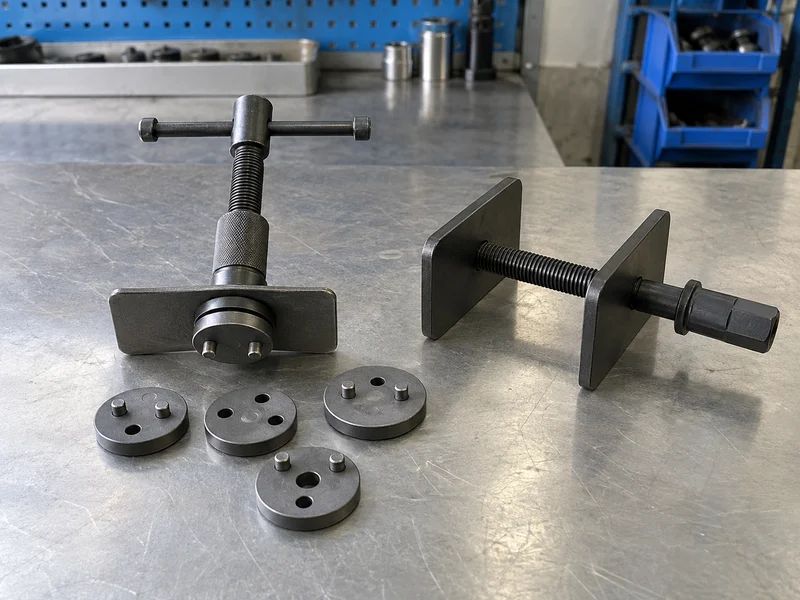
- Push-back tools apply straight inward pressure.
- Wind-back tools engage piston slots or notches while turning under pressure.
- Combination kits may cover both patterns with different adapters.
Identify the piston mechanism before selecting the tool face. Buy by caliper and vehicle coverage evidence, not by a universal claim.
Tool type
| Tool type | Motion |
|---|---|
| Compressor | Axial push |
| Wind-back | Axial force plus rotation |
| Combination kit | Multiple adapter styles, application-dependent |
2. How can a technician tell which piston motion is required?
The correct method comes from the vehicle service information and caliper design. Visible notches can suggest a rotating piston but should not replace a verified procedure. Some pistons retract straight; some use threaded mechanisms; others integrate parking-brake components. Left and right sides may differ in specified rotation direction. Do not assume a universal clockwise or counterclockwise direction. The hand tools range can help buyers distinguish a service hand tool from vehicle-specific electronic equipment.
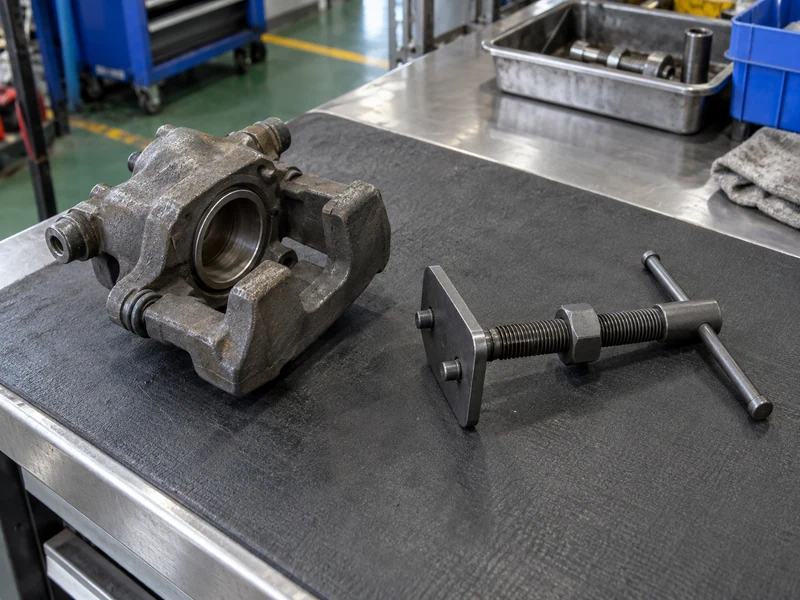
- Check OEM service information for the exact model and axle.
- Inspect piston face only as a secondary identification clue.
- Confirm whether piston rotation and direction are specified.
Procedure lookup must precede tool selection. Record application, side, direction, and required adapter in the work instruction.
Identification source
| Identification source | Use |
|---|---|
| OEM procedure | Primary requirement |
| Caliper design | Confirms adapter engagement |
| Visual pattern | Helpful clue, not final authority |
3. When is straight compression the right method?
Straight compression suits a caliper design whose service procedure permits pushing the piston inward without rotation. A broad, square adapter distributes force across the piston face. Alignment matters: a tilted plate can load the seal or piston unevenly. Buyers should verify plate contact, screw travel, thrust stability, and opening range. A practical sample record names the caliper, adapter face, contact area, and test fixture; it should not claim vehicle coverage beyond the applications actually checked.
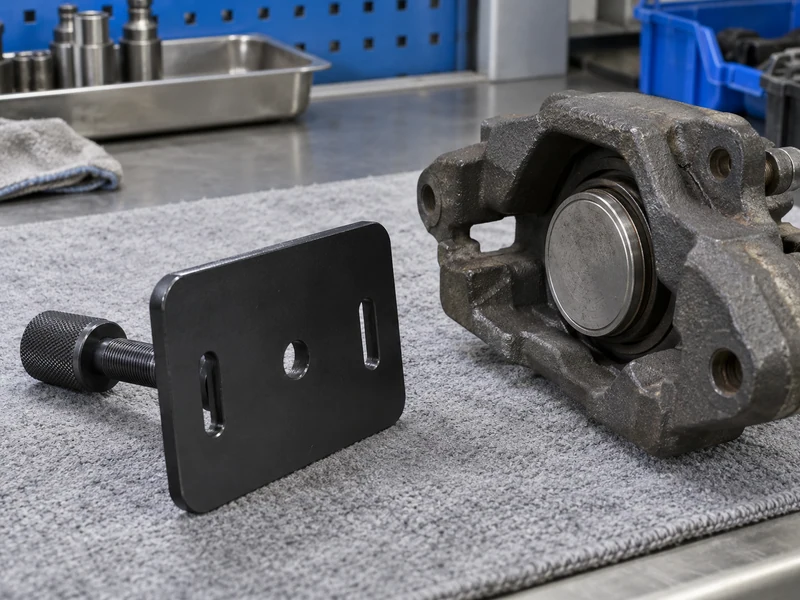
- Center the plate on the piston face.
- Keep the forcing screw aligned with the caliper bore.
- Stop if force rises unexpectedly or the piston binds.
Straight movement is simple only when the caliper permits it. Specify plate diameter, opening range, and frame clearance from actual applications.
Check
| Check | Evidence |
|---|---|
| Contact | Centered, stable plate |
| Travel | Adequate opening and screw stroke |
| Load | Smooth inward movement without tilt |
4. When does a piston need a wind-back adapter?
A wind-back adapter engages the piston face while a screw mechanism maintains inward pressure during rotation. The adapter pins or plate must match piston notches or slots. Incorrect engagement can slip, damage the piston face, or overload the boot. Some kits use interchangeable plates or cubes, so buyers should confirm which face geometry and spindle connection come with the set.
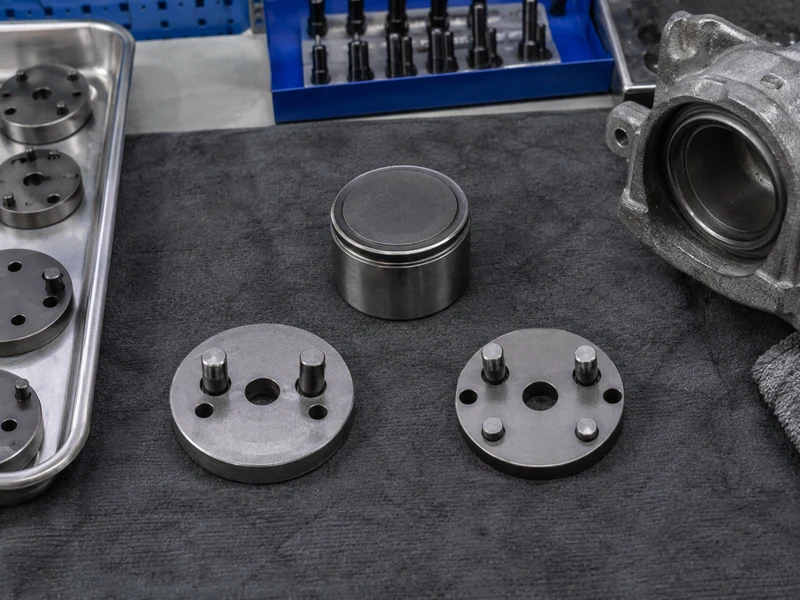
- Match adapter pins to piston slots.
- Maintain axial pressure while turning as directed.
- Use specified rotation direction and do not force a bind.
Adapter fit and procedure control the result. Request a coverage matrix showing adapter identifiers and verified applications.
Wind-back field
| Wind-back field | Buyer check |
|---|---|
| Pin pattern | Engages piston notches without slipping |
| Spindle | Maintains controlled axial force |
| Direction | Vehicle procedure specifies rotation |
5. How do electronic parking brakes change the job?
An electronic parking brake may require a vehicle-specific pad-change or service mode before caliper removal, but a scan tool is not universally required. Keep actuator release separate from hydraulic piston retraction: an electronic command may back off the parking-brake actuator without moving the hydraulic piston into its final pad-clearance position. The OEM may then specify straight compression, piston rotation, or another method. One manufacturer service bulletin gives a model-family example: enter pad-change mode to release the rear caliper, rotate the piston for pad replacement, then apply and release the EPB and run an assembly check. That example demonstrates separate steps; it is not a procedure for other vehicles. Another vehicle may command a different actuator action or require no electronic mode at all; the procurement file should cite the exact service-data section and revision rather than generalizing from this bulletin.
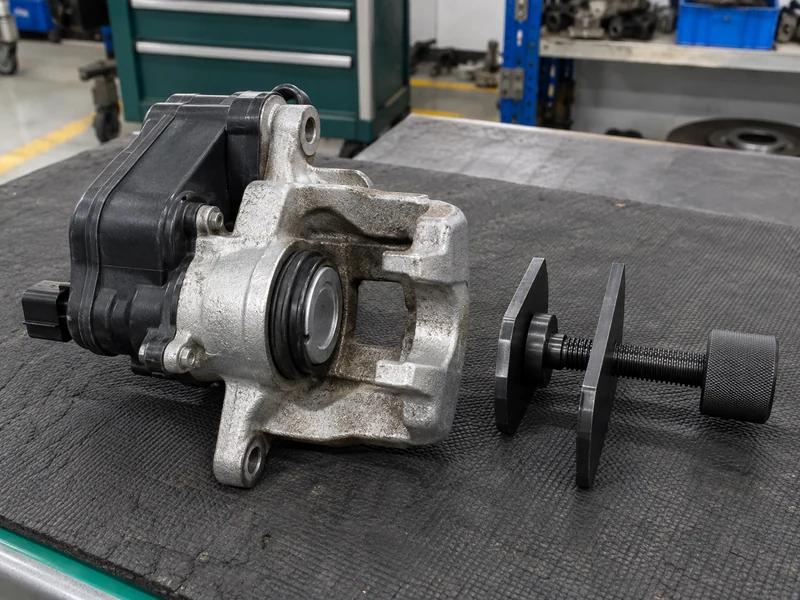
- Confirm the exact OEM service method for actuator release.
- After release, verify how the hydraulic piston must move and which direction applies.
- After assembly, exit service mode and perform only the initialization and functional checks the OEM specifies.
Electronic release and piston retraction are separate decisions. Keep them as separate columns in application data and service instructions.
EPB step
| Stage | Vehicle-specific question |
|---|---|
| EPB release | What mode or manual method does OEM service data require? |
| Hydraulic piston | After actuator release, push straight, rotate, or use another specified movement? |
| Return to service | Which exit, initialization, apply/release, or functional checks are required? |
6. Why can piston rotation direction vary?
Some tool spindles can turn in either direction, which lets an adapter follow the direction listed for a particular application. Bidirectional movement describes the tool; it does not identify fitment or authorize a direction. Give buyers a blank application matrix rather than guessed coverage. Each row should name model year, vehicle, axle and side, piston motion after any EPB release, adapter identifier, rotation direction when required, OEM data reference and revision. Leave unknown cells marked for verification. This format exposes missing evidence before a catalog claim reaches a customer. A buyer can circulate the empty matrix to technicians and distributors, asking each team to identify target applications and missing manuals. Keep the template blank until a qualified reviewer enters sourced vehicle data.
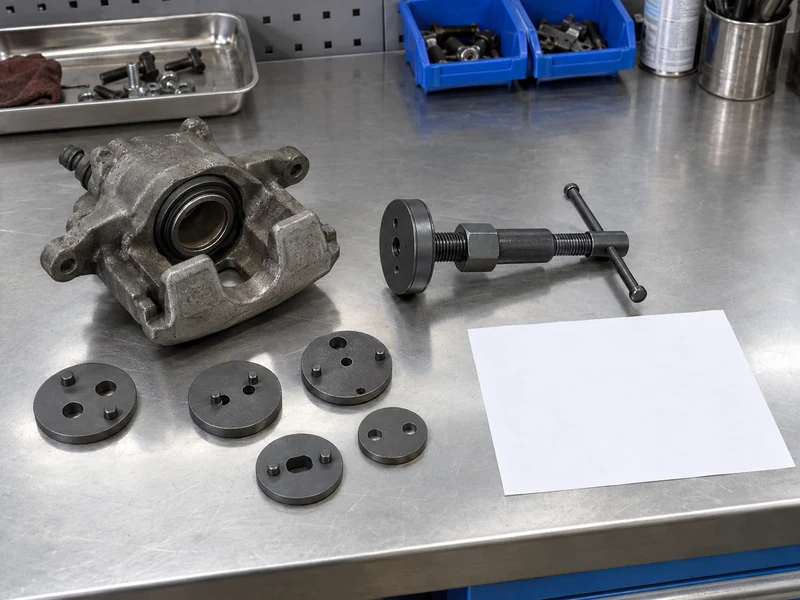
- Use the application manual for side-specific direction.
- Avoid relying on remembered direction from another model.
- Stop if the piston or adapter moves abnormally.
Keep the spindle’s bidirectional feature separate from each verified application row. Do not populate fitment or direction from the tool’s ability to turn both ways.
Blank application-matrix template
| Vehicle / model year | Axle / side | Piston motion | Adapter ID | Direction | OEM source / revision |
|---|---|---|---|---|---|
| [enter application] | [enter side] | [push / rotate / verify] | [enter ID] | [per OEM / N/A] | [enter reference] |
7. What tool features should a buyer compare?
Compare frame clearance, screw travel, thrust plate shape, adapter count, pin dimensions, drive method, case organization, and replacement availability. Compact adapters can reach tight calipers, but smaller contact area may demand precise alignment. A kit that includes many faces is useful only if identifiers and application support remain clear. Keep tool capacity tied to documented limits rather than broad “fits all” language.
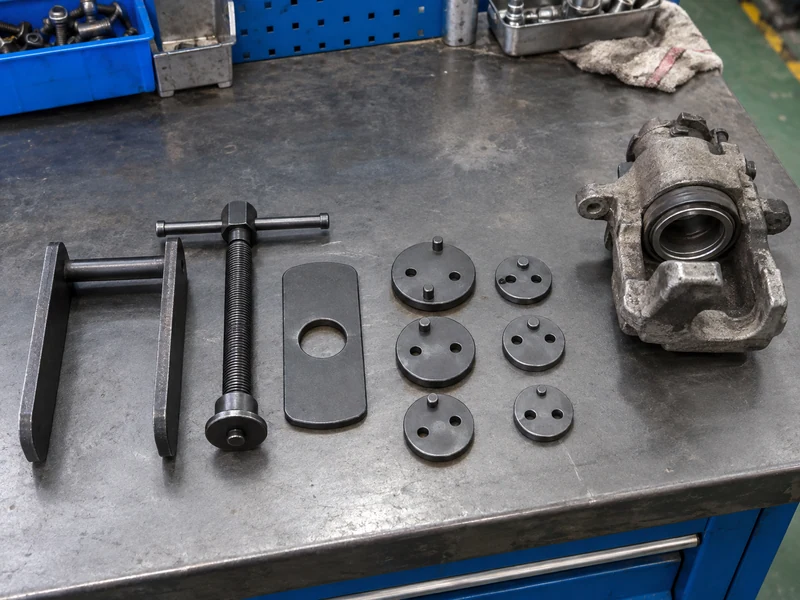
- Measure adapter pin spacing and projection.
- Check frame and screw access on representative calipers.
- Inspect retention, finish, thread movement, and case layout.
Coverage is a documented fit matrix, not the number of pieces in a case. Ask for sample fit checks on named calipers before approving a range.
Feature
| Feature | Sample evidence |
|---|---|
| Adapter coverage | Face geometry and application list |
| Mechanism | Smooth screw travel and retention |
| Service | Replacement adapters and identification |
8. How should buyers test samples safely?
Use a controlled fixture and follow the service procedure for the named caliper. Verify adapter seating and parallel movement before applying load. Check whether a rotating piston turns smoothly in the specified direction. For EPB-equipped applications, only test after the required actuator release method; then verify the separately specified piston movement. Record the electronic step and mechanical step as distinct acceptance observations. Never use a sample test to improvise a live vehicle repair process. A buyer comparing two kits should test at least one press-in application and one rotate-in application only when those applications appear in the supplier’s documented coverage. Include adapter engagement, perpendicular alignment, smooth travel, absence of slippage, and a post-test check for bent pins or thread damage. The mechanic tool planning guide is useful for documenting the kit’s place in a larger workshop list.
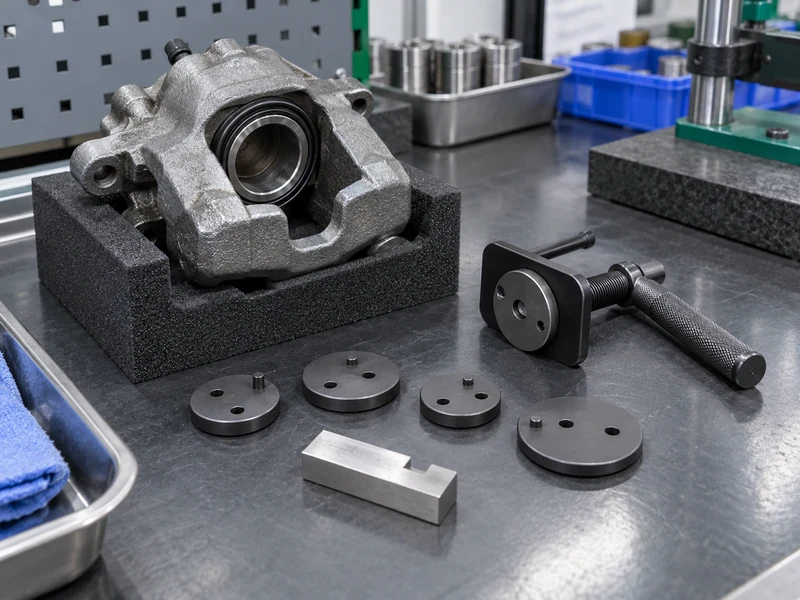
- Select one press-in and one rotate-in application if coverage claims include both.
- Record adapter, direction, setup, and result.
- Reject slippage, bending, binding, or unstable thrust.
A safe test checks tool fit while preserving the procedure boundary. Have a qualified technician approve application tests and acceptance limits.
Test
| Test | Pass condition |
|---|---|
| Press-in | Centered compression with stable plate |
| Rotate-in | Correct engagement and controlled rotation |
| Durability | No deformation or thread damage |
9. How should distributors organize brake piston kits?
Separate basic press-in tools from rotating piston kits and combination sets. Label adapter sets by shape or identifier and provide an application lookup path. Avoid implying universal coverage or including EPB service procedures that do not match every vehicle. For broader assortments, place brake tools beside bleeding, line service, and caliper work while keeping each task’s safety instructions distinct. The automotive repair tools category is the appropriate broader destination for this product family. A mechanic tool planning guide can help scope the larger kit without blending different repair procedures. Check mechanics tool sets for kit placement, while keeping verified application data in a separate matrix.
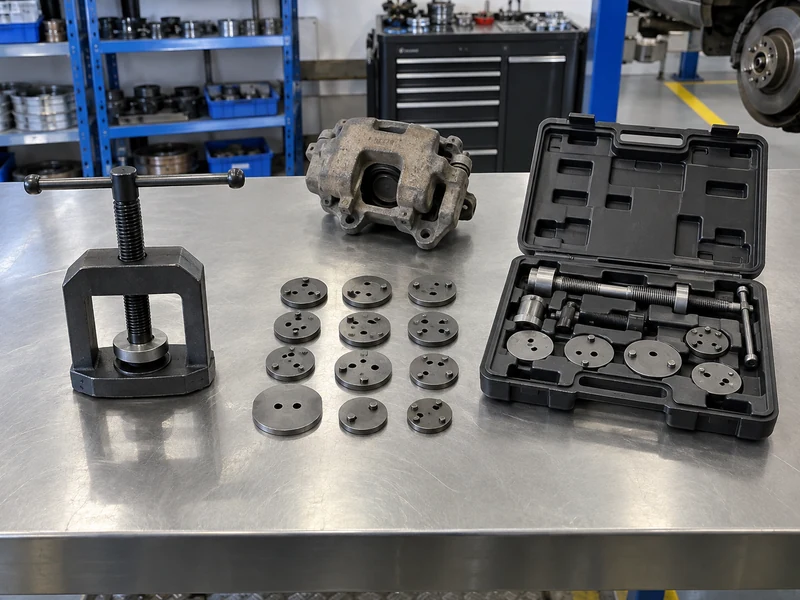
- Group by piston motion and included adapters.
- Show vehicle coverage source and date where available.
- List EPB limitations and required electronics separately.
Clear assortment names distinguish compressor, wind-back, and combination functions. Review application questions before expanding fitment claims.
Kit class
| Kit class | Catalog distinction |
|---|---|
| Compressor | Straight-push adapters |
| Wind-back | Rotation plates or pins |
| Combination | Both functions with identified coverage |
10. What should a brake piston tool RFQ specify?
State intended caliper types, push or rotate function, adapter geometry, screw and frame dimensions, included drive, materials, finish, case, and sample applications. Identify any EPB claim and demand model-specific evidence for release, subsequent piston movement, mode exit, and required functional check. Keep OEM procedures outside generic product copy and do not state rotation direction universally. For supplier screening, use the supplier selection guide before sending a completed application matrix through contact KOLARWIN.
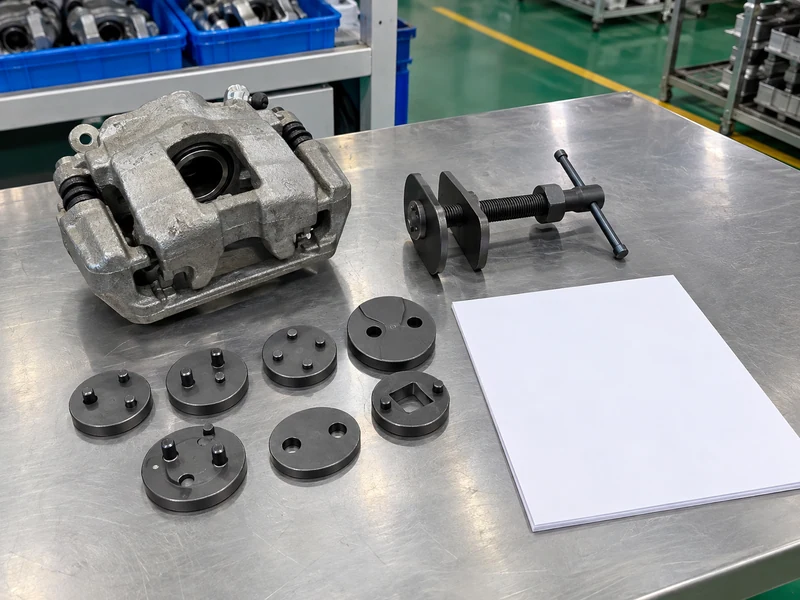
- Attach caliper face images or dimensions.
- Name target vehicle applications and verification source.
- Define sampling, fit, durability, and packaging requirements.
One verified coverage list is more useful than a broad fit-all statement. Approve the application list with its sample record.
Q1: Can I push every brake piston straight back?
No. Some pistons require rotation. On an EPB vehicle, actuator release may be a separate step from hydraulic piston retraction; follow the exact OEM method.
Q2: Does every wind-back tool turn clockwise?
No. Rotation direction depends on vehicle and caliper design; use OEM service information.
Q3: Can a mechanical tool put an EPB caliper into service mode?
No. A mechanical adapter does not replace a required electronic procedure.
Q4: What does a combination brake kit do?
Some kits include adapters for both press-in and rotate-in piston designs. Coverage remains model-specific.
Q5: Can I use visible piston notches as the only guide?
No. Treat them as a clue and confirm the required method in the applicable service information.
Looking for a reliable mechanic tools manufacturer in China?
If you are sourcing hand tools, socket tools, automotive repair tools, mechanic tool sets or OEM private label tools, contact KOLARWIN Tools for factory-direct quotation, customization support and product consultation.


