
Need OEM supplier support for this product type?
Contact KOLARWIN Tools for OEM mechanic tools, private label packaging, wholesale quotation and product range support. This gives overseas buyers a clear path from article reading to supplier discussion.
A blind hole bearing puller removes a bearing or bush from a housing when ordinary outside jaws cannot reach a rear face. Buyers must match an internal collet, slide hammer, screw bridge, or counterstay with a measured bore and safe reaction path. This guide gives distributors, importers, and private-label teams an approval route based on access, shoulder geometry, force control, and RFQ evidence.
Table of contents
- 1. What is a blind hole bearing puller?
- 2. How does an internal collet grip?
- 3. What measurements belong in an RFQ?
- 4. When choose a screw bridge or counterstay?
- 5. When does a slide hammer suit removal?
- 6. How do removal methods compare?
- 7. What safety controls belong in a specification?
- 8. How should distributors evaluate samples?
- 9. What belongs in a private-label kit?
- 10. How should a buyer approve a puller?
1. What is a blind hole bearing puller?
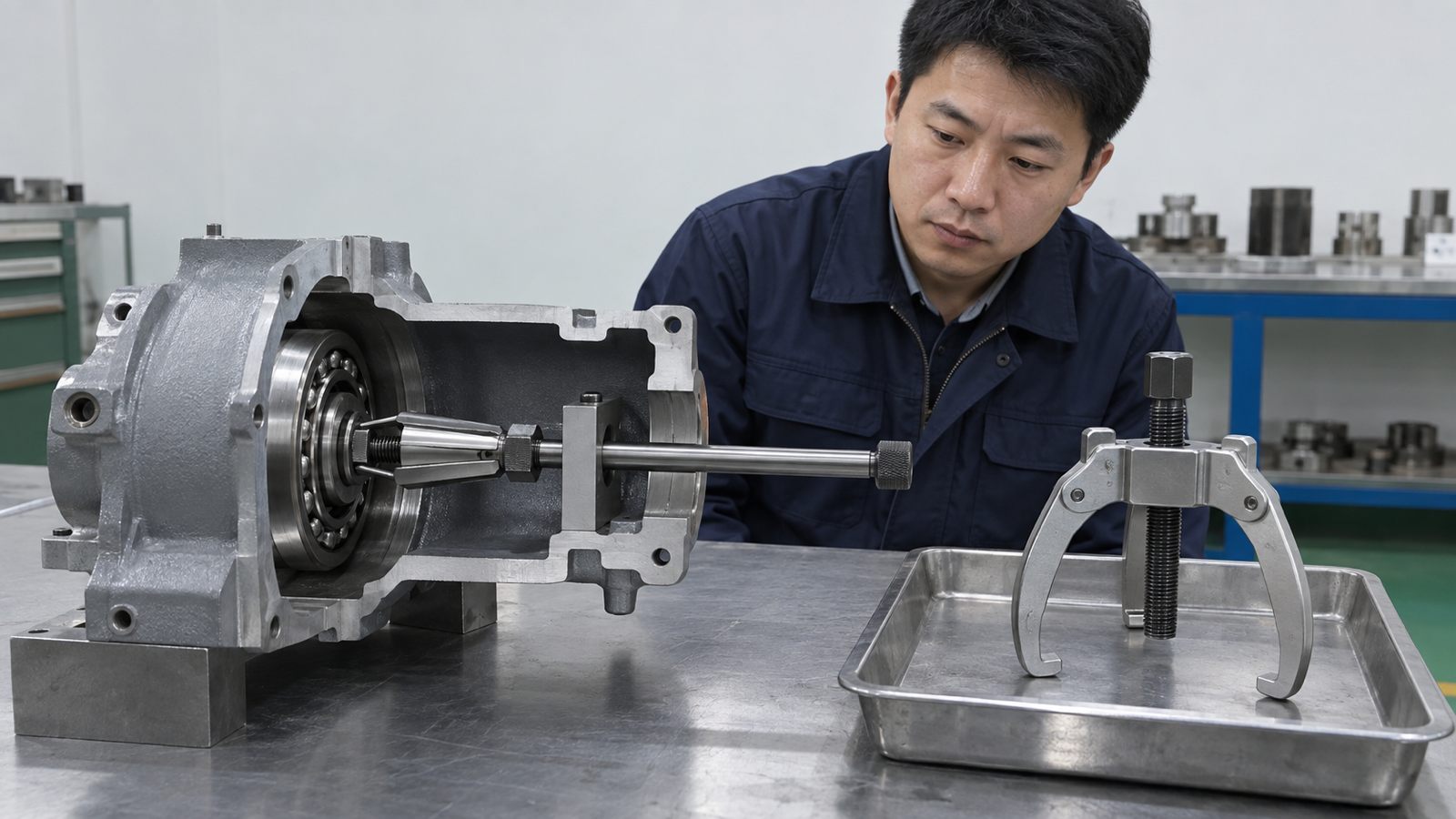
A blind hole bearing puller reaches through an open housing side and grips an internal surface. Its fingers or collet expand behind a bearing race, bushing, sleeve, or approved shoulder. A rod, bridge, counterstay, screw, or slide hammer then carries force along the bore axis. An outside three-jaw puller instead needs a rear shoulder around an exposed component.
Here is the buying test: identify the part, the internal grip surface, and the reaction point before comparing kit counts.
For a distributor line, record:
- target part plus access direction and bore opening;
- usable grip depth behind the target face;
KOLARWIN’s automotive repair tools range gives useful category context for buyers building a service-tool assortment.
Practical action: ask every supplier for a marked assembly photo showing exactly where each finger or collet carries contact.
Blind-hole job definition
| Buyer question | Evidence to request | Hold point |
|---|---|---|
| What must move? | Marked bearing or bush drawing | Part identity remains uncertain |
| Where can grip occur? | Bore view with shoulder marked | Tool touches a seal or thin edge |
| What reacts force? | Housing face, bridge, or counterstay sketch | No stable reaction surface |
2. How does an internal collet grip a blind bearing?
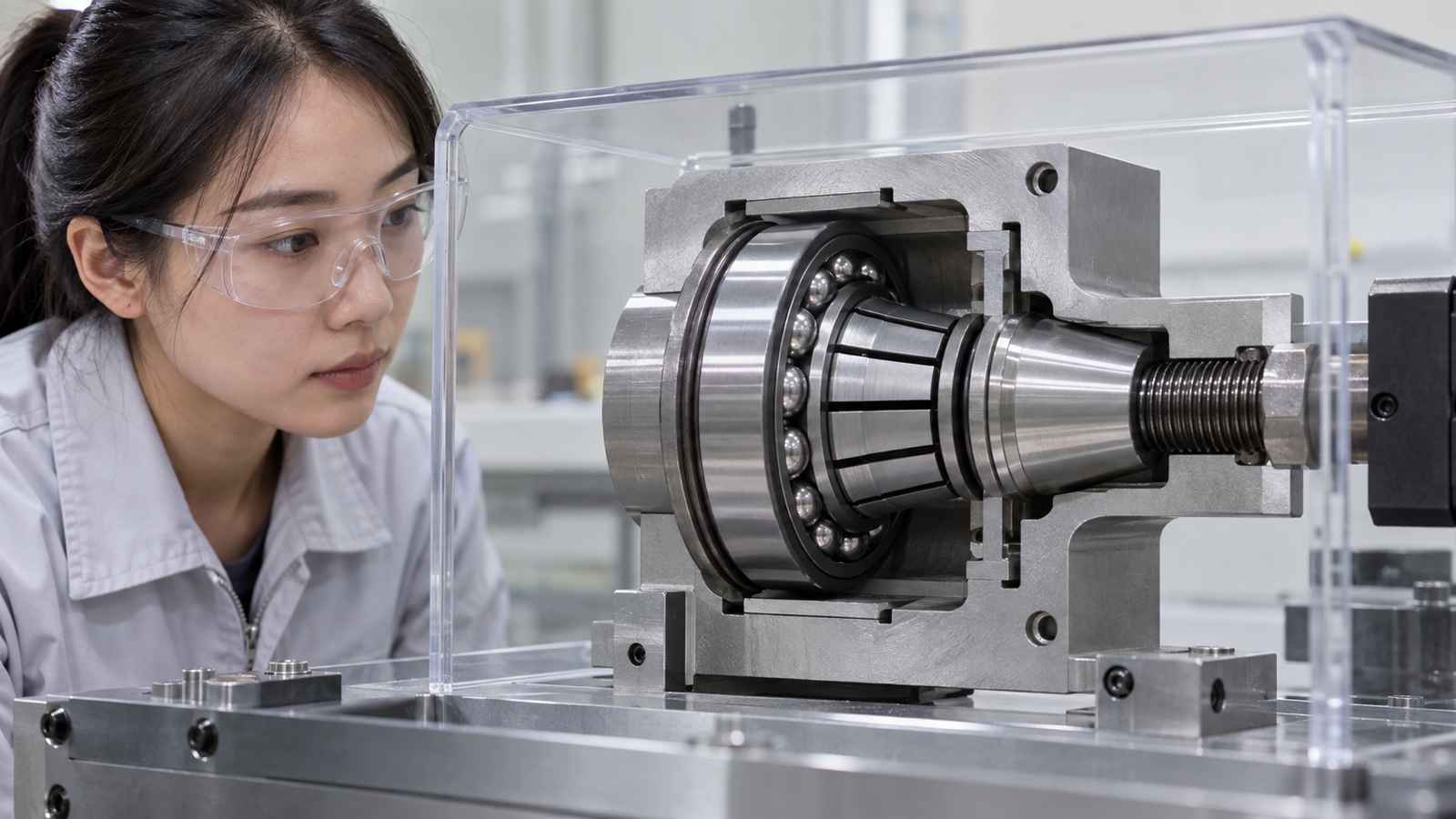
An internal collet enters smaller than its working bore. A tapered cone, threaded actuator, or similar mechanism moves fingers outward. Proper expansion places them behind a sound race edge or shoulder. Direct collet contact should avoid a seal, cage, rolling element, or damaged chamfer. However, when a collet grips the inner ring of a complete bearing whose outer ring remains interference-fitted in a housing, the full extraction load can still pass through rolling elements. Treat that bearing as unsuitable for reuse unless the bearing maker’s procedure and inspection expressly support reuse.
Fit comes before force: a strong screw cannot rescue a collet that only touches a soft or unsupported edge.
Check each internal-grip design for:
- entry diameter and expansion range at working depth;
- even finger contact behind the intended load-carrying face;
Keep blind-race tools separate from wheel-hub systems in a broader catalogue.
Practical action: require a physical sample or a sectioned fixture when a new collet must cover a tight bore.
Internal-grip review
| Feature | Buyer check | Risk if missed |
|---|---|---|
| Entry size | Collet enters without damaging the bore | Tool cannot reach the target |
| Expansion zone | Fingers open behind a sound face | Grip slips under load |
| Contact profile | Race or shoulder carries force | Seal, cage, or chamfer carries force |
3. What bore and access measurements belong in an RFQ?
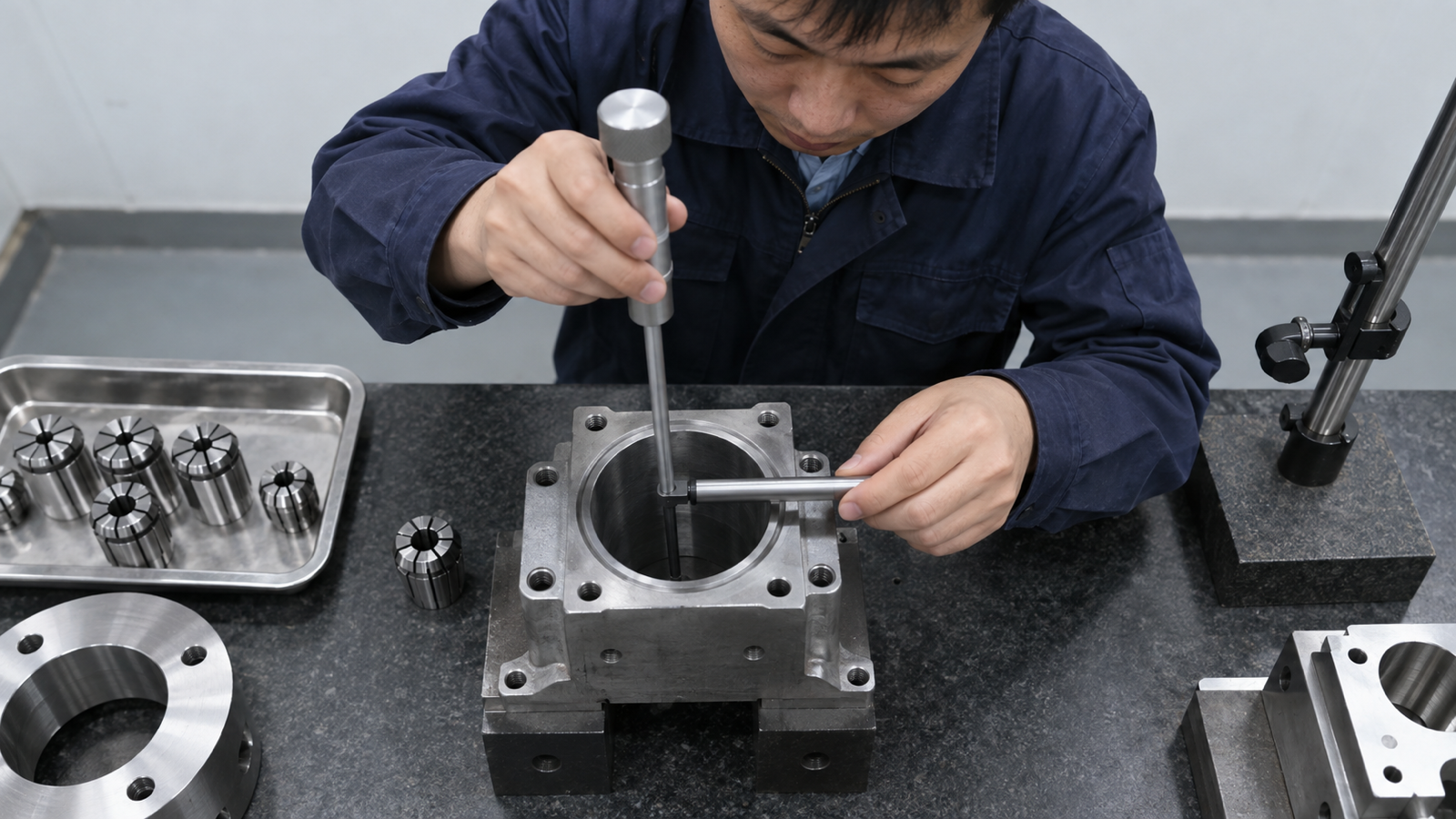
“Fits 10–32 mm” cannot describe a blind application. A buyer needs bore diameter at the grip zone, usable depth, target width, shoulder position, entry chamfer, clearance, and removal direction. Damage or corrosion may reduce engagement after cleaning.
Measure the interface, then match the tool: nominal bearing size alone leaves too many ways for a collet to slip.
Attach these fields to an RFQ:
- internal diameter at entry and at the intended grip surface;
- minimum usable depth, target width, wall thickness, and shoulder location;
The specialty pullers in a mechanic tool list helps place blind-hole tools beside other extractors without calling one kit universal.
Practical action: include two side photos, a scale reference, and a dimensioned section sketch with every blind-hole quotation request.
RFQ measurement sheet
| Measurement | Why it controls selection | Evidence format |
|---|---|---|
| Bore diameter | Sets collet entry and expansion | Caliper record and photo |
| Usable depth | Sets finger reach and seating | Dimensioned side view |
| Shoulder position | Defines where force can land | Marked section sketch |
| Surrounding clearance | Controls bridge and stroke | Top and side photos |
4. When should buyers choose a screw bridge or counterstay?
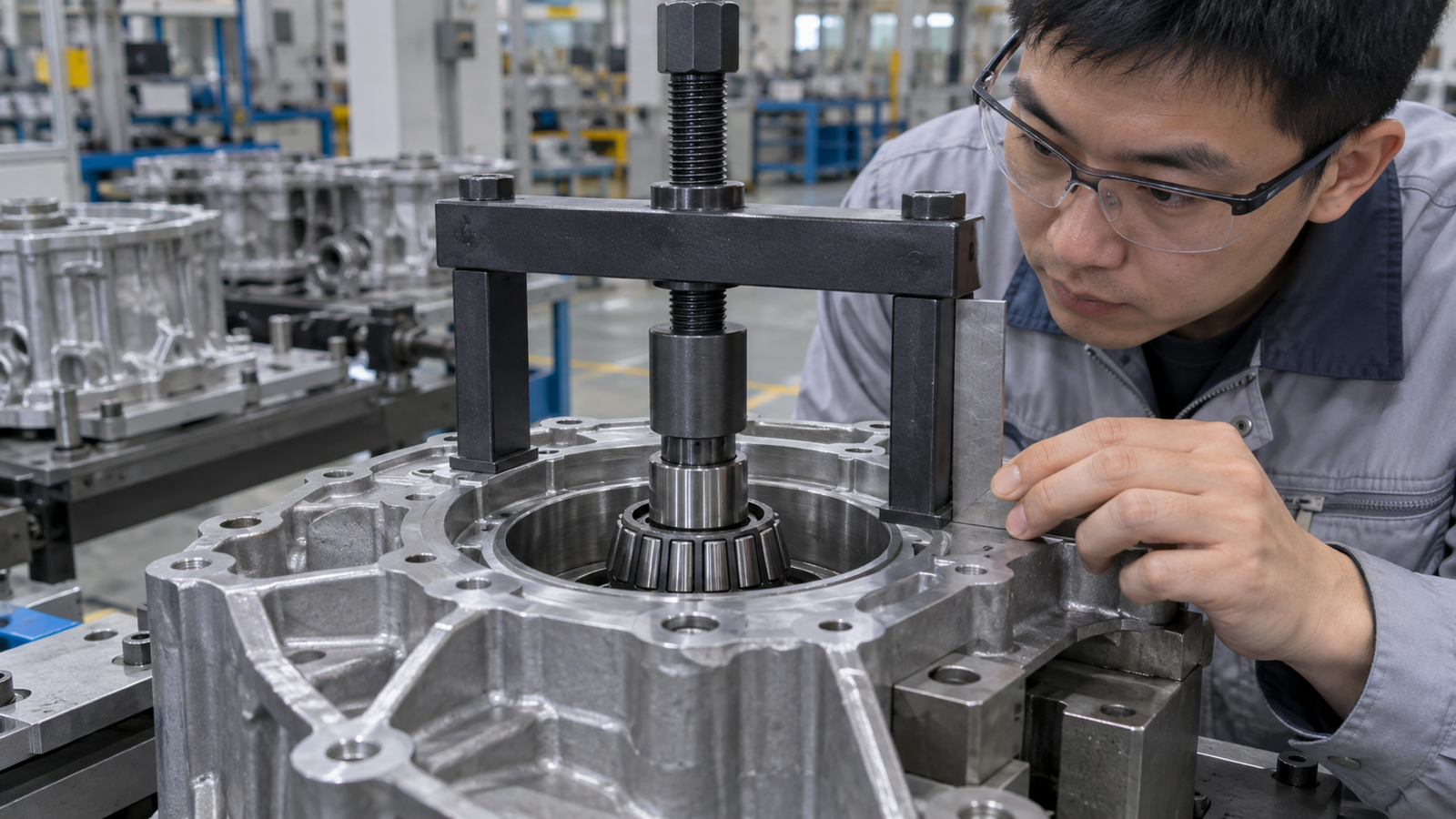
A screw bridge or counterstay suits a blind bore when a firm housing face can react load. The internal collet grips the target while a bridge, feet, or counterstay rests against support. Turning an approved screw creates controlled axial movement. This arrangement can fit spaces where a long slide stroke cannot.
Controlled movement still needs a sound landing: a bridge resting on a thin lip can distort the housing before a bearing moves.
Review these design points:
- bridge footprint and flatness at each reaction foot;
- counterstay reach around the opening and screw axis relative to the bore;
Do not infer an allowable force from screw diameter or a “heavy-duty” label. Ask for the current configuration-specific instructions and limits.
Practical action: request a drawing that shows collet, bore, bridge feet, reaction face, and screw axis in one section view.
Screw and counterstay approval
| Field | Confirm before release | Reject or hold when |
|---|---|---|
| Reaction feet | Both feet sit on a strong surface | Bridge rocks or spans a void |
| Counterstay | Reach clears seals and casting | Counterstay contacts a fragile lip |
| Screw axis | Stays concentric with the bore | Screw leans during hand loading |
5. When does a slide hammer suit blind-hole removal?
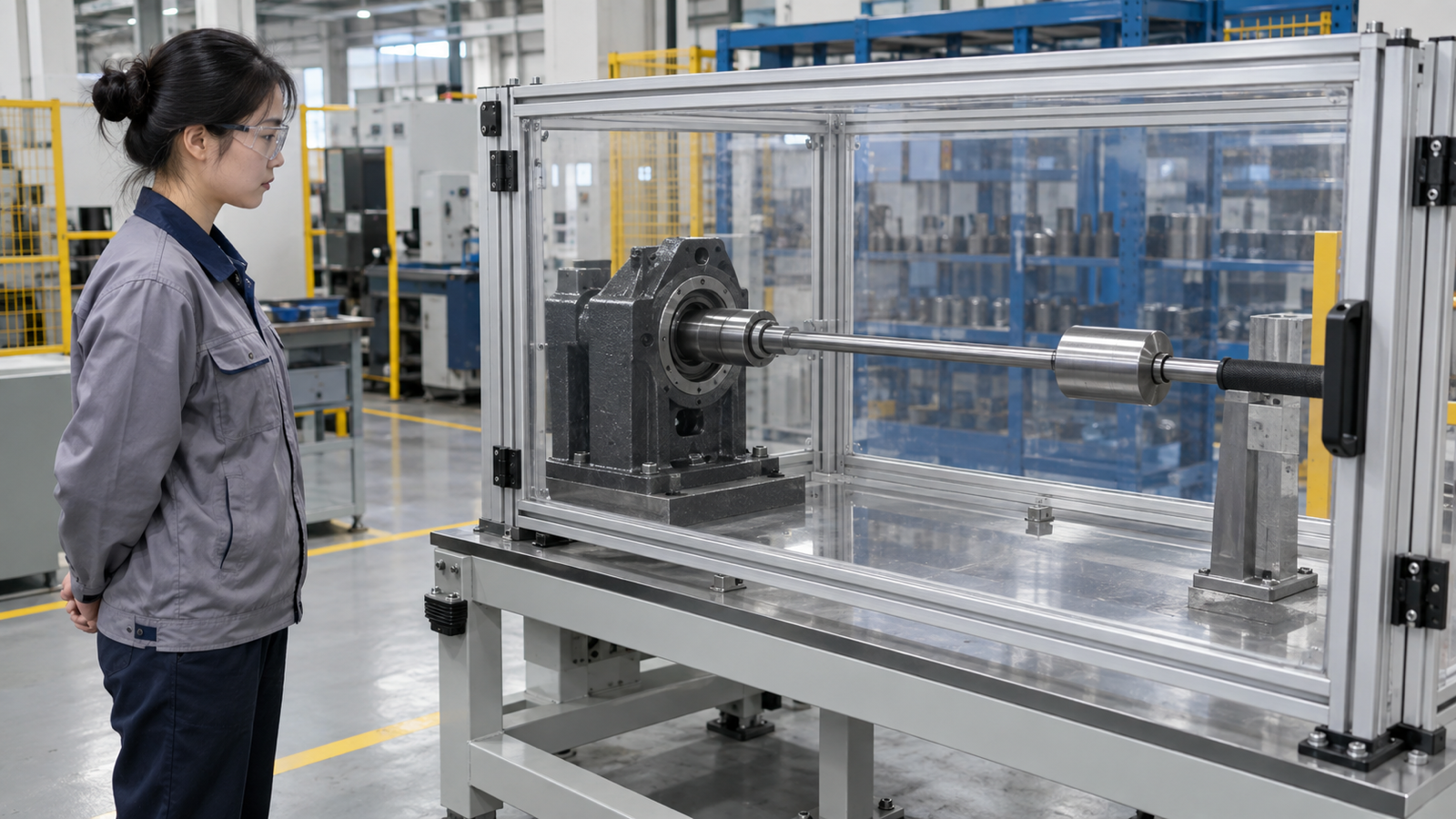
A slide hammer applies axial impulse through a rod, stop, and moving mass. It can suit a blind bearing when the collet has secure purchase and enough straight stroke remains outside the housing. A hammer does not replace correct engagement. Impact against a slipping finger can mark the bore, eject the tool, or damage a reusable housing.
The stroke envelope decides the match: the shortest clear path in a customer fixture should guide sample testing.
Check for:
- positive collet-to-rod connection and a secure stop;
- handle and mass clear of hands, fixtures, and nearby parts;
Keep slide-hammer selection separate from grip geometry. A compatible hammer rod does not prove a collet fits a given bore.
Practical action: test the smallest planned bore in a representative fixture with the full stroke and operator-clearance envelope.
Slide-hammer decision table
| Working condition | Slide hammer may suit | Reassess when |
|---|---|---|
| Open axial stroke | Impulse can travel without obstruction | Adjacent parts block the mass |
| Blind bearing | Collet seats behind a sound face | Fingers touch a seal or chamfer |
| No bridge surface | Rod has a clear straight path | Housing cannot be supported |
6. How do non-destructive and destructive methods compare?

Removal method depends on which parts must survive. A correctly seated puller can protect a shaft or housing while the bearing remains a discard item. A press may suit a removed housing when cups and plates support the correct ring. A destructive method may suit a discard race when a controlled procedure protects adjacent surfaces. Do not market any path as damage-free by default.
The part’s future sets the method: reusable surfaces need controlled contact, while a discard ring may permit a different approved route.
Compare before approving a kit:
- whether the assembly can be removed and supported squarely;
- which ring receives force and whether nearby seals, sensors, coatings, or heat-treated surfaces need protection;
Use the China OEM auto-tools sourcing guide when planning a mixed specialty-tool programme with different removal outcomes.
Practical action: put puller, press tooling, and destructive removal into separate RFQ lines with separate risk notes.
Removal-method comparison
| Method | Suitable starting condition | Main control |
|---|---|---|
| Internal puller | Bore permits stable internal grip | Collet contact and alignment |
| Screw bridge | Firm housing face is available | Reaction-foot support |
| Slide hammer | Straight stroke remains clear | Grip, stop, and operator clearance |
| Press tooling | Removed assembly has ring-specific support | Correct cups, plates, and direction |
7. What safety controls should buyers write into the specification?
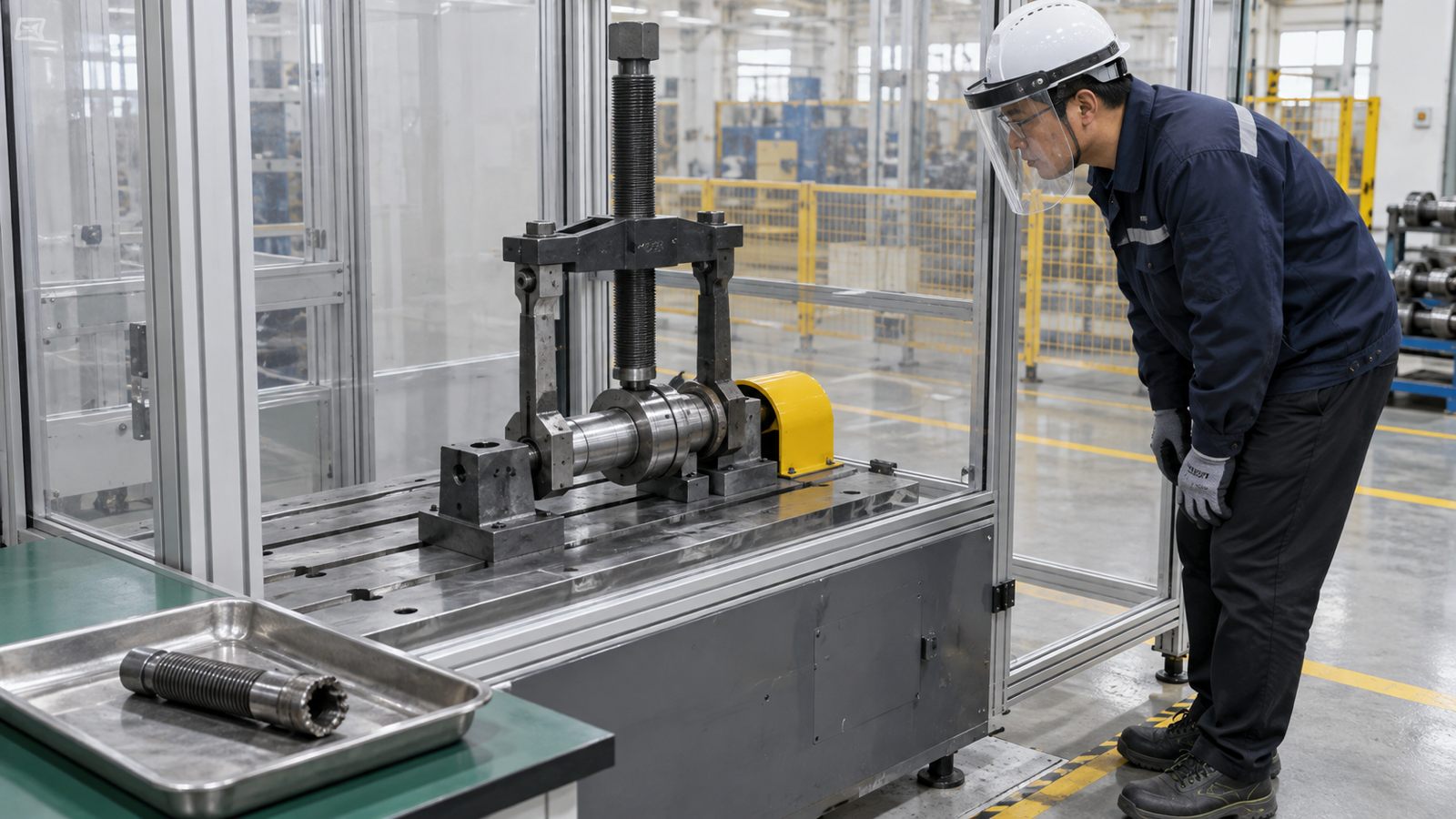
Pullers store energy through threads, rods, bridges, hydraulic components, and loaded parts. Buyers should ask for inspection, stable support, clear operator position, gradual actuation, and stop conditions. OSHA’s general hand-tool rule places responsibility on employers for safe tool condition; local procedures govern actual work.
A safe specification names stop points: slip, tilt, cracking, bent threads, abnormal resistance, leakage, or movement outside the intended axis should end the attempt.
Write these controls into product documentation:
- inspect fingers, jaws, plates, rods, pins, threads, and hydraulics before use;
- isolate unexpected start-up and stored energy where rules require it;
Use mechanics tool-set configuration for wider kit planning, but keep blind-hole safety limits specific to the puller configuration.
Practical action: include a stop-condition card and quarantine rule with every private-label sample.
Safety-document checklist
| Control | Evidence to request | Buyer decision |
|---|---|---|
| Condition check | Inspection list and quarantine rule | Approve only with traceable checks |
| Load path | Setup drawing and reaction points | Reject unclear force paths |
| PPE and guarding | Current instructions and risk note | Match local task procedures |
| Stored energy | Isolation and unload steps | Hold until release method is clear |
8. How should distributors evaluate samples and quality?

Sample approval should test the complete blind-hole configuration, not a loose collet or polished case. Verify entry, engagement depth, alignment, reaction support, movement, replacement interfaces, and storage retention on representative bores. Material names alone cannot prove suitability; request a controlled specification when material or heat treatment affects acceptance.
A sample earns release through repeatable evidence: keep photos, measurements, instructions, and part identification in one revision-controlled file.
Review these sample gates:
- collet seating at minimum and maximum planned bore conditions;
- thread fit, pin retention, and straightness of rods and bridge parts;
The mechanic tool-set selection guide for distributors supports assortment planning without transferring unrelated torque or socket claims.
Practical action: approve a golden sample plus a signed dimensional checklist before packaging artwork or production release.
Sample-approval scorecard
| Review area | Pass evidence | Hold or reject when |
|---|---|---|
| Fit | Representative engagement photo | Collet touches seal, cage, or edge |
| Assembly | Full configuration works as drawn | Unapproved adapter is needed |
| Identification | Part codes match drawings | Spare identity is unclear |
| Repeatability | Production samples match golden sample | Dimensions change without review |
9. What belongs in a private-label blind-hole puller kit?
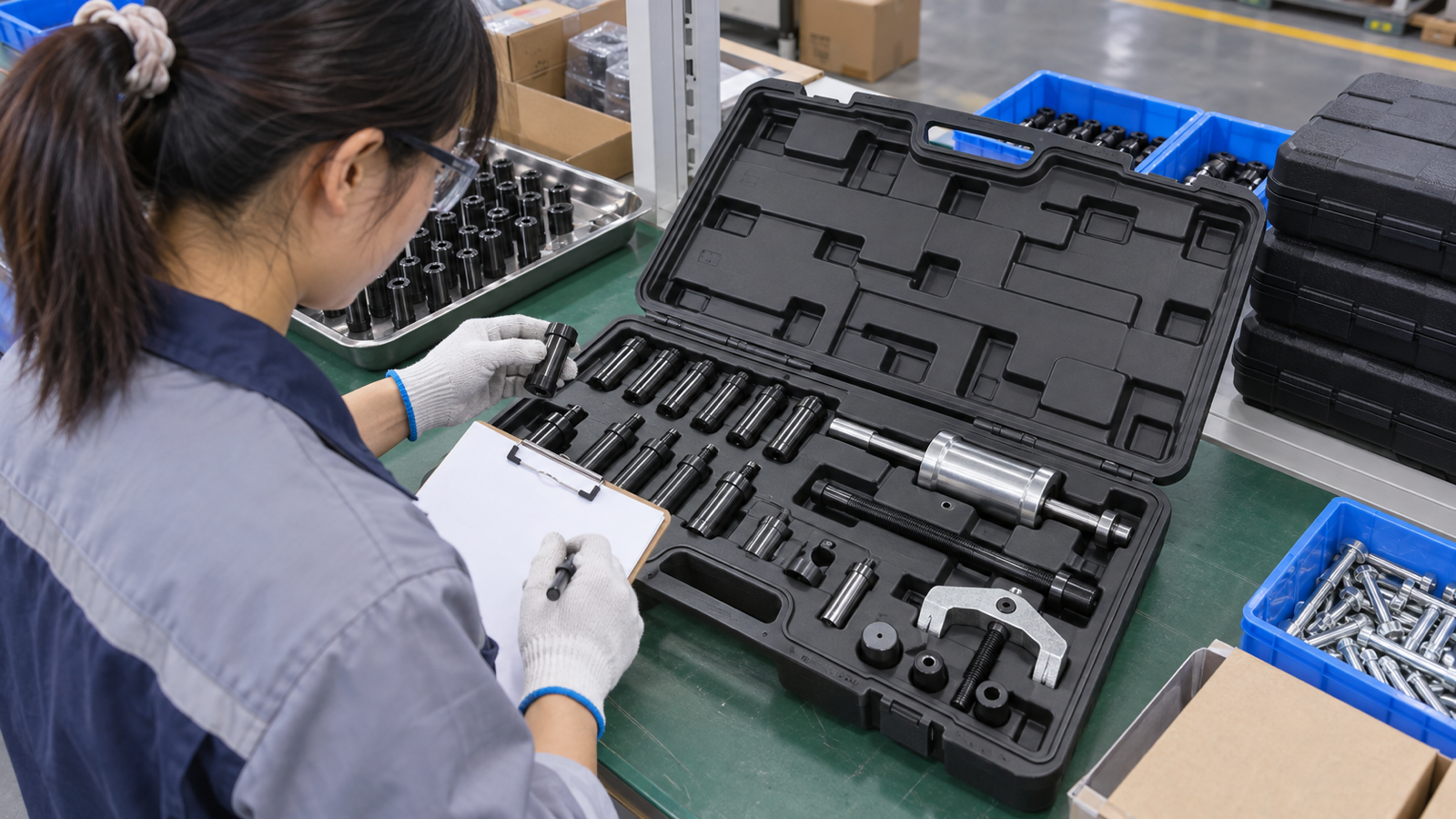
A distributor-ready kit needs a clear relationship between engagement parts and force parts. Depending on the approved family, it may include internal collets or fingers, rods, bridge or counterstay pieces, a screw, a slide-hammer body, protectors, pins, spare wear items, case inserts, and instructions. A large component count does not prove broad coverage.
A complete BOM prevents a partial tool from reaching a workshop: every part should have one identity, one case position, and one approved mating interface.
Plan these package elements:
- collet or finger sizes with a durable identification method;
- compatible rods, bridge, counterstay, screw, hammer parts, and protectors;
Keep complementary socket-tools system components separate from blind-hole grip claims. OEM socket-set packaging options offer adjacent case-planning context, not puller performance evidence.
Practical action: approve the tool, BOM, tray, spare list, and instruction revision as one sample package.
Kit completeness table
| Kit element | Buyer purpose | Required control |
|---|---|---|
| Collets or fingers | Match measured internal interfaces | Range and contact profile recorded |
| Force parts | Carry axial load through an approved path | Bridge, rod, or hammer compatibility |
| Protectors | Shield shaft ends and finished faces | Correct fit shown in sample |
| Spares | Keep serviceable pieces available | Part codes and supply route |
10. How should a buyer approve a blind hole bearing puller?
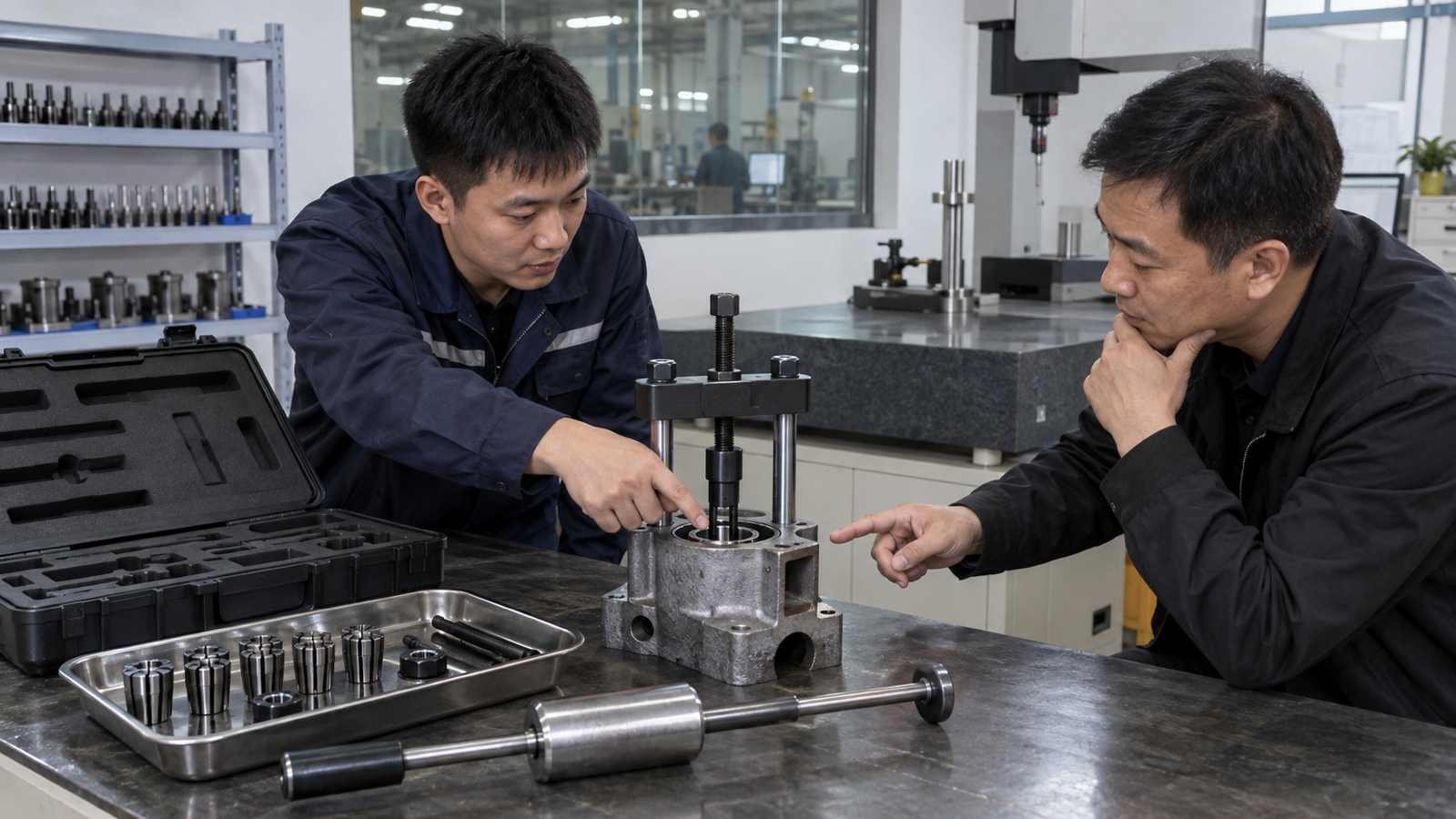
Approve a blind hole bearing puller through a named application or measured fixture. Confirm bore entry, full engagement, shoulder strength, axis alignment, reaction support, clearance, and removal direction. Then check the BOM, replacement parts, inspection evidence, packaging, and instructions. A loose bearing fit proves one interface only.
The next step belongs in the RFQ: send a marked photo, bore and depth measurements, required quantity, target markets, packaging needs, and evidence fields.
Use this approval sequence:
- identify the target part and state whether its survival matters;
- approve the full collet, bridge, counterstay, or slide-hammer configuration;
- record stop conditions, PPE, guarding, instruction revision, and change control;
For follow-up, the B2B tool sourcing blog gives related purchasing context. Buyers can contact the KOLARWIN team about a blind-hole puller RFQ with measured interfaces.
Practical action: reject any quotation that gives only a headline size or force figure without reach, spread, grip, configuration, and use conditions.
Can a blind hole bearing puller remove every bearing in a housing? No. Success depends on bore geometry, shoulder strength, access, reaction support, tool condition, and approved configuration. Request sample evidence for each application family.
Is an internal collet the same as a complete puller? No. A collet creates internal engagement. A bridge, counterstay, screw, slide hammer, or another approved force system must carry the pull.
Does a slide hammer prove a kit fits a blind bearing? No. Slide hammer describes force application. Collet range, grip depth, contact profile, stroke, and operator clearance still require approval.
Can a puller guarantee non-destructive removal? No. A suitable method can protect selected shafts or housings, yet the bearing may remain a discard item. State the required removal outcome before choosing a method.
What should an importer put in a blind-hole puller RFQ? Include target part, bore, usable depth, shoulder location, clearance, removal direction, reaction surface, force method, sample requirement, documentation, spare parts, packaging, and change-control fields.
Looking for a reliable mechanic tools manufacturer in China?
If you are sourcing hand tools, socket tools, automotive repair tools, mechanic tool sets or OEM private label tools, contact KOLARWIN Tools for factory-direct quotation, customization support and product consultation.


