
Need OEM supplier support for this product type?
Contact KOLARWIN Tools for OEM mechanic tools, private label packaging, wholesale quotation and product range support. This gives overseas buyers a clear path from article reading to supplier discussion.
Removing a bearing race can damage a shaft or housing when a tool grips the wrong ring or loads rolling elements. A race puller addresses that problem with a matched jaw, collet, or separator before controlled force. This guide helps B2B buyers specify kits without promising universal fit.
Contents
Sections 1–9 below end with tables; section 10 closes with five FAQs.
1. What is a bearing race puller and where does it grip?
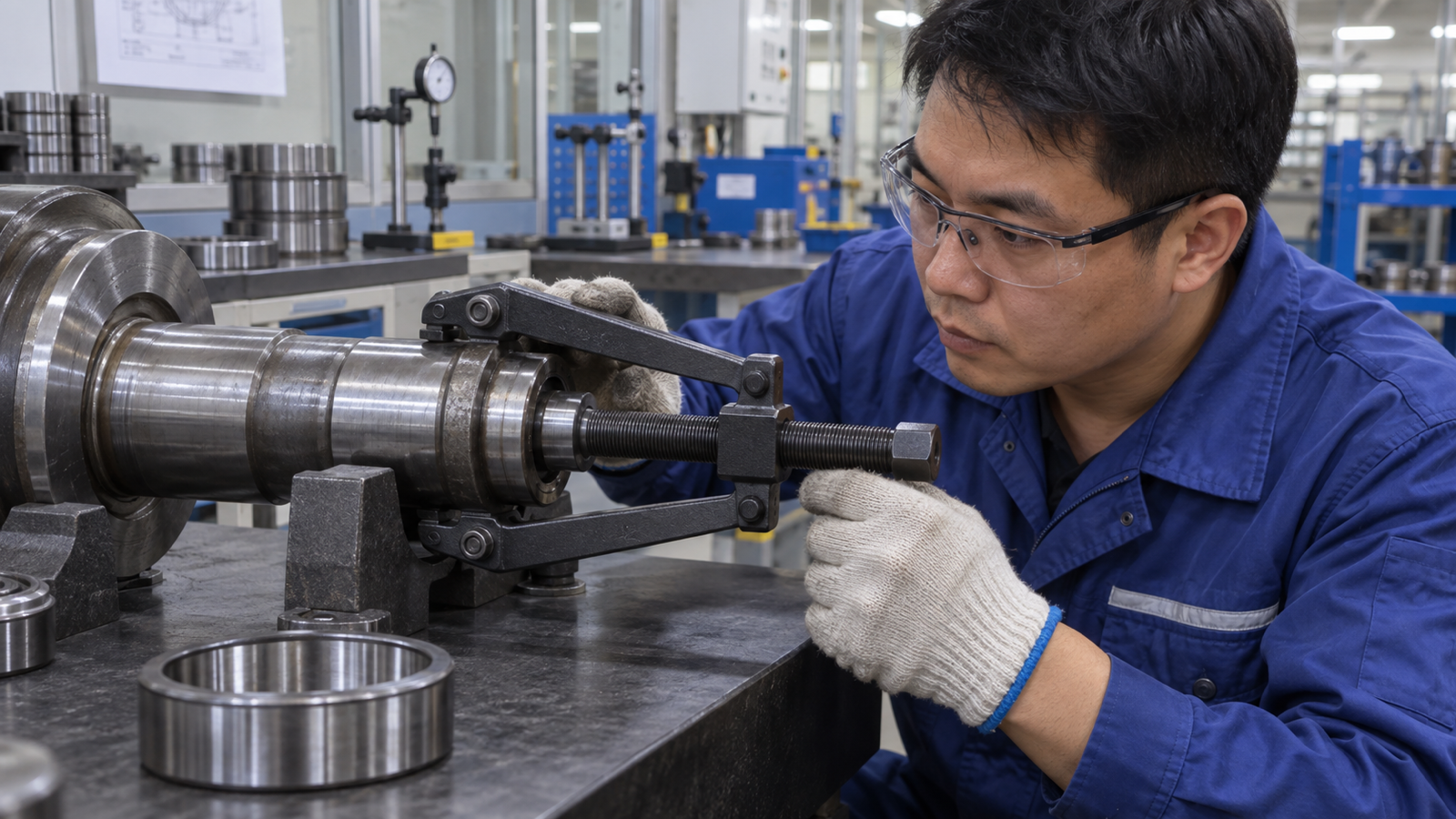
A bearing race puller removes an inner or outer bearing ring through a defined contact point. The target may be a standalone cup in a housing or a residual inner race left on a shaft after the rest of a bearing has been separated. It may also sit flush against a shoulder. Ordinary three-jaw pullers can fail when their tips cannot reach behind that ring. Race tools use fingers, jaws, or separator plates so contact lands on the race rather than a cage, seal, or casting.
Here is the working principle: engagement comes before force. Name the race, accessible face, reaction surface, and removal direction.
For a distributor assortment, record:
- target ring: inner race, outer race, or complete bearing;
- access: exposed shoulder, narrow rear gap, or blind bore;
- reaction: shaft end, housing face, bridge, rods, or press bed;
See KOLARWIN’s automotive repair tools range for related service tools.
Practical action: add a dimensioned photo to each RFQ and label which ring must move.
Race-puller role check
| Buyer question | Evidence to request | Risk if skipped |
|---|---|---|
| What ring must move? | Marked assembly photo or drawing | Force reaches a seal, cage, or wrong ring |
| Where can the tool grip? | Shoulder, bore, or rear-face measurement | Jaws walk or collet loses contact |
| What reacts the load? | Shaft-end, housing, bridge, or press detail | Housing or shaft receives unintended load |
| Must the race be reused? | Service outcome stated in RFQ | Destructive removal may be selected by mistake |
2. How do internal, external, and separator-style race pullers differ?
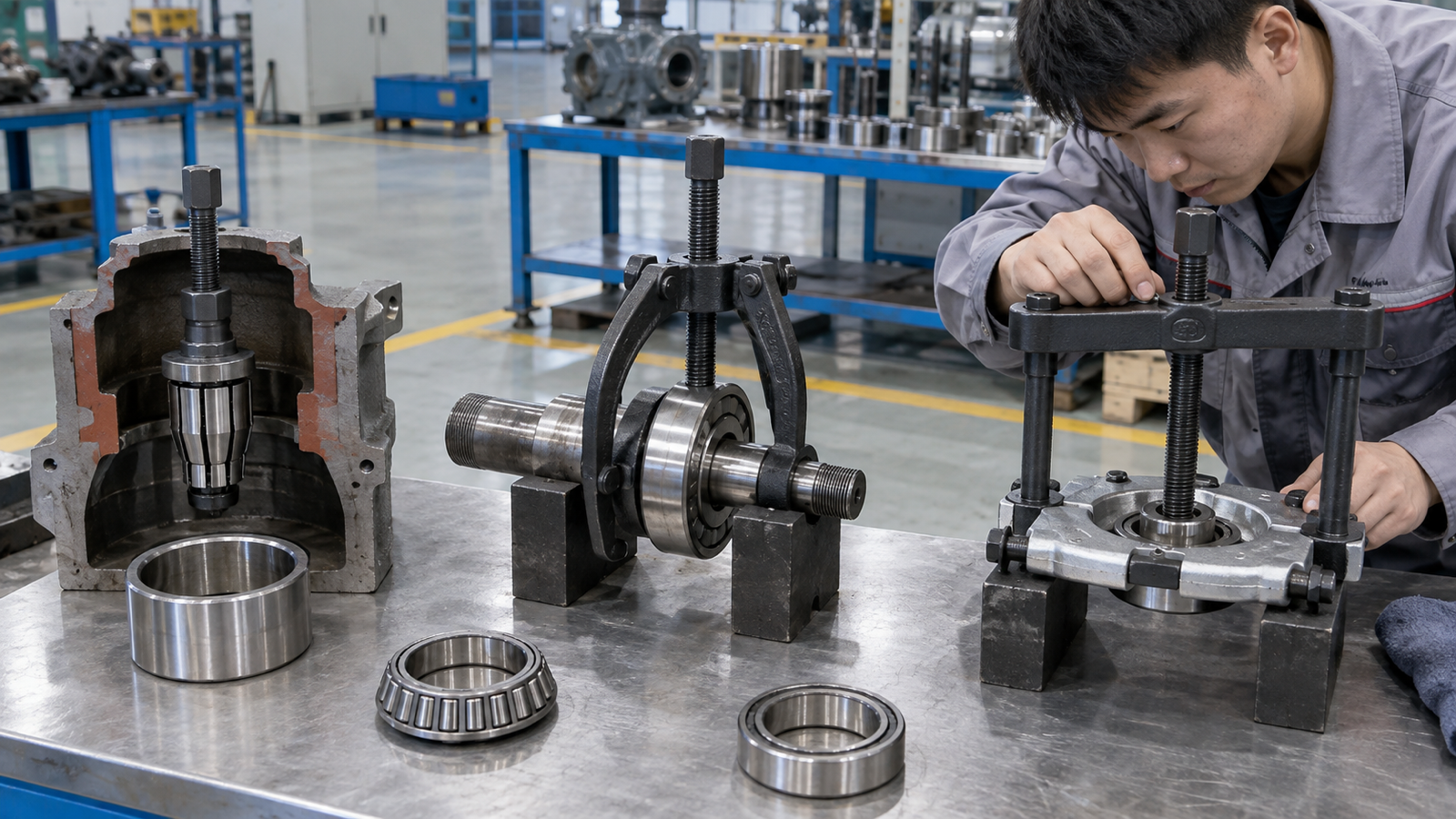
Internal race pullers expand fingers or a collet inside a bore. External pullers use jaws behind an outside shoulder. Separator tools use two plates behind a race, then connect with a bridge, rods, or another force frame. A slide hammer describes force application; it does not prove attachment geometry.
The geometry tells you more than the product name: specify engagement method, force path, and configuration limit.
Use this family screen for a line card:
- internal or blind puller for a race inside a closed housing;
- external jaws for a sound outside shoulder;
- slide-hammer attachment where axial movement suits the procedure;
Keep race-removal tools separate from complete wheel-hub puller kits, which use different attachments and application evidence.
Practical action: make suppliers submit a labeled drawing for every tool family and reversible configuration.
Family comparison for a buyer line card
| Family | Primary engagement | Typical access | Approval question |
|---|---|---|---|
| Internal puller | Expanding fingers or collet | Blind bore | Does expansion reach a strong internal face? |
| External jaw puller | Hooks behind outside shoulder | Exposed race or hub | Do jaws remain seated at working reach? |
| Separator set | Plates clamp behind race | Narrow rear clearance | Are both plates supported and square? |
| Slide-hammer attachment | Collet, jaws, or adapter plus moving mass | Selected internal or external access | Is attachment geometry approved separately? |
3. Which race dimensions and access measurements belong in an RFQ?
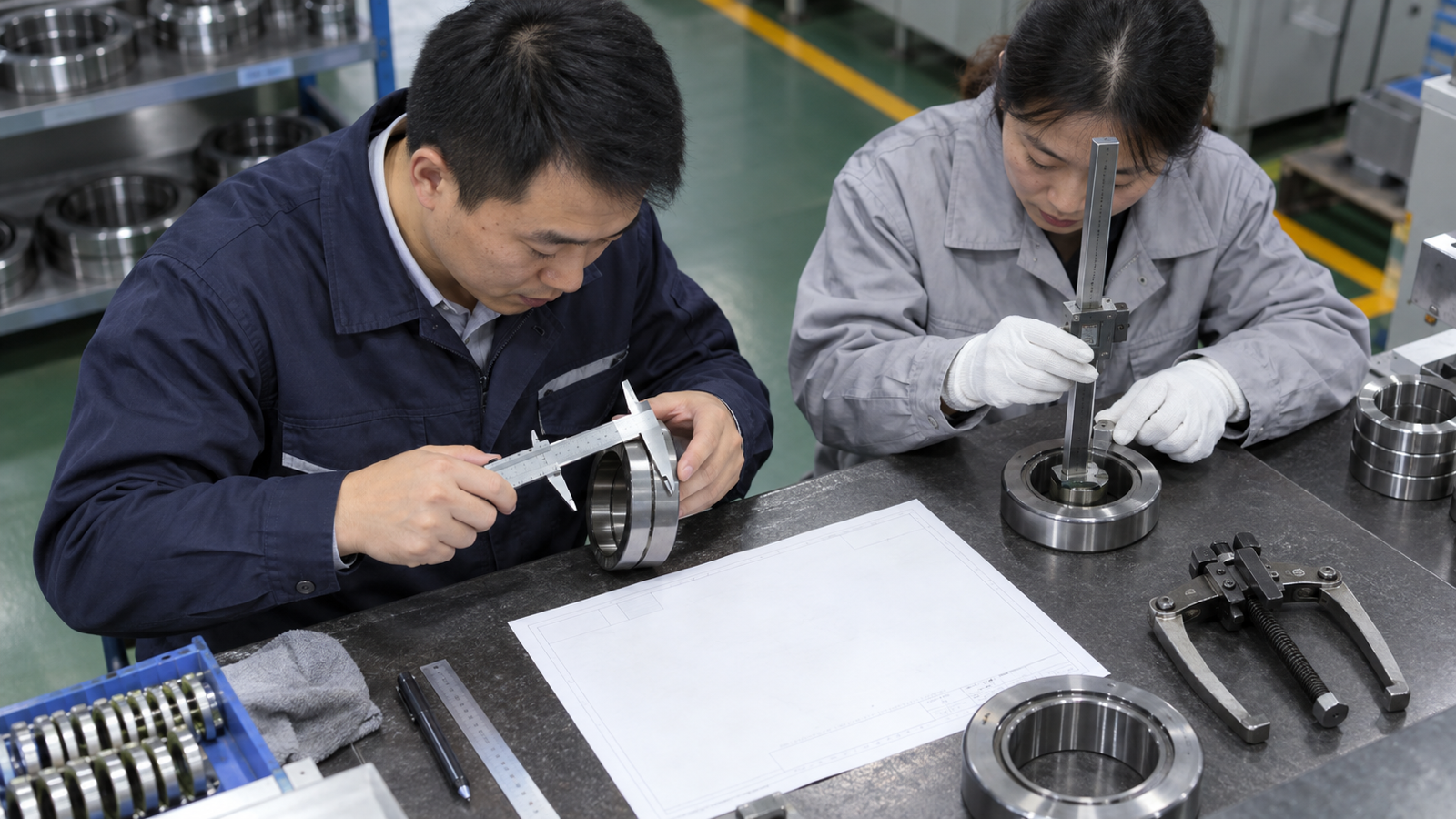
Nominal bearing diameter alone cannot select a race puller. A buyer needs bore or outside diameter, race width, shoulder depth, rear clearance, and reaction surface. For internal tools, measure usable grip depth. For external jaws, measure spread at working reach and jaw-tip thickness. For separators, measure the rear gap and supporting face.
A useful RFQ describes the interface, not a catalogue label: show contact points and force direction.
Request these fields in a drawing:
- minimum and maximum internal or external engagement;
- race width and exposed face width;
- effective reach at working spread;
- spindle thread, bridge connection, rods, or hydraulic interface;
- approved actuation and configuration-specific rating;
Use this mechanic tool list for assortment context.
Practical action: require a completed interface sheet before a supplier sends price or packaging artwork.
RFQ measurement sheet
| Measurement | Internal puller | External or separator tool | Evidence format |
|---|---|---|---|
| Target diameter | Bore and grip range | Outside race or shoulder | Caliper record and photo |
| Working depth | Internal grip depth | Reach behind race | Dimensioned side view |
| Contact width | Finger or collet face | Jaw or plate edge | Marked contact sketch |
| Reaction path | Bridge, rods, or slide hammer | Shaft, bridge, or ram | Assembly drawing |
| Clearance | Blind opening and obstructions | Rear gap and adjacent parts | Top and side photos |
4. When should buyers choose a blind-hole or internal race puller?
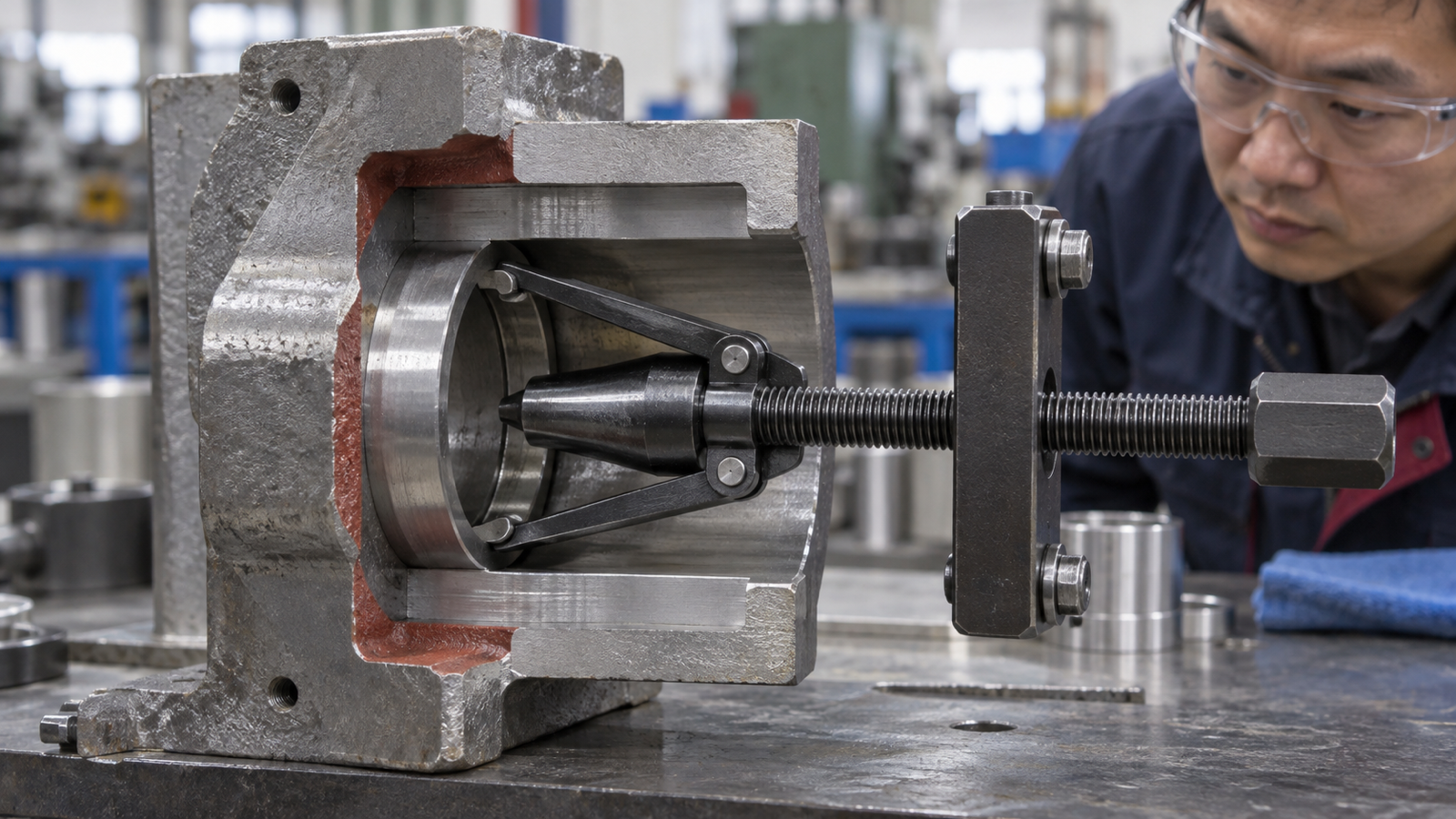
A blind-hole race puller suits a housing that blocks rear access. Fingers or a collet expand inside the race or bore, then a bridge, counterstay, screw, or slide hammer withdraws the target. The bore needs a correctly sized, strong grip surface. Expansion against a seal lip, thin edge, rolling element, or damaged surface creates a poor load path.
Blind access changes the approval test: show fingers fully engaged inside a representative race.
Ask for:
- minimum and maximum bore range by collet or finger set;
- usable grip depth and rear-edge engagement;
- compatible force mechanism and instructions;
- a stop condition for partial or uneven engagement.
Practical action: sample the smallest bore and deepest blind access in your planned assortment, since that pair exposes fit problems quickly.
Blind-access approval matrix
| Check | Acceptable evidence | Reassess when |
|---|---|---|
| Internal grip | Even contact behind a sound race face | Fingers touch a seal or edge only |
| Expansion range | Current drawing for each collet | One range is described as universal |
| Reaction system | Matched bridge, rods, or hammer | Rods or threads are improvised |
| Release path | Clear axial path and operator position | Housing or tool blocks movement |
5. When is a separator-and-puller set the better choice?
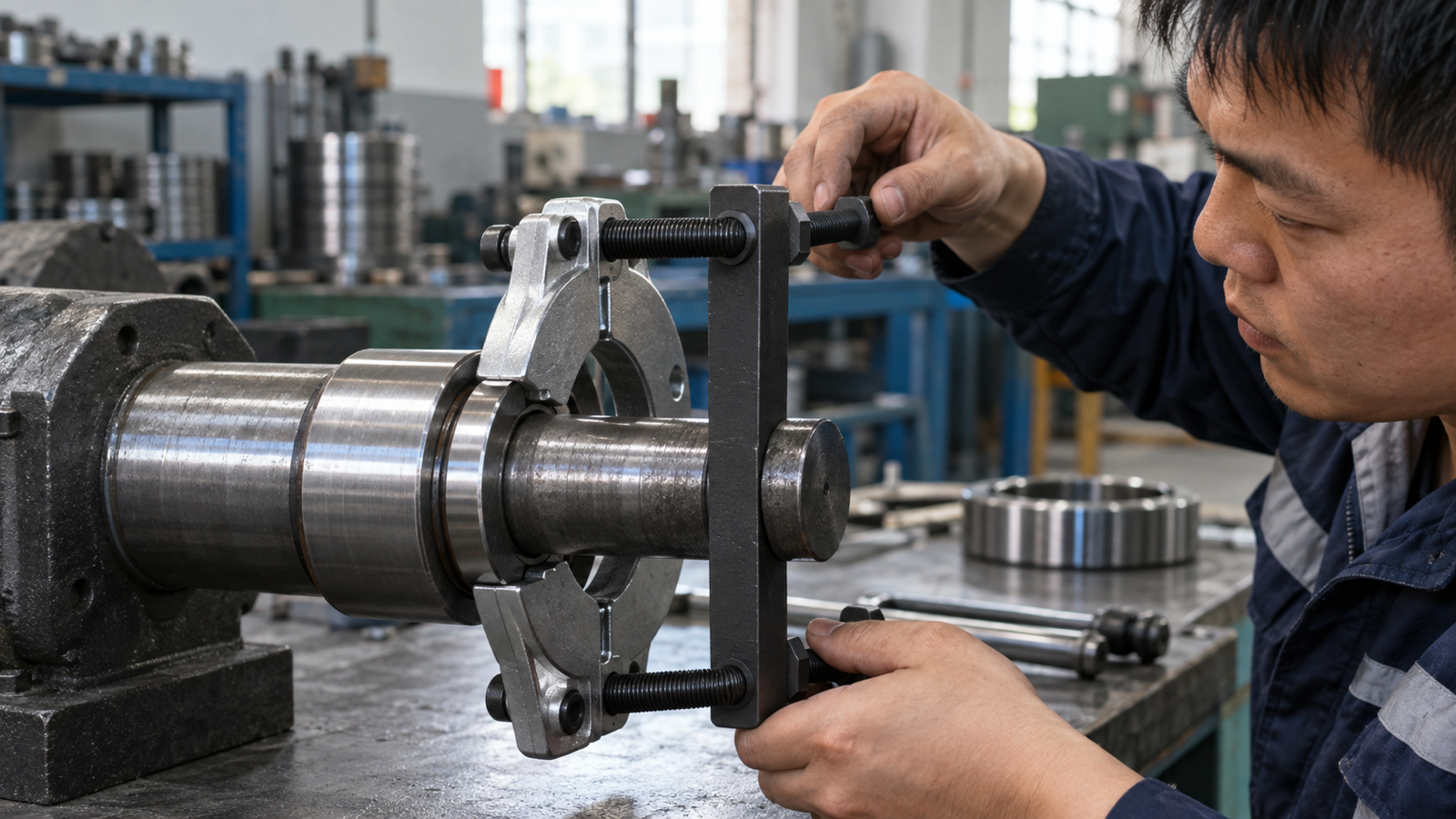
A separator creates a gripping edge when jaw tips cannot pass behind a tight inner race. Two plates close around it, then rods or a crossbar connect with a screw or hydraulic frame. This can suit a narrow gap, but plate edges must sit behind a sound face. A chamfer, cage, seal, or thin flange cannot carry dependable load.
The separator earns its place through stable seating: show parallel plates and a centered force line before loading.
For buyer trials, inspect:
- plate thickness against rear clearance;
- edge depth and contact width behind the race;
- bolt, pin, rod, and bridge compatibility;
- alignment after initial hand loading;
List a separator and its external puller as one approved configuration. Do not market the plate alone as a complete extraction system.
Practical action: ask for a fit photograph at zero load and a second photograph after initial seating on a representative sample.
Separator-set decision table
| Situation | Separator may suit | Choose another method when |
|---|---|---|
| Flush inner race | A strong rear face remains accessible | No rear face exists |
| Narrow shaft gap | Plate edge fits without shaft marking | Edge rests on a chamfer or seal |
| Larger assembly | Matched frame supports both plates | Frame connection is unclear |
| Race is discard-only | Shaft and housing remain protected | Cutting or pressing has safer support |
6. How do presses and destructive methods compare with race pullers?
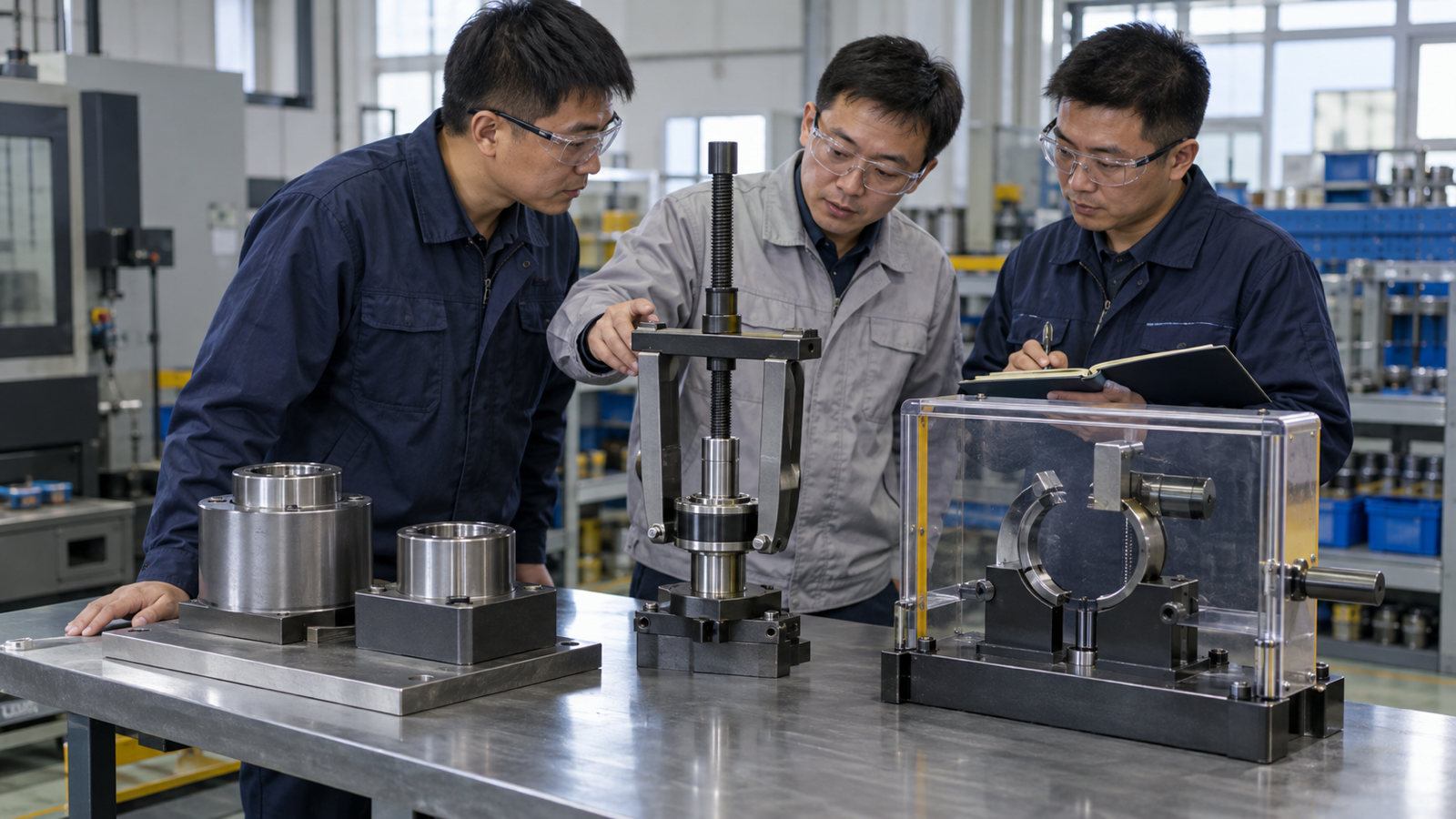
A press can suit a removed housing, knuckle, or shaft when matched cups and reaction plates support the correct ring. Pressing through rolling elements or an unsupported casting can damage parts. A race puller works in place when grip and reaction are sound. Destructive removal may suit a discard race when controlled gripping is impractical, with guarding and a documented procedure.
Method choice follows the part’s future and available support: reusable components need controlled contact; discard races may permit another plan after review.
Compare before approval:
- whether the assembly can be removed and supported squarely;
- which ring receives force during pressing;
- race-reuse requirement and nearby heat-sensitive components;
See KOLARWIN’s China OEM auto-tools sourcing guide for range planning.
Practical action: list puller, press tooling, and destructive removal as separate RFQ options with separate risk notes.
Removal-method comparison
| Method | Good starting condition | Main buyer control |
|---|---|---|
| Race puller | Access allows stable internal, external, or separator grip | Contact, alignment, and stated configuration |
| Press kit | Removed assembly has firm ring-specific support | Correct cup, plate, direction, and support |
| Destructive removal | Race is discard-only and controlled cutting is permitted | Guarding, eye protection, fragments, shaft protection |
| Unspecified improvisation | None | Reject until a defined method is approved |
7. What safety controls should a race-puller kit include?
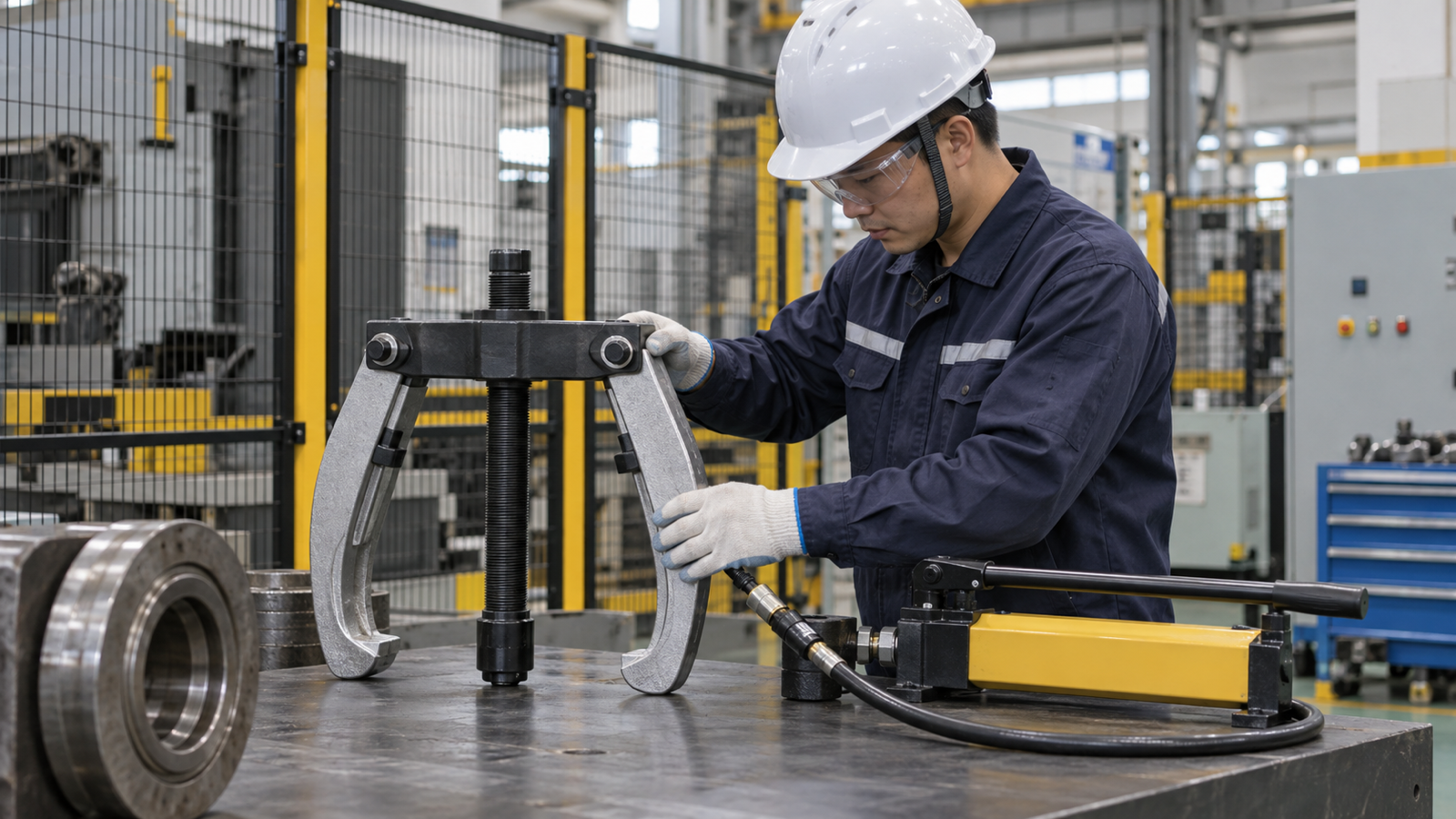
Safety begins with isolating unexpected movement and stored energy under site procedure. Pullers can release a tight component suddenly. Jaws, plates, hydraulic parts, and shafts need a clear load path. Use current instructions, required guards, eye protection, and task-specific PPE. Cracks, distorted legs, damaged threads, leaks, and unauthorized repairs call for removal from service.
A safe catalogue claim names controls rather than promising zero risk: no puller fixes a wrong grip or weak reaction surface.
Include these controls in buyer documentation:
- pre-use inspection for jaws, fingers, plates, threads, pins, and hydraulics;
- isolation of unexpected start-up and stored energy where required;
- gradual actuation through the approved handle or drive method;
- stop conditions for slip, tilt, bending, leakage, cracking, or abnormal resistance;
See mechanics tool-set configuration for wider kit context.
Practical action: include a pre-use and stop-condition card with every private-label kit.
Safety-document checklist
| Control | Document or sample evidence | Buyer decision |
|---|---|---|
| Condition check | Inspection checklist and quarantine rule | Approve only with traceable checks |
| Load path | Setup drawing and clear reaction points | Reject unclear force paths |
| PPE and guarding | Current instructions and risk note | Match local task procedure |
| Abnormal resistance | Stop, unload, inspect, reassess steps | Reject “push harder” wording |
8. How should distributors evaluate samples, materials, and replacement parts?
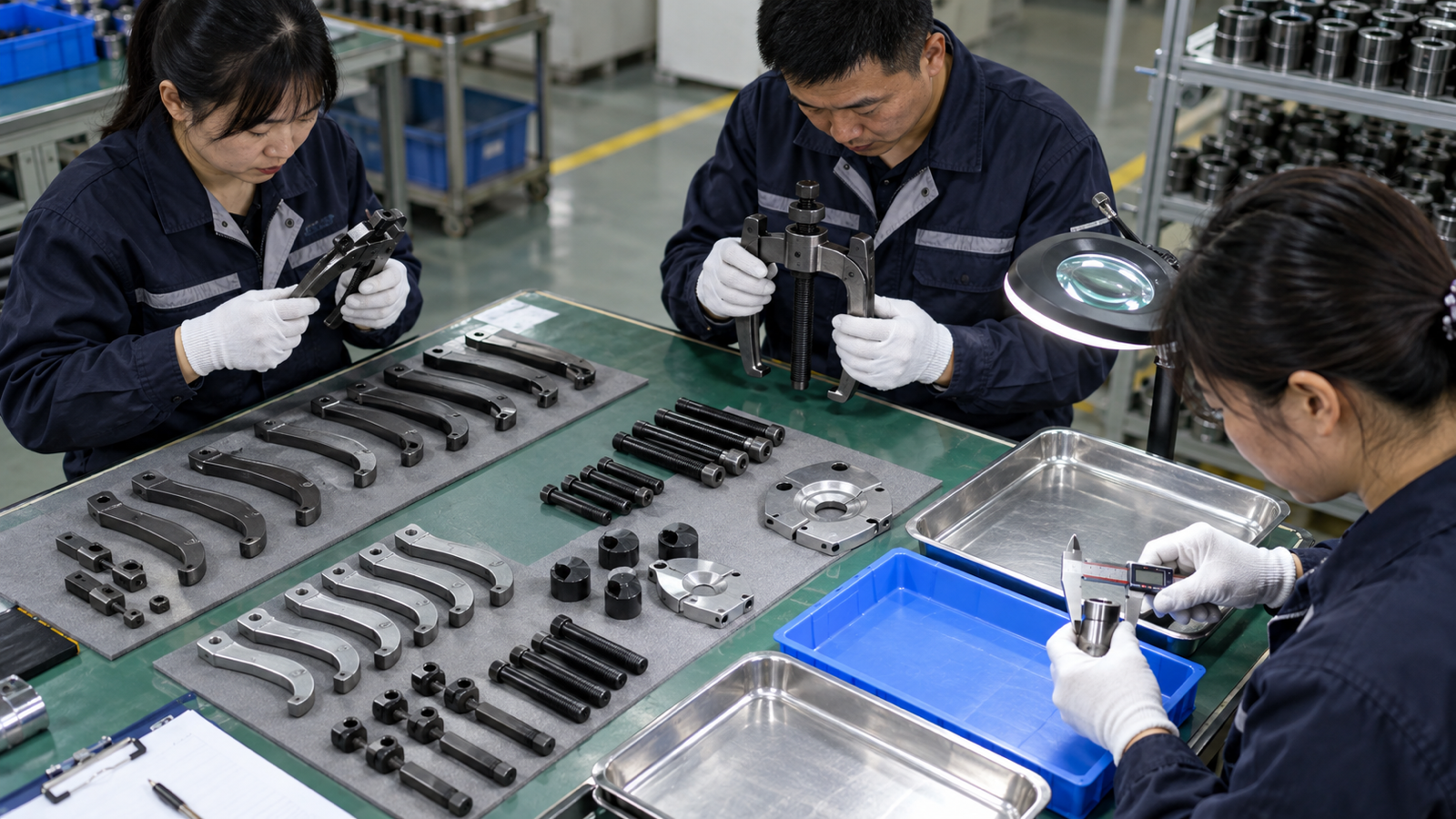
Sample approval should test the complete configuration rather than a loose jaw or attractive case. Verify contact geometry, adjustment range, thread fit, alignment, movement, and inspection access on representative races. Record limits in the product file. Material names alone do not establish performance; request a controlled specification when needed.
A practical sample earns approval through repeatable evidence: keep fit photos, dimensions, instructions, and part identification together.
Review:
- surface finish and contact edges at the race;
- thread engagement and compatibility across the complete kit;
- corrosion protection and storage-case retention;
- replacement-part codes and availability statements;
Use this mechanic tool-set selection for assortment planning.
Practical action: approve a golden sample plus a signed dimensional checklist, then compare production samples against both.
Sample-approval scorecard
| Review area | Pass evidence | Hold or reject when |
|---|---|---|
| Fit | Representative race engagement photo | Tool contacts a seal, cage, or edge |
| Assembly | Complete configuration works as drawn | Parts require unapproved adapters |
| Identification | Part codes and drawings match | Replacement identity is unclear |
| Repeatability | Multiple samples match approved geometry | Dimensions drift without explanation |
9. How should private-label buyers configure, package, and document kits?
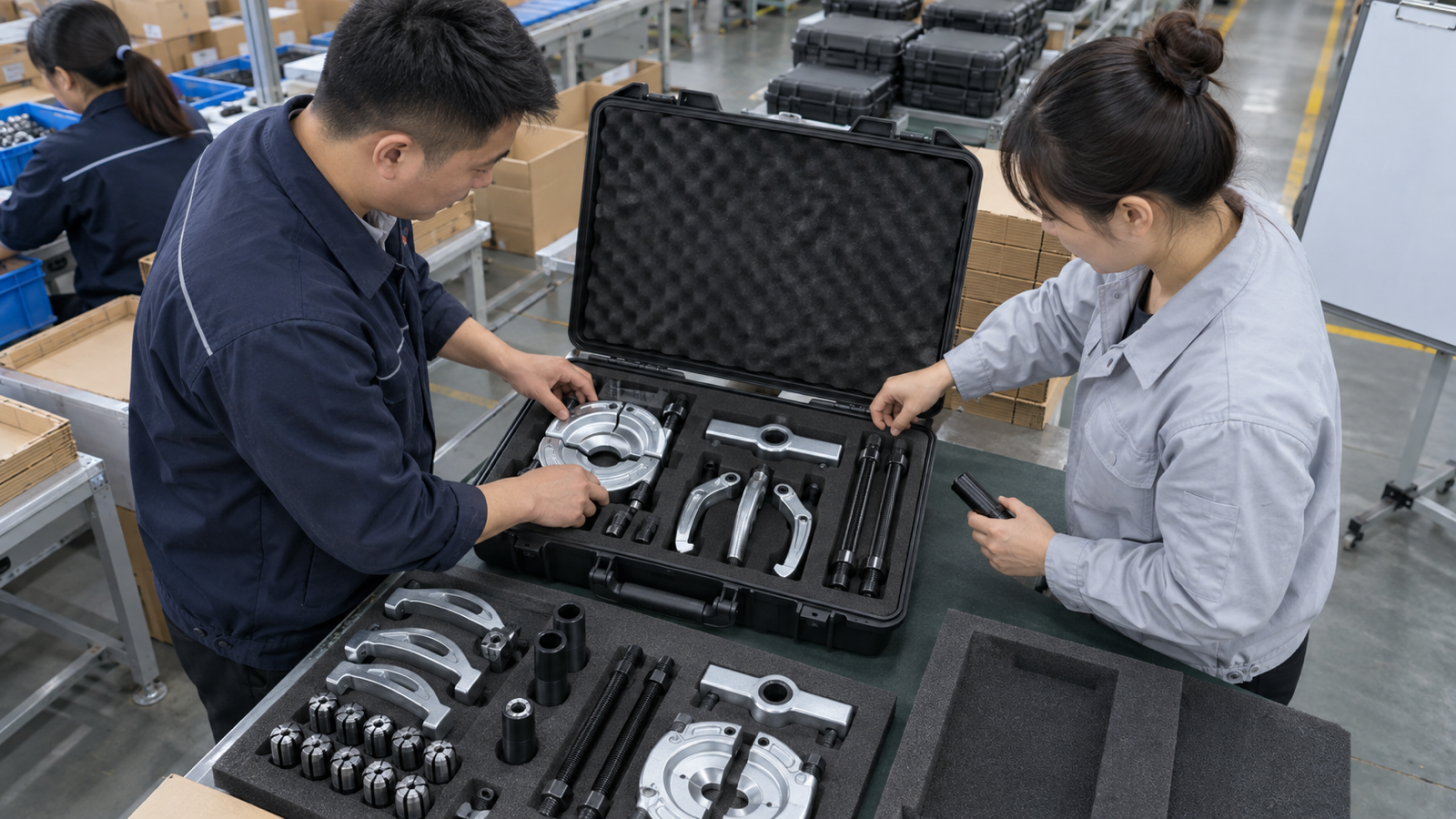
Private-label buyers should build a kit around named applications and interfaces, not a large count of loosely related pieces. Separate internal fingers, external jaws, separator plates, bridges, rods, protectors, and spare hardware. Each item needs an identifier matching the drawing, case location, instruction sheet, and replacement list. Packaging should expose missing pieces.
A kit sells more confidently when its limits are visible: configuration maps help distributors quote the right tool.
Plan:
- case artwork without unsupported “fits all” or safety-superlative claims;
- a quick-start card pointing users toward current instructions;
- inspection, storage, and quarantine guidance;
- buyer-facing RFQ fields for application photos and measured interfaces.
Keep socket or drive hardware separate from race engagement claims. See the socket-tools system and OEM socket-set packaging options for adjacent context.
Practical action: sign off artwork after technical, QC, and sourcing teams approve a shared configuration matrix.
Private-label kit contents
| Package element | Buyer purpose | Required control |
|---|---|---|
| Engagement parts | Match internal, external, or separator access | Size and interface codes |
| Force frame | Apply load through approved path | Compatible bridge, rods, or drive |
| Protection parts | Shield shaft ends and finished faces | Correct material and fit record |
| Documentation | Explain setup, limits, and stops | Revision-controlled instructions |
| Case and labels | Keep components identifiable | Tray map and missing-part check |
10. What should a buyer do before approving a bearing race puller?
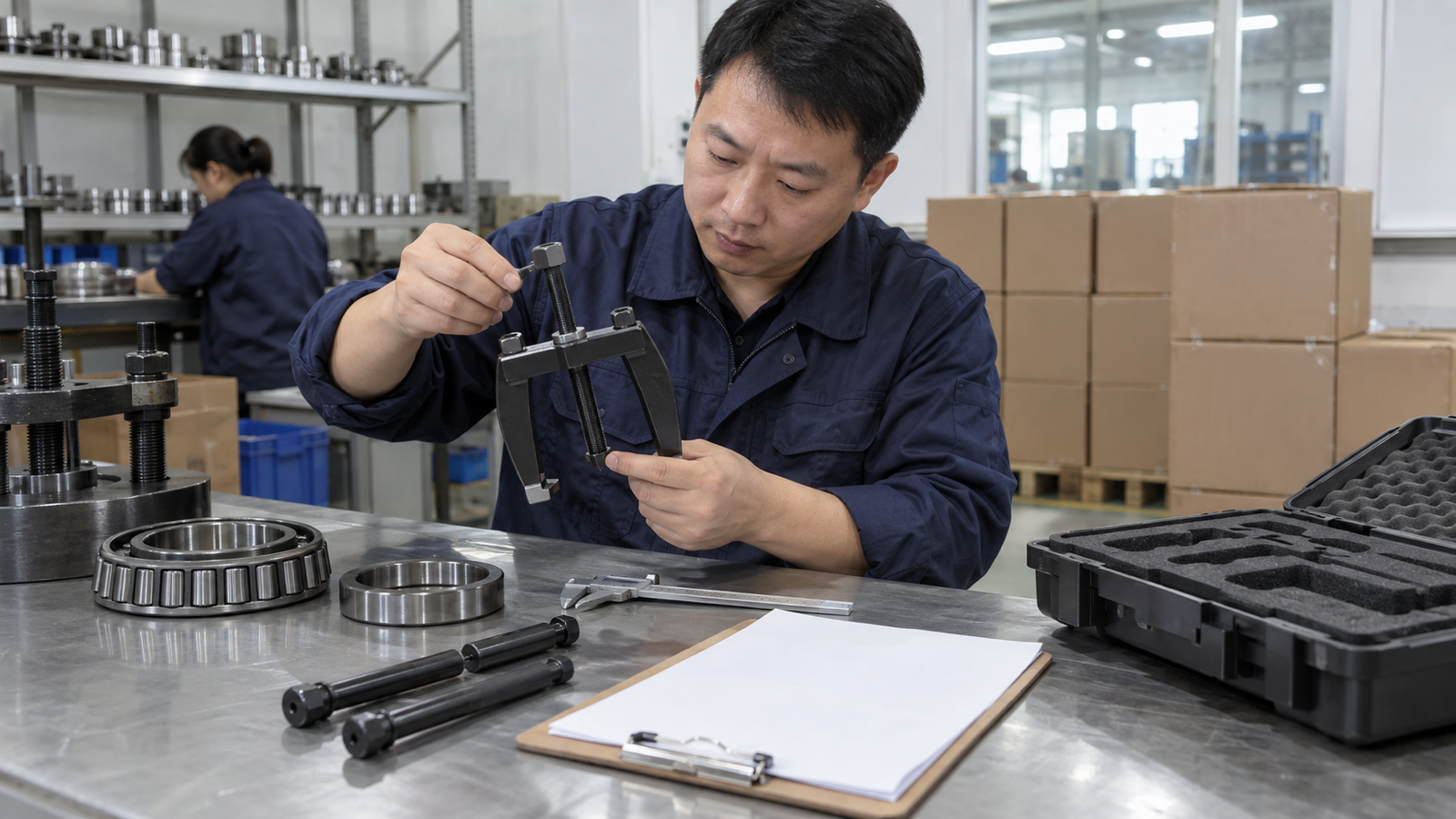
Approve a bearing race puller only after the intended race, access path, reaction surface, and removal outcome are documented. Ask for drawings, complete configuration, sample-fit evidence, safety instructions, spare-part identification, and matching packaging. If the application remains unclear, choose another family or press procedure.
The next step is practical: send a marked photo, key dimensions, target quantities, and required documentation with your RFQ. KOLARWIN’s B2B tool sourcing blog offers related purchasing context, and buyers can contact the KOLARWIN team about a bearing-puller RFQ with measured interfaces.
Use this final gate:
- identify the ring and confirm reuse needs;
- verify engagement and reaction surfaces on a representative sample;
- confirm limits, stop conditions, and documentation;
Practical action: reject any RFQ response that gives a headline size or force figure without reach, spread, grip, configuration, and use conditions.
Five buyer FAQs
Can a bearing race puller remove every bearing race? No. Fit depends on geometry, access, support, and configuration. Confirm a measured interface.
Is a bearing separator the same as a race puller? No. A separator creates the gripping edge; a bridge, rods, screw, ram, or frame supplies force.
Should buyers specify force capacity alone? No. Pair any rating with reach, spread, grip, adapters, alignment, actuation, and current instructions.
When does a blind puller make sense? When a housing blocks rear access and the bore offers strong internal grip. Confirm range, depth, reaction system, and release path.
What belongs in a private-label race-puller package? Matched engagement parts, force frame, protectors, controlled instructions, part codes, inspection guidance, and a case layout.
Looking for a reliable mechanic tools manufacturer in China?
If you are sourcing hand tools, socket tools, automotive repair tools, mechanic tool sets or OEM private label tools, contact KOLARWIN Tools for factory-direct quotation, customization support and product consultation.


