
Home/Blog/ Double Flare vs Bubble Flare: A Buyer’s Selection Guide

Double Flare vs Bubble Flare: A Buyer’s Selection Guide

Get OEM Tool Catalog + Quote Back to Tool Sourcing Blog
Labeled comparison of accurate double-flare and bubble-flare seal profiles
This KOLARWIN Tools article is written for overseas distributors, wholesalers, importers and private label tool brands sourcing mechanic tools, automotive repair tools, socket tools, hand tools and OEM tool sets from China. Use this guide to compare product options, check supplier quality points and move from reading to a faster B2B inquiry.

Need OEM supplier support for this product type?

Contact KOLARWIN Tools for OEM mechanic tools, private label packaging, wholesale quotation and product range support. This gives overseas buyers a clear path from article reading to supplier discussion.

A replacement brake tube can have the right outside diameter and still fail at the fitting. Double and bubble flares use different sealing surfaces, mating seats, tube nuts, and forming tools. A wrong match may leak even after the nut feels tight.

For double flare vs bubble flare purchasing, identify the port seat and approved tube standard before selecting tubing, nuts, dies, or adapters. Use the original assembly, drawing, or service information as evidence. The port seat and tool procedure decide the specification.

1. What is the difference between a double flare and a bubble flare?

A double flare folds the tube wall inward to form an inverted cone, while a bubble flare forms a rounded end against a matching port. Both are brake-tube connection forms with different sealing geometry.
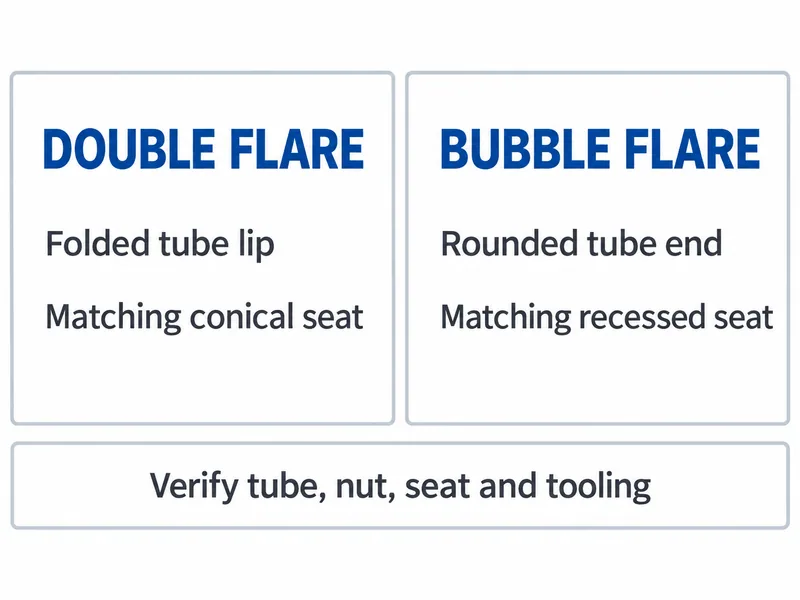
Labeled comparison of accurate double-flare and bubble-flare seal profiles
AI-generated technical illustration; schematic, not a dimensional drawing.

How does each sealing surface work?

The SAE-style double flare uses a folded tube end and a conical mating seat. The ISO-style bubble flare uses the outer surface of a rounded tube end against a port designed for that shape. Names such as SAE, inverted, 45-degree, DIN, ISO, and bubble are useful search terms, but they do not replace checking the actual fitting.

The practical check is simple.

  • Double flare: inspect the folded, funnel-like end and its matching seat.
  • Bubble flare: inspect the rounded button and its matching countersunk seat.
  • Confirm the tube nut, port, and die belong to one documented connection system.

Why should a distributor avoid shape-only catalog copy?

Feature Double flare Bubble flare
Visible end Folded or inverted cone Rounded button
Sealing contact Flare against a conical seat Bubble against a matching port seat

Use this table for screening; verify the seat.

A photograph rarely shows seat angle, tube-nut lead, usable tube diameter, or die profile. “Universal brake flare” can hide separate procedures.

  • State whether the product forms a double flare, bubble flare, or both.

Which port, nut, tube, and tool procedure passed sample approval?

Key Takeaway: Buy by verified geometry, not a shape label.

2. How do the port seat and tube end create the seal?

The port seat and tube end create a seal only when their contact surfaces, centerline, and clamping path match. Thread engagement alone does not prove that a brake-tube joint is compatible.
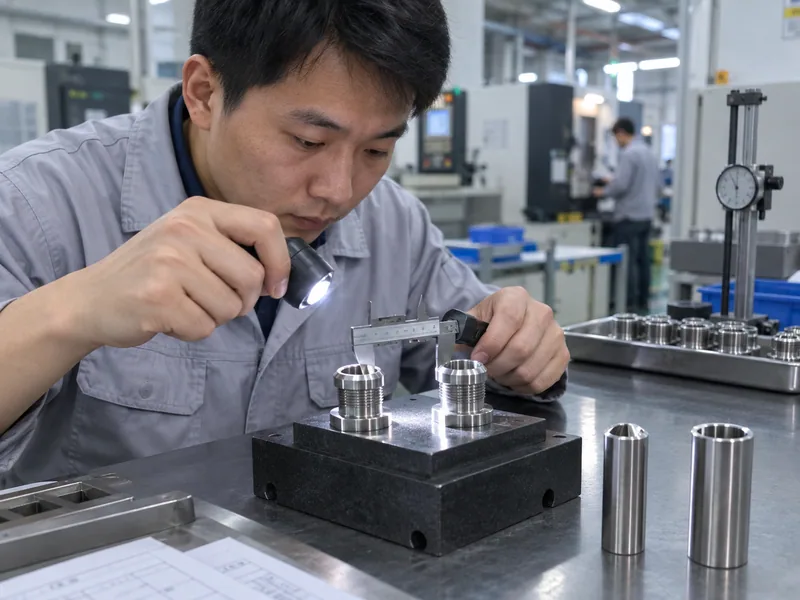
Chinese quality technician inspecting brake-tube port seats and matching sample ends
AI-generated concept illustration; not an actual factory or test record.

What must be checked inside the port?

Inspect the clean port with the old line removed. A conical recess, countersink, or absent flare seat points to different choices; do not infer the standard from thread diameter.

The port is the final reference.

  • Record the seat profile and whether a separate seat insert exists.
  • Check the port depth and thread form against the approved fitting drawing.
  • Confirm the tube nut reaches the flare without bottoming on thread.

Why do threads fail as a shortcut?

Port evidence What it can indicate What still needs confirmation
Projecting conical seat for an inverted flare A matching double-flare connection may be specified Flare angle, tube size, and nut form
Integrated countersunk port A bubble-style connection may be specified Standard, seat dimensions, and lead

This record prevents a nut match from becoming a quote.

Two fittings can share a nominal thread yet use different sealing faces, tube diameters, or nut shoulders. SAE J533 covers defined 37-degree and 45-degree forms; ISO 4038 addresses road-vehicle brake-tube dimensions. Neither makes similar threads substitutes.

  • Treat thread data as one field in the RFQ.

A matching thread starts the check; it does not finish it. Review the socket and tool category only for adjacent tool planning, then keep brake-flare geometry in its own controlled specification.

Key Takeaway: Record the port seat before quoting a connection.

3. Can a double flare and bubble flare use the same tube?

The same tube alloy may accept different flare forms, but the approved wall thickness, outside diameter, temper, and forming procedure still control the result. Tube material compatibility does not make the finished connections interchangeable.
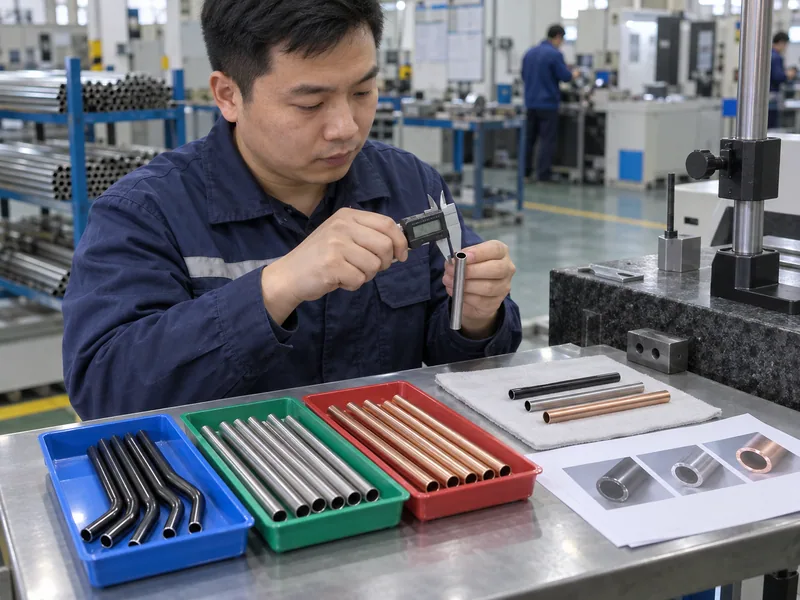
Factory technician measuring brake tube diameter and wall condition for flare compatibility
AI-generated concept illustration; not an actual factory or test record.

Which tube details belong in a purchase specification?

List tube OD, wall thickness, material designation, surface condition, and temper. Supplier guidance should state whether that material forms the requested flare without cracking or thinning.

  • Separate tube material from finished flare type.
  • Specify OD and wall range rather than “standard brake line.”
  • Ask for the forming recommendation for steel, stainless, or copper-nickel where relevant.

Material is only half of the fit decision. The finished flare must still meet the port and nut geometry approved for that material.

Why should a buyer reject generic material promises?

RFQ tube field Why it affects selection Evidence to request
Outside diameter Sets die, nut, and port compatibility Drawing or measured sample
Wall thickness Affects forming and finished contact Tolerance range and material sheet
Material/alloy Changes forming behavior and corrosion choice Mill or supplier declaration

Use the table to compare like-for-like tube quotations.

“Works with all brake tubing” is too broad. Copper-nickel, coated steel, and stainless may need different cutting, clamping, and forming controls.

  • Ask for sample material by exact designation.

Never convert a generic SAE half-formed bubble into an ISO bubble by assumption. Use a die and sequence explicitly approved for the required flare.

Key Takeaway: Match tube material and forming procedure together.

4. Which flaring tool should a buyer specify?

Specify a flaring tool by the required flare form, tube range, material range, die system, and forming sequence. A tool that makes a double flare is not automatically suitable for an ISO bubble flare.
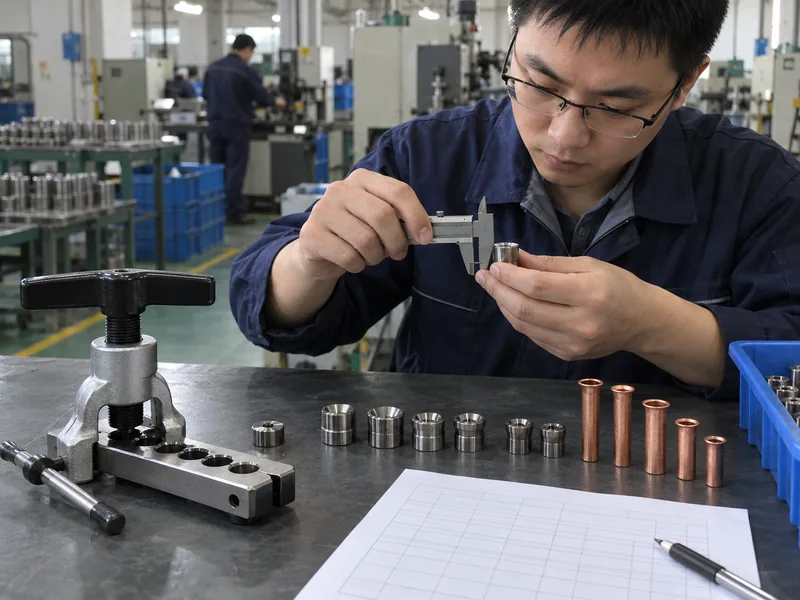
Separate flare-tool dies and tube ranges arranged for B2B tool specification review
AI-generated concept illustration; not an actual factory or test record.

What should the tool data sheet show?

A tool data sheet names each flare, tube range, materials, die identifiers, clamp method, and forming steps.

Tool names are not enough.

  • List double-flare and bubble-flare functions separately.
  • Match each function to a die, adapter, or turret position.
  • State tube sizes covered by each die.

Do all combination tools remove the risk of a wrong flare?

Tool specification Double-flare question Bubble-flare question
Forming function Does it fold the tube wall as specified? Does it form the approved rounded end?
Die identity Which die creates the required fold? Which die creates the required bubble?
Tube range Which OD and wall ranges are supported? Same check, with separate procedure

Require a sample from each function before listing a dual-purpose tool.

No. A combination tool can reduce tool changes, yet an operator can still select the wrong die, clamp height, or forming sequence. “One tool for both” describes a tool feature, not permission to interchange joints.

  • Mark dies and instructions by flare type.

Name each supported flare and its verified tube range. Avoid universal wording that could be read as a brake-system fit guarantee.

Key Takeaway: Approve each die function with a formed sample.

5. Are double flares and bubble flares interchangeable?

Double and bubble flares belong to different connection systems and should not be substituted. Approved adapters create separately matched interfaces; they do not make flare shapes interchangeable. A double flare cannot seal correctly in a bubble-flare seat, and a bubble flare cannot replace a double flare merely because the nut threads engage.
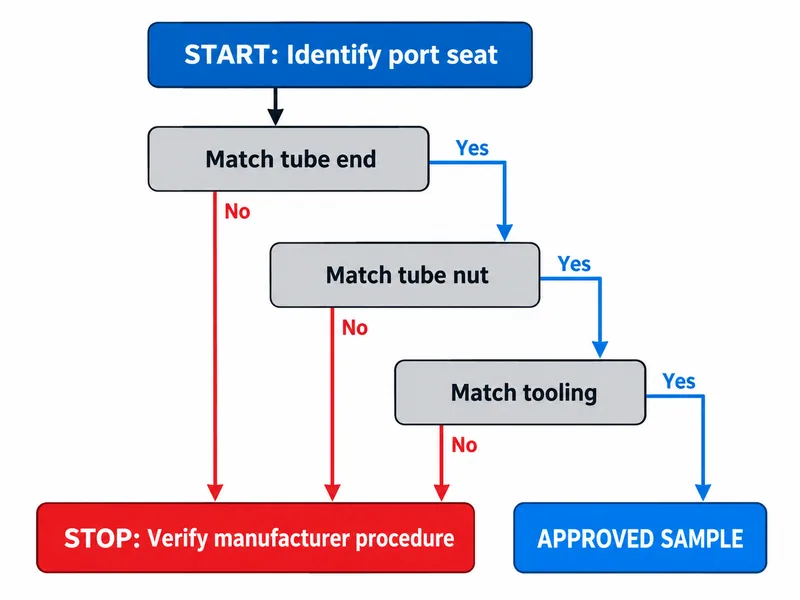
Technical diagram showing nonmatching flare and port seats without implying interchangeability
AI-generated technical illustration; schematic, not a dimensional drawing.

What happens when the wrong form is tightened?

The surfaces may touch at an unintended edge. Tightening can distort the tube or damage the seat. Do not use extra torque, sealant, washers, or retightening to compensate.

  • Stop if the flare rocks, bottoms, or seats unevenly.
  • Check the port, nut, tube OD, and die as one assembly.
  • Replace a damaged flare rather than reusing a questionable end.

When can an adapter be considered?

A tight nut is not a proof of a sealed joint. The correct proof starts with matching geometry and follows the relevant service or manufacturer procedure.

Attempted substitution Why it fails Buyer response
Bubble flare in double-flare seat Contact surfaces do not match Re-specify the double flare
Double flare in bubble seat Folded cone cannot reproduce bubble contact Re-specify the bubble flare

Use this table for consistent rejection notes.

An adapter belongs in scope only when a component manufacturer or engineering procedure specifies it for that port, pressure system, tube, and fitting family. It is not a shortcut for making an ISO bubble from a generic SAE half-step.

  • Identify both mating standards and all added interfaces.

Never publish a blanket “fits SAE and ISO” claim without a documented adapter or tool procedure. This rule protects product data, training, and customer use instructions at the same time.

Key Takeaway: Reject substitutions without a documented assembly procedure.

6. Does vehicle origin tell you which flare to buy?

Vehicle origin can suggest research, but it cannot choose a flare. Model, market, repair, and replacement history vary, so the port seat and service reference decide.
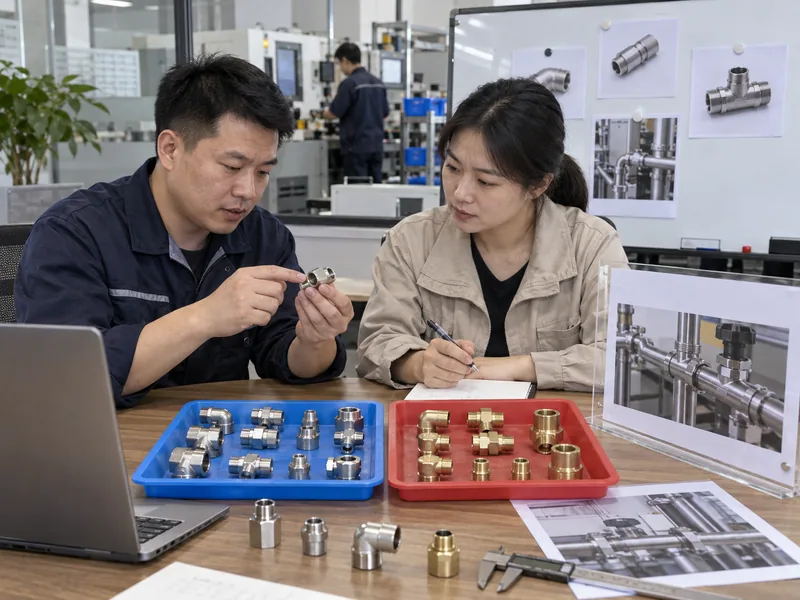
Chinese buyer reviewing mixed fitting samples and application evidence before selecting a flare tool
AI-generated concept illustration; not an actual factory or test record.

Why are US-versus-Europe rules unreliable?

Vehicle programs can combine metric or inch threads, double or bubble flares, and replacement parts from different supply chains. A platform may use more than one tube standard.

  • Use origin as a search filter only.

How should a distributor write application coverage?

Country labels are clues, not specifications. A procurement team should turn every clue into a measured or documented requirement before buying stock.

Catalog shortcut Risk Better evidence
“US vehicle = double flare” Misses mixed or repaired assemblies Port and line inspection
“European vehicle = bubble flare” Misses variant components Service data and seat check

Use this comparison to train sales teams.

Write coverage around a fitting family, tube size, flare form, and customer drawing. If a vehicle list is necessary, tie it to documented samples rather than a universal promise.

  • Separate tested applications from inquiry-only candidates.
  • Record market, model year, and component source when known.

The automotive repair tools range can support a wider workshop assortment, but it should not be used as evidence for a specific brake-line connection.

The application rule is direct. Use origin for research, then verify the port and service reference.

Key Takeaway: Publish fitment only against documented application evidence.

7. What should a distributor include in a double-or-bubble range?

A range should separate flare forms, tube sizes, dies, nuts, and application evidence so each SKU has a clear job. Ambiguous labels create returns.
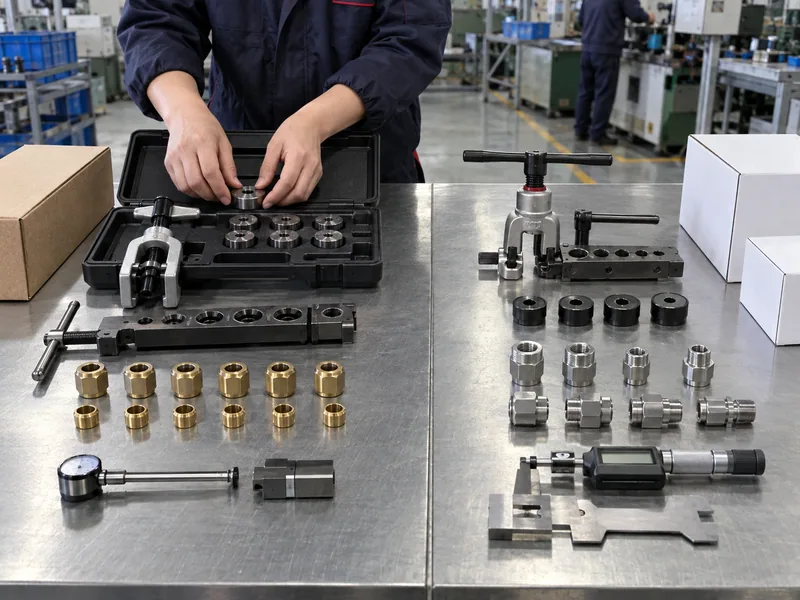
B2B distributor assortment layout separating flare tools, dies, nuts, and inspection aids
AI-generated concept illustration; not an actual factory or test record.

Which SKUs deserve a place in the range?

Give priority to tube and flare combinations supported by customer demand and verified samples. Keep dies, nuts, adapters, and inspection gauges separate where compatibility differs.

A clean range has a reason for every SKU.

  • Double-flare tool and die sets with stated tube ranges.
  • Bubble-flare tool and die sets with separate forming instructions.
  • Matching tube nuts and unions with documented thread and seat data.

How should sets be packaged for B2B channels?

Range item Required label Buyer evidence
Flaring tool Flare form and tube range Sample and die record
Replacement die Flare form, size, and tool family Tool drawing
Tube nut Thread, lead, tube OD, and seat family Fitting reference

This structure separates a dual-form kit from a shared-handle bundle.

Package the flare type beside the die or forming instruction, then show tube range and accessories. Separate replacement components by form to prevent wrong-family picks.

  • Use durable markings that remain legible after handling.

For broader kit architecture, compare mechanics tool set configurations while keeping brake-flare components in a dedicated specification block.

A range earns its shelf space through clear roles. Separate flare families in labels, dies, and packaging.

Key Takeaway: Give every SKU a verified and distinct job.

8. How should a buyer inspect a flare-tool sample?

Sample inspection should verify the tool, die, tube, formed flare, mating nut, and port as one controlled set. A polished tool body cannot replace a finished-joint check.
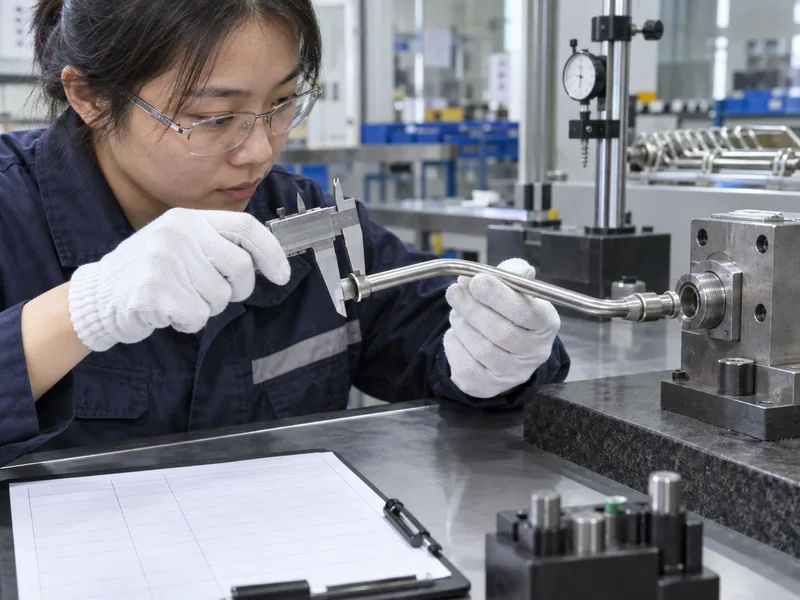
Quality technician checking a formed tube sample against its approved matching port
AI-generated concept illustration; not an actual factory or test record.

Which checks catch a bad sample early?

Measure the tube and inspect the formed end for cracks, folds, burrs, eccentricity, damage, and seat contact. Test each flare on the RFQ material and wall range.

Fit is the release gate.

  • Confirm die identity and clamp height.
  • Form samples at the stated tube range.
  • Check concentricity and visible surface condition.

Should a supplier provide torque numbers?

Inspection stage Record Stop condition
Tube check OD, wall, material, and end prep Out-of-range tube
Tool check Die mark, clamp, and sequence Unidentified or wrong die
Flare check Shape, edge, concentricity, and damage Crack, fold, or off-center form

Keep the record and repeat it after a tool or material change. Visual inspection cannot establish pressure integrity. Any pressure or leak validation must follow the applicable manufacturer test method.

Torque values belong to the specified fitting, tube, seat, and service procedure. A generic article should not invent one universal number.

  • Ask for the governing installation document.
  • Separate tool forming instructions from fitting assembly instructions.

A missing torque value is a prompt for verification, not an invitation to guess. The hand-tool range can help with adjacent maintenance planning, while the brake-joint procedure should come from the approved system source.

Key Takeaway: Release samples only after the complete joint passes inspection.

9. What should a brake-flare RFQ ask for?

An RFQ should define the connection system, sample evidence, packaging, and change-control rules. “Brake flaring kit” alone is not comparable.
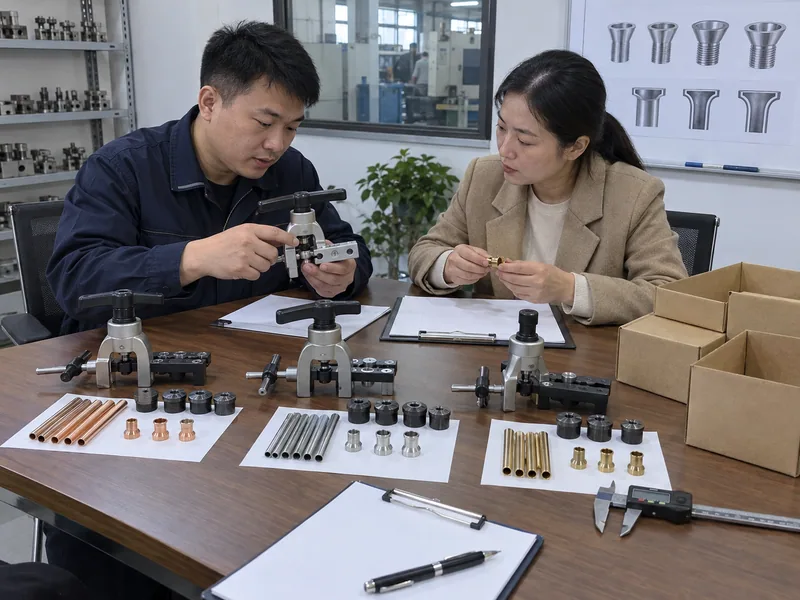
Chinese supplier and importer reviewing a flare-tool RFQ with samples and inspection records
AI-generated concept illustration; not an actual factory or test record.

Which technical fields prevent mismatched quotes?

State flare form, tube range, material, die set, supported nut and port family, inspection method, and instruction language. Split both forms into separately verified functions even when one handle serves both.

Clear RFQs lower rework on both sides.

  • Attach a drawing or approved sample of each port family.
  • List every tube material and size required for sampling.
  • Require tool and die identifiers on the quote.
  • State that any deviation needs written acceptance.

Which commercial questions belong beside the engineering fields?

RFQ block Example requirement Approval evidence
Flare form Double or bubble, listed separately Formed tube sample
Tube OD, wall, material, and range Material and measurement record
Mating parts Nut, union, port, or adapter reference Assembly drawing
Tool Die, clamp, sequence, and marking Tool sample and instructions

Use this table as the technical core of a supplier comparison sheet. Review socket-set planning only for shared packaging controls.

Ask for sample timing, packaging format, replacement-part availability, document language, change notification, and quoted-specification validity. Keep price, minimum order, and lead time tied to the exact configuration.

  • Request a separate line for dies and replacement components.
  • Identify any customer-owned drawing or packaging asset.

Do not approve a lower quote if it removes the die, sample evidence, or instruction needed to form the specified flare.

Keep price tied to the approved tool, die, sample, and documents.

Key Takeaway: A complete RFQ makes supplier quotes comparable.

10. How should a buyer make the final flare-tool decision?

Choose the option that proves the flare, tube range, mating seat, tool sequence, and inspection record as one system. Use controlled geometry and sample evidence.
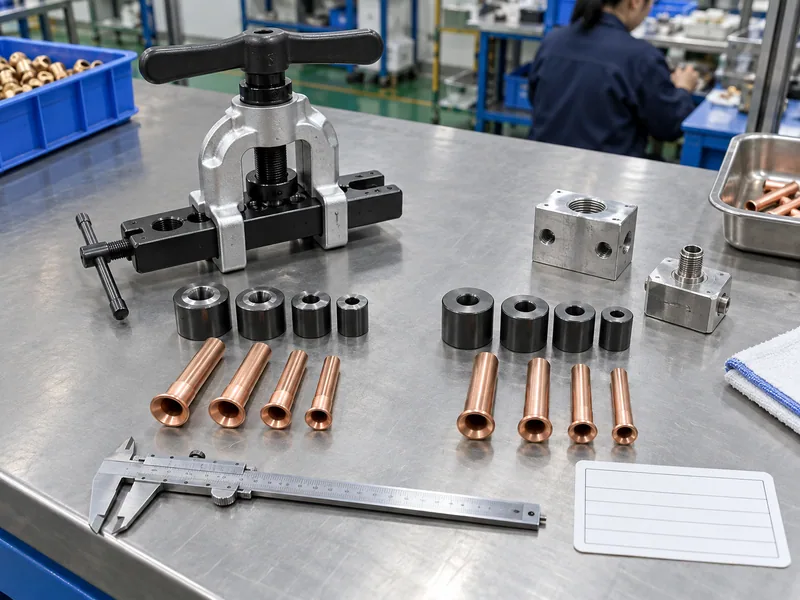
Buyer release layout with separate flare tools, tube samples, matching ports, and approval card
AI-generated concept illustration; not an actual factory or test record.

What is the final release gate?

Release a SKU after the tube forms correctly, the nut seats in the matching port, and the procedure can be repeated. Keep unresolved applications outside the fitment list.

  • Confirm the port and tube standard.
  • Confirm die and instruction match.
  • Confirm sample measurements and seat contact.
  • Confirm packaging separates flare families.
  • Confirm changes require review.

Use the industry sourcing page for maintenance-tool requirements, then send the approved flare specification through the contact page. Review the main tool range for an assortment.

The buying decision should stay tied to the joint. Require a clear seat, tube, die, sample, and change record.

Can a double flare replace a bubble flare if the threads match? No. Match the port seat, tube end, nut, and procedure.

Can one flaring tool make both forms? Some use separate dies or positions. Confirm each function, tube range, and sequence through samples.

Does a metric thread prove that a line needs a bubble flare? No. Check the actual port seat and assembly reference.

Can an adapter solve a double-versus-bubble mismatch? Only when an approved procedure specifies the complete assembly. Do not improvise a half-step conversion.

What should an importer request before placing a bulk order? Request drawings, tube ranges, die identifiers, formed samples, seat checks, packaging proof, instructions, and change-control terms.

Looking for a reliable mechanic tools manufacturer in China?

If you are sourcing hand tools, socket tools, automotive repair tools, mechanic tool sets or OEM private label tools, contact KOLARWIN Tools for factory-direct quotation, customization support and product consultation.


A replacement brake tube can have the right outside diameter and still fail at the fitting. Double and bubble flares use different sealing surfaces, mating seats, tube nuts, and forming tools. A wrong match may leak even after the nut feels tight.

For double flare vs bubble flare purchasing, identify the port seat and approved tube standard before selecting tubing, nuts, dies, or adapters. Use the original assembly, drawing, or service information as evidence. The port seat and tool procedure decide the specification.

1. What is the difference between a double flare and a bubble flare?

A double flare folds the tube wall inward to form an inverted cone, while a bubble flare forms a rounded end against a matching port. Both are brake-tube connection forms with different sealing geometry.

Labeled comparison of accurate double-flare and bubble-flare seal profiles
AI-generated technical illustration; schematic, not a dimensional drawing.

How does each sealing surface work?

The SAE-style double flare uses a folded tube end and a conical mating seat. The ISO-style bubble flare uses the outer surface of a rounded tube end against a port designed for that shape. Names such as SAE, inverted, 45-degree, DIN, ISO, and bubble are useful search terms, but they do not replace checking the actual fitting.

The practical check is simple.

Why should a distributor avoid shape-only catalog copy?

Feature Double flare Bubble flare
Visible end Folded or inverted cone Rounded button
Sealing contact Flare against a conical seat Bubble against a matching port seat

Use this table for screening; verify the seat.

A photograph rarely shows seat angle, tube-nut lead, usable tube diameter, or die profile. “Universal brake flare” can hide separate procedures.

Which port, nut, tube, and tool procedure passed sample approval?

Key Takeaway: Buy by verified geometry, not a shape label.

2. How do the port seat and tube end create the seal?

The port seat and tube end create a seal only when their contact surfaces, centerline, and clamping path match. Thread engagement alone does not prove that a brake-tube joint is compatible.

Chinese quality technician inspecting brake-tube port seats and matching sample ends
AI-generated concept illustration; not an actual factory or test record.

What must be checked inside the port?

Inspect the clean port with the old line removed. A conical recess, countersink, or absent flare seat points to different choices; do not infer the standard from thread diameter.

The port is the final reference.

Why do threads fail as a shortcut?

Port evidence What it can indicate What still needs confirmation
Projecting conical seat for an inverted flare A matching double-flare connection may be specified Flare angle, tube size, and nut form
Integrated countersunk port A bubble-style connection may be specified Standard, seat dimensions, and lead

This record prevents a nut match from becoming a quote.

Two fittings can share a nominal thread yet use different sealing faces, tube diameters, or nut shoulders. SAE J533 covers defined 37-degree and 45-degree forms; ISO 4038 addresses road-vehicle brake-tube dimensions. Neither makes similar threads substitutes.

A matching thread starts the check; it does not finish it. Review the socket and tool category only for adjacent tool planning, then keep brake-flare geometry in its own controlled specification.

Key Takeaway: Record the port seat before quoting a connection.

3. Can a double flare and bubble flare use the same tube?

The same tube alloy may accept different flare forms, but the approved wall thickness, outside diameter, temper, and forming procedure still control the result. Tube material compatibility does not make the finished connections interchangeable.

Factory technician measuring brake tube diameter and wall condition for flare compatibility
AI-generated concept illustration; not an actual factory or test record.

Which tube details belong in a purchase specification?

List tube OD, wall thickness, material designation, surface condition, and temper. Supplier guidance should state whether that material forms the requested flare without cracking or thinning.

Material is only half of the fit decision. The finished flare must still meet the port and nut geometry approved for that material.

Why should a buyer reject generic material promises?

RFQ tube field Why it affects selection Evidence to request
Outside diameter Sets die, nut, and port compatibility Drawing or measured sample
Wall thickness Affects forming and finished contact Tolerance range and material sheet
Material/alloy Changes forming behavior and corrosion choice Mill or supplier declaration

Use the table to compare like-for-like tube quotations.

“Works with all brake tubing” is too broad. Copper-nickel, coated steel, and stainless may need different cutting, clamping, and forming controls.

Never convert a generic SAE half-formed bubble into an ISO bubble by assumption. Use a die and sequence explicitly approved for the required flare.

Key Takeaway: Match tube material and forming procedure together.

4. Which flaring tool should a buyer specify?

Specify a flaring tool by the required flare form, tube range, material range, die system, and forming sequence. A tool that makes a double flare is not automatically suitable for an ISO bubble flare.

Separate flare-tool dies and tube ranges arranged for B2B tool specification review
AI-generated concept illustration; not an actual factory or test record.

What should the tool data sheet show?

A tool data sheet names each flare, tube range, materials, die identifiers, clamp method, and forming steps.

Tool names are not enough.

Do all combination tools remove the risk of a wrong flare?

Tool specification Double-flare question Bubble-flare question
Forming function Does it fold the tube wall as specified? Does it form the approved rounded end?
Die identity Which die creates the required fold? Which die creates the required bubble?
Tube range Which OD and wall ranges are supported? Same check, with separate procedure

Require a sample from each function before listing a dual-purpose tool.

No. A combination tool can reduce tool changes, yet an operator can still select the wrong die, clamp height, or forming sequence. “One tool for both” describes a tool feature, not permission to interchange joints.

Name each supported flare and its verified tube range. Avoid universal wording that could be read as a brake-system fit guarantee.

Key Takeaway: Approve each die function with a formed sample.

5. Are double flares and bubble flares interchangeable?

Double and bubble flares belong to different connection systems and should not be substituted. Approved adapters create separately matched interfaces; they do not make flare shapes interchangeable. A double flare cannot seal correctly in a bubble-flare seat, and a bubble flare cannot replace a double flare merely because the nut threads engage.

Technical diagram showing nonmatching flare and port seats without implying interchangeability
AI-generated technical illustration; schematic, not a dimensional drawing.

What happens when the wrong form is tightened?

The surfaces may touch at an unintended edge. Tightening can distort the tube or damage the seat. Do not use extra torque, sealant, washers, or retightening to compensate.

When can an adapter be considered?

A tight nut is not a proof of a sealed joint. The correct proof starts with matching geometry and follows the relevant service or manufacturer procedure.

Attempted substitution Why it fails Buyer response
Bubble flare in double-flare seat Contact surfaces do not match Re-specify the double flare
Double flare in bubble seat Folded cone cannot reproduce bubble contact Re-specify the bubble flare

Use this table for consistent rejection notes.

An adapter belongs in scope only when a component manufacturer or engineering procedure specifies it for that port, pressure system, tube, and fitting family. It is not a shortcut for making an ISO bubble from a generic SAE half-step.

Never publish a blanket “fits SAE and ISO” claim without a documented adapter or tool procedure. This rule protects product data, training, and customer use instructions at the same time.

Key Takeaway: Reject substitutions without a documented assembly procedure.

6. Does vehicle origin tell you which flare to buy?

Vehicle origin can suggest research, but it cannot choose a flare. Model, market, repair, and replacement history vary, so the port seat and service reference decide.

Chinese buyer reviewing mixed fitting samples and application evidence before selecting a flare tool
AI-generated concept illustration; not an actual factory or test record.

Why are US-versus-Europe rules unreliable?

Vehicle programs can combine metric or inch threads, double or bubble flares, and replacement parts from different supply chains. A platform may use more than one tube standard.

How should a distributor write application coverage?

Country labels are clues, not specifications. A procurement team should turn every clue into a measured or documented requirement before buying stock.

Catalog shortcut Risk Better evidence
“US vehicle = double flare” Misses mixed or repaired assemblies Port and line inspection
“European vehicle = bubble flare” Misses variant components Service data and seat check

Use this comparison to train sales teams.

Write coverage around a fitting family, tube size, flare form, and customer drawing. If a vehicle list is necessary, tie it to documented samples rather than a universal promise.

The automotive repair tools range can support a wider workshop assortment, but it should not be used as evidence for a specific brake-line connection.

The application rule is direct. Use origin for research, then verify the port and service reference.

Key Takeaway: Publish fitment only against documented application evidence.

7. What should a distributor include in a double-or-bubble range?

A range should separate flare forms, tube sizes, dies, nuts, and application evidence so each SKU has a clear job. Ambiguous labels create returns.

B2B distributor assortment layout separating flare tools, dies, nuts, and inspection aids
AI-generated concept illustration; not an actual factory or test record.

Which SKUs deserve a place in the range?

Give priority to tube and flare combinations supported by customer demand and verified samples. Keep dies, nuts, adapters, and inspection gauges separate where compatibility differs.

A clean range has a reason for every SKU.

How should sets be packaged for B2B channels?

Range item Required label Buyer evidence
Flaring tool Flare form and tube range Sample and die record
Replacement die Flare form, size, and tool family Tool drawing
Tube nut Thread, lead, tube OD, and seat family Fitting reference

This structure separates a dual-form kit from a shared-handle bundle.

Package the flare type beside the die or forming instruction, then show tube range and accessories. Separate replacement components by form to prevent wrong-family picks.

For broader kit architecture, compare mechanics tool set configurations while keeping brake-flare components in a dedicated specification block.

A range earns its shelf space through clear roles. Separate flare families in labels, dies, and packaging.

Key Takeaway: Give every SKU a verified and distinct job.

8. How should a buyer inspect a flare-tool sample?

Sample inspection should verify the tool, die, tube, formed flare, mating nut, and port as one controlled set. A polished tool body cannot replace a finished-joint check.

Quality technician checking a formed tube sample against its approved matching port
AI-generated concept illustration; not an actual factory or test record.

Which checks catch a bad sample early?

Measure the tube and inspect the formed end for cracks, folds, burrs, eccentricity, damage, and seat contact. Test each flare on the RFQ material and wall range.

Fit is the release gate.

Should a supplier provide torque numbers?

Inspection stage Record Stop condition
Tube check OD, wall, material, and end prep Out-of-range tube
Tool check Die mark, clamp, and sequence Unidentified or wrong die
Flare check Shape, edge, concentricity, and damage Crack, fold, or off-center form

Keep the record and repeat it after a tool or material change. Visual inspection cannot establish pressure integrity. Any pressure or leak validation must follow the applicable manufacturer test method.

Torque values belong to the specified fitting, tube, seat, and service procedure. A generic article should not invent one universal number.

A missing torque value is a prompt for verification, not an invitation to guess. The hand-tool range can help with adjacent maintenance planning, while the brake-joint procedure should come from the approved system source.

Key Takeaway: Release samples only after the complete joint passes inspection.

9. What should a brake-flare RFQ ask for?

An RFQ should define the connection system, sample evidence, packaging, and change-control rules. “Brake flaring kit” alone is not comparable.

Chinese supplier and importer reviewing a flare-tool RFQ with samples and inspection records
AI-generated concept illustration; not an actual factory or test record.

Which technical fields prevent mismatched quotes?

State flare form, tube range, material, die set, supported nut and port family, inspection method, and instruction language. Split both forms into separately verified functions even when one handle serves both.

Clear RFQs lower rework on both sides.

Which commercial questions belong beside the engineering fields?

RFQ block Example requirement Approval evidence
Flare form Double or bubble, listed separately Formed tube sample
Tube OD, wall, material, and range Material and measurement record
Mating parts Nut, union, port, or adapter reference Assembly drawing
Tool Die, clamp, sequence, and marking Tool sample and instructions

Use this table as the technical core of a supplier comparison sheet. Review socket-set planning only for shared packaging controls.

Ask for sample timing, packaging format, replacement-part availability, document language, change notification, and quoted-specification validity. Keep price, minimum order, and lead time tied to the exact configuration.

Do not approve a lower quote if it removes the die, sample evidence, or instruction needed to form the specified flare.

Keep price tied to the approved tool, die, sample, and documents.

Key Takeaway: A complete RFQ makes supplier quotes comparable.

10. How should a buyer make the final flare-tool decision?

Choose the option that proves the flare, tube range, mating seat, tool sequence, and inspection record as one system. Use controlled geometry and sample evidence.

Buyer release layout with separate flare tools, tube samples, matching ports, and approval card
AI-generated concept illustration; not an actual factory or test record.

What is the final release gate?

Release a SKU after the tube forms correctly, the nut seats in the matching port, and the procedure can be repeated. Keep unresolved applications outside the fitment list.

Use the industry sourcing page for maintenance-tool requirements, then send the approved flare specification through the contact page. Review the main tool range for an assortment.

The buying decision should stay tied to the joint. Require a clear seat, tube, die, sample, and change record.

Can a double flare replace a bubble flare if the threads match? No. Match the port seat, tube end, nut, and procedure.

Can one flaring tool make both forms? Some use separate dies or positions. Confirm each function, tube range, and sequence through samples.

Does a metric thread prove that a line needs a bubble flare? No. Check the actual port seat and assembly reference.

Can an adapter solve a double-versus-bubble mismatch? Only when an approved procedure specifies the complete assembly. Do not improvise a half-step conversion.

What should an importer request before placing a bulk order? Request drawings, tube ranges, die identifiers, formed samples, seat checks, packaging proof, instructions, and change-control terms.

Why Partner with Kolarwin Tools?

Factory-Direct Pricing Skip the middleman — access competitive wholesale prices and protect your margins
Private Label & OEM Ready Your brand, our expertise — full customization from logo to packaging
Fast Global Shipping Reliable delivery to 60+ countries with full export documentation support
Low MOQ, High Flexibility Start small, scale fast — flexible order quantities to fit your business
Dedicated B2B Support One-on-one account management from quote to delivery, every time

Get Your Free Quote in 24 Hours

Tell us your sourcing needs — we'll respond with a tailored quote, product specs, and the best pricing for your market. No commitment required.

Chat on WhatsApp Email Us Directly
